
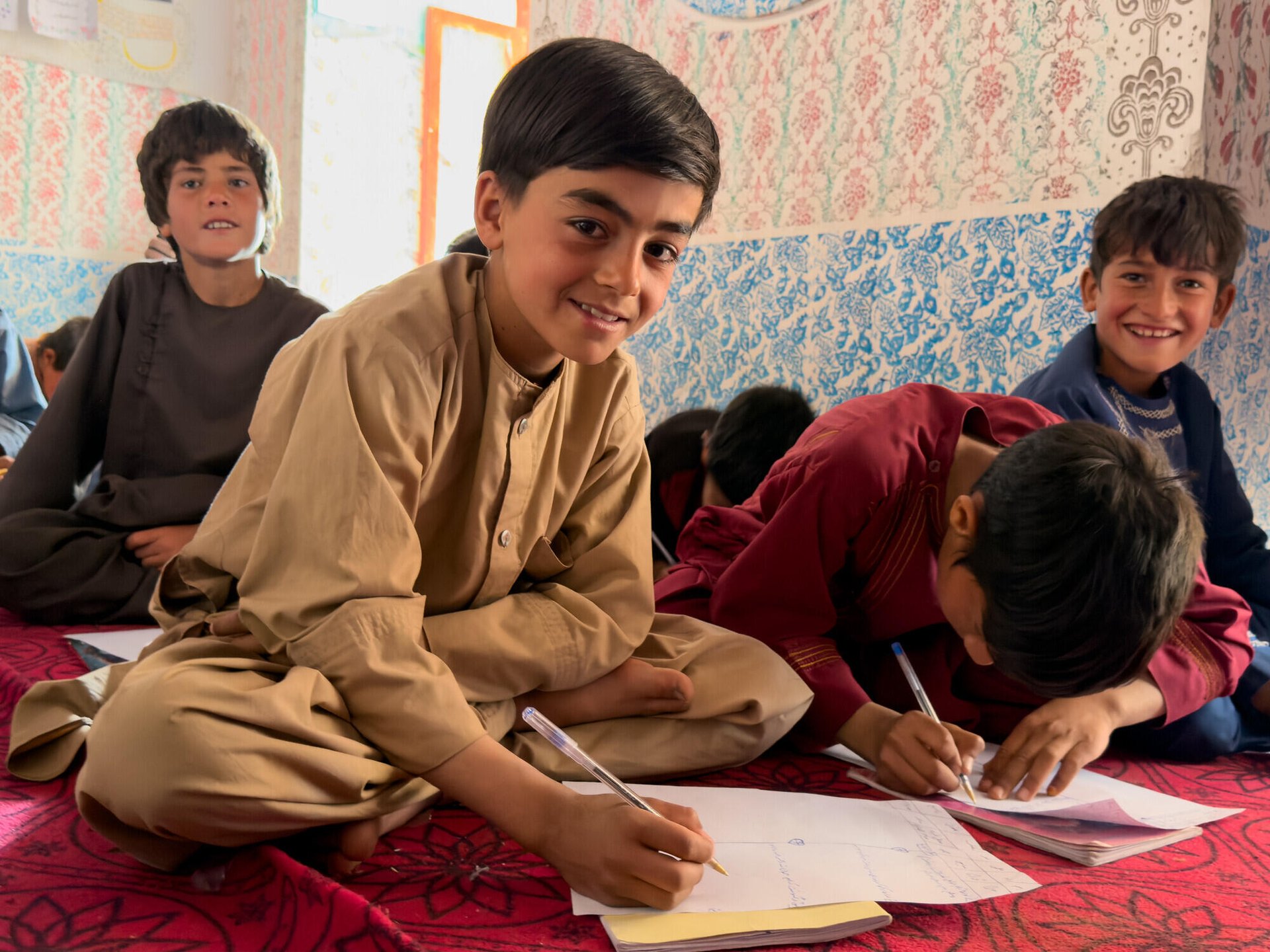
Twelve-year-old Nooragha has spent his entire life in the village of Khoja Chaharom in western Badghis Province, Afghanistan. His educational journey began as a first grader in a community-based class in the village, supported by the Norwegian Refugee Council (NRC). Today, four years later, he is a dedicated fourth grade student.
According to his teacher, Nooragha stands out as one of the brightest learners in the class, known for his active participation, curiosity, and enthusiasm to learn every subject.
Life in Badghis Province
Nooragha comes from a farming family. His father cultivates wheat on a small piece of land and tends a garden filled with grapevines and apple, peach and pear trees. When asked about his favourite fruit, Nooragha smiles and replies: “grapes and apples”.
Each morning, Nooragha attends school, eager to learn a wide range of subjects, including English, Dari, Pashto, mathematics, science, social studies, and religious education.
After returning home and completing his homework, he helps his parents with household and farming tasks, balancing his education with supporting his family.
Among all his subjects, English is his favourite. “I like English more and focus more on learning it,” he says. “But all the subjects allowed me to gain information in all areas.”

New opportunities
Nooragha is grateful for the opportunity to attend the community-based class. His is one of eight community-based classes in Qadis district, giving girls and boys in remote villages the chance to learn where public schools are far away. “Now I can write everything I want, and read books that I like. It is very helpful,” he says eagerly.
The fourth-grade student dreams of becoming a teacher one day. He hopes to continue his education at a university in Herat or Kabul before returning to his village. “I want to come back to my area after completing my education and teach other kids reading and writing so that they will also be equipped with education,” he emphasises.
Planning for the future
The day I met Nooragha, he was preparing to take his mid-term science exam. Excited and confident, he told me he was ready. When I asked what he had learned in science, he proudly explained: “We have learned about different types of plants, the movement of the earth, different kinds of animals and many other topics. I am fully ready for the test.”
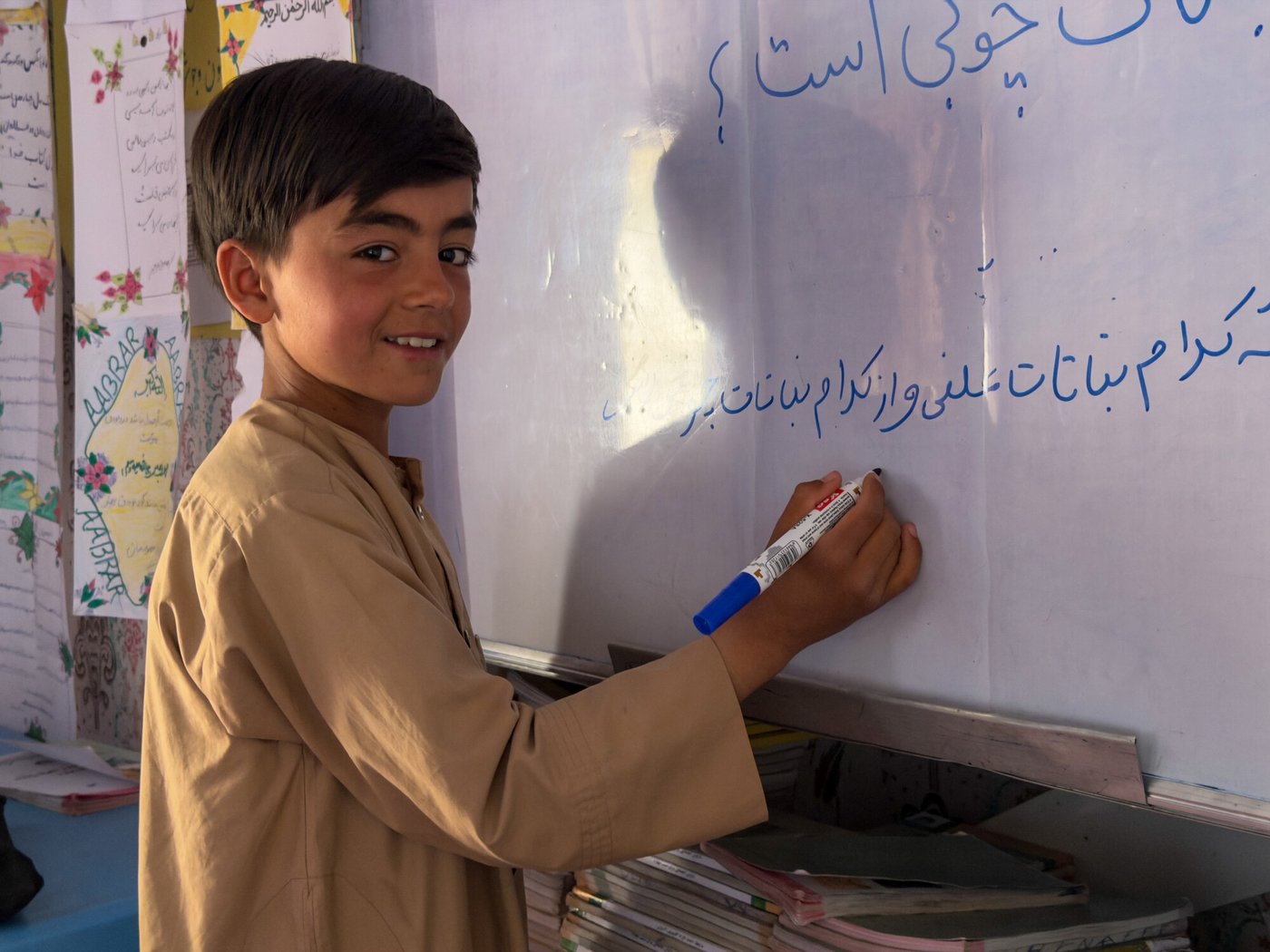
The community-based classes support students up to grade six, after which they continue their education in public schools. Nooragha is already looking ahead. “I can study here until grade six. After that, I plan to join a public school and continue my education,” he says.
Nooragha also shared what a typical afternoon looks like after school. Once he gets home, he has lunch and completes his homework to prepare for the next day's lessons. He then helps his parents with household chores, such as fetching water or cleaning the house whenever they need him.
“I like to play football, so in the evenings I play football with a group of friends,” he explains.
A message to the world
Nooragha has a simple message for the world. “There are many children in our village and district who still do not have the chance to go to school. I want new classes to be established for them as well,” he says.
With generous support from the European Union, NRC has established 25 community-based education classes providing learning opportunities to over 830 students, including girls and boys in remote areas of Badghis Province.
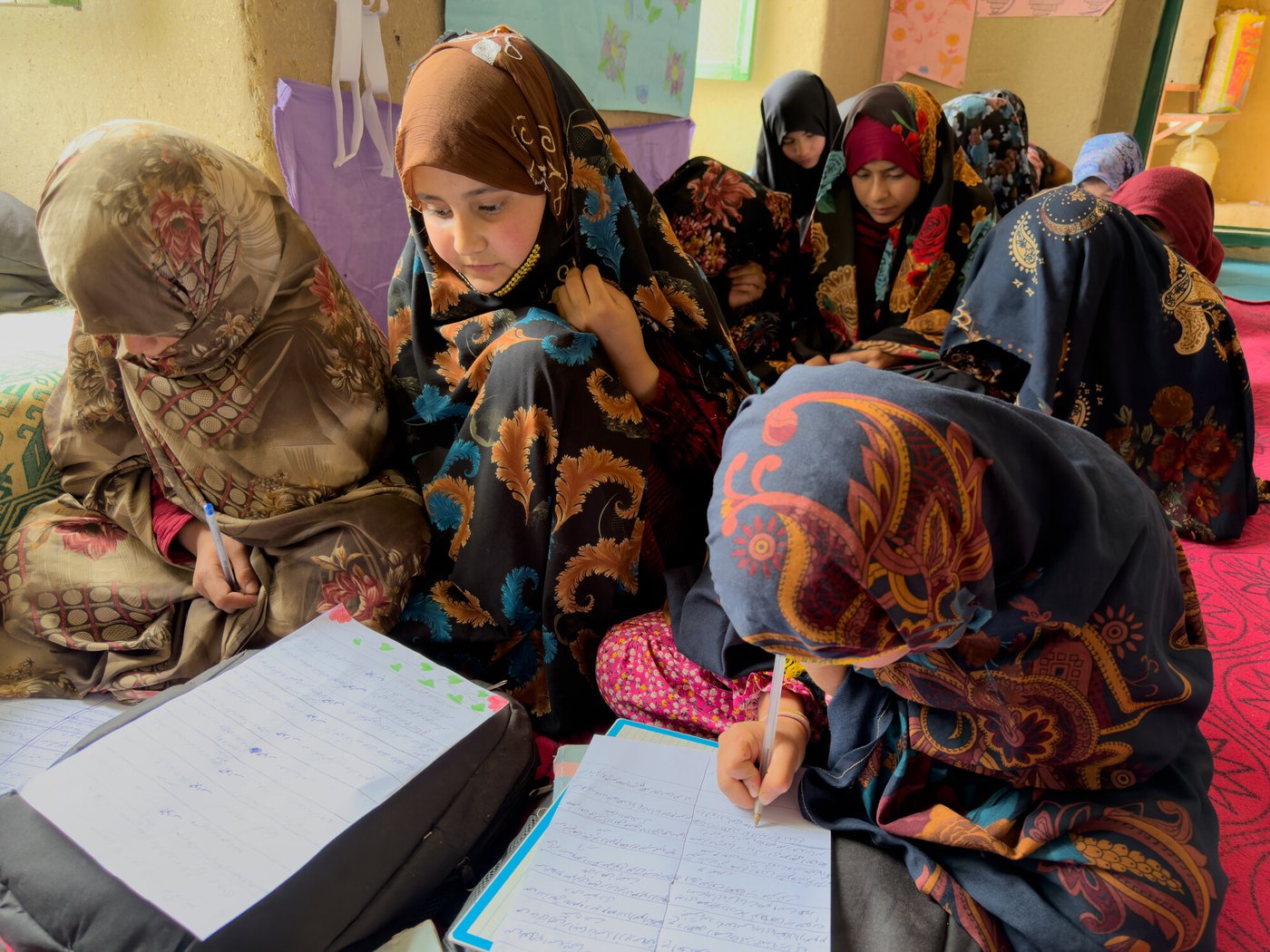
According to a report by UNICEF, an estimated 3.7 million Afghan children are out of school, with girls representing 60 per cent of those excluded from education.
Children in remote communities have the same dreams and potential as children anywhere else. They simply need the opportunity to learn. Continued investment in education is essential to reach under-served children, and ensure every child has access to quality education close to home. Education is not just a tool for learning but a lifeline that offers hope, continuity and protection amidst displacement, conflict and instability.
The Better Learning Programme (BLP) – NRC’s flagship psychosocial support approach – is a key component across our response that addresses acute psycho-educational needs arising from displacement and other vulnerabilities. Our monitoring indicates that 78 per cent of BLP students report improved academic performance through better concentration on schoolwork, while 73 per cent report feeling safer at school due to improved teacher engagement and receiving basic psychosocial support. Improvements have also been noted in self-regulation (81%), hope (54%), and self-efficacy (61%), including a greater ability to manage emotions and find solutions to challenges.
We’re here to tell you about the crises no-one else is talking about.
