


Violence and climate-induced disasters have forced 1.8 million people to flee their homes in north-eastern Nigeria, while conflict and insecurity are increasingly affecting central and north-western regions.

NRC in Nigeria
The Norwegian Refugee Council (NRC) is working in displacement camps and host communities in north-eastern Nigeria to ensure families have the essentials they need to survive, as well as protection, education and legal assistance.
What’s happening in Nigeria?
Nigeria is the most populous country in Africa and has suffered decades of political instability, economic inequality and violence. In the north-eastern states of Borno, Adamawa and Yobe, 7.8 million people need humanitarian assistance, including 1.8 million who are internally displaced. The crisis is also increasingly affecting central and north-western regions.
Plateau state, located in Nigeria’s Middle Belt region, has a prolonged history of violence. Tensions between communities, particularly over land and resources, have led to violent clashes and the displacement of thousands of people, leaving many families without shelter or basic necessities.
Many displaced families end up in overcrowded camps or makeshift shelters in host communities, where sanitation and other basic services are inadequate and food is in short supply. Women and girls face particularly serious protection risks, including a heightened risk of gender-based violence.
Our response
We’re working with our partners in the following areas:
- Water, sanitation and hygiene – constructing and repairing boreholes and sanitation facilities, installing handwashing stations, distributing hygiene kits and helping communities prevent diseases such as cholera.
- Shelter and settlements – providing emergency and longer-term shelter, repairing damaged homes, offering rental and cash assistance and distributing essential household items to families affected by conflict, flooding and displacement.
- Education – providing catch-up and other learning opportunities for children who are out of school, constructing and repairing classrooms, training teachers and offering vocational and life skills training to young people.
- Protection from violence – helping communities identify and reduce protection risks, providing individual support to people at risk of violence or abuse, and connecting them with specialist services where needed.
- Information, counselling and legal assistance – helping people obtain civil and identity documents, protect their housing, land and property rights, resolve disputes and overcome legal barriers to employment and starting businesses.
- Multi-purpose cash assistance (MPCA) – providing cash transfers to enable families to meet their most urgent basic needs such as food, shelter and other essentials.
- Advocacy – working with communities, authorities and humanitarian organisations to improve access, protect the rights of displaced people and support longer-term solutions.

Our operations
NRC office established: 2015
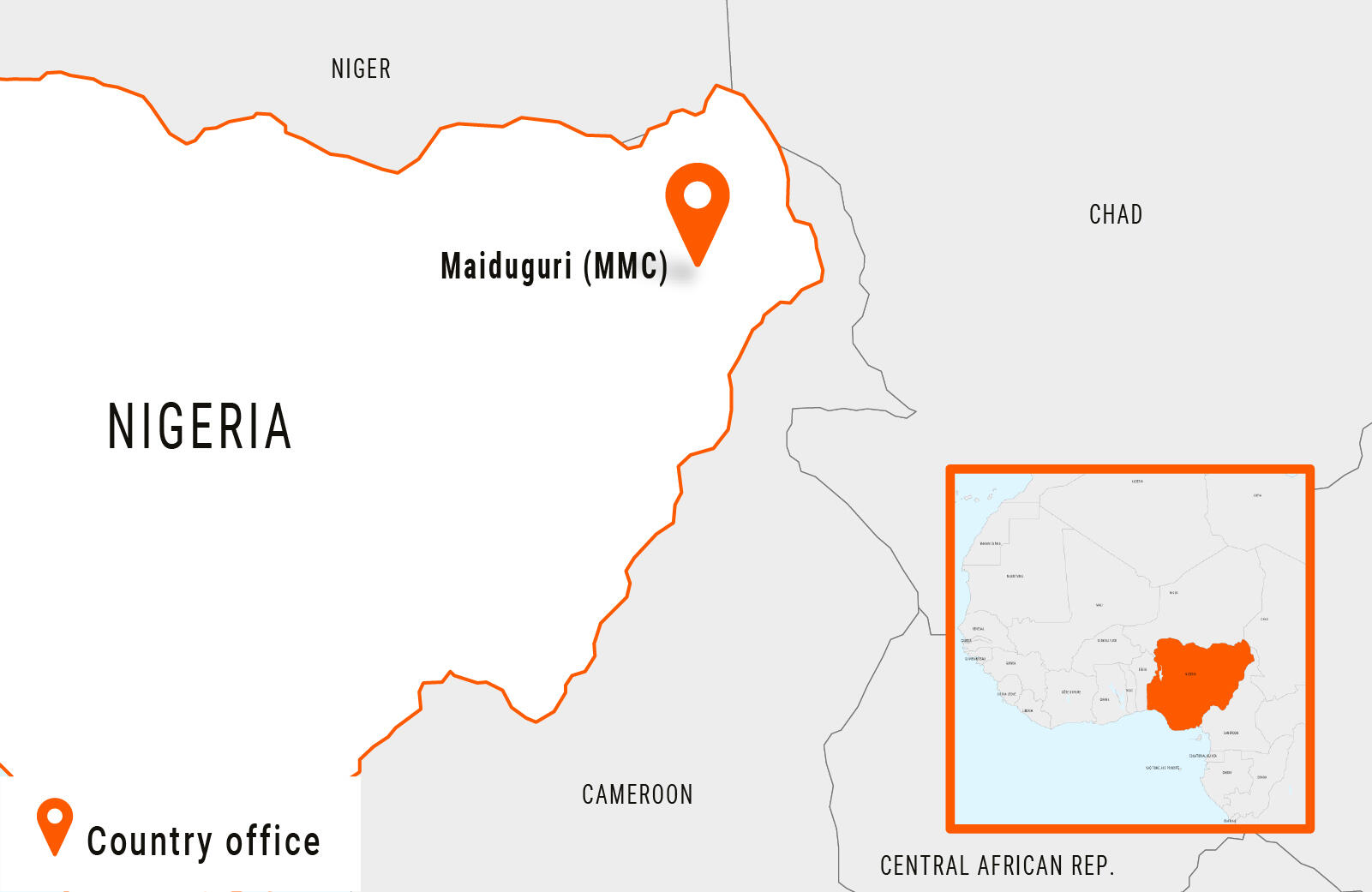
Areas of operation: Abuja (country office), Borno State, Adamawa State, Yobe State, Plateau State
Country Director (acting): Patricia Kheirallah
Contact: ng.nrcnigeria@nrc.no
Our impact
In 2025, we assisted 347,694 people through our programmes in Nigeria:
-
32,540Education
-
20,299Livelihoods and food security
-
20,992Shelter and settlements
-
125,107Protection from violence
-
112,496Information, counselling and legal assistance
-
188,277Water, sanitation and hygiene
-
16,934Multi-purpose cash assistance
Note: some people received more than one type of assistance.
News and stories

Publications


