


Thousands of families are fleeing renewed fighting in Yemen with little more than the clothes they are wearing. As the number of newly displaced people rises, tens of thousands are struggling to find somewhere safe to stay, putting new pressure on a humanitarian response already stretched to the breaking point.

Yemen’s growing displacement crisis
At one in the morning, Ammar woke up to the sound of artillery and gunfire.
The 20-year-old was sleeping with his parents, brother and sisters in the tent they called home. Outside, other displaced families were beginning to gather in the darkness, trying to understand what was happening. They stood there for several minutes, just listening.
At first, Ammar and his brothers told themselves the noise could be a celebration. Maybe a wedding?
But his older brother looked at Ammar and said, “There is no way this is a wedding. Not at this hour.”
The gunfire was getting stronger, closer and more intense. They weren’t imagining it. This was real. “I looked at my family. I looked at the children. I looked at the elderly. And I knew we could not stay,” Ammar says.
Two hours later, his family left.
“We walked in the dark, with the sound of gunfire behind us, not knowing what was ahead of us. We went for one reason only: to stay alive.”
For Ammar, it was not the first time he had been forced to flee his home.
“I am 20 years old. I should be thinking about my education, my future, my dreams,” he says. “Instead, I am thinking about how to keep my family safe.”
Thousands forced from their homes
Since early September, hostilities have intensified across several parts of Yemen. Tens of thousands of people have been displaced as fighting has escalated, forcing families to abandon homes and displacement sites and search for safety once again.
More than 100,000 people have been newly displaced across Yemen, according to the UN. In areas where the Norwegian Refugee Council (NRC) works, five displacement sites have emptied as families fled the fighting. More than 1,000 households living in the displacement sites we manage have been affected.
Some families have escaped in the middle of the night, carrying only their children and whatever they could hold.
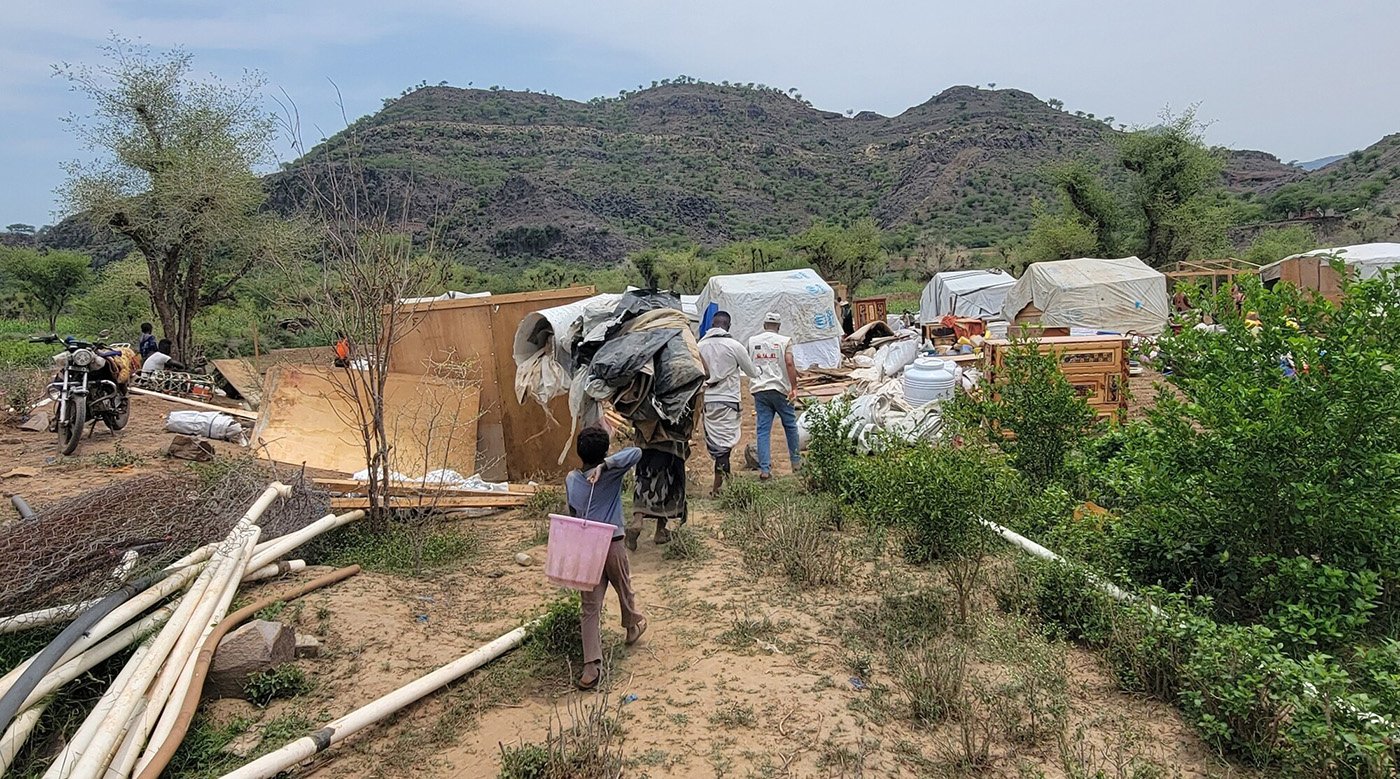
One mother told us how she woke her children after shelling intensified near their home. Her five-year-old son didn’t understand why they had to leave.
“Where are we going, Mama?” he asked.
She told him they were going to visit his grandfather.
“Mama, I want to sleep. In the morning we’ll visit Grandpa,” he replied.
Instead, the family were forced to set out at three in the morning and walk 15 kilometres through the darkness in search of safety.
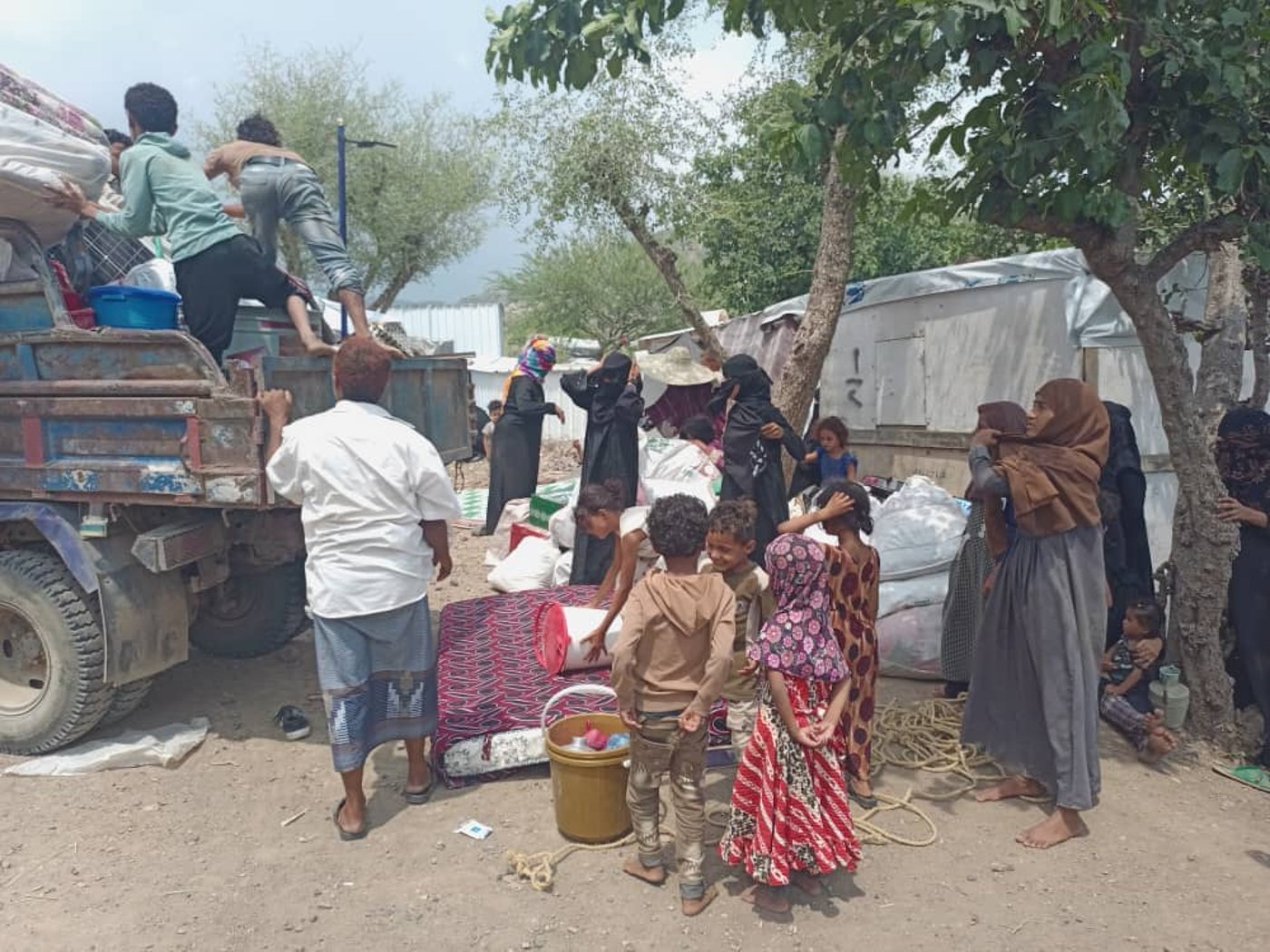
For many of those fleeing, reaching a safer area is only the beginning. Close to three in four newly displaced households don’t have safe shelter, according to the UN. Families have been sleeping outside under trees or crowding into already packed tents and temporary shelters made by sandbags or whatever materials they could find.

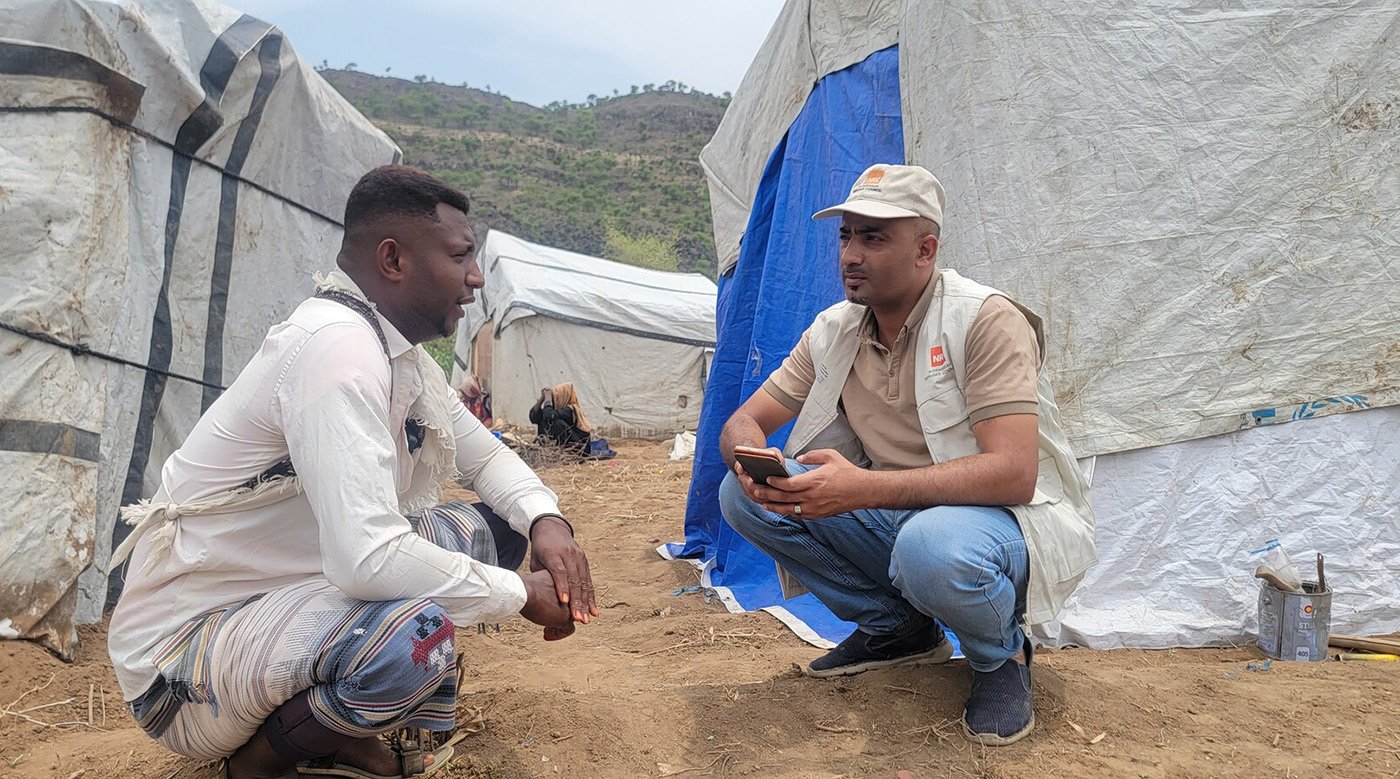
A colleague who recently met with families who had been forced to flee described seven families sharing a shelter designed for one.
“The overcrowding is overwhelming,” our colleague says. “Men are forced to sleep outside in the open because the tents are packed with women and children.”
And for many families, this is displacement on top of displacement. People who had begun rebuilding their lives have suddenly lost what little stability they had regained. Some fled so quickly that they left behind important documents, certificates and basic possessions. Others are now relying on relatives, host communities or families who were already displaced themselves.
Despite the immense pressure, our staff have also witnessed remarkable solidarity. Local families with little to spare have shared food, livestock and firewood with newly displaced people arriving around them.
But local generosity cannot meet needs on this scale, and families urgently need a safe place to sleep, clean water, sanitation, food and other basic supplies.
Another emergency in an already devastated country
The latest displacement is unfolding in a country already facing one of the world’s largest, and neglected, humanitarian crises.
Around 23 million people in Yemen need humanitarian support. An estimated 18.3 million people are facing acute food insecurity, while 2.2 million children under five are acutely malnourished. More than five million people are already internally displaced, many of them having been forced to flee more than once.
For many families, years of conflict, economic decline and repeated displacement have already left little room to cope with another crisis.
Prices for basic goods have been rising in several parts of the country, and the threat of flood season is adding even more pressure. At the same time, Yemen’s humanitarian response is lacking 80 per cent of the funding needed to reach everyone in need, and humanitarian organisations like NRC are trying to respond with severely limited resources.
That means the emergency stocks and services were already stretched thin even before the latest escalation in fighting forced thousands more people from their homes.
“This escalation could not come at a worse time for Yemenis,” says Jan Egeland, NRC's Secretary General.
“In a country where half the population are struggling to put food on the table, and where many children have only known displacement, renewed full-scale conflict would be a blow to millions of families already struggling to make ends meet.”
Shelter, water and sanitation are immediate priorities
NRC currently manages ten displacement camps in Taiz Governorate. Five have emptied as families fled the fighting, while many have sought safety in the five remaining camps. Some were already living in NRC-managed camps and have now been displaced again. Others are arriving there for the first time.
At the five camps receiving newly displaced families, NRC is preparing an emergency response which will include:
- Emergency shelter kits, with tarpaulin, wooden poles, plywood, nails and a hammer. Families can use these materials to build a shelter measuring around six by four metres.
- Emergency response kits, including a mattress, blanket, bowls and utensils, soap and a solar battery for lighting.
- Latrines, providing families with access to safer sanitation.
But the existing camps cannot accommodate everyone, and NRC is now setting up an additional displacement site for hundreds of families. Funding is limited and organisations such as NRC need more to be able to meet the level of needs for families that lost everything they had.
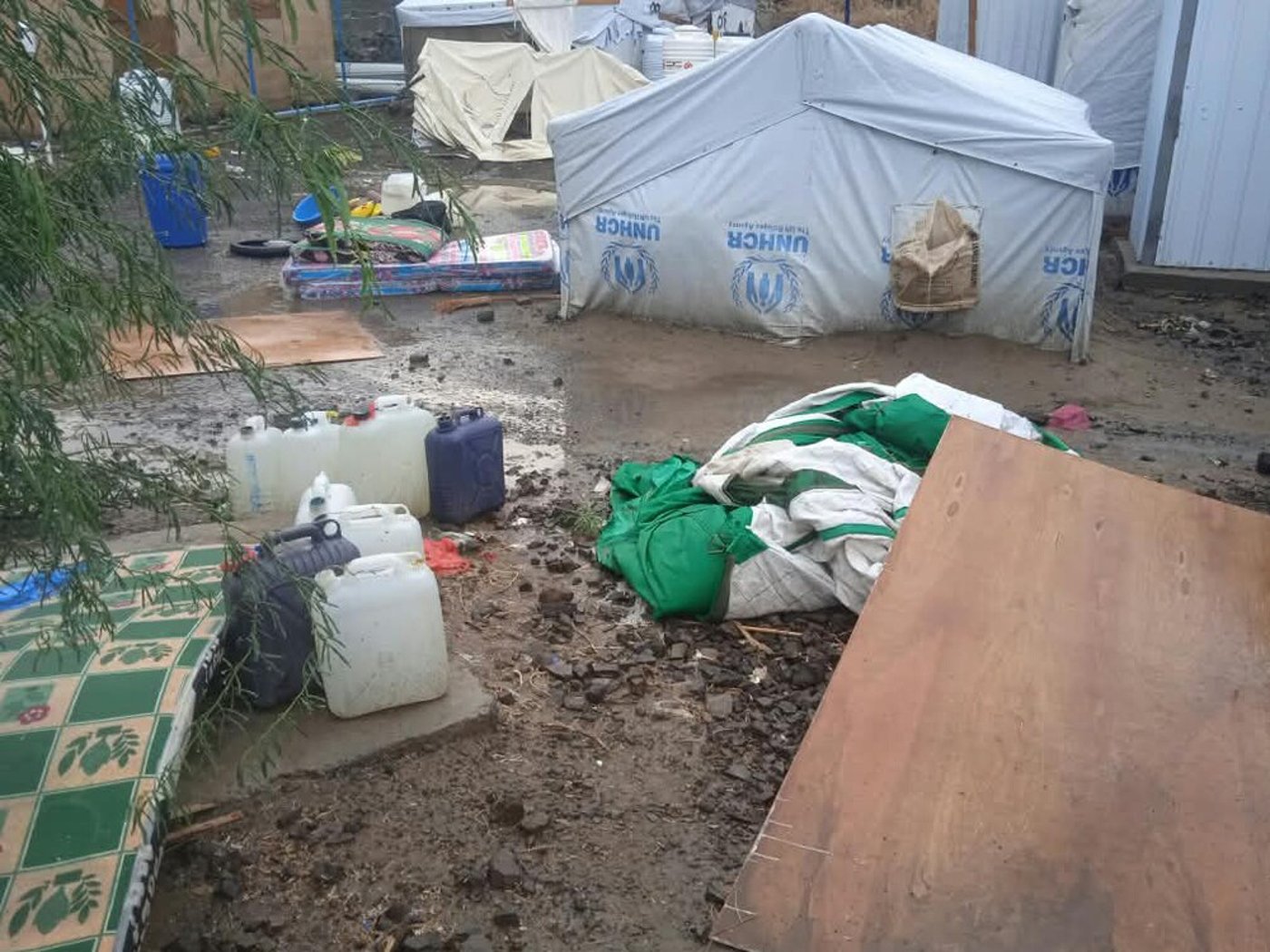
Our emergency response means that families who have been forced to flee can receive materials to build somewhere safe to sleep and kits that include the very basics they need. NRC is also building latrines to meet the new demands at old sites and new sites.
But the scale of needs is growing quickly. Many families have sought shelter with host communities or wherever they can find space. Some are sleeping in extremely basic conditions, but NRC does not yet have the resources to respond everywhere people have fled. Humanitarian organisations simply cannot reach everyone in need without more funding. Years of reduced humanitarian support have already led to deep cuts in essential services across Yemen, including food, nutrition and healthcare. NRC has ranked Yemen among the most neglected displacement crises in the world.
The latest escalation shows what that neglect means when another emergency hits. Families flee, but there are fewer resources waiting for them when they finally reach safety.
Read our neglected crises list here.
Tired of running
“This is not the first time I have been displaced, and I am afraid it will not be the last,” Ammar said.
“But I am telling my story because I want the world to know what is happening to us. I want you to know that we are not numbers. We are not just displaced people. We are innocent, poor families. We are human beings. And we are tired of running and escaping our lives.”
As fighting continues, civilians must be protected and allowed to reach safety. Families forced from their homes need immediate humanitarian assistance, and the people in Yemen need sustained international support, not further neglect.
And above all, Yemen needs a lasting peace that allows families like Ammar’s to stop fleeing and, instead, begin rebuilding their lives.
“All I want, all any of us want, is to sleep through the night without fear. To wake up in the morning without the sound of bombs. To live with dignity, in safety, in peace. That is not too much to ask. That is what every person of us deserves.”
