
Years of conflict have displaced millions of Yemenis, leaving families to face daily challenges that extend far beyond the loss of their homes. At Mohassam Al-Yami internally displaced people (IDP) site in Al-Zuhrah District, Al Hudaydah Governorate, access to water became one of the greatest hardships, consuming hours each day and affecting families' wellbeing.

When water came closer, time returned to Ali’s family
Ali, 55, a teacher and father of nine has lived this reality since fleeing Haradh District. Every morning began with repeated journeys to nearby wells and farms, walking long distances several times a day to secure enough water for his family's basic needs.
"Every morning, the first thing on our minds was how we would find enough water for our family before anything else," he says.
The burden extended far beyond the physical effort. Ali spent hours collecting water, while his children sometimes missed school to help him. When nearby sources ran dry, he had no choice but to buy water using money intended for food and other household needs.
Responding to priorities identified by the community, the Norwegian Refugee Council (NRC), with funding from the European Union and as part of the Yemen Displacement Response (YDR) Consortium, installed a solar-powered pumping unit and a water transmission line at Mohassam Al-Yami IDP site, bringing water closer to displaced families.

Today, water is available close to Ali's home, ending the long daily journeys that took up much of his day. The hours he spent searching for water are now devoted to his work, caring for his family and supporting his children's education.
"Today, I have more time for my family because collecting water no longer takes away most of our day," he says.
Although the water is intended for domestic use rather than drinking, it has significantly reduced one of the family's greatest daily burdens. His children attend school more regularly, and the family has regained a stronger sense of stability after years of displacement.
"The distance may seem small to others, but for us it has brought back comfort and renewed hope,” says Ali.
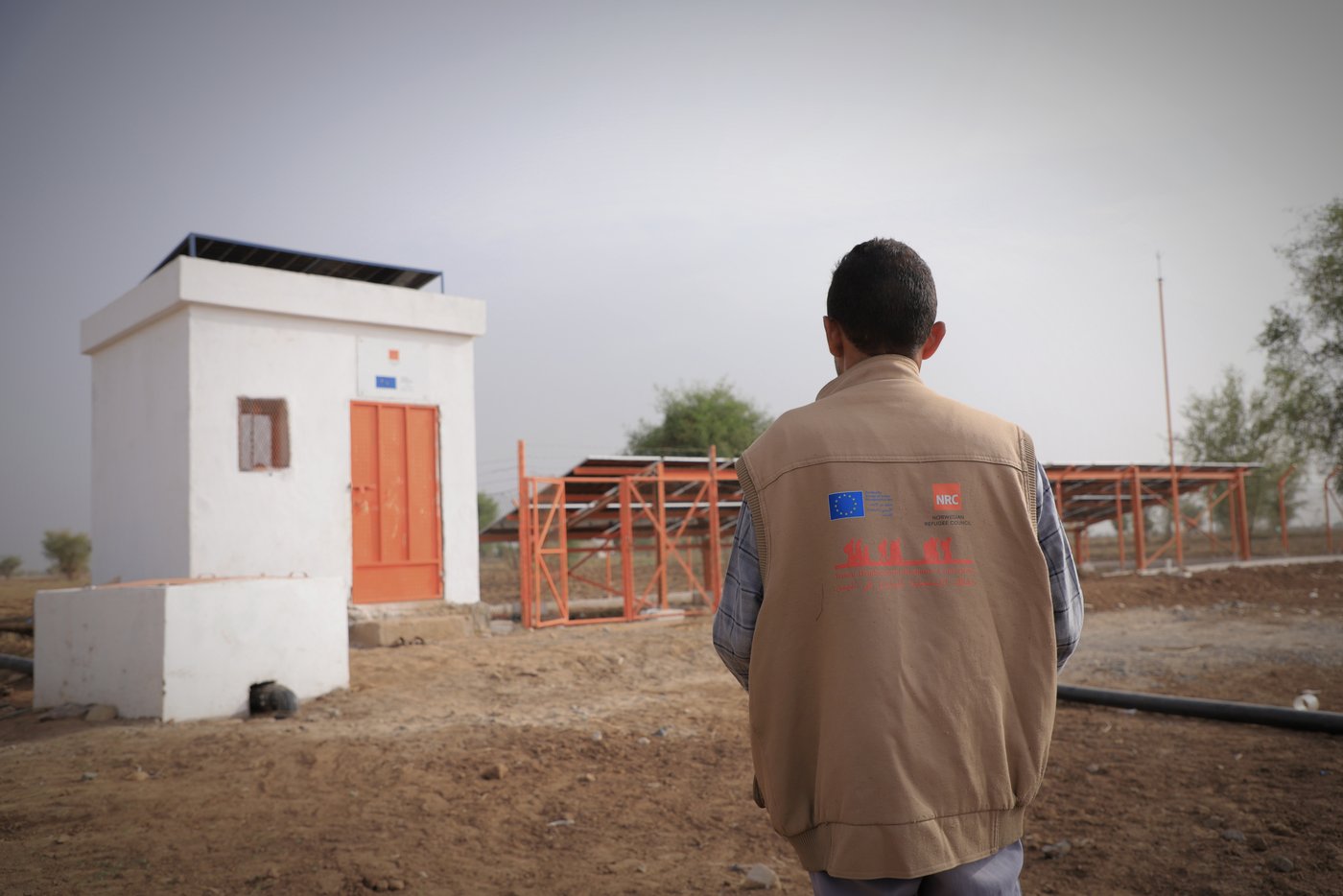
Ali's story reflects the experience of many displaced families in Mohassam Al-Yami IDP site.
Through the YDR Consortium, NRC, with funding from the European Union, has improved access to water for around 450 displaced families – approximately 2,610 people – bringing water closer to households and significantly reducing the time and effort required to collect it.
This has enabled families to dedicate more time to livelihood activities, education, and caring for their loved ones. For thousands of displaced individuals, improved water access is not only about meeting a basic need. It is about restoring dignity, strengthening resilience and creating opportunities for a more stable and secure future.
Sign up to our newsletter to read more stories from around the world.
