


Children living in Juba's displacement camp, South Sudan, are back in classrooms after years of studying under trees. But many still lack books, legal documents and safe access to school, putting their education at risk.

The chance to keep learning
New classrooms
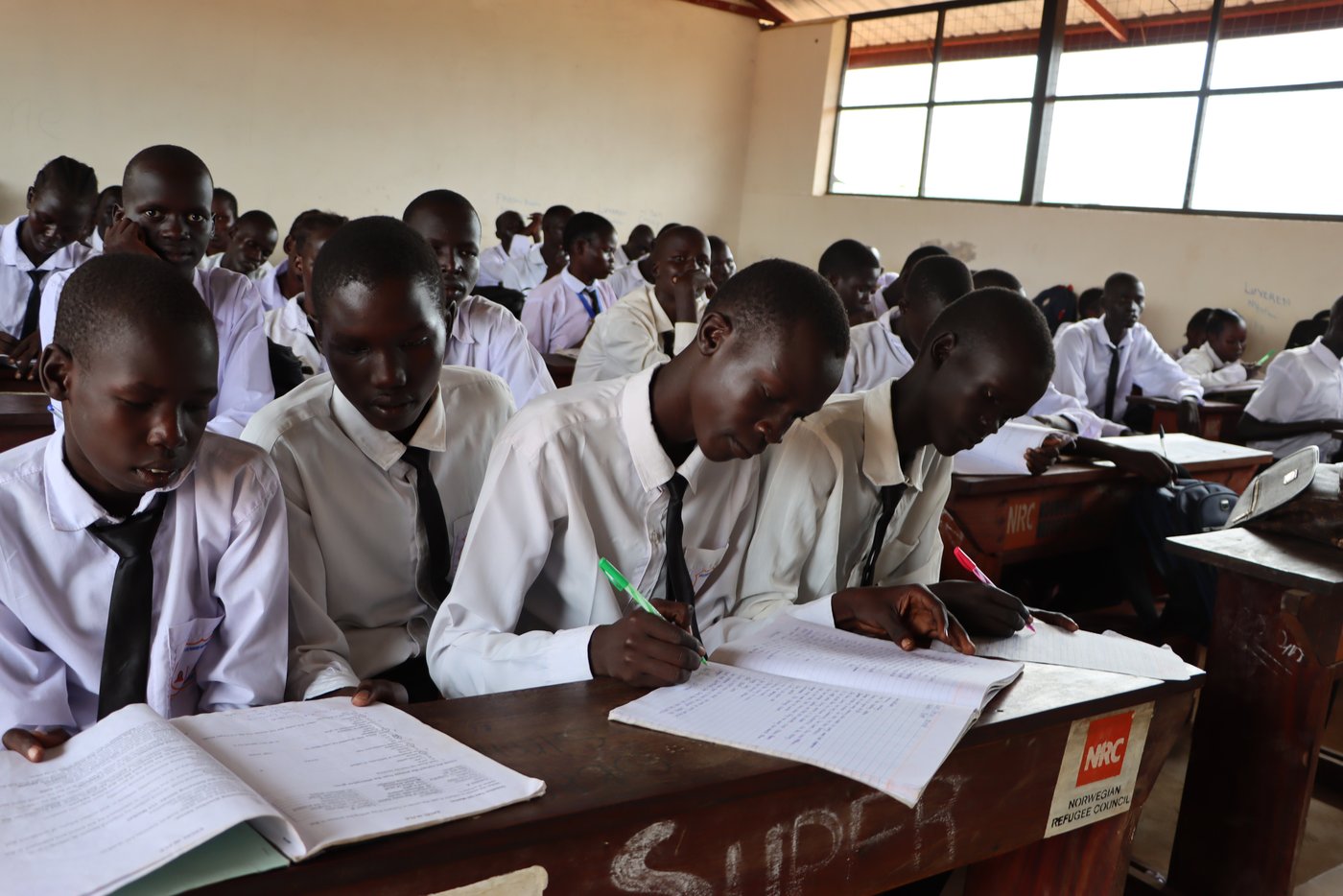
Every school day, Nyehok Med Chuong walks into a classroom she once wished for. As a Primary Eight pupil at Hope Primary School, she described the challenges learners previously faced and called for further assistance.
"We used to study under a tree, and whenever it rained, our learning was disrupted," she says. "Our books would get wet, and strong winds made it difficult to continue with classes. Many learners dropped out because of these poor conditions."
She says having classrooms has changed school life.
"Since [the Norwegian Refugee Council (NRC)] built classrooms, the number of learners has increased because we can now study without disruptions from rain or wind," she adds.
But the new classrooms are not enough to accommodate every child.
"We received scholastic materials from NRC in April, but they were not enough.” Nyehok says. “Many of our parents do not have stable incomes, so we cannot afford books, pens and other learning materials. We hope more support can be provided."

Outside the classroom, Nyehok heads to the school's journalism club, where pupils share news with their classmates every morning.
"I lead the journalism club, which has about 22 members. We share current affairs with fellow pupils every morning during parade, mostly through news I gather from radio stations. However, we lack a speaker to amplify my voice so all pupils can hear clearly.”
Proving who they are
Across the school, 17-year-old Malow Gatkuoth Malow shares how displacement has affected his education.
"My sister and I came to Juba from Nasir County in Upper Nile State because of the armed conflict in our village. Initially, we studied under a tree, but thanks to NRC, we now have a better learning space."
For Malow, however, the biggest challenge is proving who he is.
"Many of us were born during the conflict and do not have birth certificates or proof of nationality. This becomes a major problem during national examinations, where displaced learners are sometimes treated as non-South Sudanese. Thanks to NRC for processing the age assessment certificates."
He says some learners have received help, but many are still waiting.
Yearning to learn
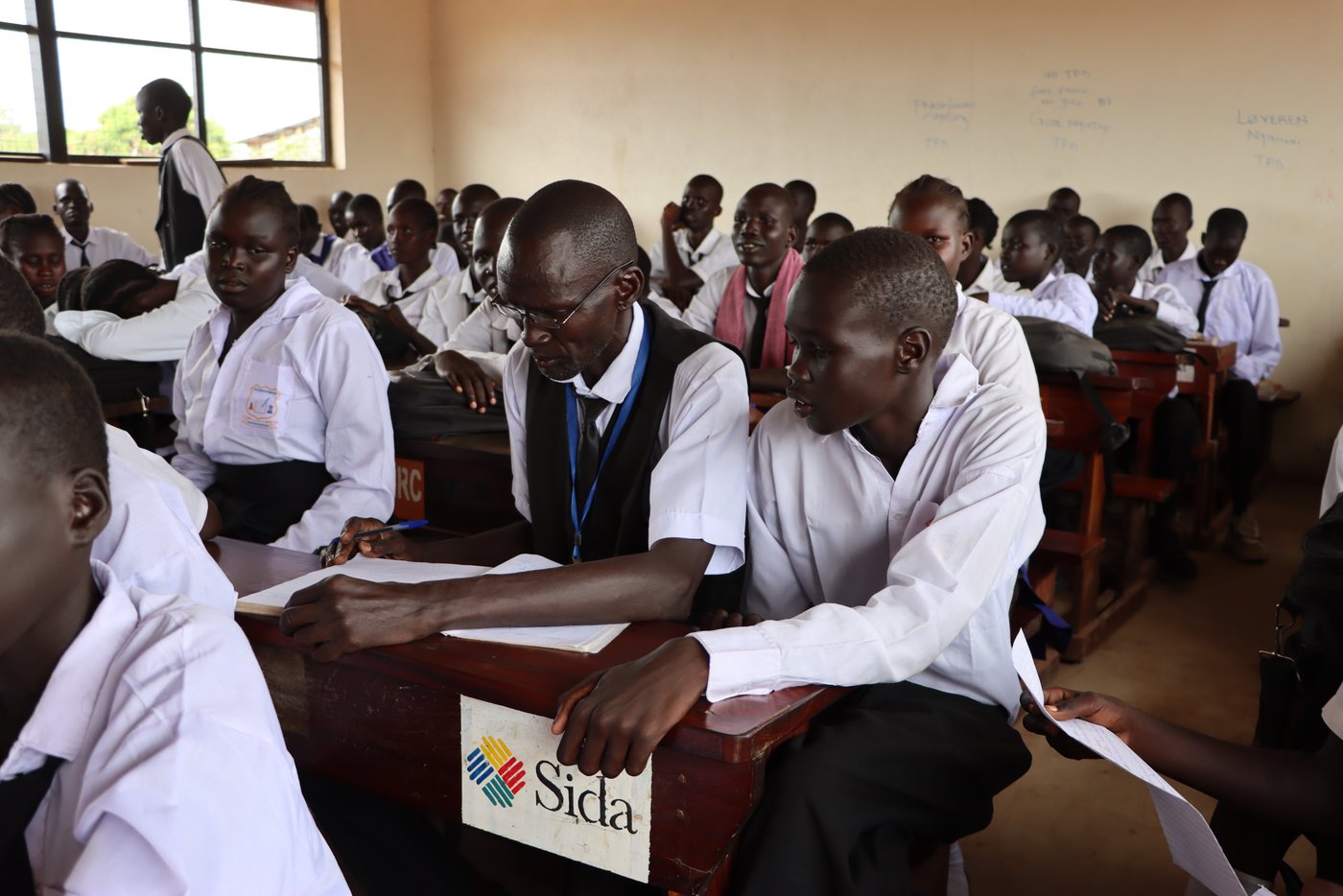
At 53 years old, Abraham Kang Kuol is one of the oldest pupils at Hope Primary School. His journey back to education has taken decades.
"I did not have the opportunity to attend school when I was young due to a physical disability and continuous conflict in my home area,” says Abraham.
He later enrolled in school in Uganda but had to leave because he could not afford to continue.
"I have now come to the camp to finish my primary education and hope to become an evangelist in the future."
Remaining challenges
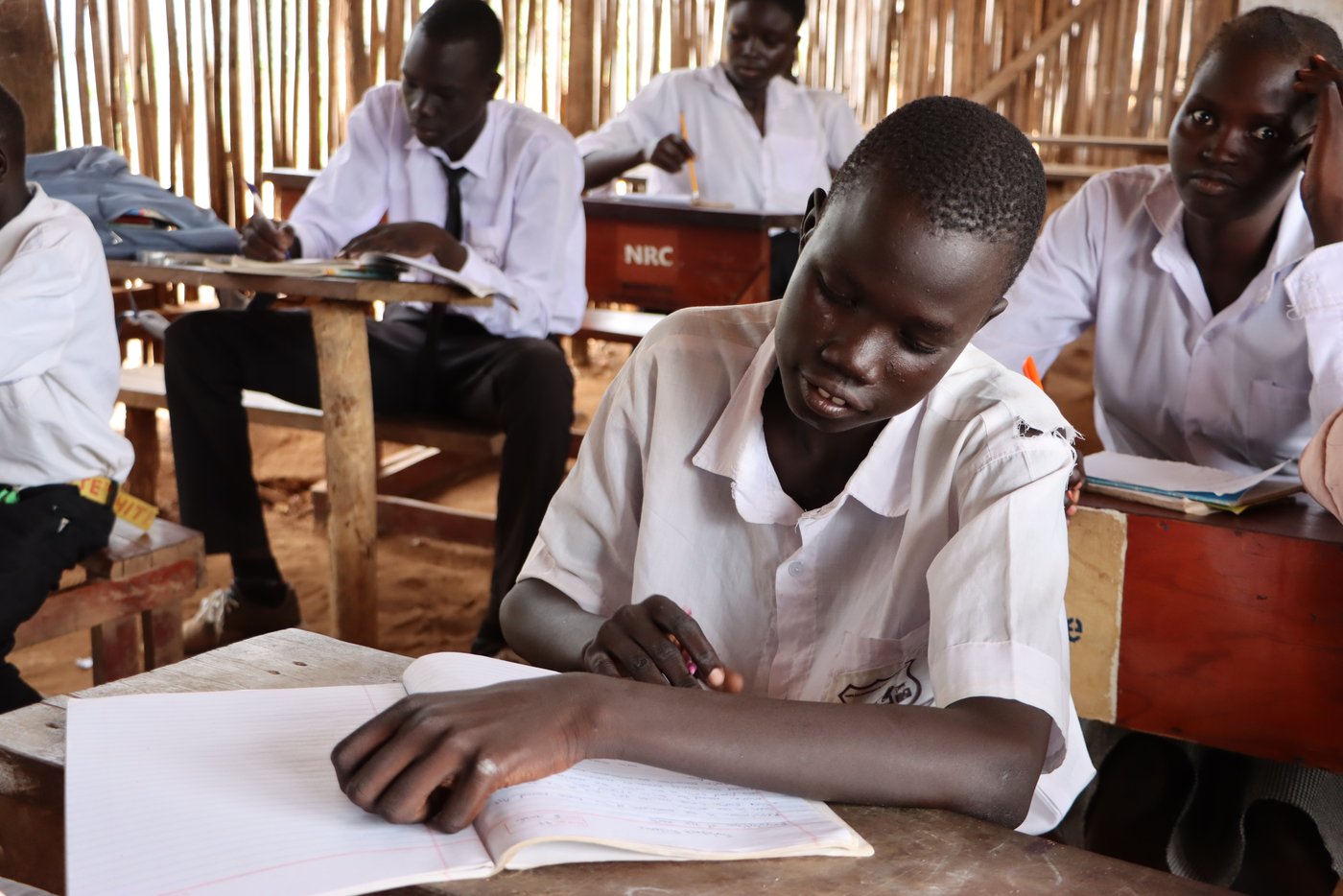
Meanwhile, Beny Mazoy Kueny, a 16-year-old Primary Six pupil, added that theft remains a serious problem within the camp.
“I was robbed of my school materials, including my books and bag. Some individuals target pupils on their way to or from school and steal their materials.” Beny says “We also need a proper fence to protect learners and recreational facilities to encourage children to attend school.”
The Norwegian Refugee Council, with funding from the Norwegian Government, supports families in the camp by helping children access legal documentation, training teachers and improving school infrastructure.
In addition, NRC has strengthened the education system by training teachers and supporting Parent-Teacher Associations (PTAs).
Despite these efforts, limited funding continues to constrain the reach of humanitarian support, leaving many learners underserved. As a result, affected children and communities continue to appeal for increased assistance to address the persistent challenges they face.
Sign up to our newsletter to read more stories from around the world.
