
When the only borehole at Manyiel primary school broke down, children left class to look for water and often were too exhausted to return. Now that the water is back, the school’s head teacher, Joseph Akech, can grow vegetables and sell them to pay for school supplies.
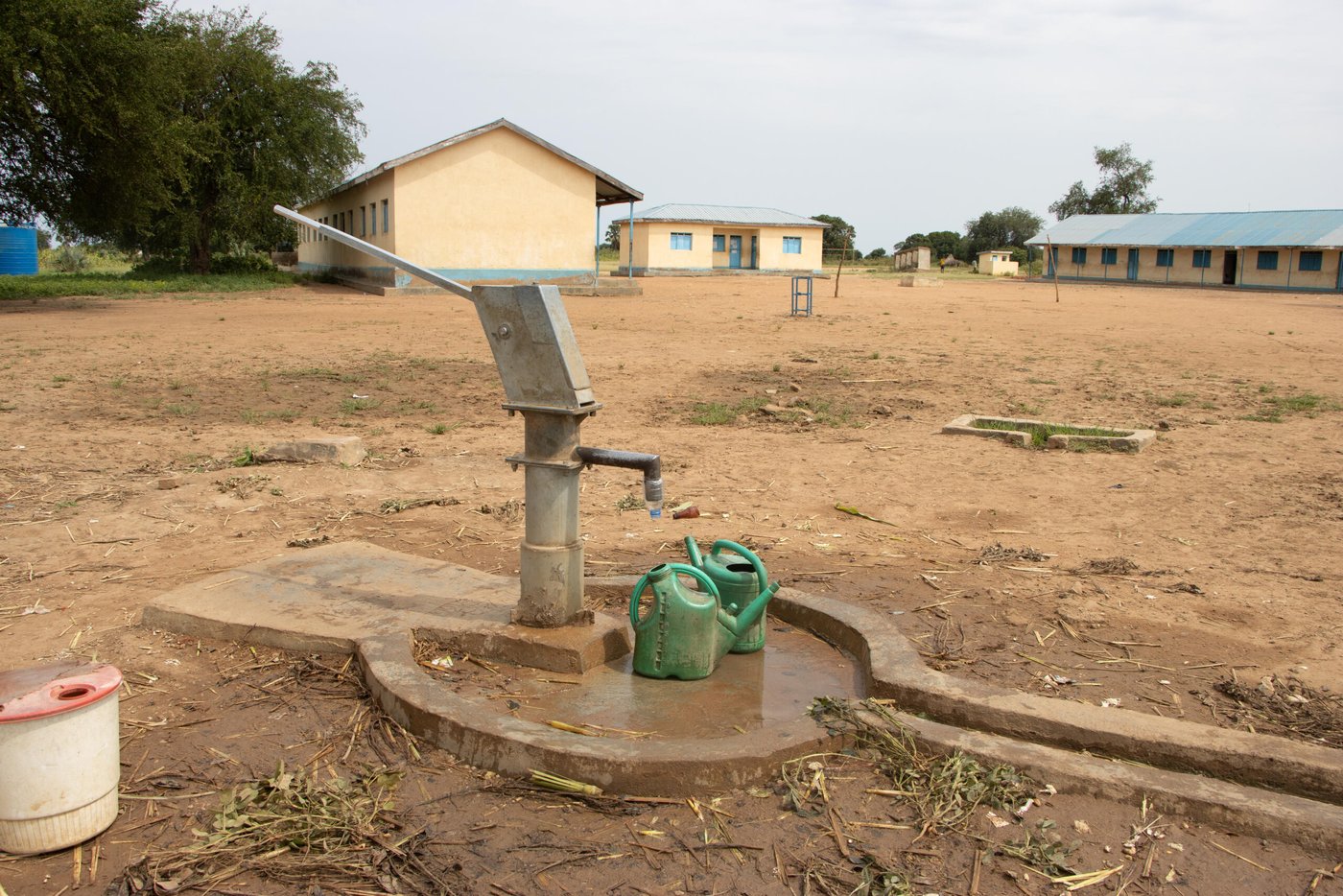
The borehole that keeps Manyiel primary school going
Manyiel primary school in Aweil East County, Northern Bahr el Ghazal State, South Sudan, was set up in 2008 through the Government's Constituency Development Fund (CDF). There are very few schools in the area, so children come from the surrounding villages. At one point, more than 700 students were enrolled.
In late 2025, the school's only borehole broke down. Without safe drinking water, attendance and learning were affected. Children who walked long distances to school struggled to find water during the day, and poor sanitation made the school a harder place to learn in. Nearly 80 students had to drop out.
“Our challenge was the lack of water,” says Joseph Akech, the head teacher of Manyiel primary school. “Children would leave the school during break time to search for water and often did not return to class.”
In addition, there was little money to run the day-to-day of the school. Teaching materials were scarce and teachers had little support. Basic supplies such as chalk were often missing, which affected lessons.
With funding from the South Sudan Humanitarian Fund (SSHF), the Norwegian Refugee Council (NRC) rehabilitated the school's borehole and built a new latrine block. Learners and teachers now have safe water and better sanitation.
The borehole now gives the school a reliable supply of safe drinking water on its own compound, so children no longer need to leave in search of it. The new latrines have improved hygiene, giving students a healthier and more dignified place to study.
Akech says the changes are already making a difference, and he expects more children to come back to school.
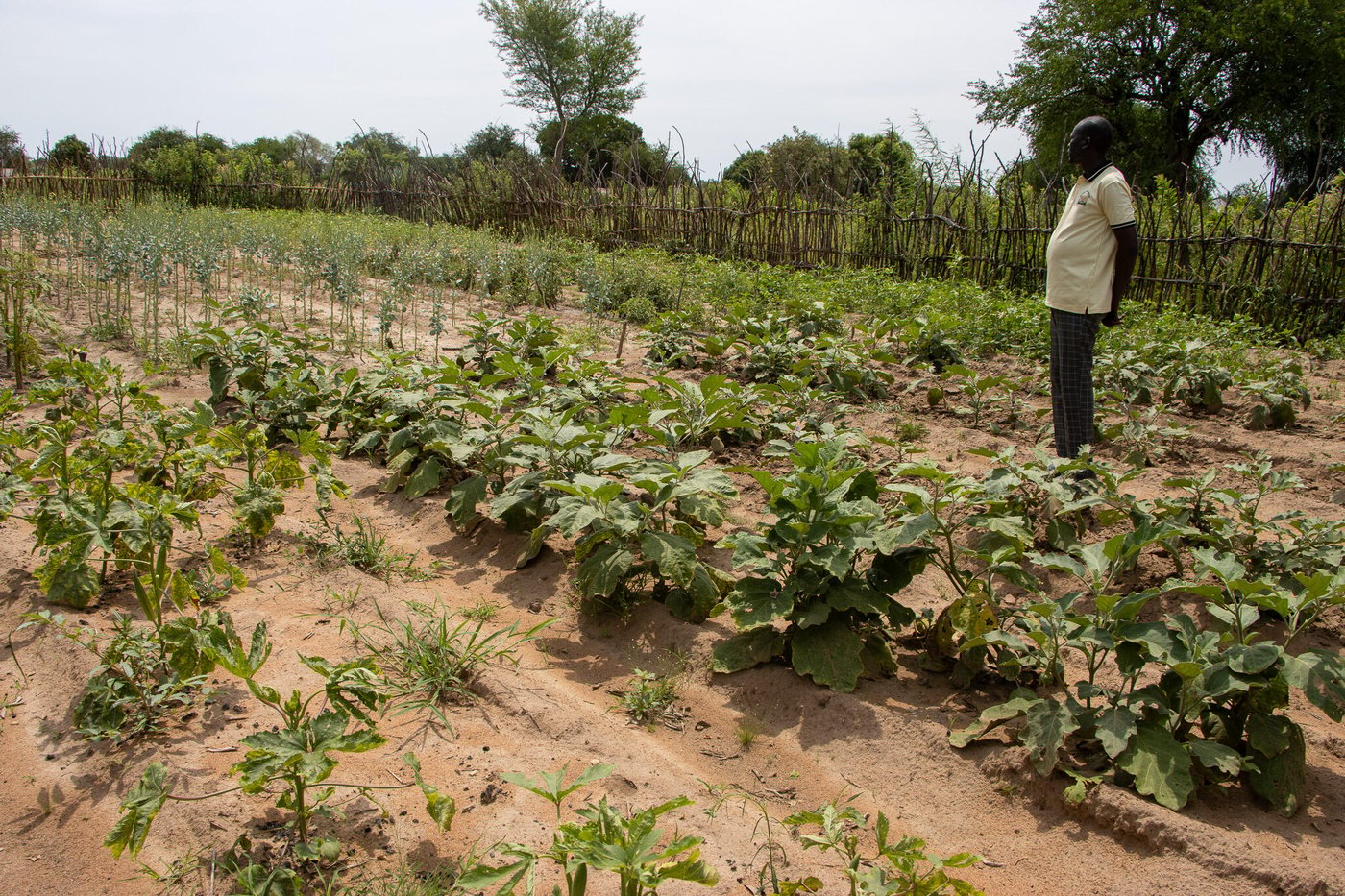
“Improved access to water and sanitation is giving students greater confidence in returning back to school,” Akech says. The borehole is doing more than providing drinking water. Akech has started a school garden, and the school now uses water from the borehole to grow vegetables and other crops. The vegetables improve the students’ nutrition, and selling the produce brings in some income.
“We use the school garden, powered by the borehole, to improve nutrition and generate income, which we use to buy chalk and other school materials,” says Akech.
Money from the sale of produce pays for teaching essentials and helps cover other running costs. That takes some pressure off a school with very little money to spend. The crops also mean better nutrition for students and teachers.
“The garden will continue operating even when the school is closed so that it can keep generating income to support school activities,” he adds.
Akech says the school still faces challenges, especially a shortage of classroom benches.
“We do not have benches in our classrooms. Students sit on the floor while attending lessons, and this remains one of the reasons why some children do not regularly attend school. They do not want to sit on the dirty floor and soil their clothes,” says Akech.
As more children are expected to enrol, the school is also appealing for a water supply station and more learning materials.
Through the SSHF-funded project, NRC has rehabilitated 50 boreholes and built five water yards across the five villages of Aweil East County in South Sudan. Thousands of people now have better access to safe drinking water.
Sign up to our newsletter to read more stories from around the world.
