
For years, families displaced by conflict in Yemen have sought safety in Al-Kud displacement site in Khanfar District, Abyan Governorate. Yet for many, safety remained elusive as makeshift shelters offered little protection from fire, harsh weather or insecurity.
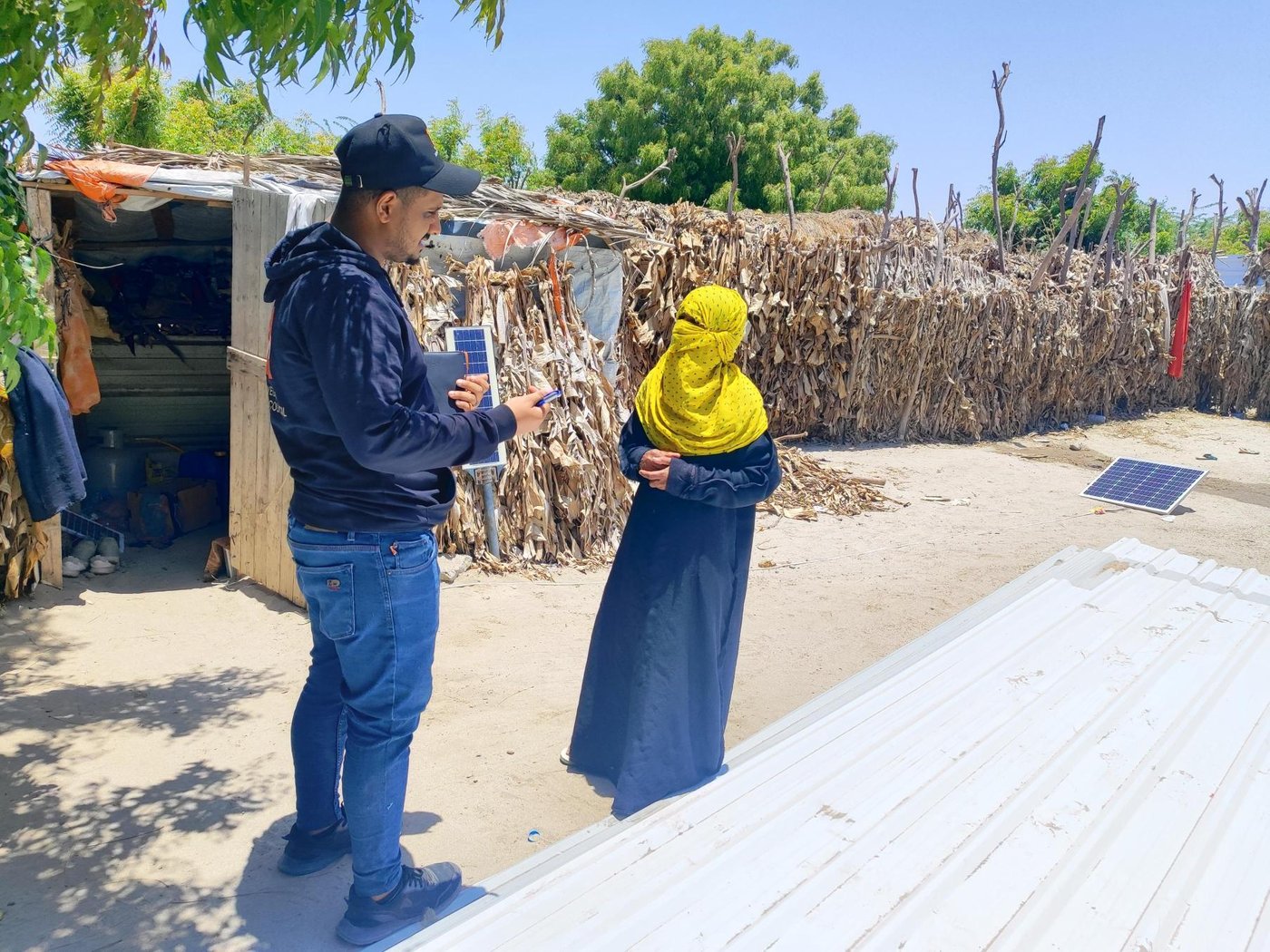
Securing homes in Al-Kud, Yemen
Among those affected is Salma, a mother of three and the head of her family.
After her husband was seriously injured in a traffic accident, Salma became solely responsible for supporting her family. Having fled conflict in Taiz, she and her children have spent the past eight years trying to rebuild their lives while facing the challenges of an unsafe shelter.
"Whenever I left for work in the nearby farms, I worried constantly about my children," Salma recalls. "Our shelter offered very little protection, and I was always afraid something might happen while I was away."
Like many displaced families in Al-Kud, Salma lived in a simple home made from wooden poles and banana leaves.
Several fires incidents had already occurred within the site, increasing anxiety among residents and highlighting the need for safer shelter conditions.
To address these challenges, the Norwegian Refugee Council (NRC), with support from the European Union, implemented a site care and maintenance intervention in Al-Kud site. Working closely with the community, NRC provided families with safer shelter materials to replace the highly flammable banana leaves used in their shelters, reducing fire risks while improving privacy, protection and living conditions.
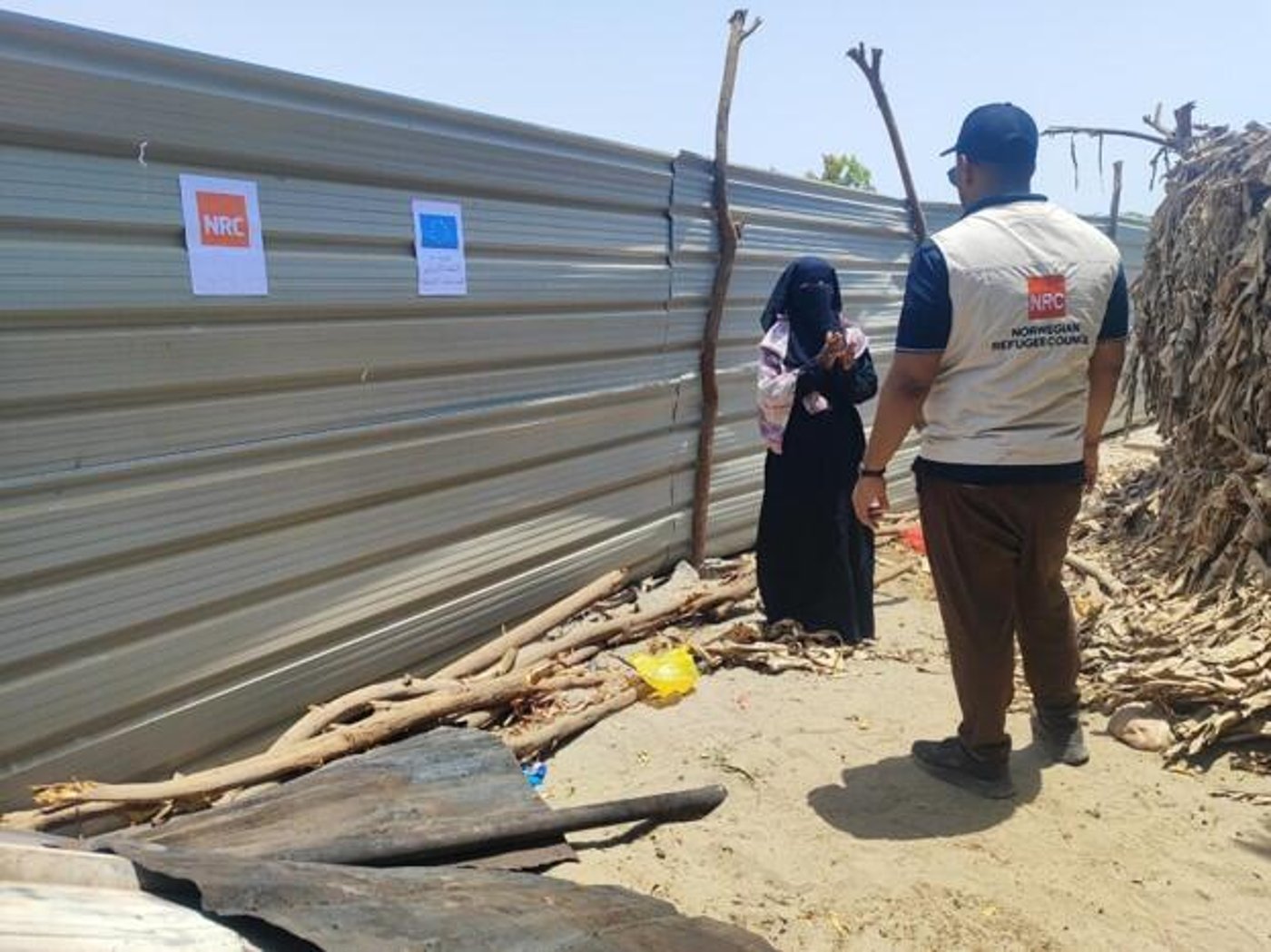
After sharing her concerns with the NRC team, Salma’s family received materials to improve their home. The changes immediately made a difference.
"Now I can go to work with greater peace of mind, knowing my children are safer at home," she says.
Salma's story reflects the experience of many families living in Al-Kud displacement site. Through the Yemen Displacement Response (YDR) Consortium, NRC, with funding from the EU, has helped 1,308 displaced people access safer shelter conditions that reduce fire risks and improve protection across the site. By replacing hazardous shelter materials with safer alternatives, the intervention has strengthened community safety.
While many humanitarian needs remain, including access to livelihoods and durable solutions, safer shelters provide families like Salma's with greater security and stability as they continue to rebuild their lives.
With support from the European Union, NRC is strengthening the safety and resilience of displaced families through immediate protection and risk-reduction measures.
At Al-Kud site, 73 families (315 individuals) received fire-safety support, including materials to replace flammable banana-leaf shelter components with zinc sheeting, helping reduce fire risks and limit the spread of flames.
Through community-based programming, 220 families (1,025 individuals) benefitted from safer cooking-space barriers, while 69 families (314 individuals) participated in cash-for-work activities to construct latrines.
Additionally, 90 families (490 individuals) received solar lighting support, improving safety and living conditions.
Sign up to our newsletter to read more stories from around the world.
