
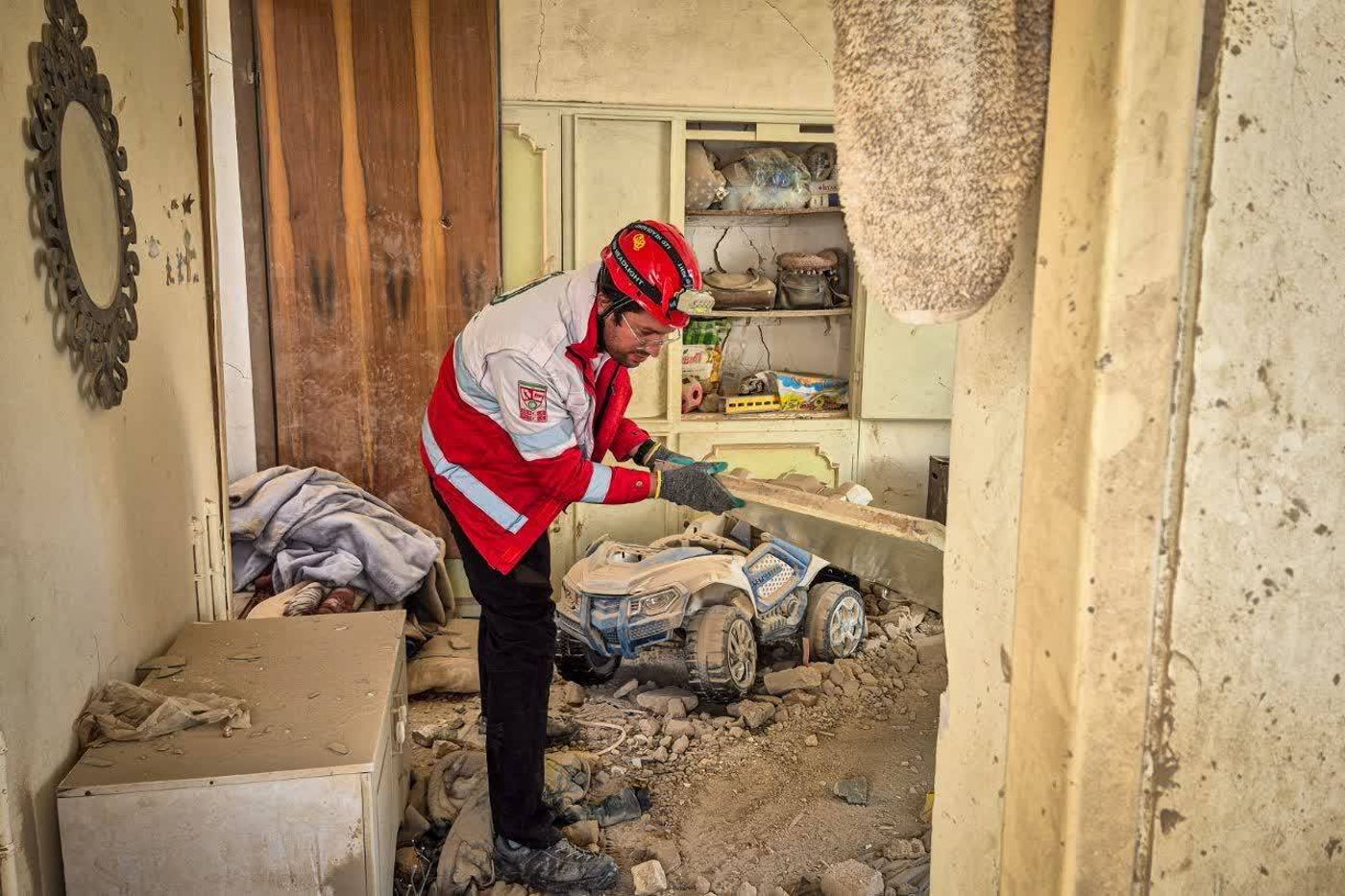
In a small town in north-west Iran, a family of five sits inside a damaged home with cracked walls and broken windows. Dust is still in the corners where parts of the ceiling collapsed during the air strikes.
Iran: the small things that war takes away
The parents are both over 60 years old, and one of their children lives with a disability. Like many families affected by the war, they are trying to rebuild their lives while surrounded by the uncertainty of the ceasefire.
A staff member from the Norwegian Refugee Council (NRC) is documenting the damage with the family, and discussing what support they might need. We provided them with cash so they would be able to meet their immediate needs. In the middle of the conversation, the family’s young daughter interrupted.
"My laptop was also destroyed in the strike,” she says. “I understand that our house is nearly ruined, and I know people have lost their homes. I know it might seem insignificant compared to everything else.”
For many young people in small towns, a laptop can be a connection to education, language learning, work opportunities, and a future beyond isolation and economic hardship.
In a war that destroys homes and livelihoods, the loss of a laptop also means the loss of comfort, distraction, learning and dreams.
Across Iran, civilians continue to bear the heaviest burden of the conflict. According to the government, more than 126,000 civilian structures, including homes, schools, businesses and health facilities, have been damaged. Millions of people were displaced during the escalation of hostilities. Simultaneously, rising inflation and job losses continue to deepen hardship for vulnerable families, including Afghan refugees, women, children, older people and people with disabilities.
While helping others, local NRC teams and partners have been carrying their own experiences of war. Some of NRC’s staff members have been displaced or forced to leave their homes during the escalation. Still, they continue supporting affected communities across the country.
Since the escalation began, NRC and local partners have been responding to the growing humanitarian needs across Iran. They have been supporting displaced Iranians and Afghan refugees through the provision of psychosocial support, education assistance, school repairs and cash assistance.
Beyond the numbers and the damage, colleagues listen to people’s stories of grief, resilience, generosity and the things the war takes away from them. Sometimes, those losses are homes. Sometimes they are livelihoods. And sometimes, they are a young girl’s laptop and everything it represented for her future.
NRC’s response to the war in Iran is funded by Norway and the Swedish International Development Cooperation Agency (Sida).
NRC in Iran
Since 2012, the Norwegian Refugee Council (NRC) has been assisting Afghan refugees in Iran as well as affected Iranians. We protect people's rights and deliver essential services to improve living conditions. Together with our partners, we deliver assistance in the following areas: cash and livelihoods, education, shelter, water, sanitation and hygiene, legal assistance, and protection. We operate across nine provinces: Alborz, Tehran, Yazd, Hormozgan, Kerman, Qom, Razavi Khorasan, Markazi, Sistan and Baluchestan. When disasters strike, we expand our programmes to help, and our emergency response team assists people affected to recover quickly.
Read more about our work in Iran
