
The fire happened before the war did. Meseret Chanie's 5-year-old son was badly burned, an accident that happened fast and terrible the way accidents do. She managed as she always had. After her husband left, Meseret raised four children alone in Raya Alamata, Ethiopia, working and building a life small and solid.
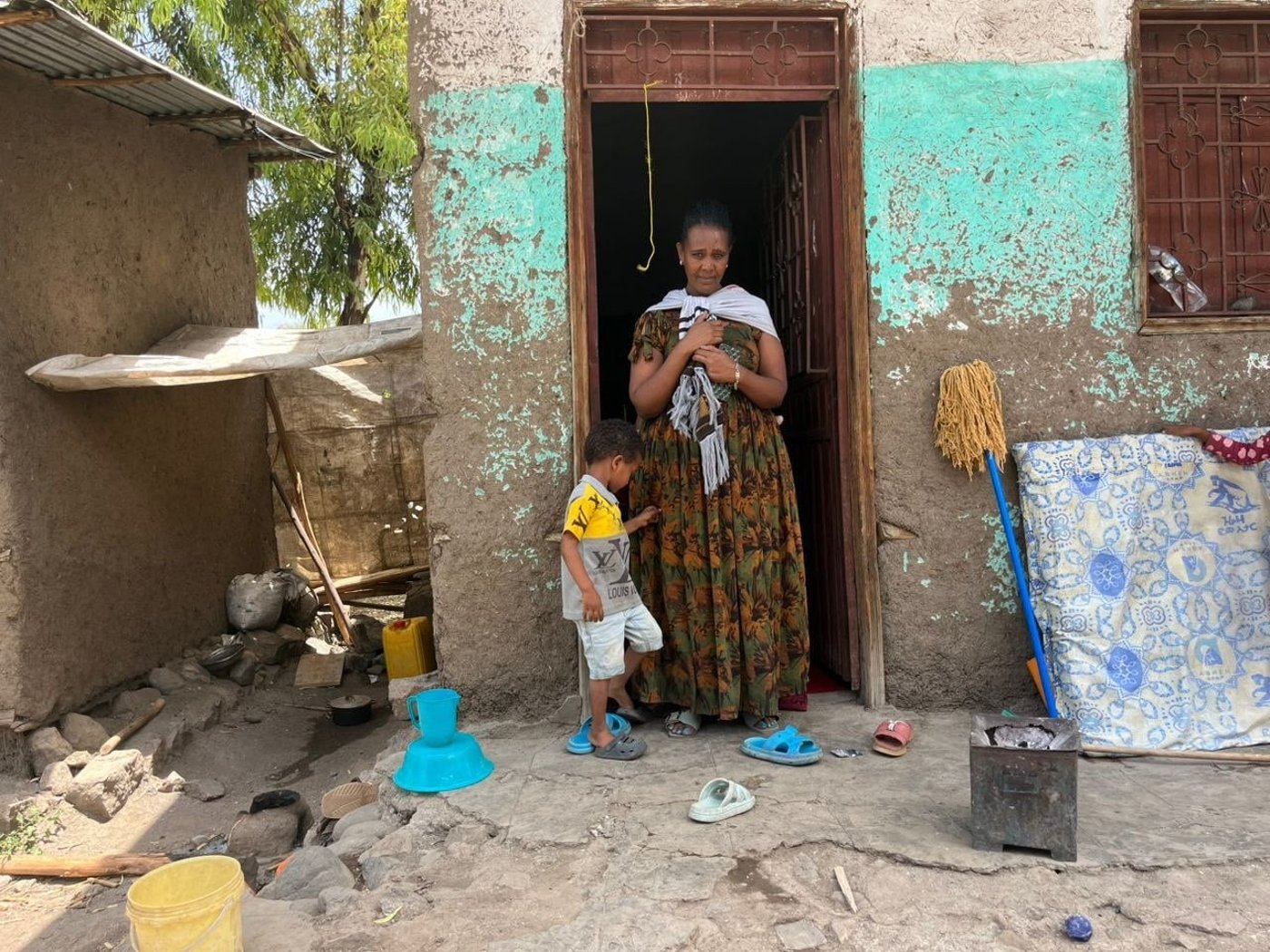
"In my town, I had a way to provide. Here, I have nothing but hope."
Then conflict came, and managing stopped being enough.
Meseret fled to Kobo town with her children. She found a single room and paid for it with money borrowed from friends and family. She couldn't look for work, her infant needed constant care, and her son's burns still needed attention she couldn't afford. She sat with the rent notice in her hand and did the calculations over and over, and it kept coming out the same way.
"In my town, I had a home and a way to provide,” she says. "Now, I have nothing but the hope that my children will survive this."
As more displaced families poured into Kobo, landlords increased the rent prices. What Meseret had budgeted for became impossible. The borrowed money was gone, and the room would be next.
The Norwegian Refugee Council (NRC) identified Meseret through its vulnerability assessment and enrolled her in the cash for rent programme, funded through the Ethiopian Humanitarian Fund with USG support. Six months of rent were paid in full, and the eviction that had felt inevitable did not come.
Her son still needs follow-up medical care for his arm, and the family still relies on neighbours for food. There is no comfortable ending here, only a breathing space that didn't exist before.
But Meseret keeps the appointment card for her son's next check-up folded in cloth near her bed. She has not given up on it. That, too, is something.
Sign up to our newsletter to read more stories from around the world.
