


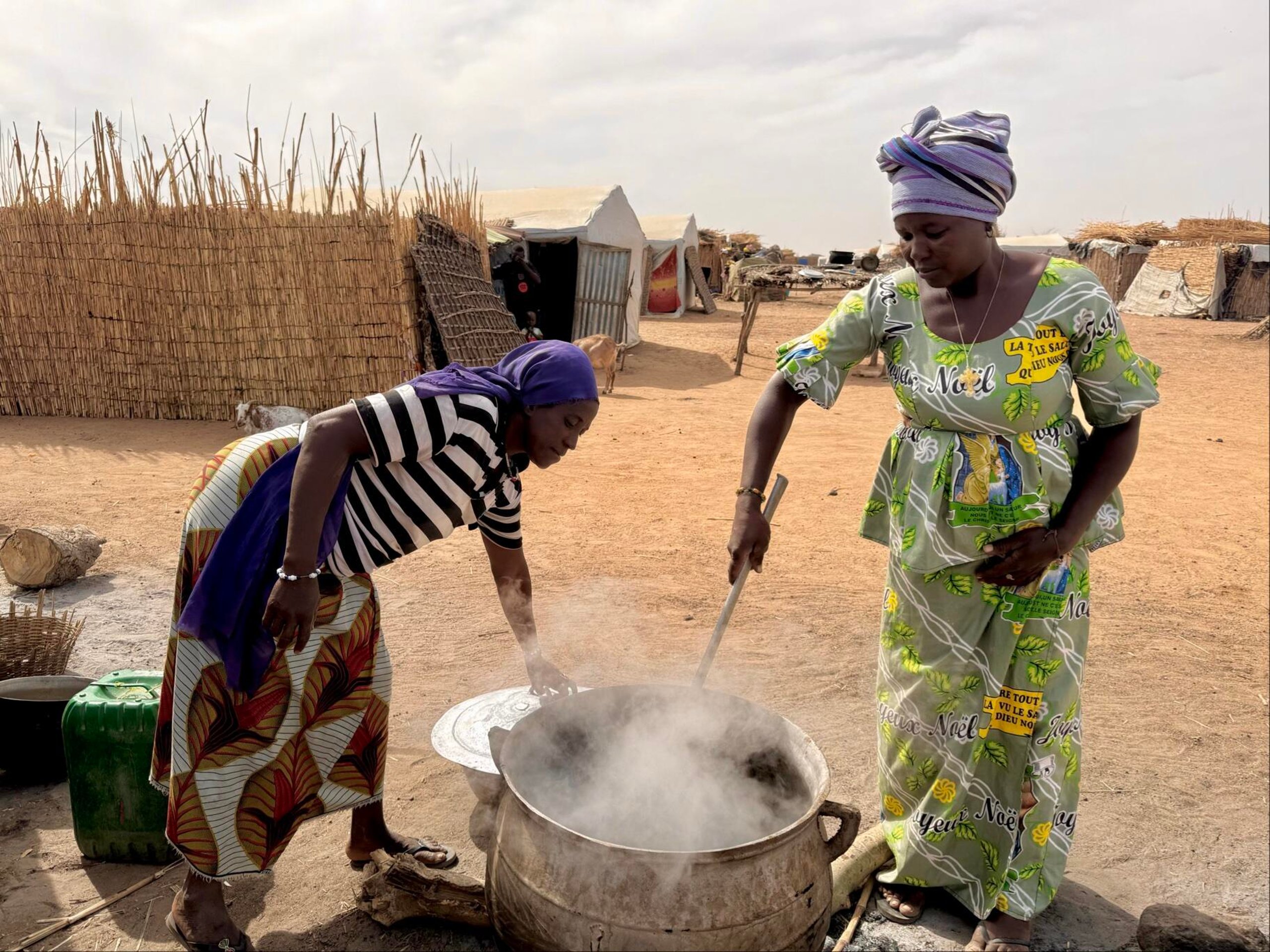
In the Torodi displacement site in Dori, northern Burkina Faso, mornings begin with smoke rising slowly into the Sahelian sky. Around a large metal pot, women gather, talking while they stir boiling seeds.
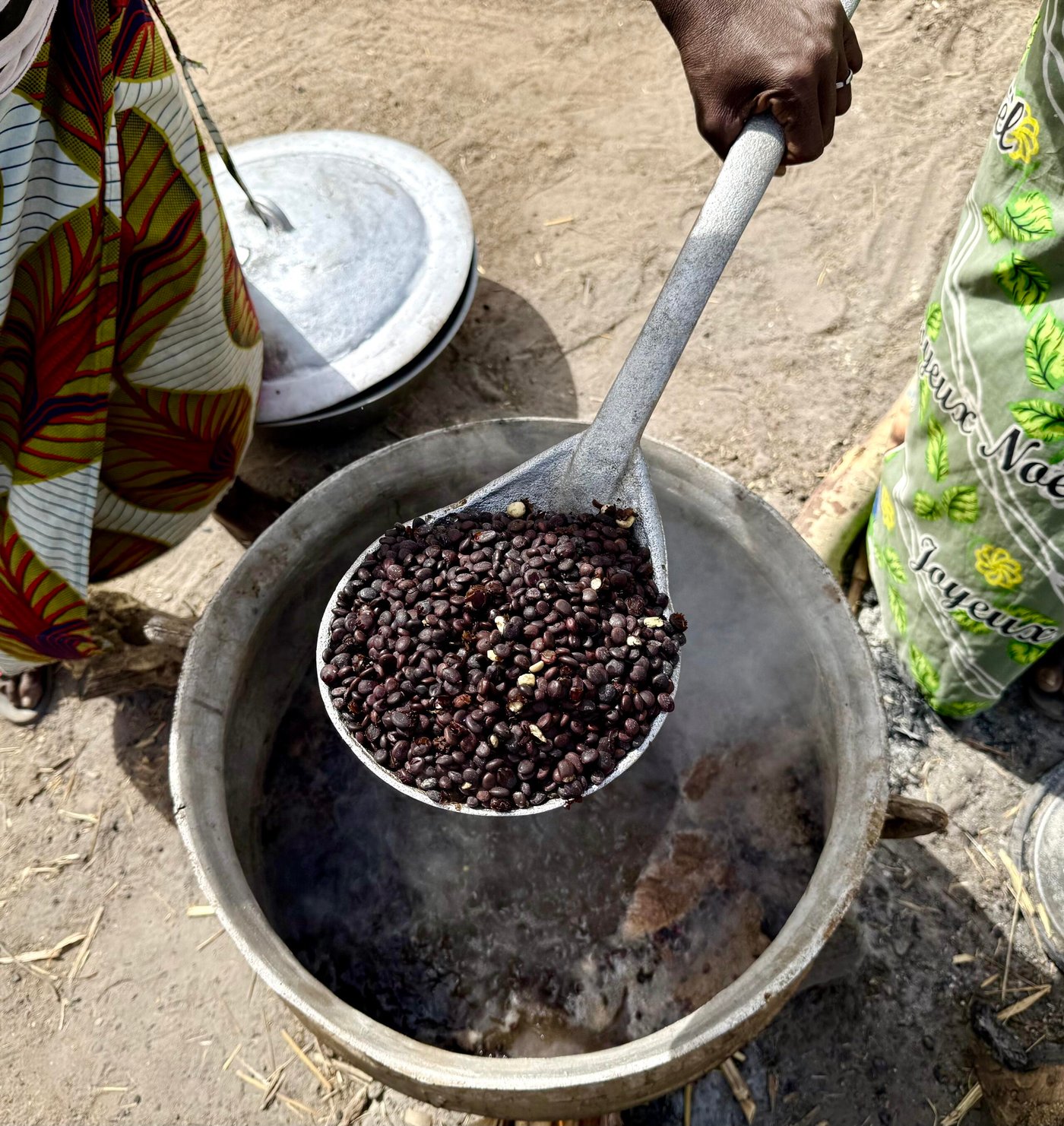
The smell is strong and familiar. They are making soumbala – a traditional fermented condiment – prepared from the seeds of the néré tree and used in everyday meals across the country.
For these women, it is more than food. Soumbala instils a routine, and is a crucial part of their identity. And little by little, making soumbala is helping them rebuild after being forced to flee their homes.
Finding stability in familiar things
Displacement changes almost everything. Families lose their homes, their work, and often the social networks that structure daily life. In sites like Torodi, displaced people from different villages and communities now live side by side, sharing limited resources and an uncertain future. But rebuilding stability requires more than shelter, it requires purpose.
Supported by the Norwegian Refugee Council (NRC), through a UNHCR-funded project implemented in collaboration with the Provincial Directorate for Humanitarian Action, a group of displaced women came together around something familiar: soumbala.
They received equipment and technical training to help structure their production and develop their business, enabling them to regain economic independence.
But what started as a means to earn a living quickly became something deeper.

A traditional food bringing communities together
Beyond its nutritional value, soumbala is a shared cultural heritage across many communities. Almost everyone in Burkina Faso knows its taste and its smell.
Working around it brings women together naturally. They talk, exchange advice, and help each other. Through this familiar activity, trust slowly grows again.
The women keep the initiative alive by saving, reinvesting, and producing together.
Mamounata Zabré, a member of the group, explains: “We worked and saved money to buy a bag of seeds so that we could restart and continue our production. With the savings, we were also able to purchase additional equipment.”
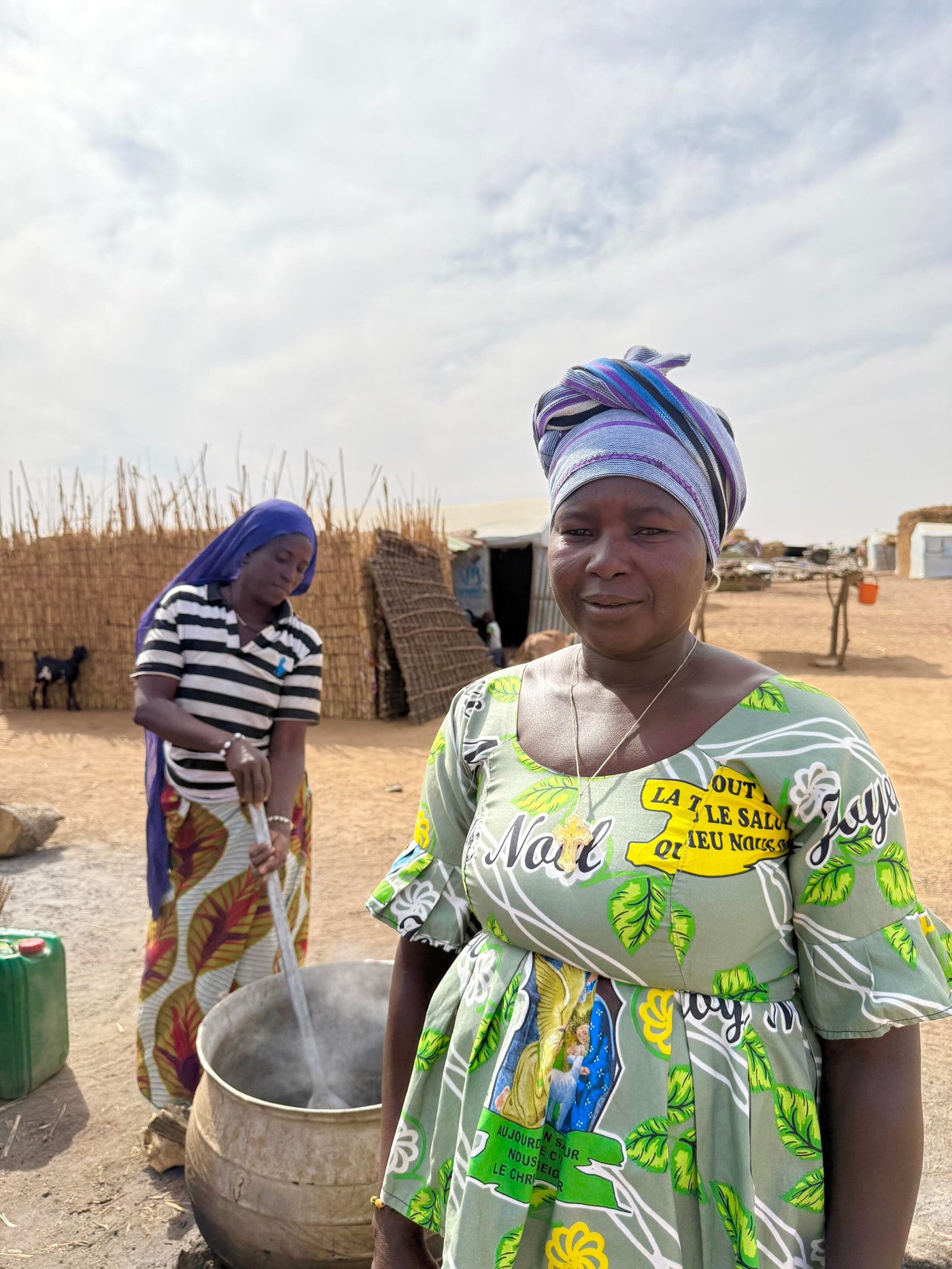
The impact of the activity is being felt at home as well.
Kadidiatou Ouerem, member of the group, explains: “With the income we earn, we can buy school supplies for our children, give them a little pocket money and even buy them clothes.”
Little by little, the production space has become more than a workplace.
It is a place where relationships are rebuilt, confidence returns, and community members interact.

Increasing impact
NRC's support to the group covered several complementary aspects. It included equipment to improve hygiene, safety and productivity, as well as training sessions to strengthen technical skills and improve production management and marketing practices.
NRC’s intervention also helped structure the group internally: clarifying roles, encouraging shared resource management, and coordinating with community leaders and site management.
This strengthened local ownership and the sustainability of the initiative.
These efforts improved the quality of the product and increased visibility in local markets. The group president, Fatoumata Sawadogo, describes how the women reinvest collectively:
“With the profits from the first production, we saved to buy another bag of néré seeds to produce more soumbala. We doubled our production.”

A path back to independence
The experience in Torodi shows how economic empowerment rooted in familiar skills can help women regain control over their lives after displacement. Through soumbala production, they are rebuilding routines, generating income, and gradually restoring a sense of stability for themselves and their families.
By continuing technical support and strengthening access to markets, initiatives like this can help women move beyond immediate survival – allowing them to plan, support their children, and rebuild their futures.
Sign up to our newsletter to read more stories from around the world.