
Access to water, sanitation and hygiene (WASH) services has a special importance to the Rohingya community living in the camps of Cox’s Bazar, Bangladesh. For families like Amina’s, it has been a pathway to health, protection and dignity while living in displacement.
How water, sanitation and hygiene are transforming daily life for Rohingya families
Safe water on the doorstep
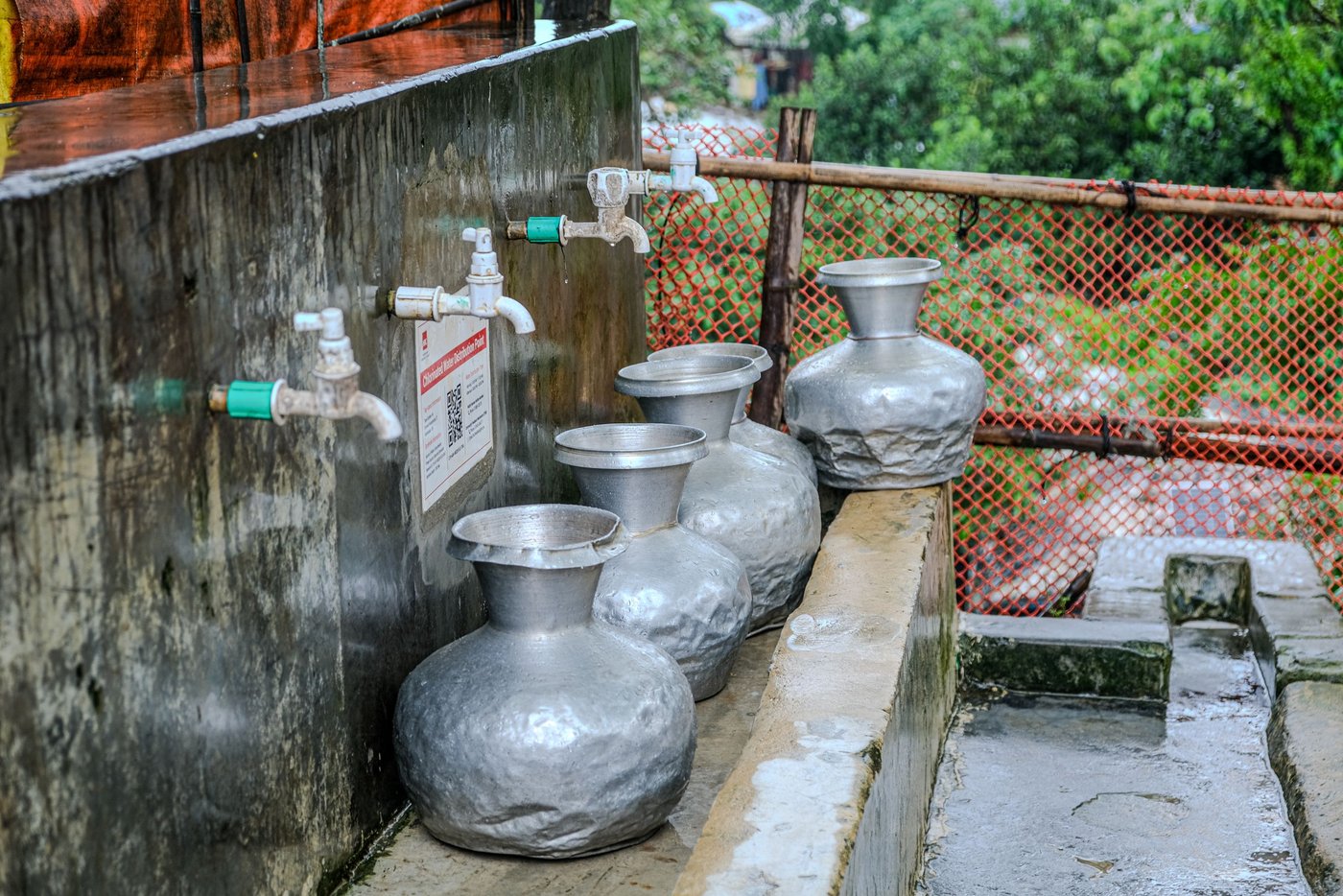
10 am is a busy hour at the Rohingya refugee camp in Cox’s Bazar. Rows of jars stand ready at the water point. Women wait for their turn to collect chlorinated water in their jar.
Among them is Amina Khatun, 42, a mother of nine, collecting water for her family. She fled with her husband and nine children in 2017 after violence erupted in their homeland.
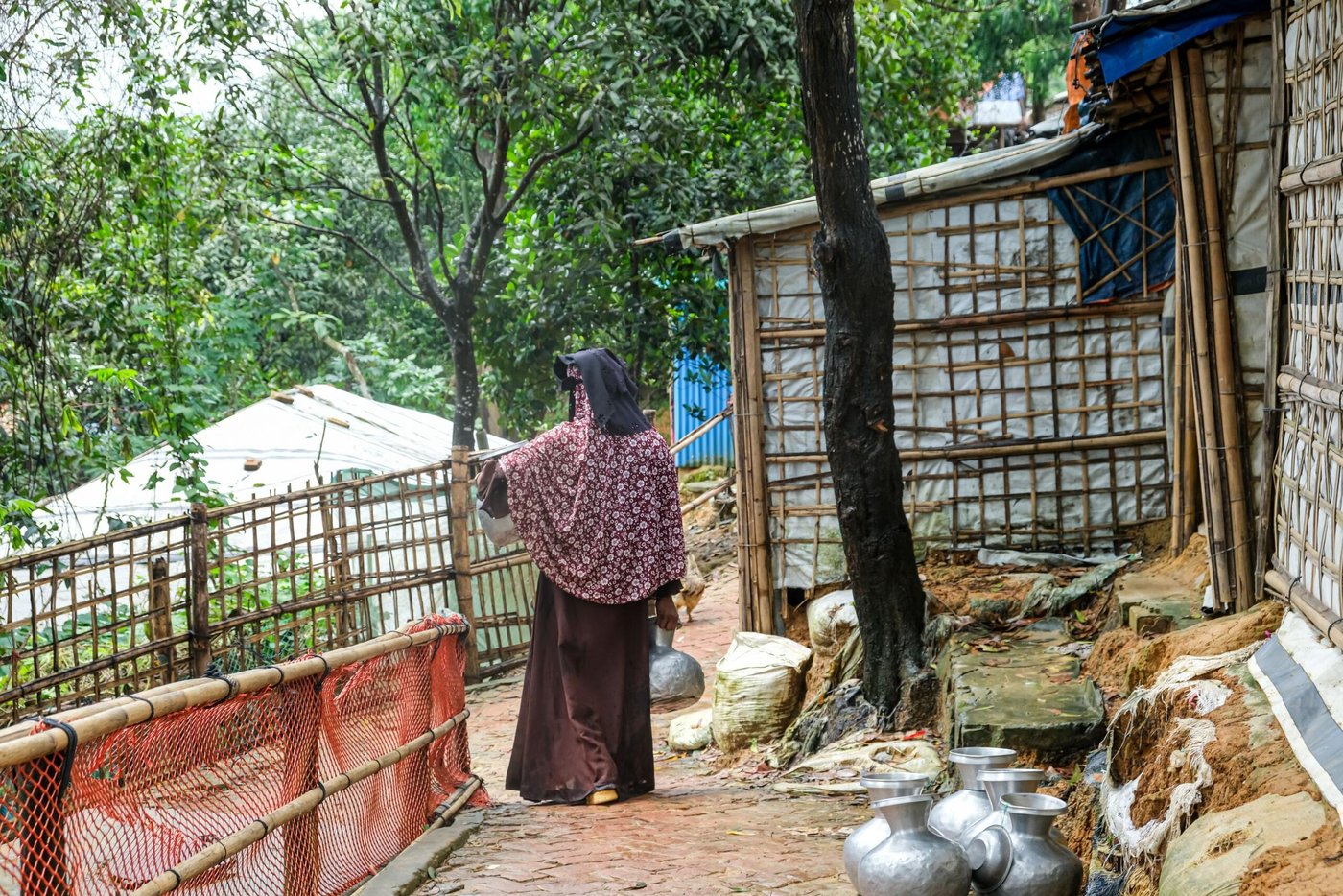
The family walked for 15 exhausting days before crossing the border into Bangladesh. For the past nine years, Amina and her family have been living in the refugee camps on the steep hillsides of Cox’s Bazar.
The water supply at the camp is available only for a limited time, so every minute matters.
“I need to collect four to five jars of water every day for my family, mainly for drinking and cooking,” Amina says. “If I miss this time, I may not get enough water for the whole day.”
Missing the daily round of water collection can affect the entire day for her family. The only alternative is a long walk downhill to unsafe shallow tube wells. Carrying heavy water containers back home is exhausting, and there is a risk of illness from contaminated water.
As she lifts the filled jar, it is hard to imagine that this short walk to the nearby water point was once a long and exhausting struggle.
Back at her makeshift shelter, she explains how having access to safe water has changed her everyday life.
Since the early days of the Rohningya displacement, securing enough drinking water for a family in the camps has been a constant challenge. Waterborne diseases such as acute watery diarrhea (AWD), cholera and skin infections are a year-round risk, spiking during the rainy season due to flooding, overflowing latrines and severe groundwater contamination.
“Drinking poor quality water, the children suffered often. As a mother, I was always worried,” says Amina.

The Norwegian Refugee Council (NRC) operates four water supply networks in the camp, providing chlorinated water to around 1,000 families every day. Through regular supply of treated water and quality monitoring, we help ensure that families like Amina’s can rely on clean water close to home, reducing the risk of waterborne diseases and enabling them to meet their daily water needs safely.
"Access to safe drinking water is life for us," says Amina. "Knowing that the water is checked and safe makes a big difference."
A greener approach to safe sanitation
Water is only one part of keeping a family healthy in a densely populated camp. Sanitation and waste management also shape the conditions in which families live every day.
Amina shared how sanitation challenges have long affected the health, safety and dignity of Rohingya families living in the camps.
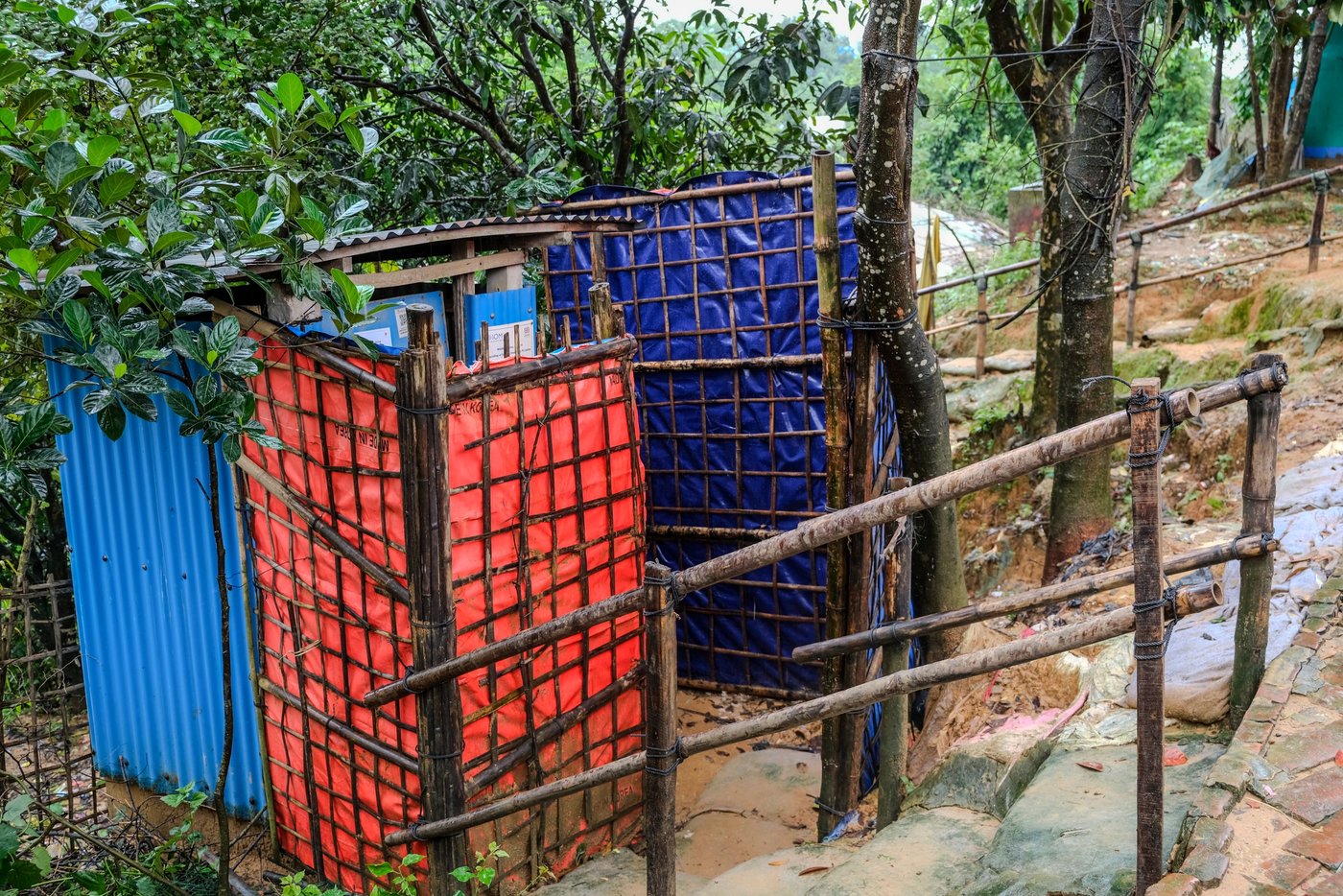
Poorly maintained sanitation facilities created health risks. Overflowing latrines, blocked drains and seasonal flooding often spread waste into surrounding areas, affecting living conditions for camp residents.
Amina remembers what happened when latrines were not emptied on time.
"The latrines in the camp filled up quickly. If they were not emptied on time, the surrounding area became dirty, and the smell was overwhelming when sludge overflowed from the pits,” she says.
To address these challenges, NRC operates fecal sludge treatment plants in Camps 19 and 13, helping to safely manage and treat sludge collected from latrines across the camps. Regular desludging prevents latrine overflows, improves the condition of sanitation facilities, and reduces health and environmental risks.

At the treatment plant, collected sludge undergoes anaerobic treatment, enabling the safe processing of waste while contributing to a cleaner and healthier environment for the community.
Amina is also part of a community-led WASH committee. The committee meets monthly to identify issues, report concerns, and work closely with service providers to ensure facilities remain functional and accessible.
“When facilities are properly maintained, it makes a big difference for everyone in the community,” she says.
Giving waste a new purpose
As Amina shares her story, a community volunteer arrives at her doorstep, making his daily rounds to collect household waste from families in the camp.
The camps generate an estimated 120 to 140 tonnes of solid waste per day. Without regular waste management, the camps could become uninhabitable within weeks due to contamination, odours, and pest infestations.
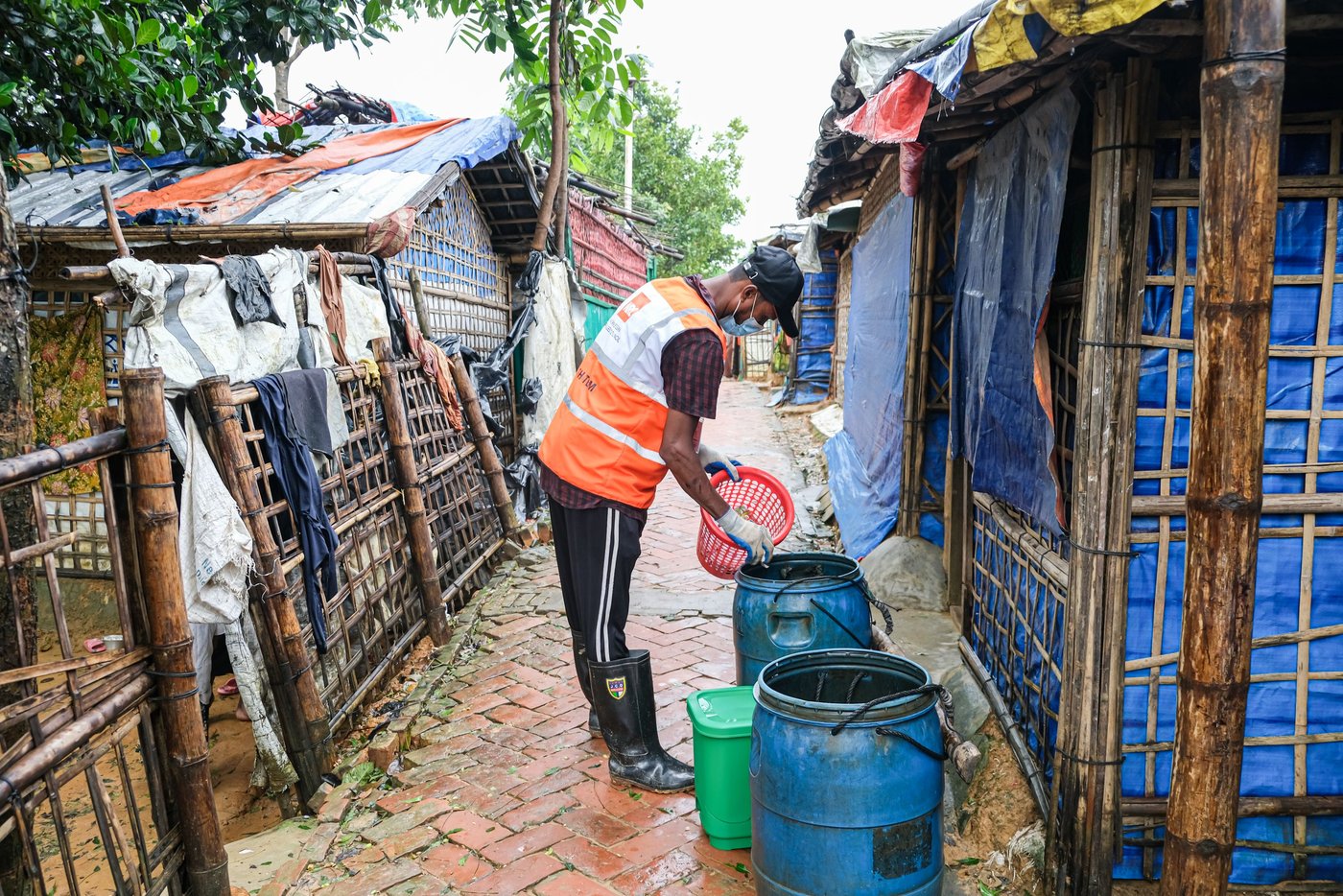
“Every day, our household produces different kinds of waste," says Amina. "Before, we threw it away near our shelter. As a result, the surroundings became dirty and unhealthy for everyone."
NRC’s solid waste management programmes in Camps 13 and 19 provide households with separate bins for biodegradable and non-biodegradable waste, helping them sort their waste and dispose of it responsibly.
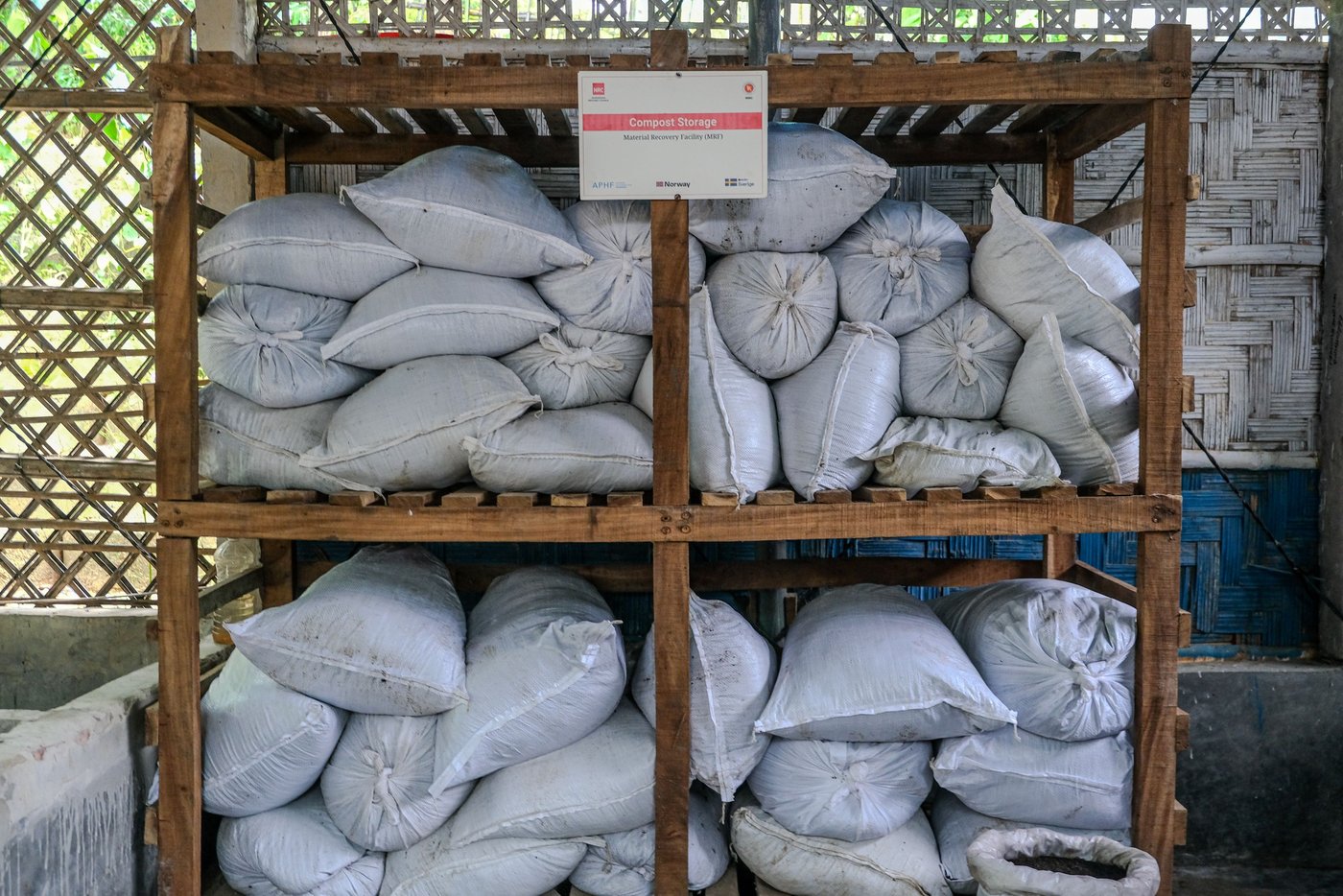
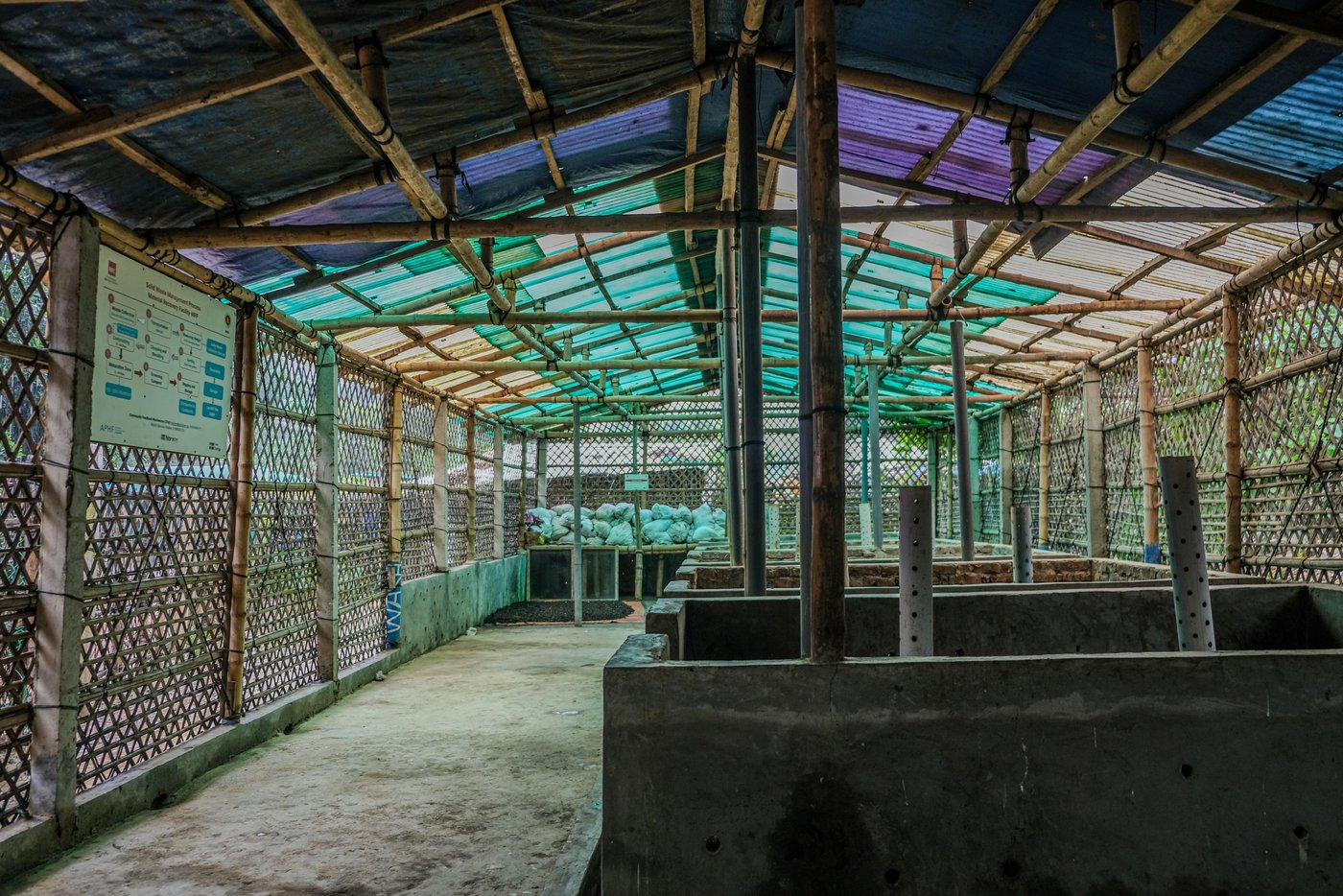
The collected waste is transported to NRC's material recovery facility, where it is sorted and processed. Biodegradable waste is converted into compost, producing organic fertiliser that is returned to the community and used in household gardening.
“Now, most waste is no longer left scattered around the camp,” says Amina. “The environment is cleaner, and we can use the compost to grow vegetables in our gardens.”
Learning healthy habits together
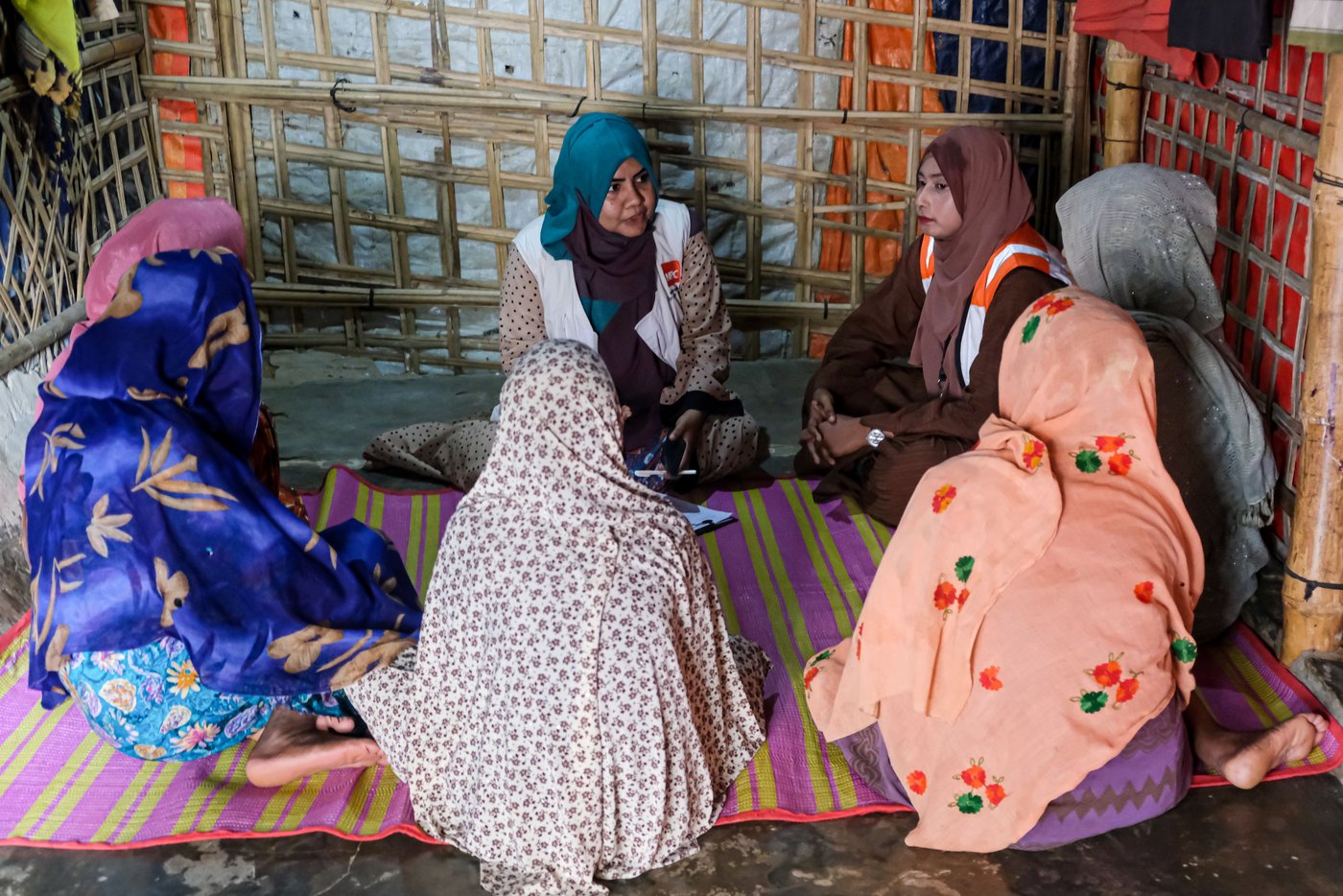
Once a month, Amina attends NRC’s hygiene awareness sessions alongside women and girls from her community.
As a mother, she finds the menstrual health and hygiene sessions particularly valuable, as her two daughters will soon reach puberty.
“Talking about menstrual hygiene has always been a challenge in our community. Many women and girls feel shy discussing it,” says Amina.
In the camp, limited hygiene and menstrual health awareness within the community presents severe risks, particularly for women and adolescent girls. The situation is exacerbated by inadequate sanitation facilities and poor maintenance of existing infrastructure.
“It is very difficult to use shared latrines during menstruation. Young girls often struggle the most, as they have limited privacy and face additional challenges in managing their hygiene,” says Amina.
Through the awareness sessions, women and girls learn about menstrual hygiene and ways to care for their health. The discussions also provide a space to ask questions and share concerns that may otherwise remain unspoken.
For Amina, the sessions are also an opportunity to prepare her daughters for a stage of life that she knows can be difficult to discuss.
Besides the sessions, Amina receives menstrual hygiene supplies twice a year through NRC, with support from UNICEF, the area focal agency.
However, menstrual health remains one of the less prioritised sectors, and limited funding continues to affect the level of support available to women and girls.
A future that still needs support
For Amina and her family, access to safe water, sanitation facilities, waste management services and hygiene promotion has transformed daily life.
Yet significant challenges remain.
After nine years of displacement, maintaining essential WASH services in the Rohingya camps continues to require significant resources. Aging infrastructure, high operation and maintenance costs and funding constraints can affect the reliability of water systems. Heavy rainfall can damage pathways and drainage systems, while inadequate lighting around sanitation facilities can create additional safety concerns, particularly for women and girls, older people and people with disabilities.
“Latrines are mostly open places. We often feel unsafe using them, especially at night, due to the lack of privacy and adequate lighting,” says Amina.

As the Rohingya crisis becomes increasingly protracted, families like Amina’s continuing to rely on essential WASH services not only for survival, but also for their health, safety and dignity.
Access to safe water, sanitation, hygiene services, and effective waste management remains a lifeline for a thousand Rohingya families.
For them, every improvement matters, but so does every gap that remains.
***
NB: This story features the Norwegian Refugee Council’s Water, Sanitation and Hygiene (WASH) interventions, supported by the Bangladesh Humanitarian Fund in the Rohingya refugee camps of Cox’s Bazar, Bangladesh.
NRC provides a range of WASH interventions in the camps, including safe drinking water supply, inclusive and accessible sanitation facilities, hygiene promotion activities, and solid waste and fecal sludge management.
