
Misgna was 11 when political unrest forced him to leave Eritrea. He settled at Mai Aini Refugee Camp in northern Ethiopia, and spent years rebuilding a life there.
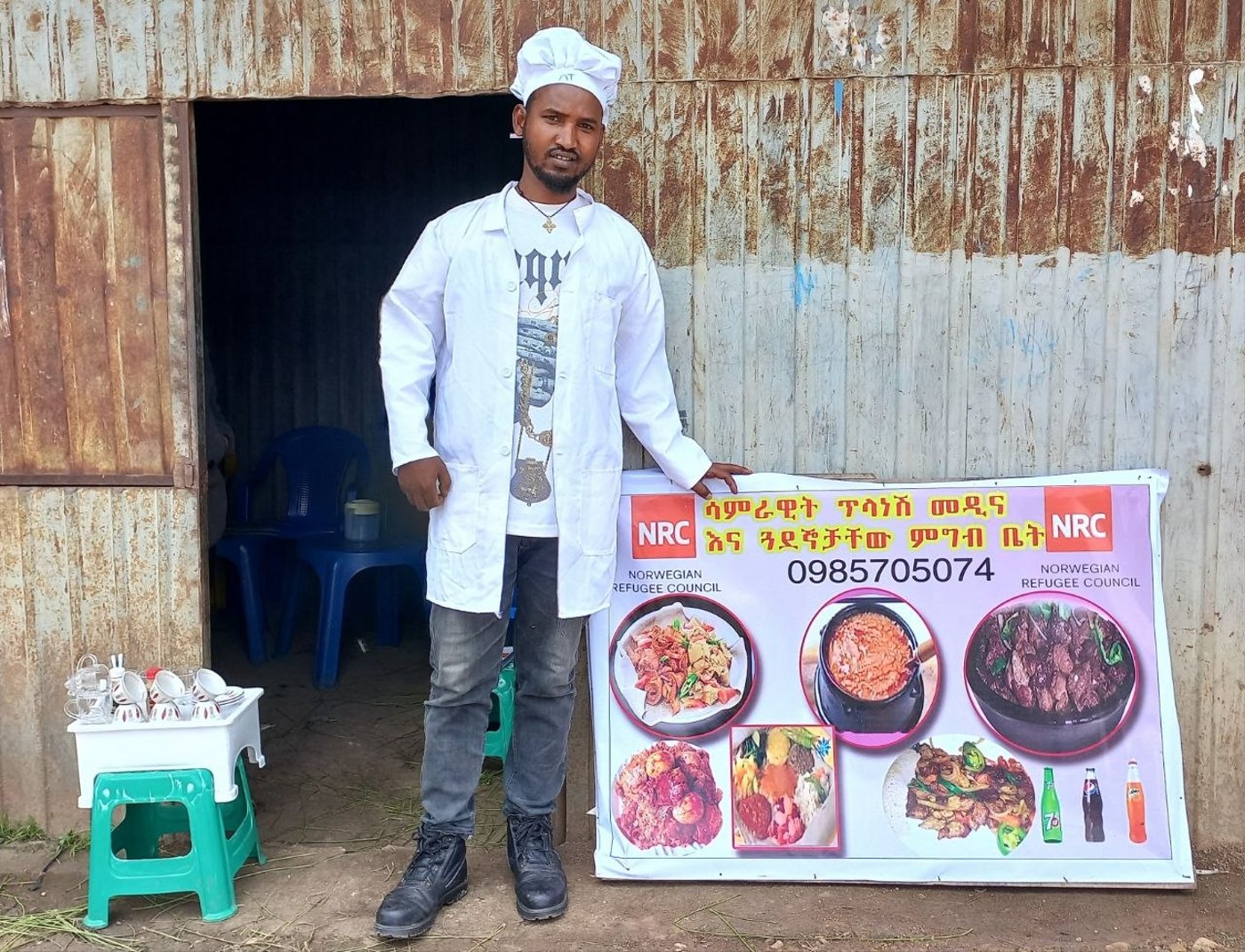
How a shared cafe is rebuilding one refugee's life in Dabat
Then conflict broke out in northern Ethiopia, too, and in 2022 he had to flee again. This time he fled on foot for seven days, and reached Alem Wach Refugee Site in the Dabat area. He went hungry, slept in the forest for safety and kept walking.
Misgna is now 28, married and a father of two. Even after reaching Alem Wach, life stayed hard: little work, food assistance that didn't stretch far enough, and the daily strain of getting by.
New skills, a new door
On 20 February 2025, the Norwegian Refugee Council (NRC) launched a youth education and training programme at Alem Wach, funded by UNICEF's PROSPECTS II project. It combined basic education, protection, vocational training and livelihoods support for refugees, displaced people and host communities.
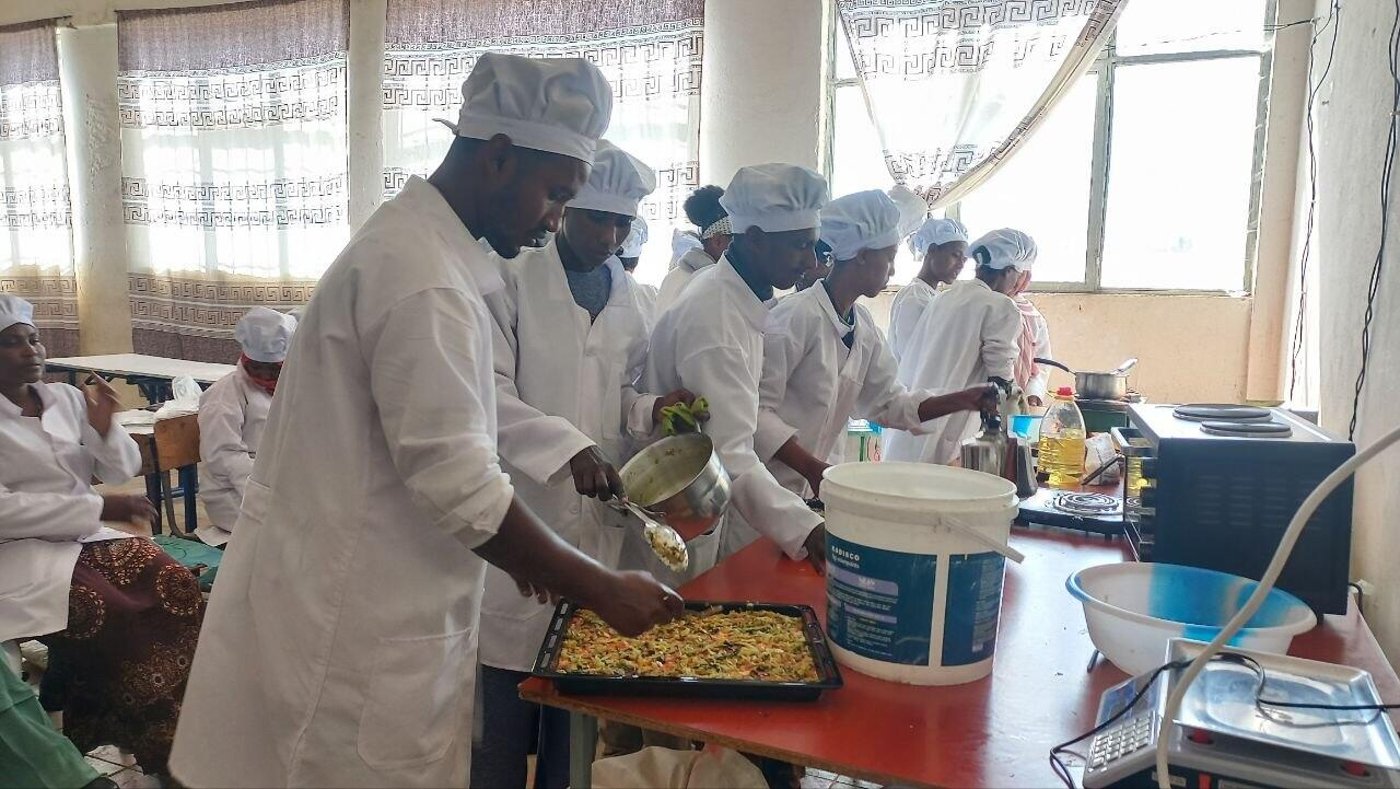
Misgna enrolled in vocational training at Dabat Technical and Vocational Education and Training (TVET) College, specialising in food preparation, and completed the course.
Afterwards, Misgna and ten other refugees and host community members together started a business: Samrawit, Tilanesh, Medina and Their Friends Small Enterprise. With start-up capital from NRC and UNICEF, they opened a small cafe and restaurant in Dabat. After years of relying on humanitarian assistance, Misgna was earning an income again, this time working side by side with members of the host community, serving customers and running a business together.
“For many years, I depended on assistance and wondered what my future would look like. The training and start up support gave me the chance to work with others, earn an income, and build something of my own. Today, I have hope that I can provide a better future for my family,” says Misgna.
Makatet: integration through shared opportunity
Misgna, an Eritrean refugee, now speaks Amharic fluently alongside his mother tongue, Tigrigna, and has built close relationships with people in the host community.
At the cafe, he and his host community partners share the work: cooking, serving, managing the till and splitting the earnings.
Most mornings now, Misgna is behind the counter of the cafe he helped build, Eritrean and Ethiopian, refugee and host community, serving the same customers side by side.
Sign up to our newsletter to read more stories from around the world.
