
When the war came to the Tigray region of Ethiopia in early November 2020, it took almost everything. It took homes and harvests, routines and roads. For the young people who ended up in Tenedba refugee camp in Sudan, it also took the ordinary future they had imagined for themselves.

From the camp, for the camp
Then, in April 2023, war broke out in Sudan, driving millions from their homes and further straining an already fragile education system. For young people living in displacement camps, higher education became almost impossible to access. There were no universities nearby, no vocational schools and no structured pathways to anything. Without work, income or purpose, the days stretched long and heavy.
Yet amid these challenges, a small group of young people in Tenedba camp did something remarkable.
Wanting to do something real
Israa Al-Nour had been working as an education officer with the Norwegian Refugee Council (NRC) in Gedaref when she first noticed them.
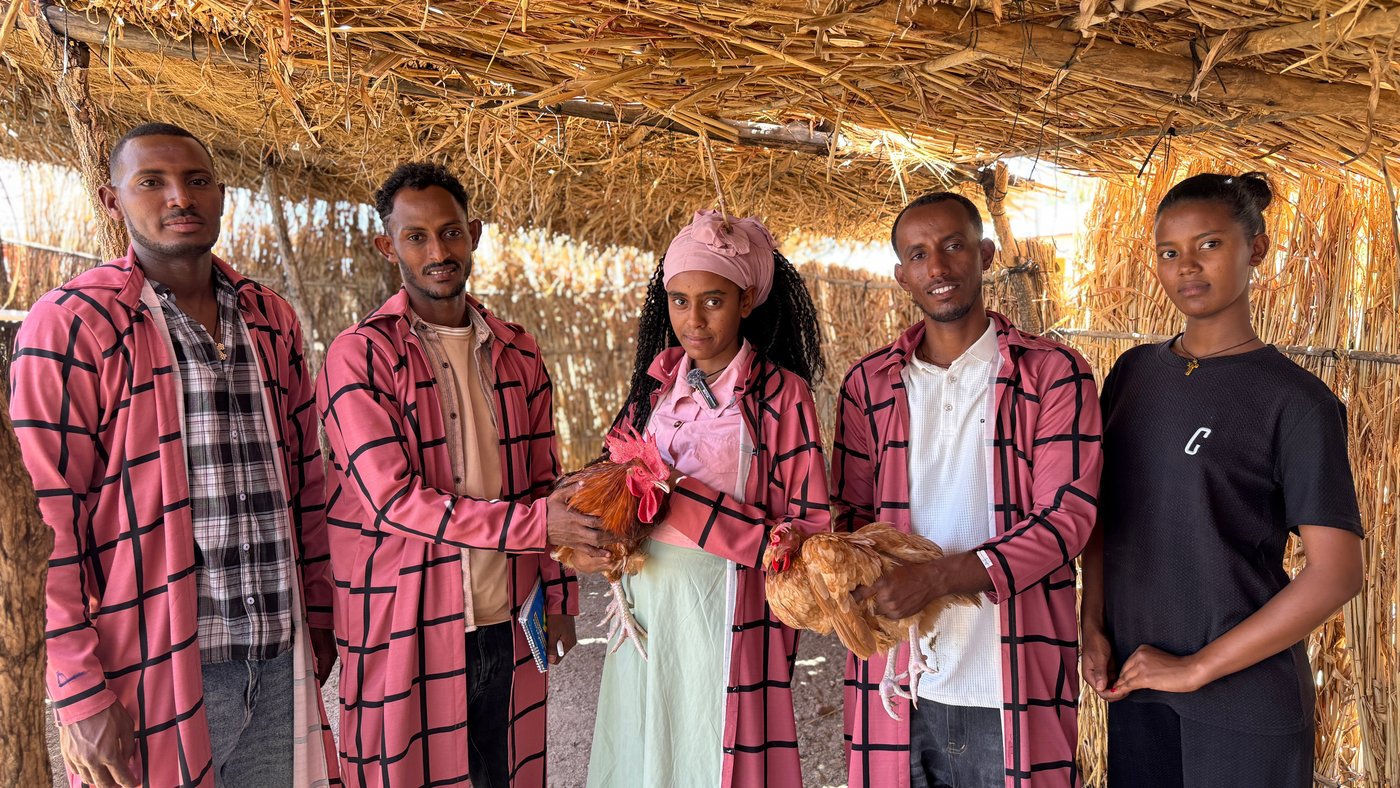
It happened during a distribution – one of those crowded, logistically demanding days when aid teams move quickly and there is always more to do than there are hands to do it. A group of young men and women showed up, unprompted, and asked if they could help.
"These are our people," they told her. "This is our community. We are ready to help with anything you need."
It was not the help itself that stopped Israa, but the instinct behind it.
They were young people who wanted to do something real, something that would help their community. Something that would let them see themselves differently, not as people waiting to be helped, but as people who could provide.
What they were up against
Many of these young people had been in the camp for years. Some had arrived as teenagers. Displacement had interrupted their education at the worst possible moment, right at the age when they should have been finishing secondary school, applying to universities and starting careers. Instead, the crisis had frozen them in place.
With no higher education institutions in or near the camp, the path forward was unclear. Some were still below the age at which young people should be carrying heavy economic responsibilities, yet they were already doing difficult, physical and poorly paid work. The economic pressure on their families was real and constant.
Then the war that erupted in Sudan made everything worse. Whatever fragile stability they had built in the camp was disrupted again. Job opportunities that had existed disappeared. The community around them became more desperate. The young people, who had long occupied an in-between space, were too old to be children, but unable to build independent and adult lives. They found themselves with even fewer opportunities and even less certainty about the future.
This was the group that showed up to help during the distribution and whom Israa had found.

Building before funding
NRC’s POWER project, supported by Norway, offered them a way to build something more structured. Through a group cash transfer mechanism, NRC could provide financial support to community groups, but the model was always about more than the money.
Before any funds were transferred, the team invested time - a lot of it.
The young people were enrolled in financial literacy training. They learned how to think about money not just as something to spend but as something to manage. They learned how to track, protect and grow it. They also took part in project cycle management sessions, learning how an idea moves from concept to implementation to evaluation.
The goal was to make sure they could manage the funds when the grant arrived. It was also to ensure that the group, individually and collectively, had the capacity to make real decisions and be accountable for them.
There were also technical trainings on hygiene, animal care, and the specific demands of the kind of project they were planning. Each session added a layer and each layer added confidence.

Twenty-five chicks
The idea had come from the youth themselves.
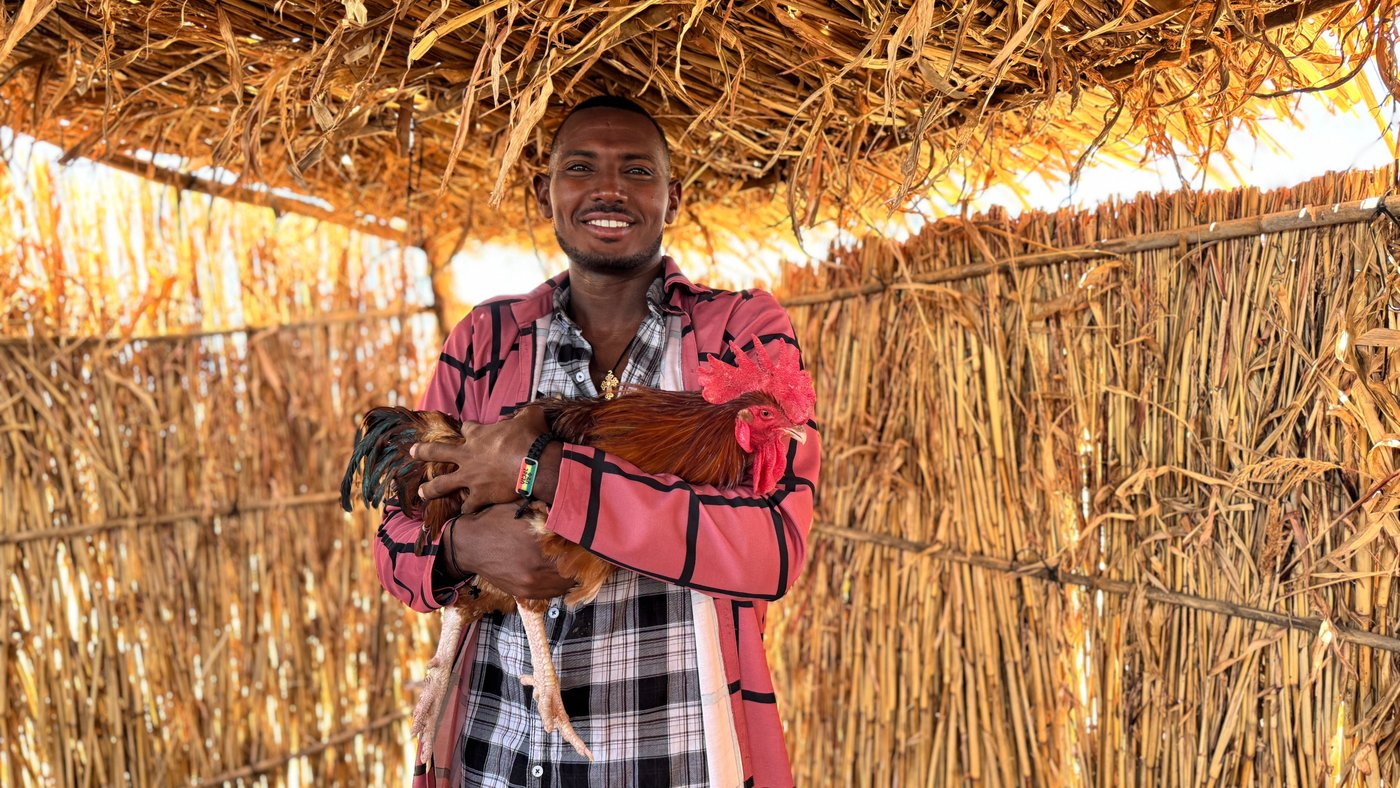
They had been part of the youth centre supported by NRC, and through that space and those conversations, a concept had emerged: poultry farming. It was practical, and something they could actually do with their own hands, in the camp, with limited space. It would produce food, generate income, and it would benefit the wider community, not just the group members.
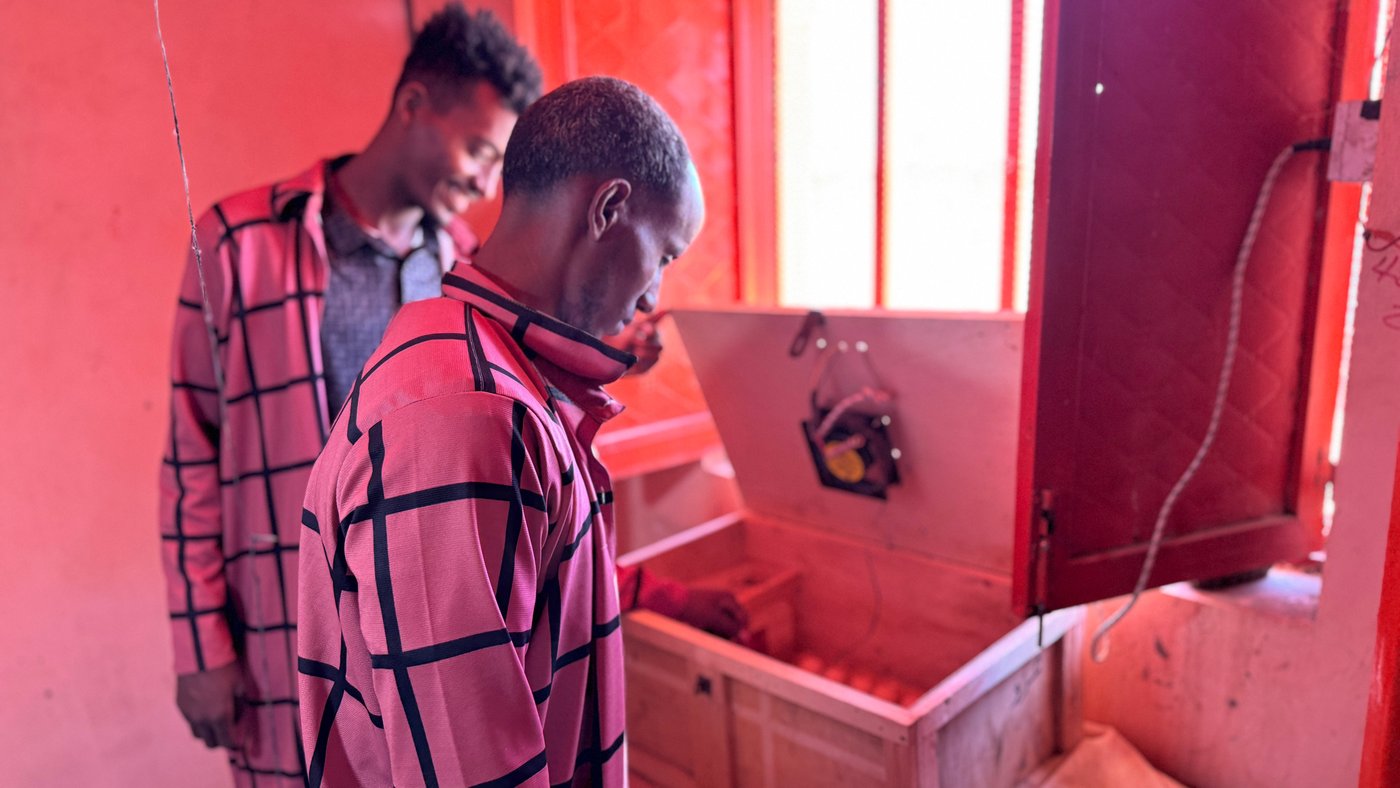
When they were ready, they went to the local market near the camp and bought 25 chicks.
What followed was a three-week trial. They had built the coops themselves, working with iron and wire, figuring out the structural design as they went.
They learned how to raise the chicks, how to clean the coops and followed strict hygiene routines. They learned how to read the signs when something was wrong, and how to solve problems they had never encountered before.
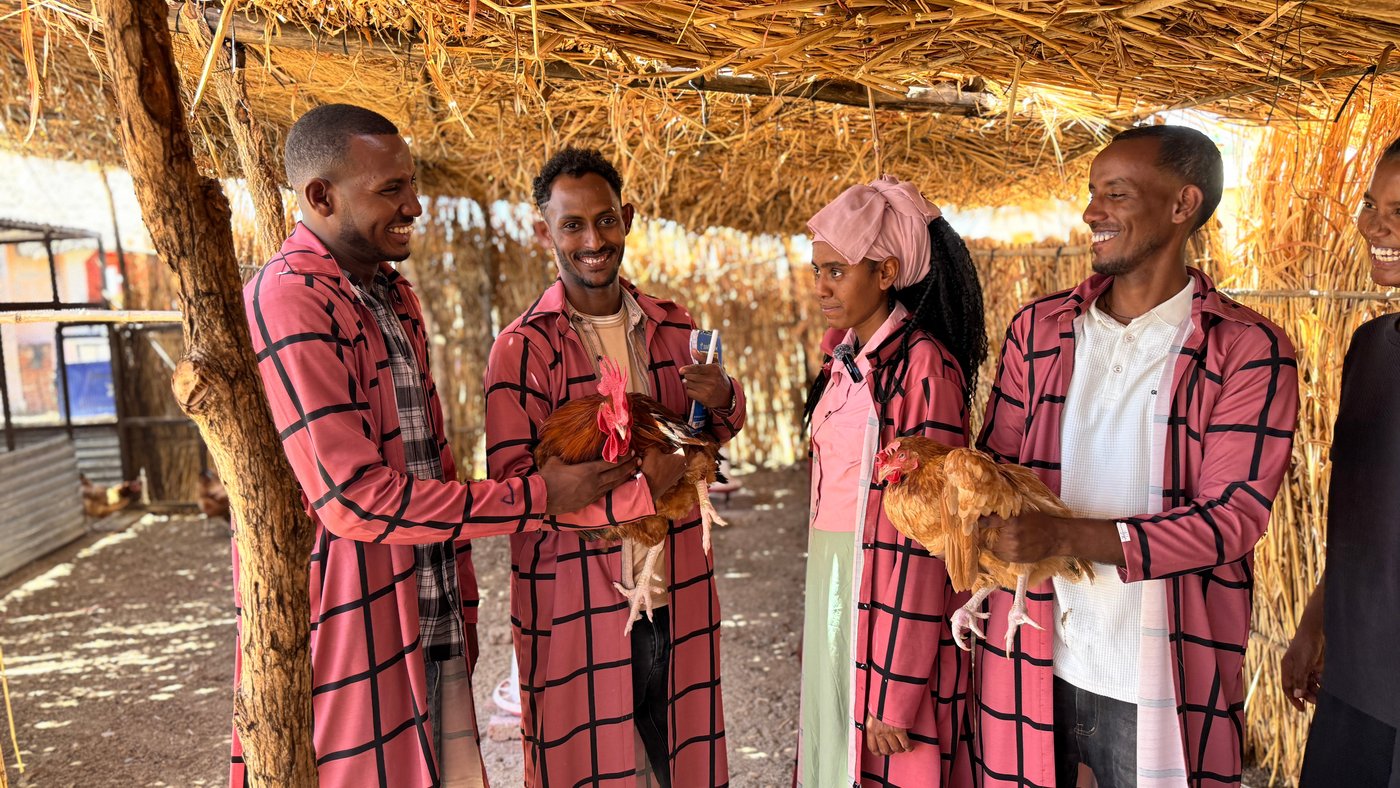
Seeing what the group had achieved, NRC supported them with USD 5,000 to take the project further. They used the funds to build more coops, purchase more chicks and expand operations – doing all of it themselves.
What it meant for the community
The group had never intended to keep the benefits to themselves. From the beginning, their plan had a community dimension built into it.
Older people in the camp, particularly those without family members to provide for them, began receiving eggs. Five or six eggs a day, given freely. For people with almost nothing, it meant protein in their diet, and consistency in a world with very little of it.
When they began thinking about how else to extend the impact, the group landed on something practical and generous. They would sell food to the community at half the market price. The target was children in schools, helping families who could not afford full market prices to feed their children.
Yearning to do more
Fiyori had been sitting at home. She was young, at the age when she should have been applying to university. But there were no universities accessible to her. No clear road to any kind of higher education. The war had sealed those paths, and she was left with the question that many young people in the camp were asking quietly: what now?
She started by volunteering with NRC teams, which led her to the poultry group. Then something shifted.
"Before, I was a person who had no job, who couldn't provide for the people in my house," she says. "Now I'm a productive young person. I earn. I give something to the community from what I do.
We need more funding to grow," Fiyori says simply. "We are ready."
This initiative is supported by the Norwegian Refugee Council (NRC) through funding from the Norwegian Agency for Development Cooperation (NORAD) under the POWER project.
Sign up to our newsletter to read more stories from around the world.
