
For decades, Ituri province in the east of the Democratic Republic of the Congo has been plagued by chronic instability. Armed violence has forced hundreds of thousands of families to flee their villages and leave everything behind.
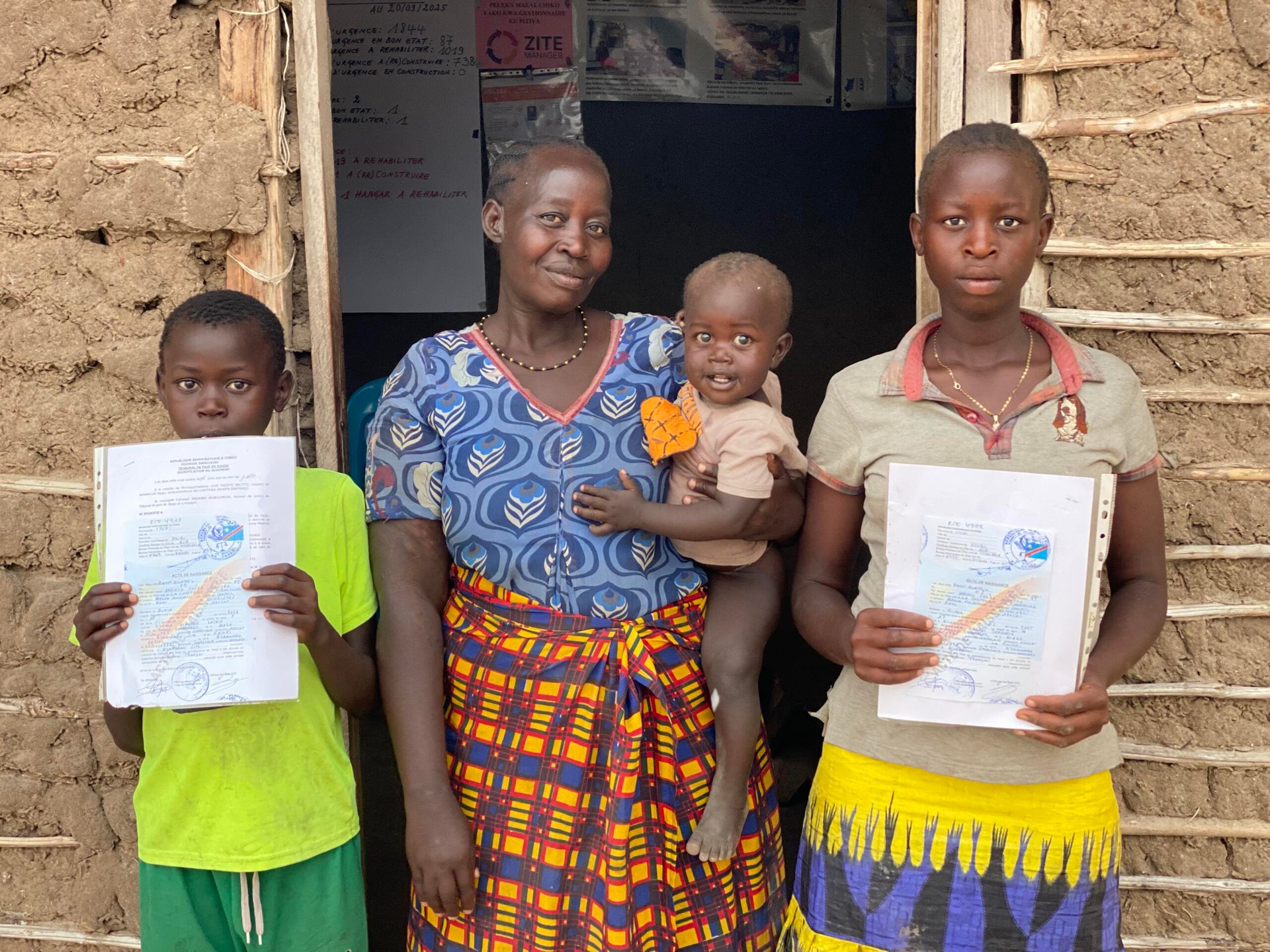
Children are being born far from any civil registry office, without the possibility of being registered within the legal timeframe of 90 days after birth. Their parents, preoccupied with immediate survival, find themselves powerless in the face of such a loss.
“The risk is huge for both the child and the parent,” explains Philippe Bamporiki, president of the Djugu Peace Court. “In conflict zones, families often have no other choice but to flee for their lives before even thinking about registering a birth.”
Without a birth certificate, the consequences are severe. A child can be denied access to school, lose their inheritance rights, or be considered stateless. For girls who are victims of sexual violence, court proceedings are an uphill battle. Every missing document is a closed door to the future.
A document can change a life
To address this challenge, the Norwegian Refugee Council (NRC), with support from the United States Office of Foreign Assistance (OFA), is providing support to help children affected by the conflict access their right to identity.
Now, my children can go to school, travel, and get married.Germaine, a mother of five
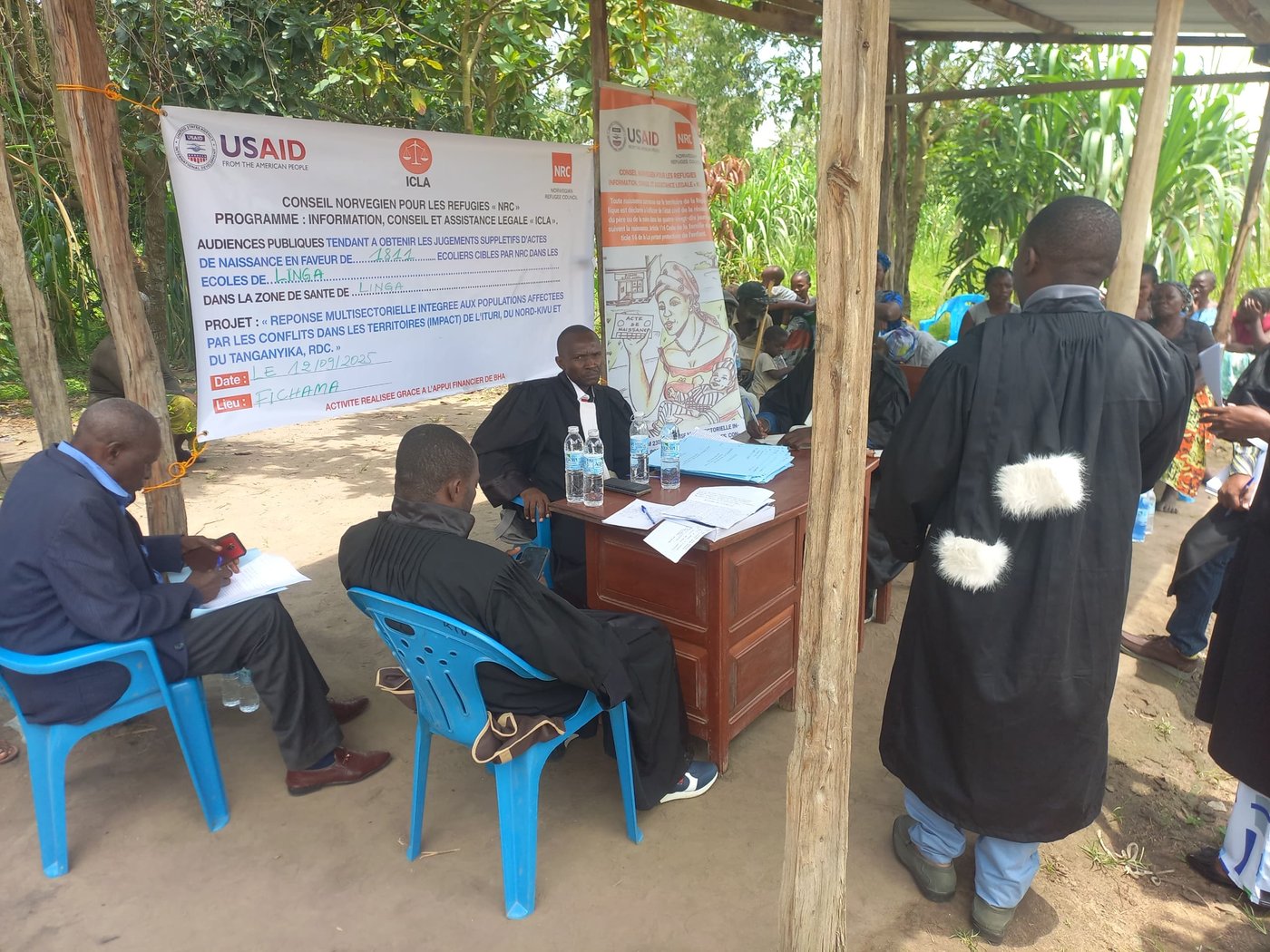
This initiative has enabled us to assist families with legal proceedings, cover costs and logistics, and organise mobile court hearings in isolated areas such as Djugu and Tchomia – bringing justice closer to the people.
Information sessions, community dialogues and structured awareness sessions also help inform parents about the importance of birth registration. It was during one of these sessions at a displacement site in Tchomia that Germaine, 60, discovered she could register her five children.
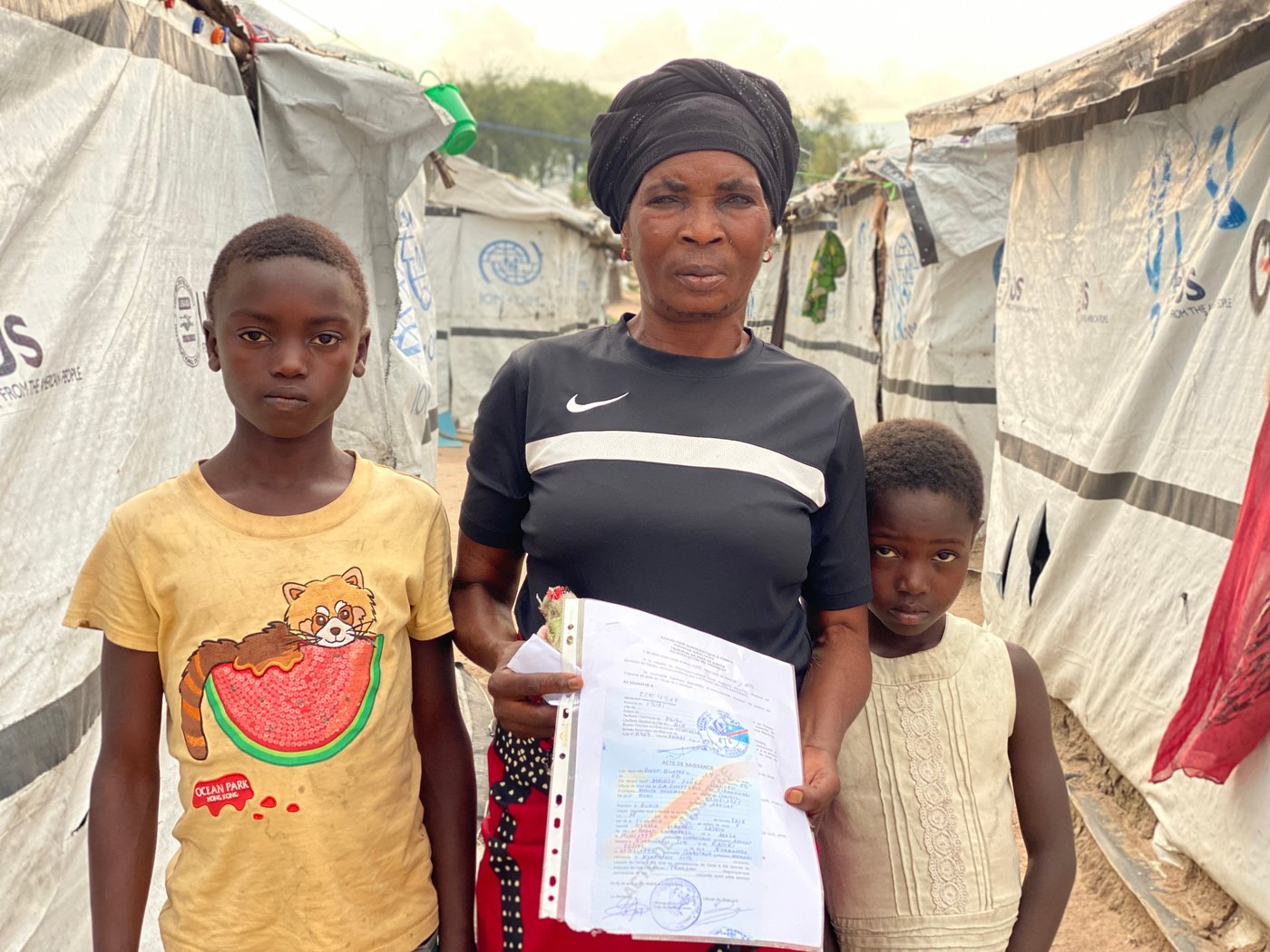
“I knew nothing about birth certificates,” she says. “Now, my children can go to school, travel, and get married. They finally have an identity.”
Nyangoma, 36, a mother of nine who arrived at the Tchomia displacement site in 2022, explained that insecurity and gunfire prevented her from obtaining her children’s documents.
“This is a challenge that I shouldn’t have faced, but it happened because of my displaced status. I thank NRC for their work. All three of my youngest children now have their documents,” she says.
Allowing children to dream
Thanks to this intervention, a total of 1,811 judgments were handed down in record time, despite the vastness of the territory and the poor condition of the roads. Civil registry records have been updated and local offices now have complete and accessible documents.
In a province where conflict sometimes erases all traces of existence, these birth certificates help children be seen and allow them to dream of a future.
The right to identity should never depend on safety or place of birth. Yet, in Ituri, as long as violence continues to force families to flee, this fundamental right will remain threatened. It is therefore urgent that humanitarian efforts be accompanied by a renewed commitment to peace and stability.
We’re here to tell you about the crises no-one else is talking about.
