


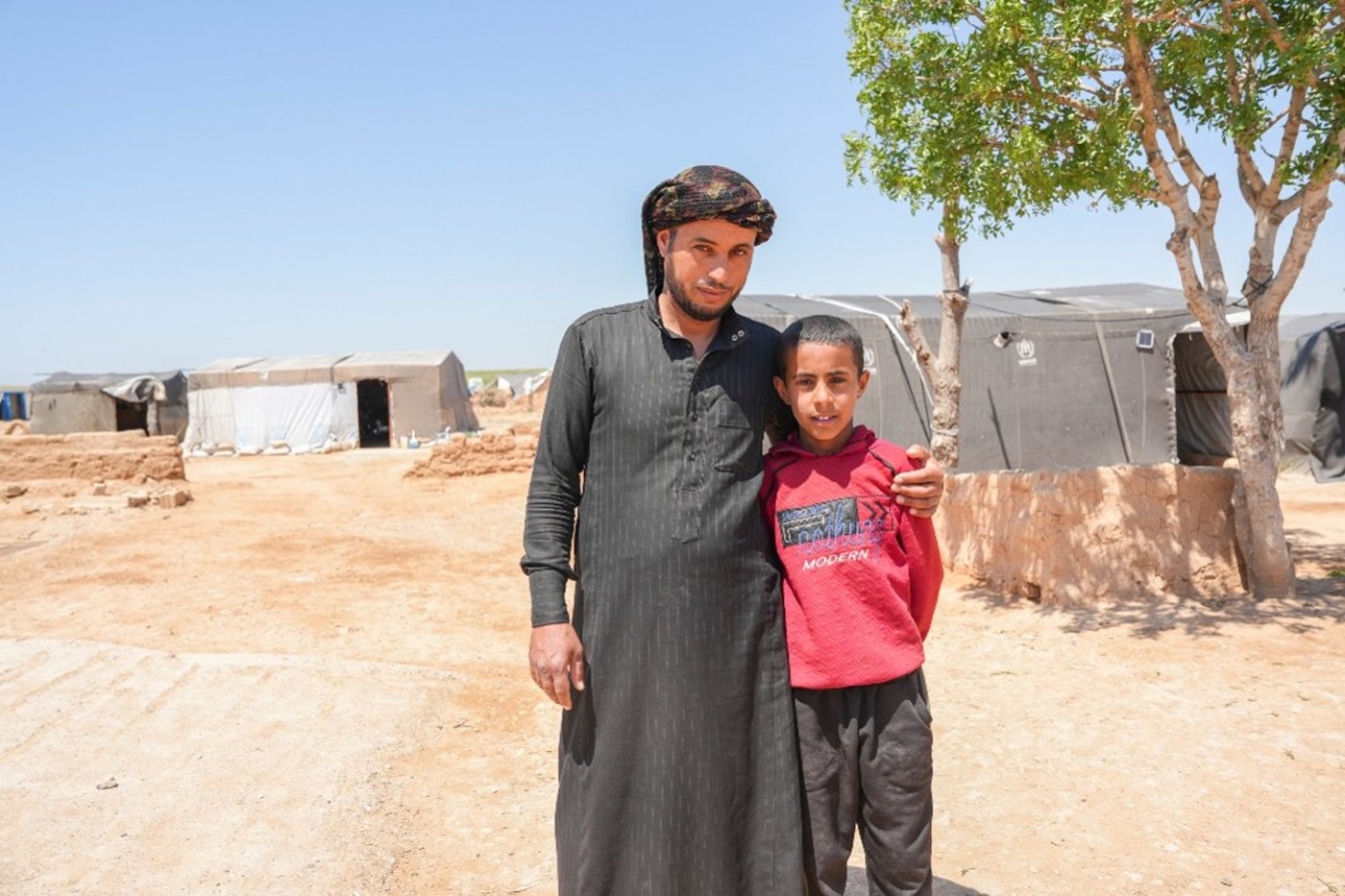
For Dayf Allah, a 39-year-old father displaced from rural Homs, Syria, securing an education for his children has remained a consistent priority. “Education is more important than eating and drinking for us. I can endure hunger for my children to study,” he stated while living in the Twaihina displacement camp in Ar-Raqqa, where his family resided from 2017 until recently.
Bridging the learning gap
A major risk of long-term displacement is that it creates prolonged academic gaps, which often prevent children from re-enrolling into the formal education system. This was one of the concerns that Dayf Allah had for years. However, when Dayf Allah’s family returned to their area of origin in rural Homs two months ago, his children were able to transition directly into a formal school.
The role of the camp education centre
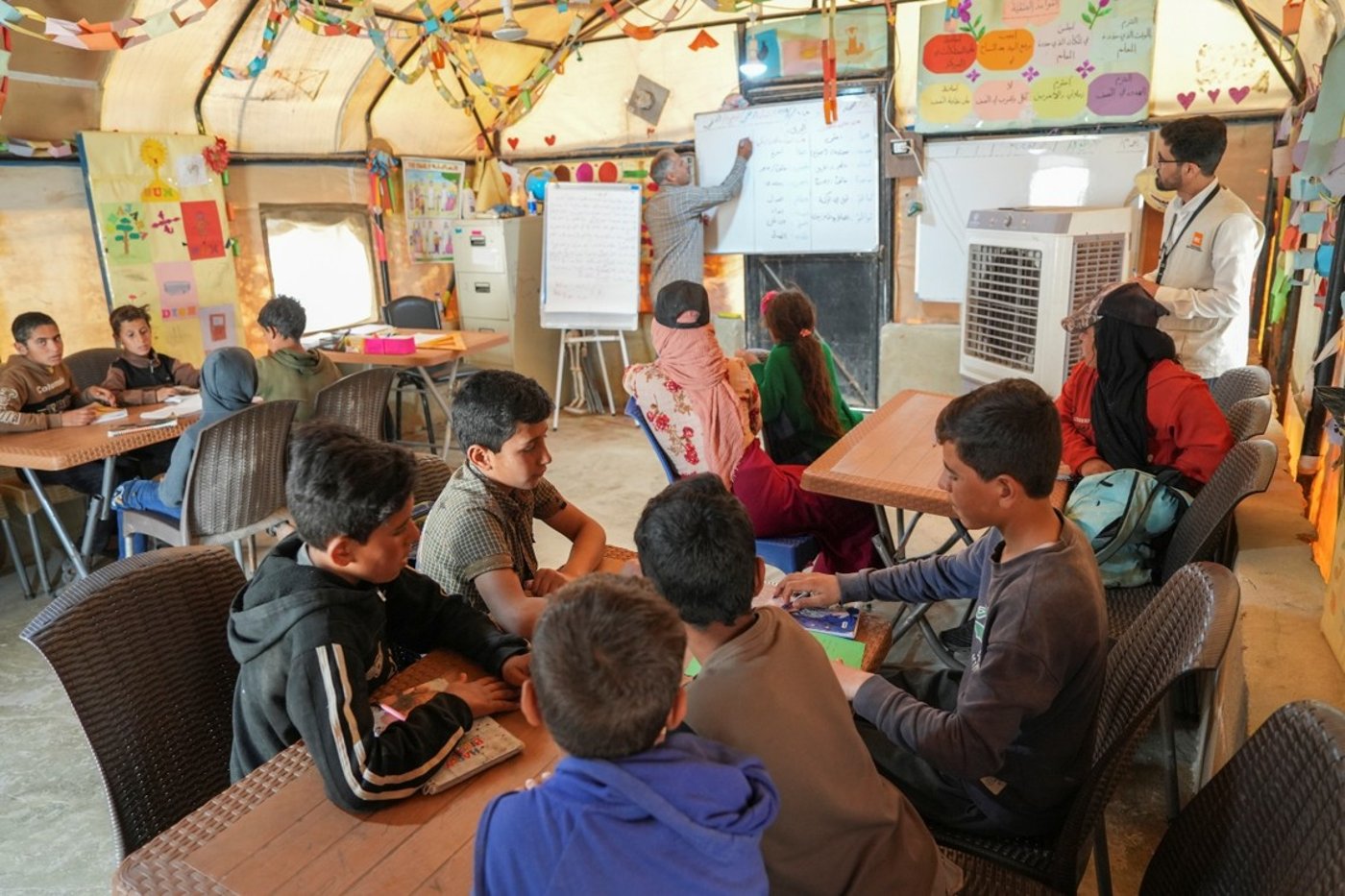
Dayf Allah credits the smooth transition of his children to the academic support built at the camp's sole education provider. Operated by the Norwegian Refugee Council (NRC) and funded by the Swedish International Development Cooperation Agency (Sida), the centre ensures that children’s education does not fall permanently behind while they are displaced. Operating since 2021, it has provided access to learning for approximately 1,500 displaced children.
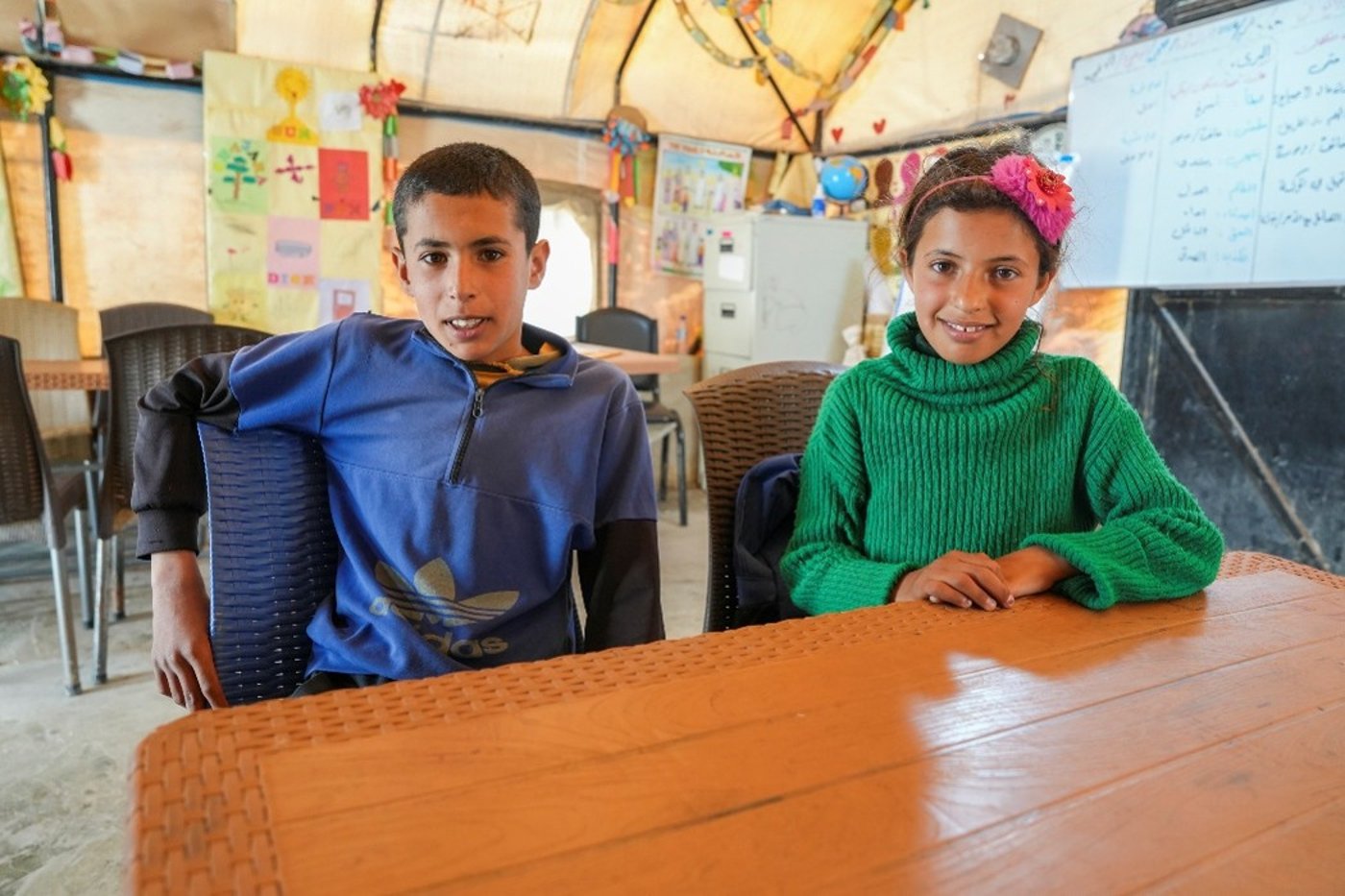
For Dayf Allah’s 14-year-old son, Sanad, and 13-year-old daughter, Na’aymah, the centre provided them with fundamental literacy and numeracy skills. “This is where we learned how to read and write,” they note. Maintaining an active educational routine prevented them from falling too far behind their age groups. It also allowed them to dream of a future–Sanad aims to become an engineer and Na’aymah plans to be a teacher.
Challenges of return and reintegration
The process of returning home involves significant challenges. Dayf Allah’s home is destroyed, livelihood opportunities in the area are limited, and the nearest functioning school is in a neighbouring village, requiring a daily commute on foot.
Despite these hurdles, the children's academic preparation has enabled them to do well in the formal system without falling behind.
“They were able to join [formal school] without any issues," Dayf Allah explains. "Their teacher told me the other day that they were the most diligent students in their classrooms. I am very proud of them to be able to do that despite all these years in displacement and despite the hardships.”
Ongoing need
Some 736,000 people continue to live in camps and sites for internally displaced people across Syria, 77 per cent of whom are women and children. Those who remain are, for the most part, people for whom return is not yet possible or not desired. They include families blocked by significant barriers in areas of return, including destroyed homes, lack of basic services, and/or widespread land contamination. Without continuous support, vulnerable families and children risk losing access to essential services, including their education.
Currently, 120 displaced children attend NRC's education centre in Twaihina camp. For most of these students, it is the only source of learning they have accessed in years and represents their hope for a continued education and a future when they finally return home.
Aghiad, 10, who goes to school with three of his siblings, says he does not want to return to his village because his old school was destroyed. He saw it when he and his family visited their village in rural Hama a few months ago. Aghiad wants to be a teacher when he grows up.
Ahmad, 12, who is in the third grade, says he loves school because it is where he learns to read and where he plays with his friends. Ahmad hopes he can return to his village and continue his education, saying: "Hopefully, after the winter ends". Because his family’s house is destroyed, they must wait.
Amena, 10, also hopes to continue her schooling–whether inside the camp or outside–as she dreams of becoming a doctor. While the school in her area is functional, her home has been destroyed, and widespread remaining landmines in the area are preventing Amena's family from returning.
Upon return, NRC supports children and young people to access, continue and succeed in education through a range of flexible learning pathways. This includes supporting children returning from displacement to reintegrate into the formal education system through the bridging programme, providing remedial academic support to children already enrolled in formal schools, and helping young people prepare for national Grade 9 and Grade 12 examinations.
Recognising that learning goes beyond academic achievement, NRC complements these pathways with classroom-based psychosocial support, life skills development and initiatives that foster safe, inclusive and welcoming school environments where children feel a sense of belonging and are motivated to learn. NRC also works to strengthen teachers' capacities to respond to the diverse learning and psychosocial needs of children and young people.
Sign up to our newsletter to read more stories from around the world.
