
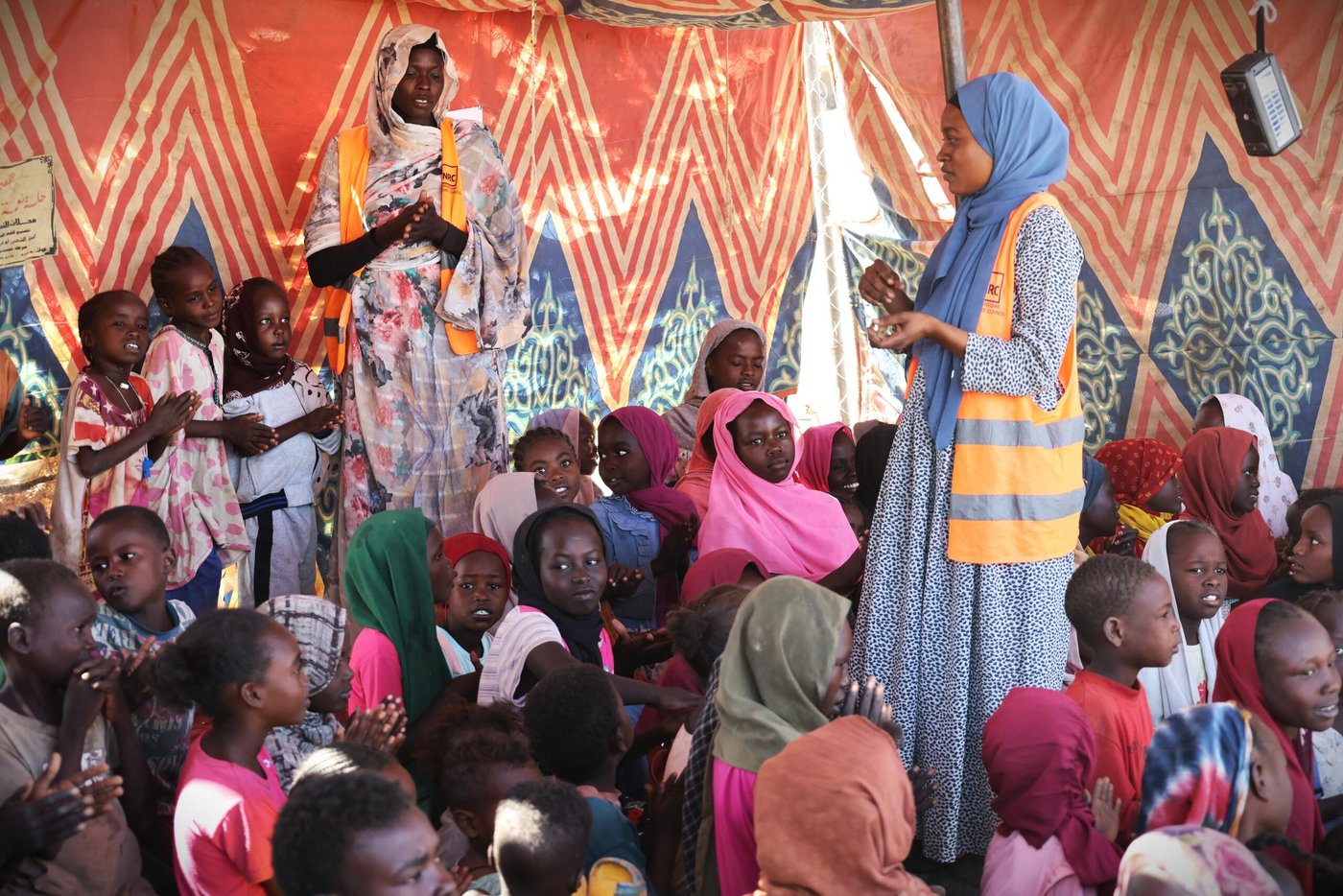
At eight in the morning, the tent in Tawila Al-Omda, Sudan, comes alive. Children arrive in small groups. They are far from home. Many fled Al Fasher and nearby villages – and for some, this is the first time anyone has asked: How are you doing?
A safe space to start again
What the children carry
Nidaa, a teacher from Al Fasher, stands at the entrance and welcomes them one by one. She recognises the look in their faces because she carries the same memories.
Now displaced in Tawila Al-Omda, she volunteers with the Norwegian Refugee Council (NRC) in an education and psychosocial support tent funded by the European Union. There, she runs daily activities designed to help children settle, reconnect with others, and begin to process what they have lived through.
On the first day, Nidaa and the team handed out paper and crayons and invited the children to draw anything they wanted. The pictures came quickly. Many children drew weapons. Some drew blood. Others drew bodies on the ground, tanks, and fire. Scenes too heavy for hands that still look small holding a pencil.
It was not only what appeared on the pages. Some children withdrew into silence, refusing to join the group. Others reacted to small frustrations with sudden anger.
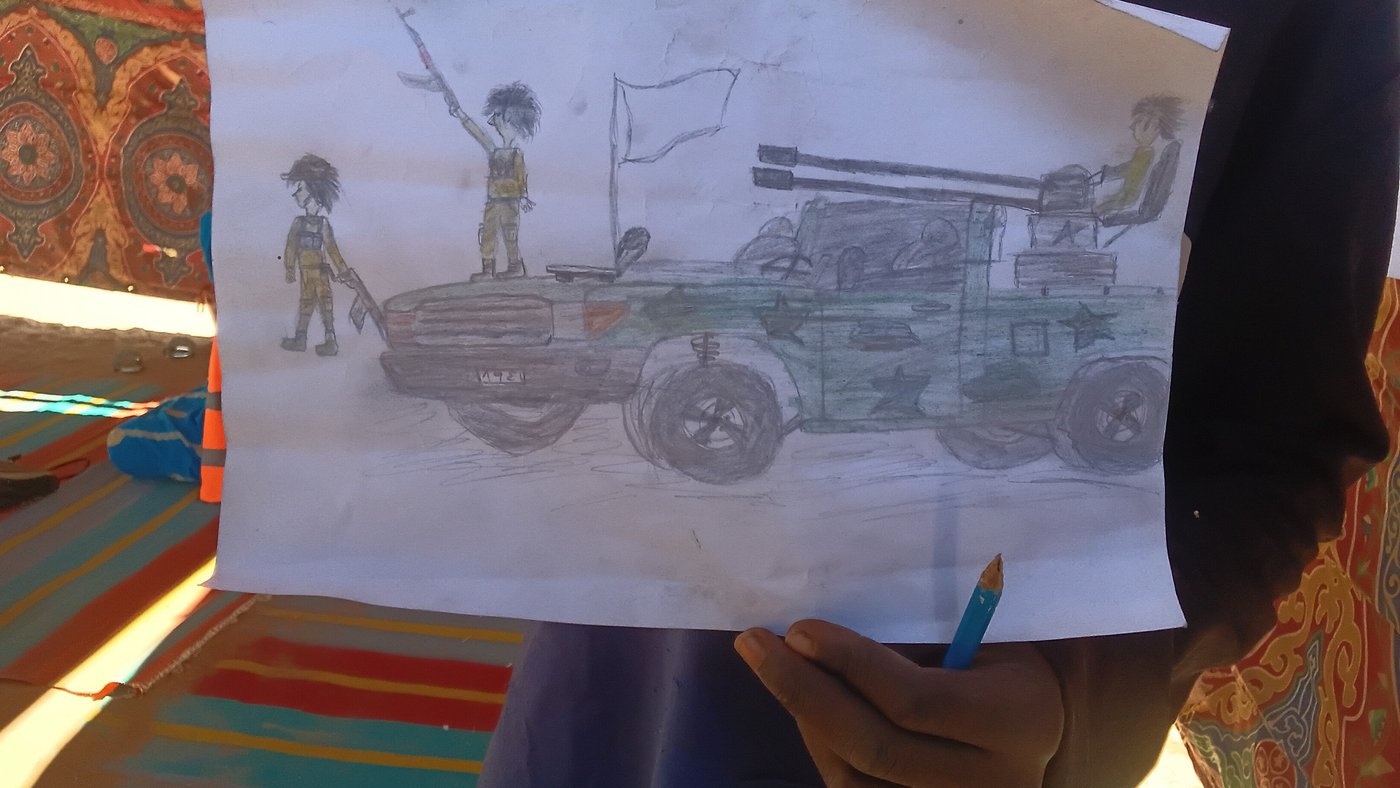
Looking at the drawings spread across the floor, Nidaa understood what they revealed. “Most of what they drew was violence,” she says. “It showed us what they carried inside. Their drawings said what their voices could not.”
The tent operates in a displacement site that has expanded rapidly under repeated waves of people fleeing Al Fasher in April and October 2025. Tawila is now hosting more than half a million displaced people. Needs extend far beyond the tent. Many families – and children who arrived on their own – sleep under trees with little privacy. Nights feel unsafe. Children describe fear after dark and long days spent in the heat. Some miss activities while queuing for food that may be insufficient and irregular.
Many speak of leaving behind homes, schools, and friends. Others describe separation during flight, or relatives who never arrived. Nidaa has seen children reach Tawila without parents, relying on strangers to carry them to safety and care for them until relatives could be found.
A structured approach
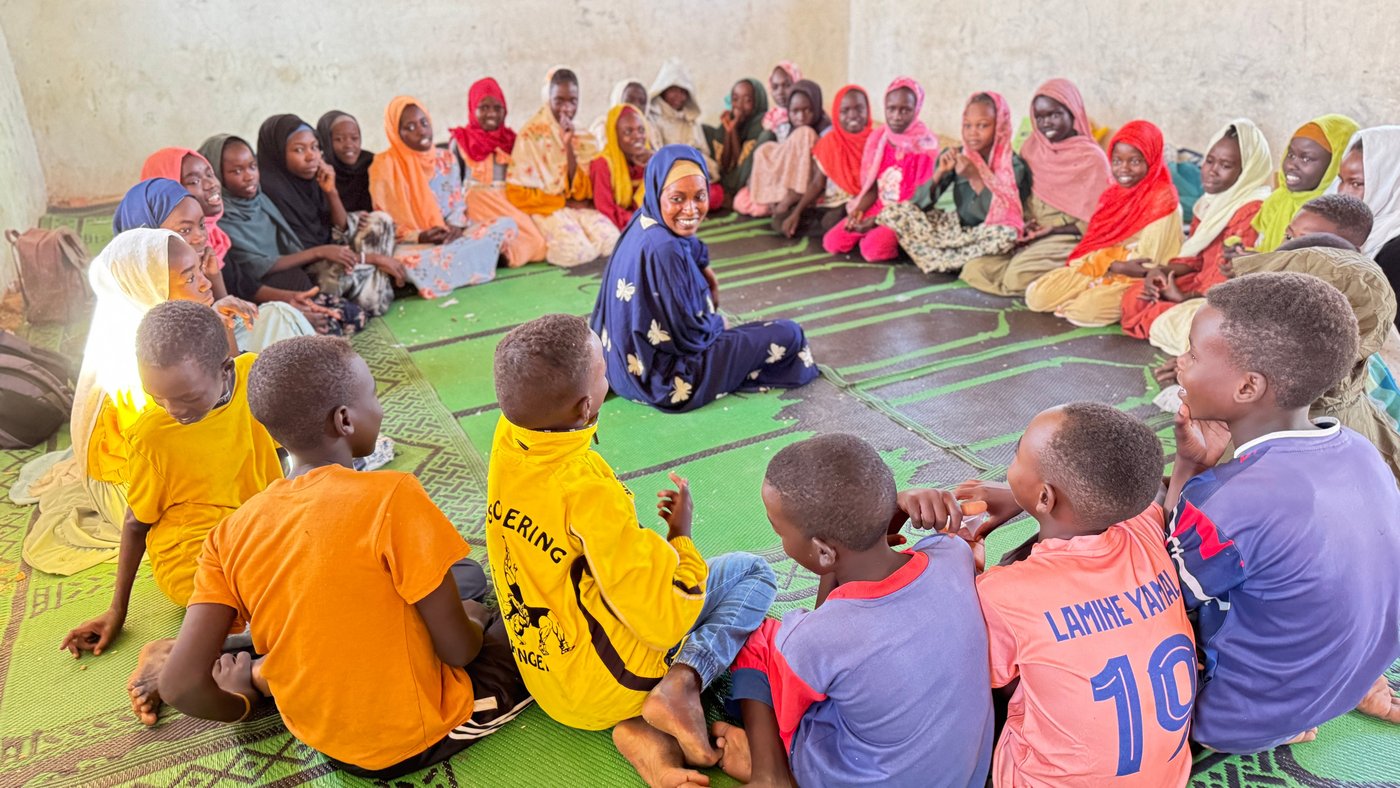
Inside the tent, structure matters. Children are grouped by age so activities feel appropriate and safe. From morning until mid-afternoon, the space rotates through drawing, play, and structured sports, including football, volleyball, and games children teach one another from their own communities.
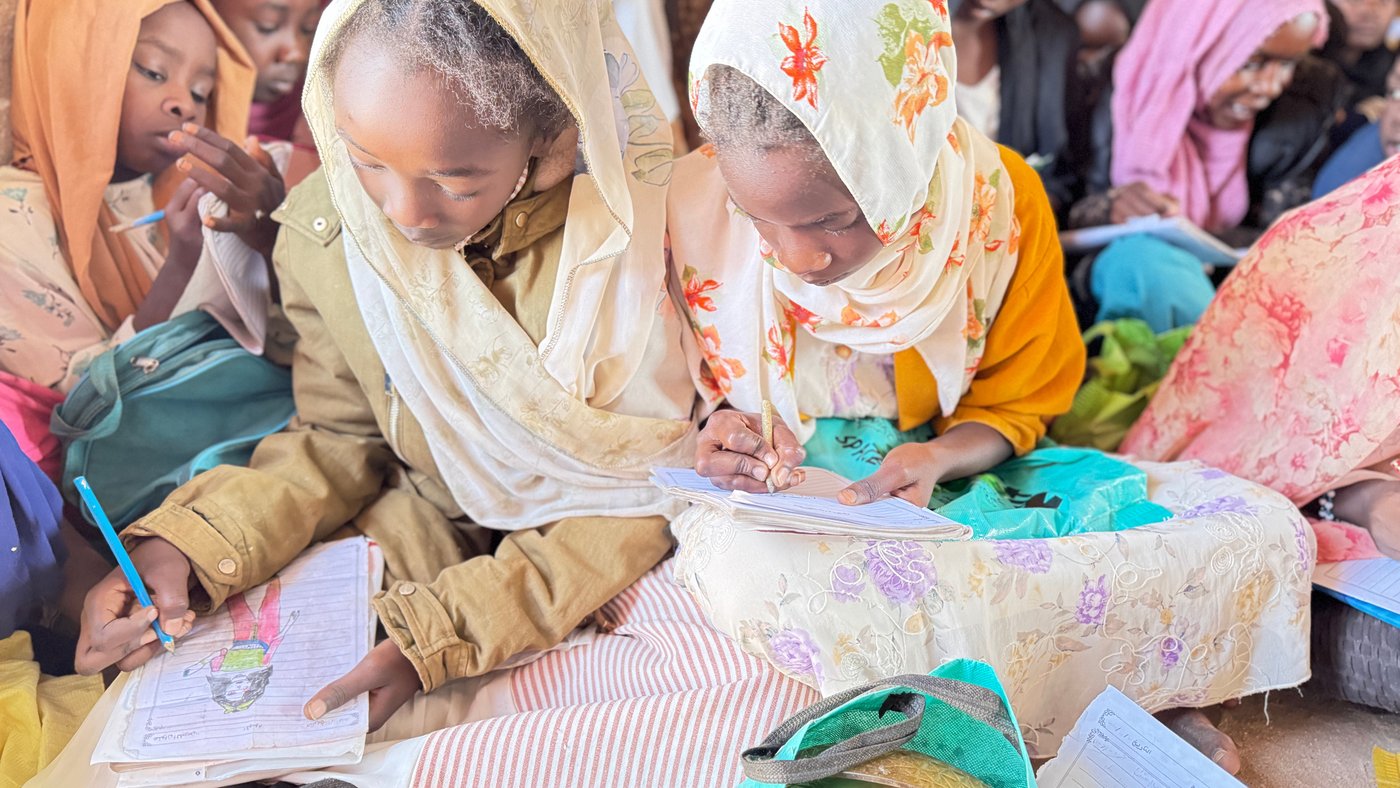
Beyond scheduled activities, the focus is on restoring a sense of stability. Children practice breathing techniques and grounding exercises that help them notice their bodies, slow their thoughts, and identify a safe place in their minds when fear returns. They are encouraged to name feelings rather than suppress them. Drawing becomes a way to place painful memories outside themselves.
Without mental health and psychosocial support, children affected by conflict can face long-lasting harm to their development and wellbeing. These needs sit alongside food and shelter, not beneath them.
Over time, small shifts become visible. “The second time we asked them to draw, the pictures changed,” Nidaa explains. “There was still sadness, but less violence. Nightmares became less frequent for some, and fighting between children reduced.”
“I can find my safe haven”
For Tartil, the change feels personal: “I feel so happy now. I know how to comfort myself to feel better. I know how to breathe and calm myself. I can find my safe haven. I draw and write down my feelings.”
Rayyan describes something similar: “After conflict scattered our families and neighbours in Al Fasher, everything changed. Some have been killed. The support helps us leave sadness for a while. The palm tree exercise and smelling a flower exercise help me feel good.”
The activities in the tent are part of NRC’s Better Learning Programme, designed for children whose education has been disrupted by conflict. It addresses immediate learning and psychosocial needs first, then supports children to transition into appropriate non-formal education pathways.
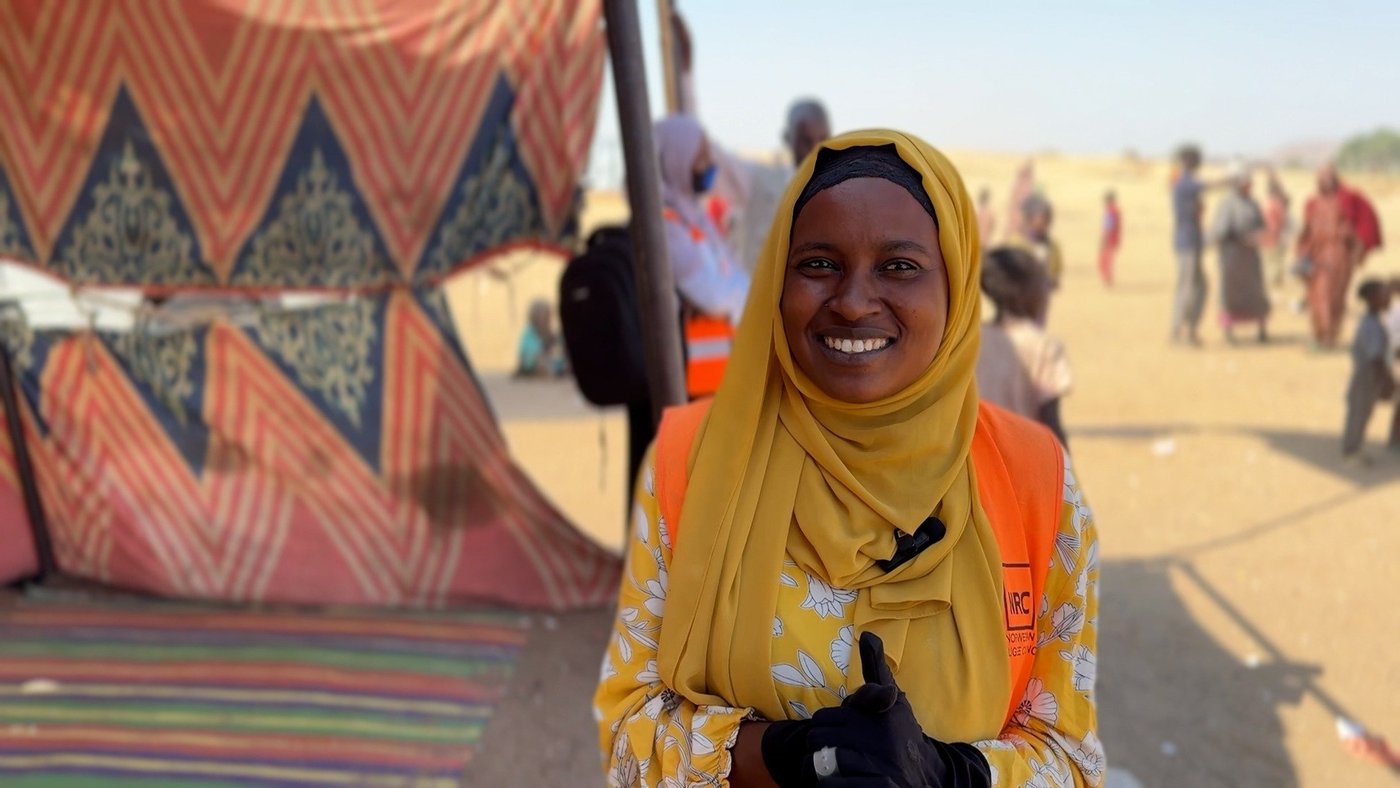
For Nidaa, one principle guides the work: “When a child loses home, school, friends, and everything familiar, what they need first is a place that feels safe. From there, learning can return.”
She did not plan to become a volunteer in a displacement camp. She was a teacher in Al Fasher, but conflict forced her to flee, like so many others. Yet, each morning she returns with the same purpose: to help children move forward, not by erasing what happened, but by creating space for play, calm breathing, friendship, and the first steady signs of recovery.
Sign up to our newsletter to read more stories from around the world.
