


Garasbaley camp sits on the edge of Mogadishu, a sprawling settlement of makeshift shelters where thousands of people are suffering the consequences of Somalia’s conflicts. Here, Khadija, 78, is raising six grandchildren. They are the children of her late son, and their care is now her responsibility.

A national ID and new possibilities for a grandmother in Mogadishu
For the seven years she has lived here after fleeing armed conflict in Lower Shabelle, Khadija has faced a bureaucratic barrier on top of the physical demands of displacement. She had no formal legal identity.
When people flee a war zone, paperwork is rarely the priority. But in the years that follow, the lack of a national identification card becomes a wall. Without it, displaced people cannot easily register for aid, deal with local authorities or prove who they are to the agencies distributing the basic services a family of seven needs to live.
“After leaving our home, we had many difficulties to deal with,” Khadija says. “Not having an [identity (ID) card ] added another worry. Now I have an official document that shows who I am.”
Khadija recently joined 11,000 displaced people in Mogadishu who have been issued newly printed national ID cards. It is the result of a push by the Norwegian Refugee Council (NRC) and Somali authorities, the National Identification and Registration Authority (NIRA) and the Banadir Regional Administration.
Funded by the Swiss government, the wider plan is ambitious. It aims to formally register 130,000 displaced people across Mogadishu, Baidoa, and Kismayo. The premise is straightforward. People forced from their homes remain citizens with rights. But those rights are hard to claim when the state has no record of people's existence.

An ID card does not alter the physical reality of Garasbaley. It does not automatically guarantee financial assistance or healthcare, which still depend on whether overstretched local systems have anything left to give. It cannot replace a lost home or undo the last seven years. Khadija knows this.
But it does change the terms of engagement. A long walk to a clinic or a support request will no longer end in immediate rejection simply because she cannot produce the right documents. For someone managing a family with limited resources, removing that single administrative hurdle matters.
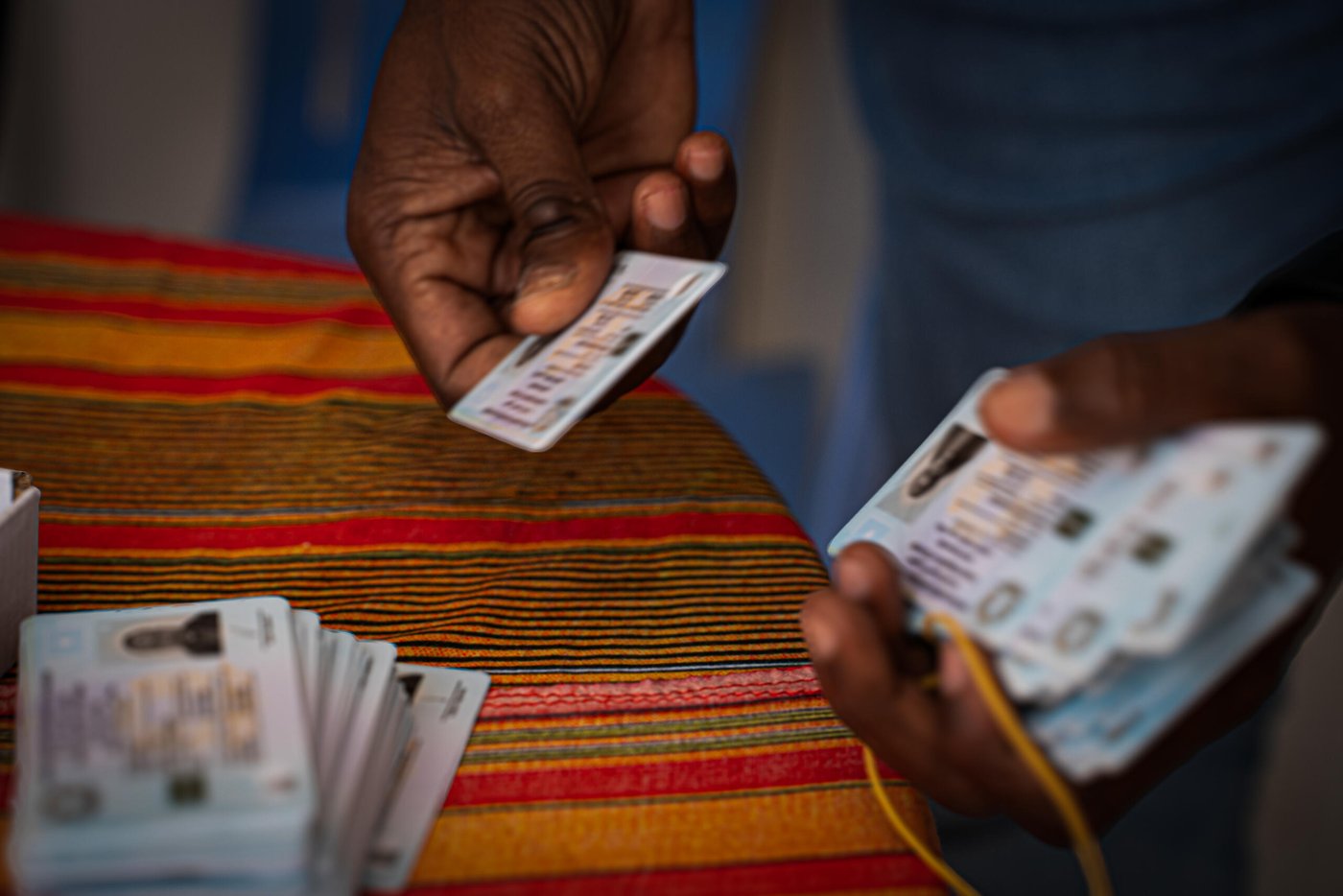
“I am looking after my late son’s six children,” Khadija explains. “At my age, caring for them is a big responsibility. I hope this card will make it easier to seek the services we need.”
In displacement crises, older people are often grouped into sweeping statistics, their specific burdens overlooked. Yet caregivers like Khadija are the ones holding fractured families together. For her, this ID is not about state-building. It is entirely about the future of the six children sleeping under her roof.
The success of the project will be tested in the coming months, measured by what happens when people like Khadija actually slide their new cards across a desk to ask for help.

For now, a practical milestone has been reached. She holds an official document that proves her identity.
“What matters to me is being able to care for these children,” she says. “I want them to have what they need, and I hope having an ID will help me do more for them. I have received my card, and I am glad to have it.”
Sign up to our newsletter to read more stories from around the world.
