


In Mambuke Town, north-west Ethiopia, three families survived the same conflict only to face the same problem: a shared house with strangers, one latrine between too many people, and no clear way out.

A door of our own
When Ahmed Abdela fled Burje, the conflict took his house, his cattle and his fields. His family of seven arrived in Mambuke with nothing. Their only option was to move into a small house already shared by two other displaced families. Three families shared one latrine with no privacy.
The mothers watched whose children went near it, and they argued when the answer was unclear. Ahmed's wife started keeping their daughters inside after dark.
Medina Ayechew, 35, lost her husband and her sight on the same day she fled Burje. Her 60-year-old mother became her eyes, guiding her out of Burje, into a life of displacement and whatever came next.
"I lost my husband, my eyesight, and everything our family owned. We escaped with nothing, leaving behind our home and livelihood. My elderly mother sacrificed everything to save our lives and has continued to care for me and my children despite her age,” says Medina.
The family of seven moved into a small house alongside another displaced family. Every time Medina needed the latrine, she had to ask someone to guide her across a shared compound she could not see. She stopped asking after dark.
“Living with another family in one small house was extremely difficult. We had no privacy, the sanitation was poor, and using the latrine was a daily struggle because I am blind,” she says.
Shea Yesuf Hussen buried three brothers after the conflict reached Burje. Then he fled with his family of six.
In Mesereta Kebele they found shelter in a house where four other families lived with no latrine. At night, residents went outside. Shea counted his daughters before he slept and again when he woke. He did not sleep well.
"After losing my brothers and everything we owned because of the conflict, I did not know how I would protect my family. We lived in a crowded house with other displaced families under very difficult conditions,” he says.
Through the Ethiopia Humanitarian Fund (EHF), the Norwegian Refugee Council (NRC) provided all three families with cash assistance to help them pay their rent.
Ahmed's family received ETB 3,200 (equivalent to 20 US dollars) per month for six months, the standard rate for internally displaced people in Ethiopia. Medina's family received ETB 3,633, reflecting the additional cost her disability places on daily life in shared accommodation. Shea's family received ETB 3,200 and signed a tenancy agreement enabling them to move into a house in Mambuke 02 village.
Before the first transfer, NRC's Information, Counselling and Legal Assistance team issued Ahmed with a digital ID and helped him open a bank account, so the cash could move through the formal banking system securely, without risk. The families signed six-month tenancy agreements and moved into their own rented homes in Mambuke Town.
Ahmed's seven family members now have a house to themselves. The children sleep without bodies pressed against them. There is a private latrine. His wife no longer counts the hours until morning.
"The shelter rental assistance gave my family more than a house. It restored our sense of safety, privacy, and hope for the future," says Ahmed.
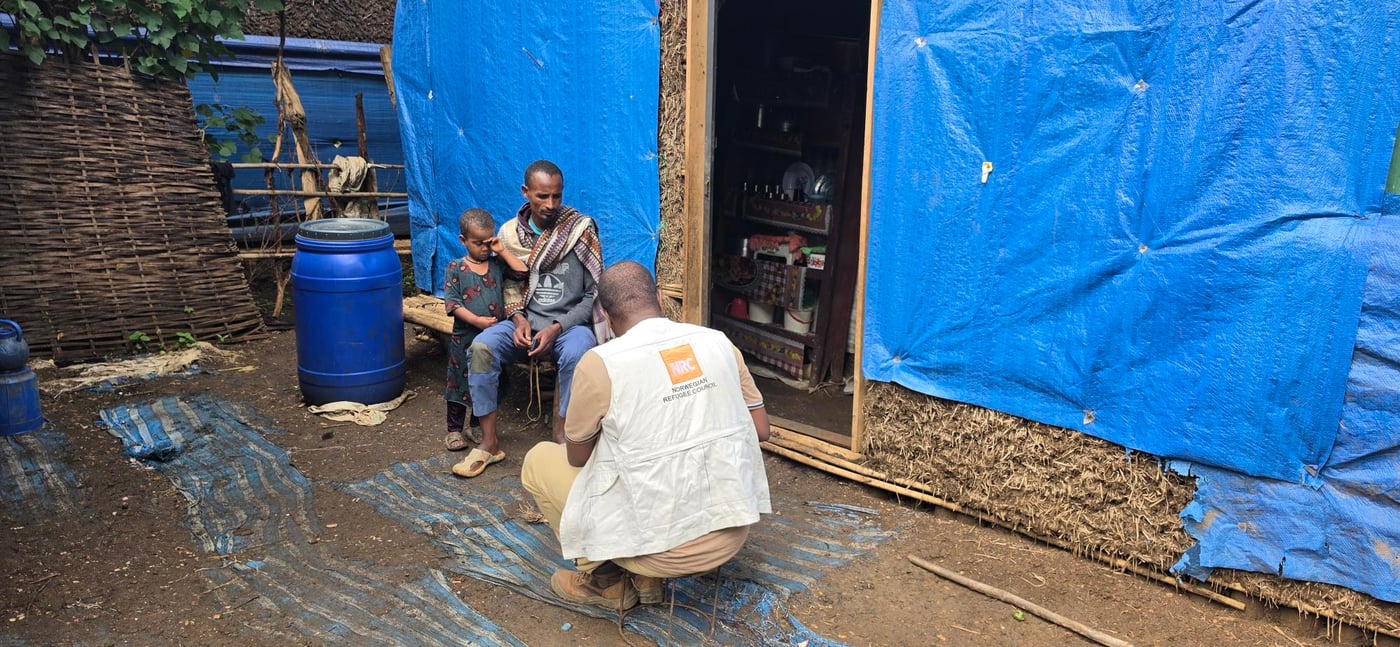
Medina's family has adequate space, a private latrine, and walls of their own. Her mother still guides her. But the path from the bedroom to the latrine is one that Medina has walked enough times to know by feel. She does not ask for help after dark anymore.
"Today, my children and I have a safe place to live. We have regained our dignity and can finally look forward with hope," says Medina.
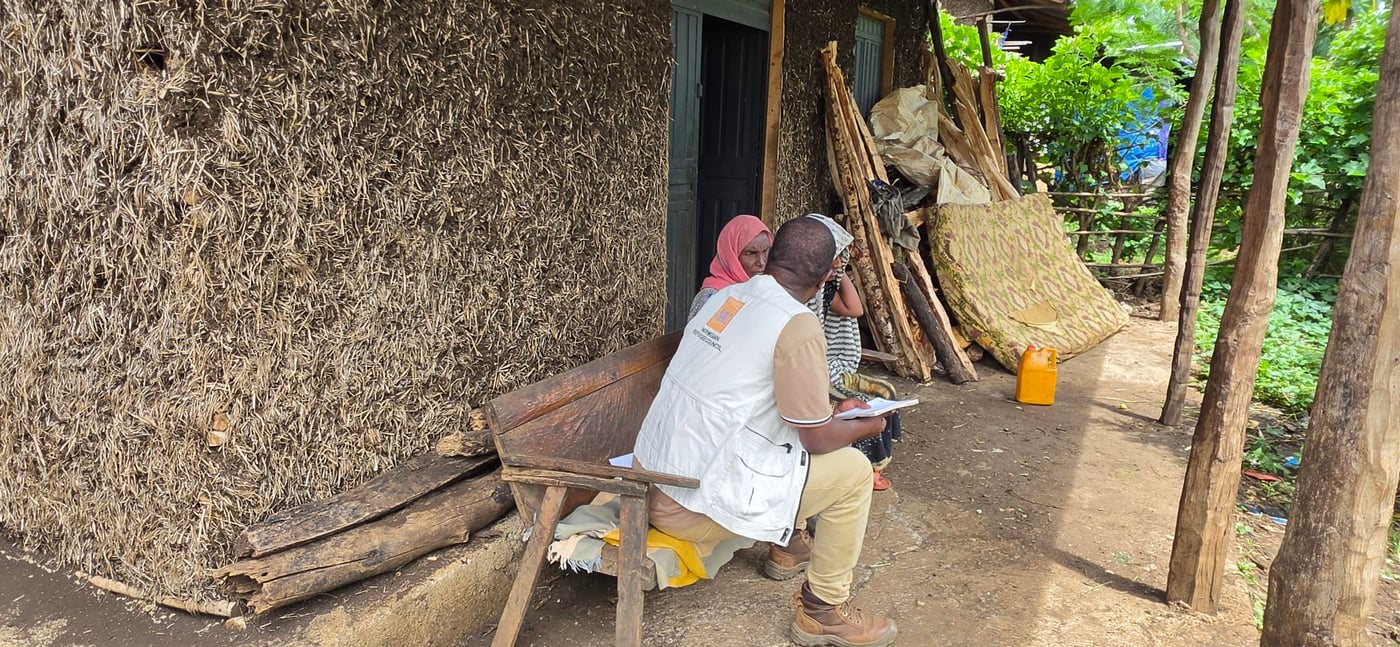
Shea's daughters now sleep inside at night, and he knows exactly where they are. The new house has a latrine, and has walls that belong to one family.
“Today, thanks to NRC and the EHF rental support, my family has a safe place to live with privacy, sanitation, and dignity. This support has restored our hope and given us peace of mind," says Shea.
Ahmed now serves on the project participant selection committee for his area. He sits in the meetings where vulnerable households are identified and listed. He has seen what the wrong side of that list looks like from the inside of the shared compound. He remembers the arguments at the latrine, the daughters kept indoors. He makes sure other families do not have to wait longer than necessary.
Burje is still not safe, and the families cannot go back. But the tenancy agreement is signed, the rent is paid, and for the first time since fleeing, the door at the end of the day is theirs to close.
Sign up to our newsletter to read more stories from around the world.
