


Across Darfur, different classrooms are creating common ground through learning, friendship and play.
Same blackboard, different futures
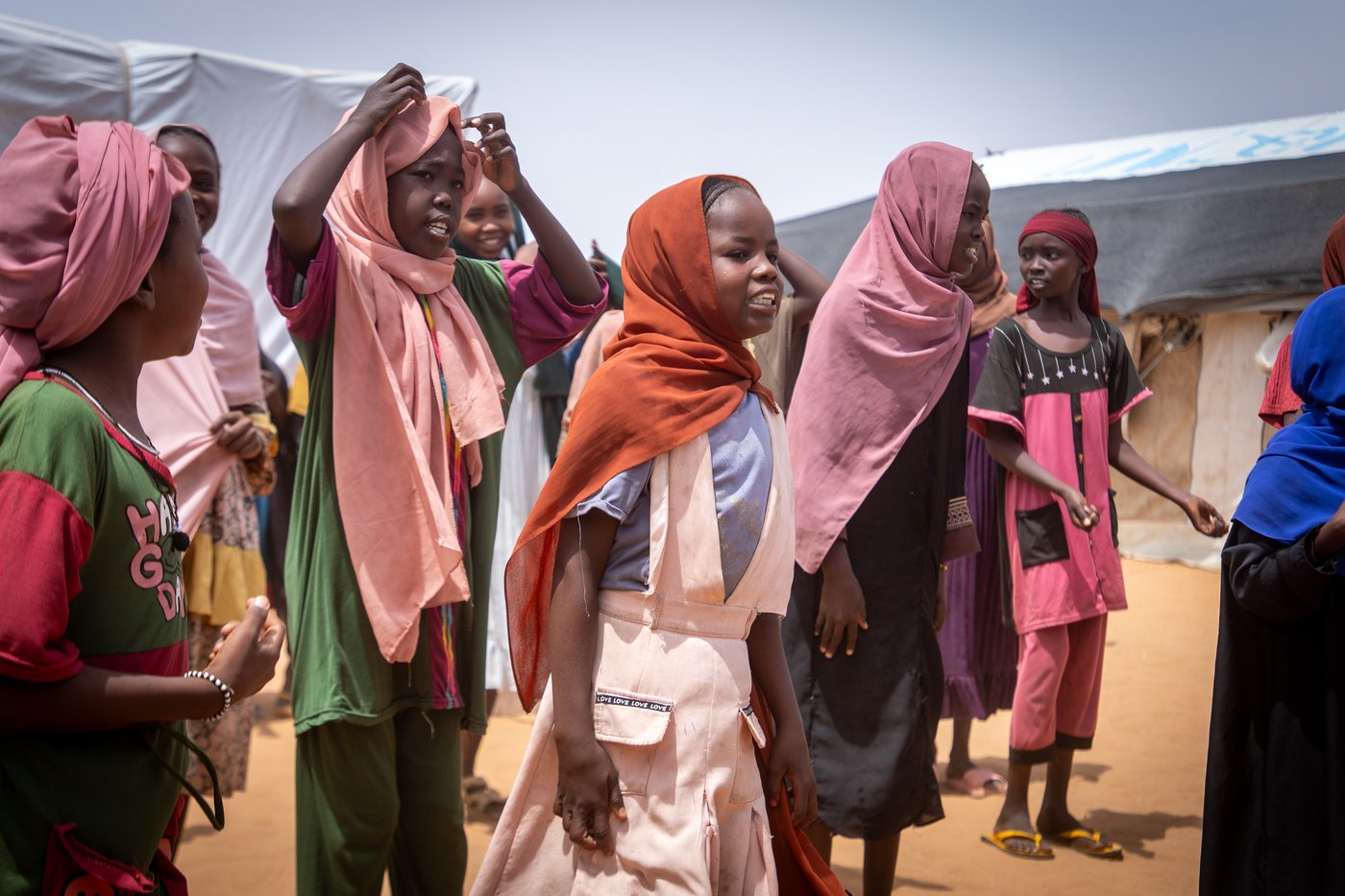
Somewhere in Tawila, North Darfur, a girl looks at a blackboard and smiles before the lesson has even started.
“Just seeing the blackboard inside the classroom makes me smile instantly,” she says. “Being here makes me incredibly happy.” At the Child Friendly Space she attends, Maysam reads, skips rope and picks flowers with her friends Zuhal* and Muzdalifa*.
Tawila now hosts more than 700,000 people displaced by conflict, placing enormous pressure on already limited services. Yet within its learning spaces, children are finding opportunities to return to the familiar routines of learning, friendship and play.
At another learning space in Tawila, 14-year-old Esraa notices something different when she arrives. “I feel happy here when I come to school, see the flowers, and meet my friends,” she says. Drawing, volleyball and skipping rope are among the activities she enjoys there.
Across Darfur, the same small details recur in different forms. They matter even more in a region where more than three million of nearly four million school-aged children are out of school. Against that backdrop, the ordinary routines of a school day have taken on greater significance.
The learning spaces are part of an education and protection response supported by the European Union and implemented by the Norwegian Refugee Council (NRC), Plan International and War Child, working alongside seven Sudanese partner organisations. Together, the consortium is reaching more than 197,500 conflict-affected girls and boys across Sudan through learning opportunities, psychosocial support and child-friendly spaces that support children’s learning, wellbeing and protection.
A place to learn and belong
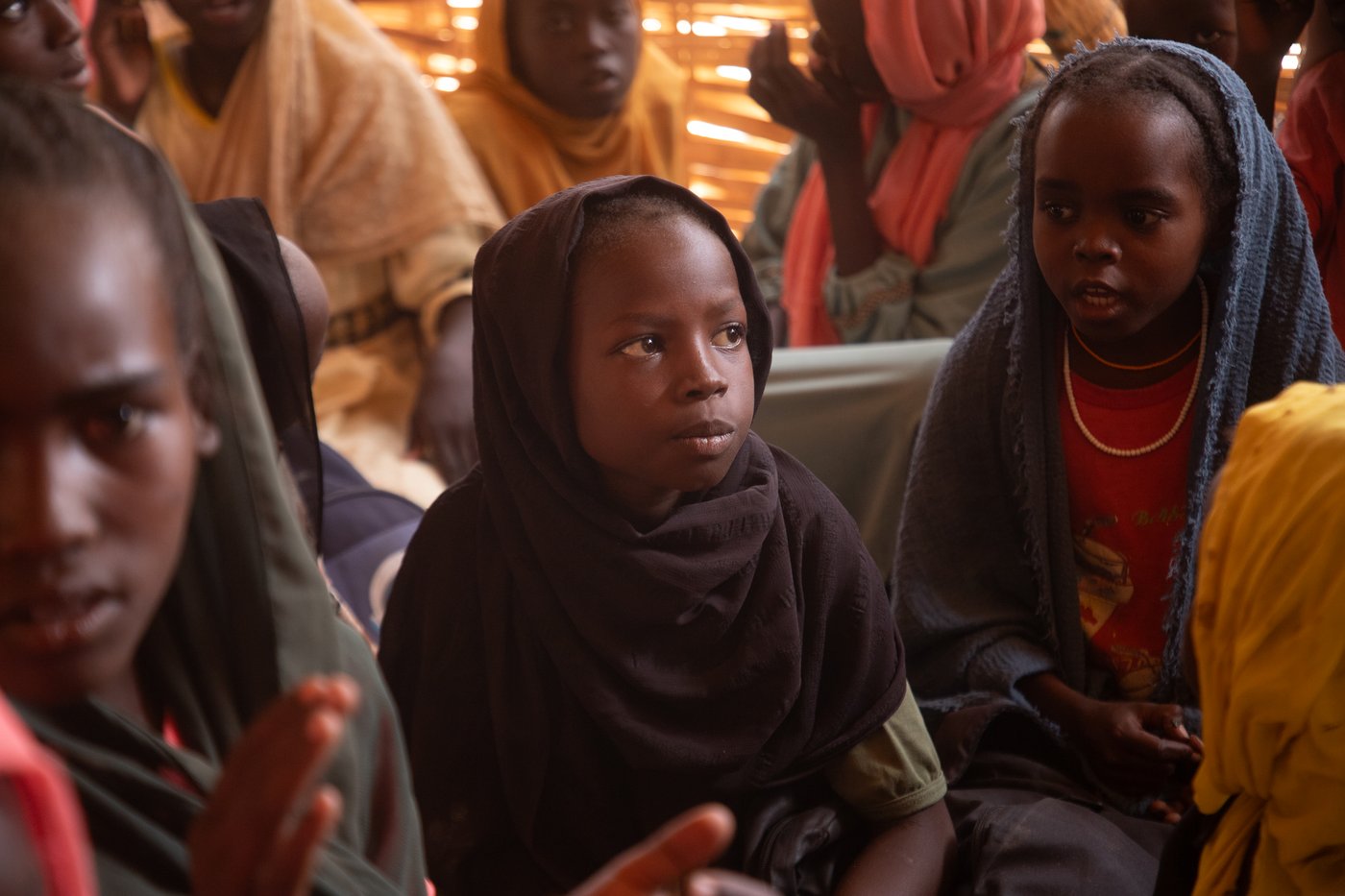
Ask the children what they enjoy and the answers tend to be immediate and specific. Rabha, 12, names Esraa among her friends and says skipping rope is her favourite activity. “When I come to school, I feel happy,” she says. “I come here to study and play.”
For 10-year-old Masoula, a good day can include volleyball, skipping rope, studying and talking with friends. One of her favourite moments is passing an exam, and she describes the school as “a safe home”.
As for Maysam, the centre is also a place where she says she feels safe. “We feel very safe and supported,” she says.
Her father, Mohamed*, notices the difference too. “Seeing my children play and smile again is the pinnacle of happiness,” he says.
These moments recur across the interviews; children finding people they want to spend time with, activities they look forward to and reasons to return. Their experiences may be different, but inside these learning spaces they are able to do many of the same things children everywhere should be able to do: learn, play, form friendships and think about what comes next.
From one side of the classroom to the other
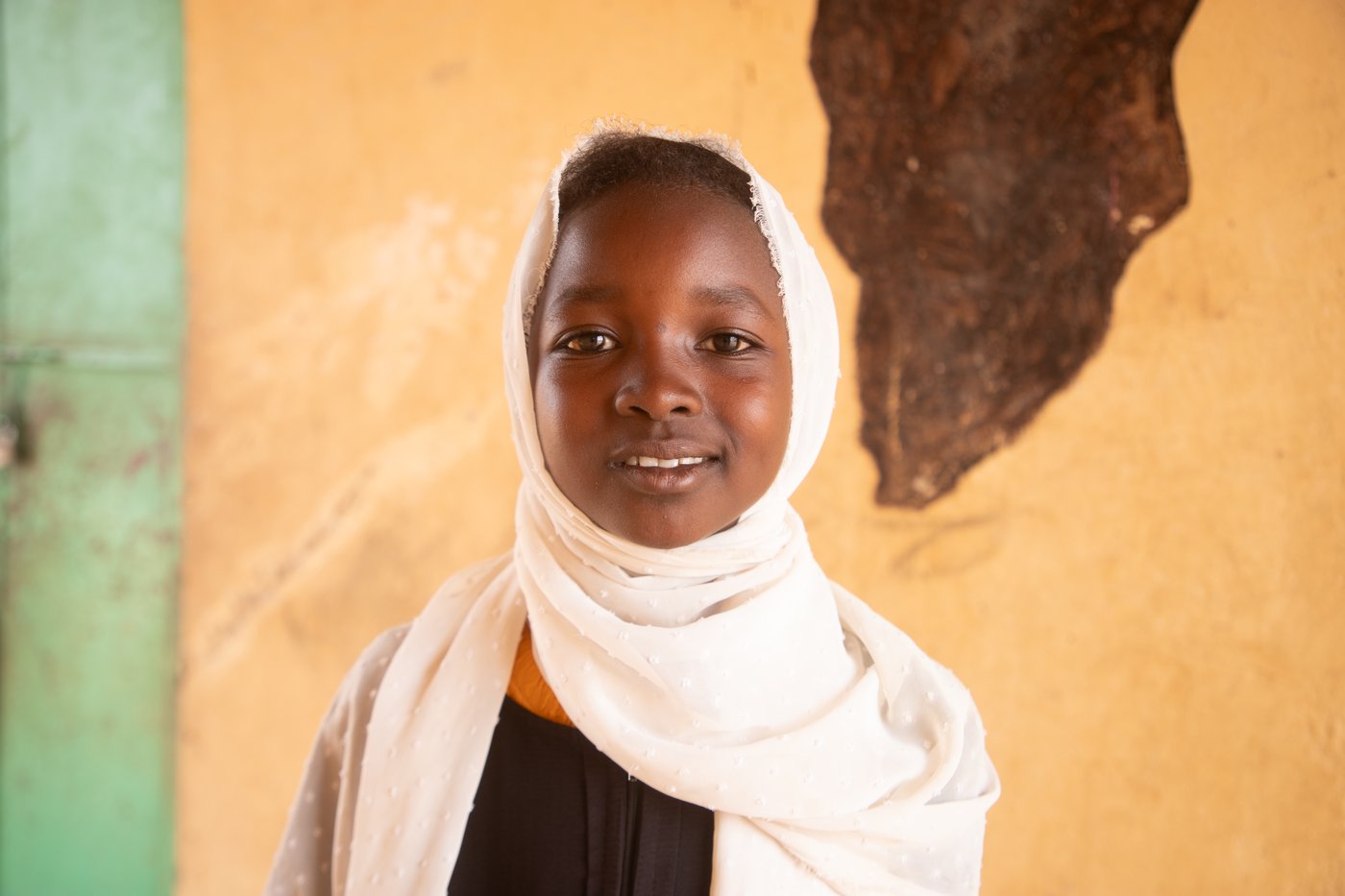
At an NRC-supported centre in Tawila, Sukaina sees that school day from the front of the classroom. She was displaced from Zamzam to Tawila before becoming a teacher in June 2025, after receiving training in psychosocial support. She later received training in accelerated learning, helping her support children who have missed periods of schooling.
“Many things made me become a teacher,” Sukaina says. “I want to bring people from the darkness of ignorance to the light of education.”
She says the changes she has seen in children have taken time. “Now they have become cheerful with us, with their classmates, and with each other,” she says.
Making that possible is not always straightforward. Sukaina recalls a period when 200 children were using a single tent, with no water, no fence and very little space. At another learning space in Tawila, overcrowding has also been identified as an ongoing challenge as more displaced families arrive.
The learning spaces cannot remove the uncertainty children and families face beyond them, but they can offer structure within the day through lessons, play, psychosocial support and time spent with peers.
In South Darfur, a child attending a War Child-supported school describes a favourite activity in similarly straightforward terms: “My favourite activity at school is when I am inside the classroom reading and writing while learning.”
The child also remembers receiving exercise books and colours for painting, singing during a school activity, playing sports with classmates and the satisfaction of succeeding in a test.
When asked why education matters, however, the answer looks beyond today's classroom. “Education is important to me because it will help me in the future. My dream is to become a teacher.”
The ambition echoes Sukaina's words from another classroom in Tawila: “The country needs teachers.”
Across different classrooms, their words meet: one teacher standing at the front of one, and one child imagining a future there.
*Names changed for safeguarding purposes.
Sign up to our newsletter to read more stories from around the world.
