


Nearly 15,000 newly displaced people in Yemen have arrived at displacement sites supported by the Norwegian Refugee Council (NRC), as fighting continues to force families from their homes across governorates, the organisation has said.
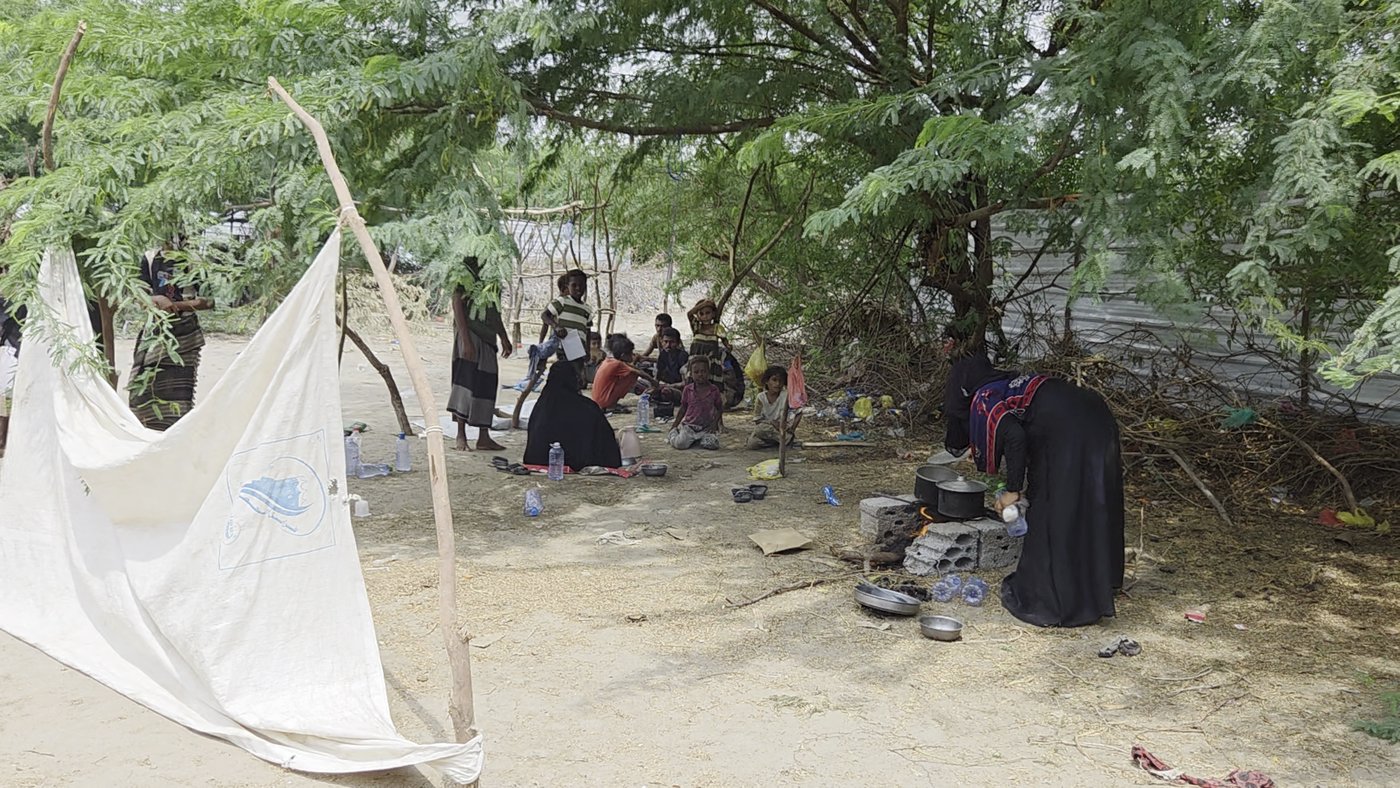
Yemen: 15,000 people arrive in NRC-supported displacement sites
The figure represents a 78 per cent jump from pre-escalation figures across sites that NRC supports in the southern governorates of Taiz, Lahj and Abyan. Many new arrivals are families who have been displaced again after fleeing NRC-supported sites in Taiz. Overall, 128,000 people across the country have been displaced by the fighting.
Taiz remains the most affected governorate. Five of ten displacement sites that NRC supports there have emptied as fighting drew close. People have moved to other displacement sites and villages.
“New families are arriving by the hour, many moving from one displacement site to another,” said Alison Bottomley, NRC’s advocacy advisor in Yemen. “I have met many families arriving with nothing - no food to sustain them and no extra clothing or shelter to protect them. The ability of humanitarian organisations to respond falls short of the vast ocean of needs that we see. Urgent funds must be mobilised immediately to help provide water, shelter, food, education and safety.”
People have told NRC that they had to walk for two kilometres to reach the nearest water supply point, often relying on farms or mosques for drinking water. One father told NRC that he spent over six hours waiting to get hold of water as hundreds of people gathered around the same source. Entire families have to survive on one meal a day, often made of a single can of tuna and some bread. Others have made their own shelters out of wood, banana leaves and spare blankets.
At the same time, children are missing school and vulnerable people face heightened protection risks after being displaced yet again.
Said, a father displaced with his family in Abyan, told NRC, “We don't have anywhere to go; we can only stay here. We don't even have water containers or a bathroom. We have no shelter, no clothes. Food is provided by charitable people who give us what they can. This is our plight, being displaced by these wars.”
Emergency funding for Yemen has drastically diminished over the years while the needs continue to soar. Over 18 million people across Yemen face acute hunger, while 23 million, over half of Yemen’s population, were already in need of humanitarian aid before the latest escalation.
“When a neglected crisis is hit by an emergency on this scale, there are no easy choices. We are being forced to move already scarce funding from one community to meet urgent needs in another. But we cannot keep shifting the same limited resources around while needs continue to grow,” added Bottomley.
NRC is providing emergency supplies such as tents, mattresses, blankets, cleaning supplies, utensils, and safe spaces for children. Across Taiz governorate, NRC is supporting 1,500 families with emergency response in addition to 3,000 children, but needs are so great that new sites must be established for another 1,000 families.
Note to editors:
-
Photos from displacement sites in Taiz and Abyan governorates are available for use here.
-
Over 128,000 people, or 21,000 households, have been newly displaced across Yemen since 1 August according to the UN (OCHA).
-
NRC supports 25 displacement sites for internally displaced persons (IDPs) in governorates hosting people fleeing the current fighting in Taiz governorate and the West Coast. This includes 10 sites in Taiz governorate, 12 sites in Abyan governorate, and 3 sites in Lahj. Before the latest escalation, these displacement sites were home to more than 19,265 people (3,855 families).
-
Since the escalation, 2,835 families have newly arrived at NRC-supported sites including 1,350 new families in Taiz, 1,242 new households in Abyan, and 243 new families in Lahj. The majority of the families displaced within Taiz have come from NRC-supported sites and sought safety at other NRC-supported sites.
-
While the exact number of individuals per each household is undergoing survey verification, NRC estimates most IDP families have 5.5 members per household. This means 15,592 individuals are newly arrived at NRC-supported sites in Taiz, Abyan, and Lahj.
-
In Abyan, across 15 NRC-supported displacement sites, there were 2,347 households that have taken in another 1,350 newly displaced households, increasing the site population by nearly 60 per cent.
-
Al-Kud displacement site in Abyan previously hosted 256 families but has had 317 families arrive, doubling the population of the site.
-
In Lajh NRC-supported displacement sites, there were 737 HH including 3673 individuals. Since the escalation a further 242 families have arrived, a 35 per cent increase.
-
Close to three in four newly displaced households lack adequate shelter according to OCHA (OCHA).
-
23 million people need humanitarian support in Yemen (HNRP).
-
18.3 million people, nearly half the population, face severe food insecurity (HNRP).
-
Yemen’s humanitarian response for 2026 is just over 20 per cent funded as of September (OCHA).
-
NRC is prioritising an emergency response for newly displaced families in Taiz and Abyan, which includes emergency shelter kits, non-food items, hygiene kits, and the installation of new latrines.
-
Yemen is among the top five most-neglected crises in the world, according to NRC’s annual Neglected Displacement Crises report (NRC).
For more information or to arrange an interview, please contact
-
NRC global media hotline: media@nrc.no, +47 905 62 329
