
Across the Central Sahel region, millions of children carry deep mental scars resulting from exposure to extreme violence and armed conflict.
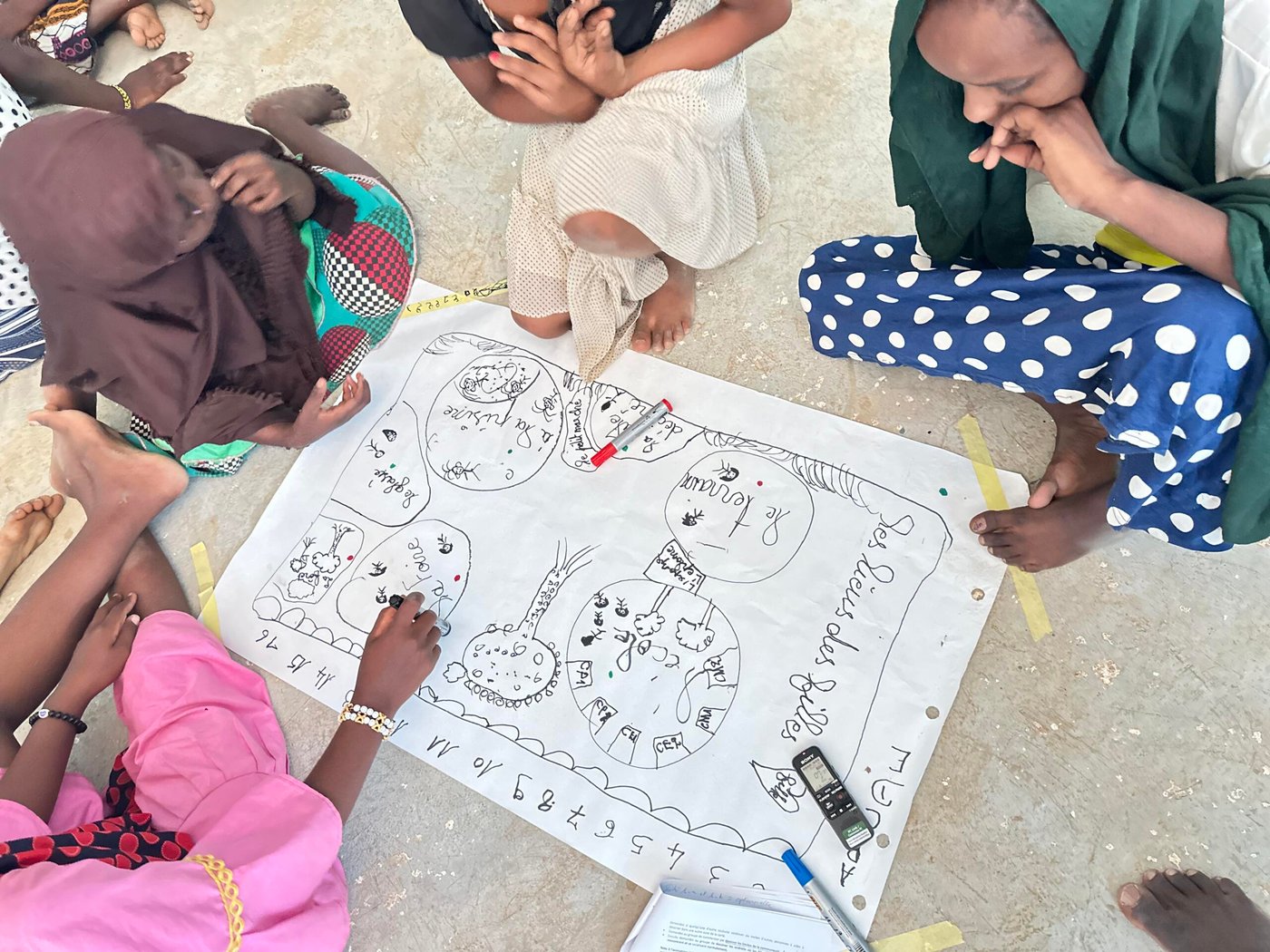
Central Sahel: Children supported to process trauma, but scale-up needed
Through its Better Learning Programme (BLP), the Norwegian Refugee Council (NRC) has helped close to 100,000 children across the region to begin to recover, giving children, teachers, and entire communities a chance to rebuild hope after trauma.
A severe lack of funding means support is only available for a fraction of those in need. Donors must step up and fund these programmes at the scale this crisis demands. At the same time education authorities must ensure that mental health and psychosocial support are fully integrated into teacher training and classroom practice — as an essential part of helping children learn and thrive again.
Across Burkina Faso, Mali, and Niger, which make up the Central Sahel, 12 million people now require humanitarian support, including 8.2 million children.
“Imagine a child in your care telling you: ‘I saw a motorbike hit a child until his head exploded.’ This offers a small window into the immense trauma being endured by children in some of the world’s most complex – and neglected – humanitarian crises, in the Central Sahel,” said Hassane Hamadou, NRC’s regional director for Central and West Africa.
“Gunfire, displacement, and food insecurity have become part of daily life, with many children also witnessing terrible atrocities. Children urgently need psychosocial support to process this trauma, and to give them the tools not only to begin healing, but also for their communities to begin to rebuild.”
Testimonies collected by NRC demonstrate that children continue to live with the trauma and sense of danger generated by such experiences long after the immediate threat has passed. Their mental wounds are compounded by a lack of educational opportunities, and an even deeper lack of psychosocial support, which both have a detrimental effect on children's ability to learn.
Amid these challenges, governments across the Central Sahel are showing leadership by helping to keep children learning and integrating psychosocial wellbeing into education policy and practice. NRC’s Better Learning Programme, developed in partnership with the Arctic University of Norway and implemented in partnership with education ministries, builds on this momentum. It offers a tested approach to address trauma and restore learning abilities; several countries, including Burkina Faso, are now adopting it at national scale.
The programme, which mobilises the support network of caregivers, teachers, and counsellors, aims to restore a sense of normality, and hope. It works to provide children with the tools and techniques needed to process their trauma and regulate their emotions during times of stress. This includes breathwork and other exercises for emotional regulation. This in turn helps them to feel safer, get back to learning, and ultimately to return to some semblance of childhood.
Many children confided in their parents and teachers, explaining how the programmes have helped them begin to recover. “These are movements that turn a sad person into a happy person,” explained one child from Dori in Burkina Faso. "I was scared when I heard shots and I took a deep breath, it passed," said another.
Teachers have also faced huge challenges trying to support children who lived through traumatic experiences. The programme has offered them practical support, allowing them to strengthen their own skills. “When we use the exercises, I feel calmer, more able to manage the class even when it’s crowded or noisy. It helps me to focus and not let fear take over,” reported a teacher working with the BLP programme.
“These programmes have given a lifeline to children who have experienced situations beyond the imagination of most people,” said Hamadou. “With NRC’s work we have shown just how effective psychosocial support can be – for children, teachers, and ultimately for communities building a future.
“It is now vital that donors invest in a way that allows these programmes to be implemented at the scale required. Ministries and educational leaders must strengthen the support they give to teachers and ensure that psychosocial support is properly integrated throughout both teacher training and the wider curriculum.”
Notes to editors:
-
The Better Learning Programme (BLP) is NRC’s flagship classroom-based psychosocial support intervention, designed to help children and youth in crisis-affected communities recover and thrive. Additional information can be found here: Right to Wellbeing 2025, Together for Wellbeing 2030
-
Across Burkina Faso, Mali, and Niger, which make up the Central Sahel, 12 million people – including 8.2 million children – now require humanitarian support (combined Global Humanitarian Overviews and UNICEF).
-
Since February 2021, BLP has supported 97,000 children across Burkina Faso, Mali and Niger (NRC Better Learning Programme Data).
-
The example of Burkina Faso demonstrates a successful pathway. Since December 2023, NRC and the Ministry of Education have advanced a five-year roadmap for BLP integration, backed by a three-year partnership with the Ministry and ST-ESU (Technical Secretary for Education in Emergency). Over 100 master trainers, 700 teachers, and nearly 850 caregivers have been trained, piloting BLP and reaching more than 60,000 children (NRC Better Learning Programme Data).
-
As of July 2025, the Central Sahel was the epicenter of the region’s education crisis, accounting for more than half of all school closures in West and Central Africa. In total, 8,452 schools were closed, leaving over 1.5 million children without access to education (data collected by education clusters in the region). Without quality education and psychosocial support, children cannot learn, teachers cannot teach, and communities cannot rebuild (Education Cluster report).
For more information or to arrange an interview, please contact:
-
NRC global media hotline: media@nrc.no, +47 905 62 329
