Glimpses from the field
The Norwegian Refugee Council
December 2019

Thank you!
We have reached the end of 2019, and we would like to take the opportunity to thank all our friends and supporters for your contributions throughout the year.
This past year has been challenging for millions of refugees and displaced people. In Syria, 6.2 million people are internally displaced; in the Democratic Republic of the Congo, at least 7 million children between five and 17 are out of school; and in Yemen, two thirds of the population - 20 million people – are facing crisis or emergency food insecurity.
Thanks to the support and engagement from the private sector we are able to respond quicker to humanitarian needs, exchange valuable knowledge, and maximise our impact. Last year, we delivered life-changing aid to 8.5 million displaced people in 31 countries worldwide.
Our work for displaced people touches upon all the areas of the United Nations Sustainable Development Goals (SDGs), from environmental and social impact to economic development. Our activities related to education, shelter, water and legal assistance have impact on many SDGs such as: no poverty, quality education, gender equality, clean water and sanitation, reduced inequality and more.

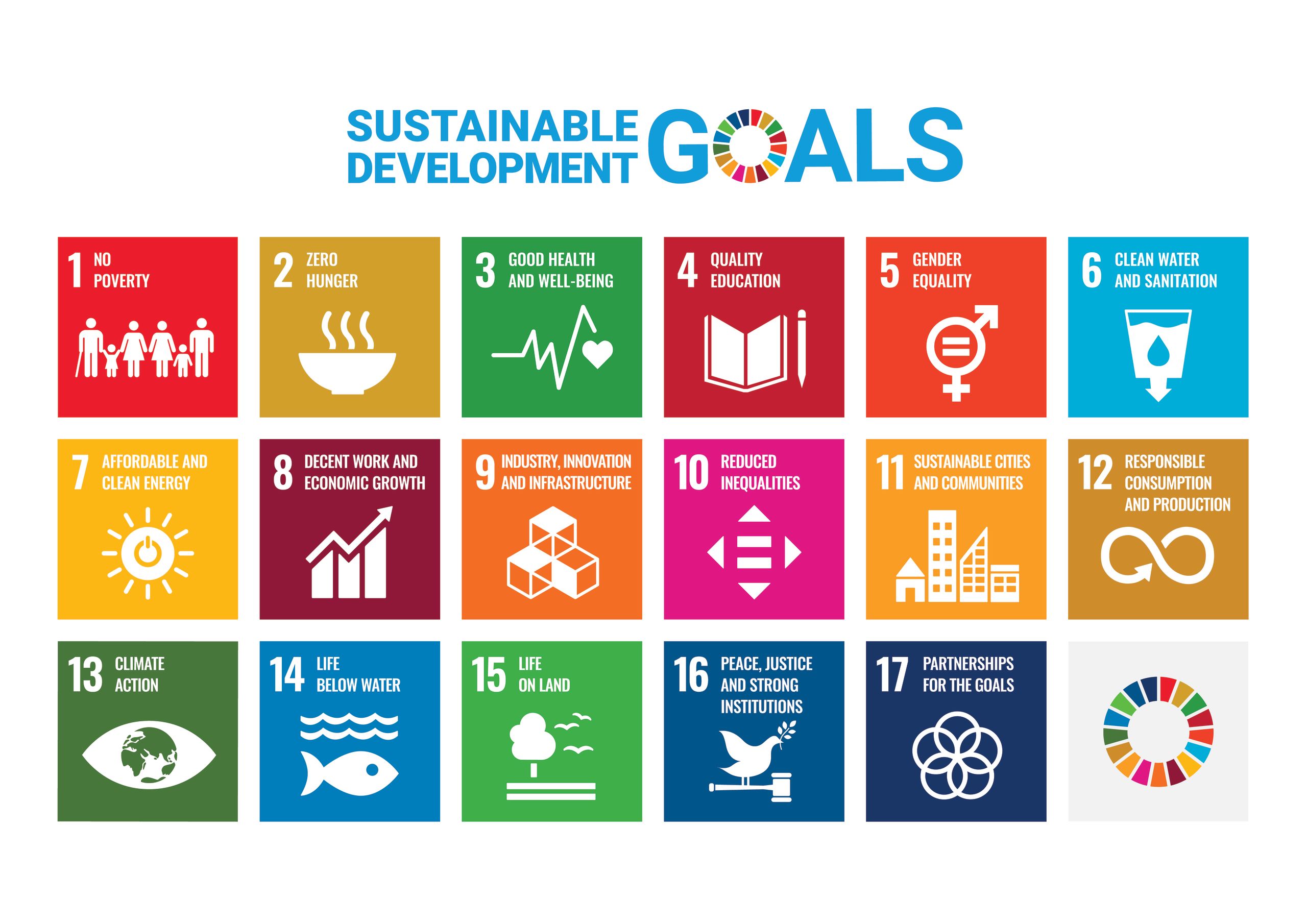
Photo: United Nations (UN)
Photo: United Nations (UN)
The SDGs require collaboration and partnerships across sectors – between organisations and corporations. We believe that mutual and sustainable partnerships are essential to respond efficiently to the world's displacement situation. With a particular focus on goal 17; “Partnerships for the goals”, we want to make sure we sustain a better planet for all future generations, together.



Follow us on LinkedIn to stay updated on corporate-related topics linked to our work for displaced people:
Snapshots from where we work

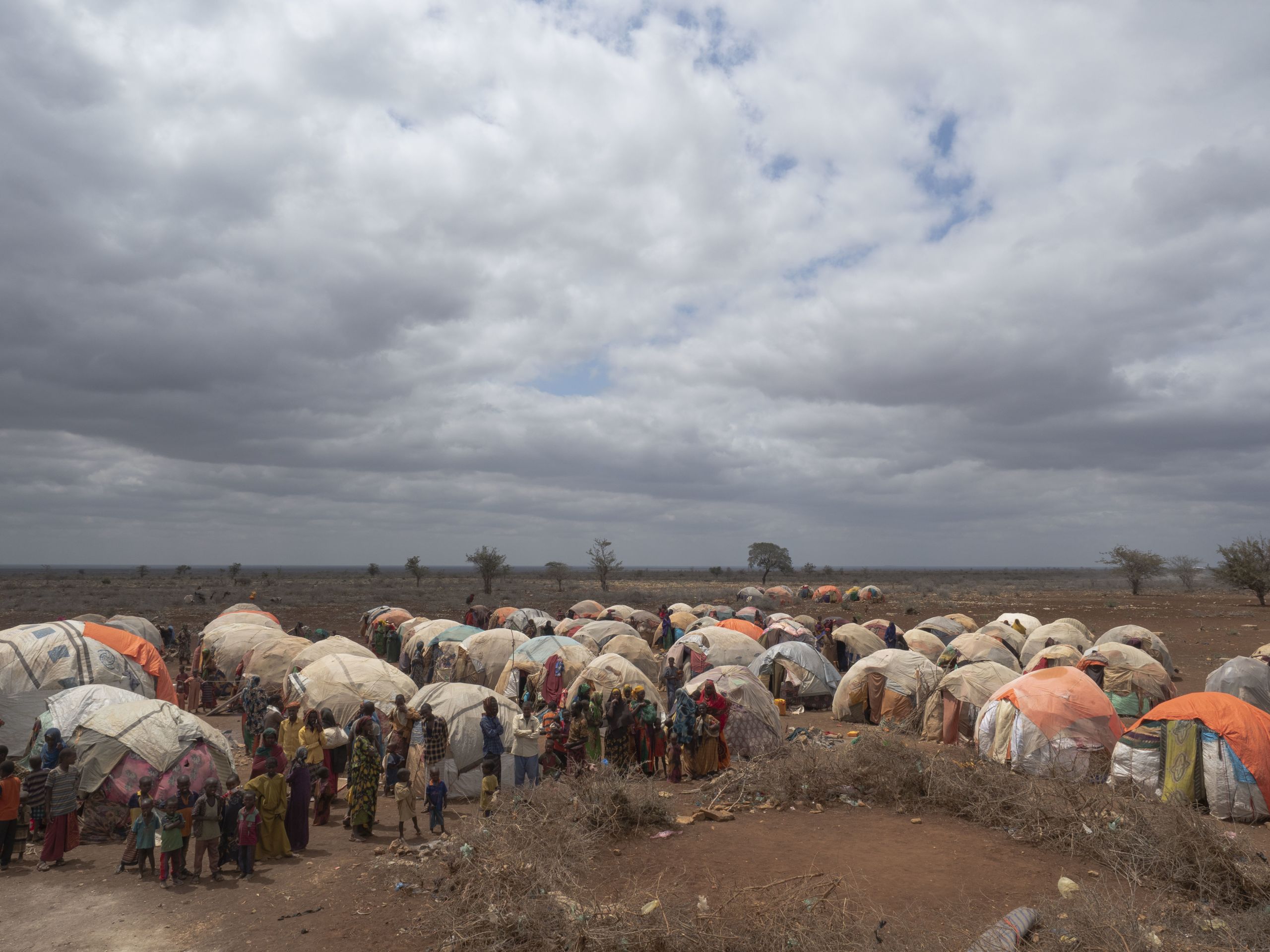
57,000 people affected by severe flooding in Central African Republic
As of November, more than 10,000 homes have been destroyed and already impoverished neighbourhoods are under water due to flooding caused by heavy rain in Central African Republic (CAR). The recent flooding has exacerbated an already difficult situation for people living the poorest country in the world. More than half of the population is in need of humanitarian support and 600,000 are displaced by ongoing conflicts in several parts of the country. The UN and humanitarian partners have appealed for $430 million to meet the needs this year, but so far only 67 percent has been funded.
Read about NRC's work in CAR here.
Because of the flood, canoes are the only way that get from one side of the neighbourhood to another. Photo: Itunu Kuku/NRC

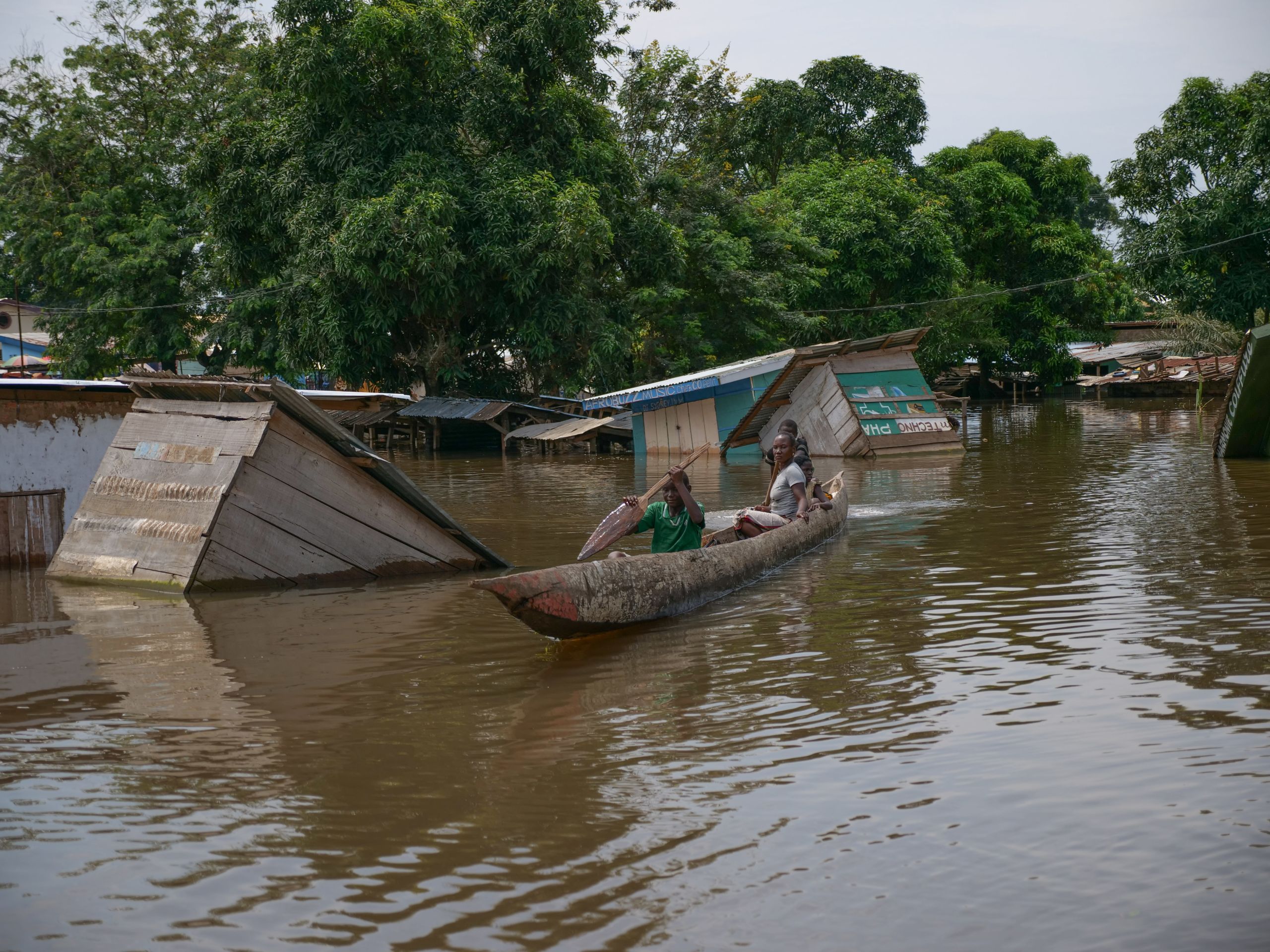
Conflict and drought displace 300,000 in Somalia this year
Somalia represents one of the world’s most complex and longstanding humanitarian crises, where almost 20 percent of the population is currently displaced and a third in urgent need of humanitarian aid. Severe climate shocks are having a major impact in Somalia, where different parts of the country are simultaneously affected by floods and the impact of drought.
Read about NRC's work in Somalia here.
People queue at a water installation in Baidoa, which has been built to support both displaced people and the local population, all of whom would otherwise have limited access to safe water. Photo: Ingrid Prestetun/NRC

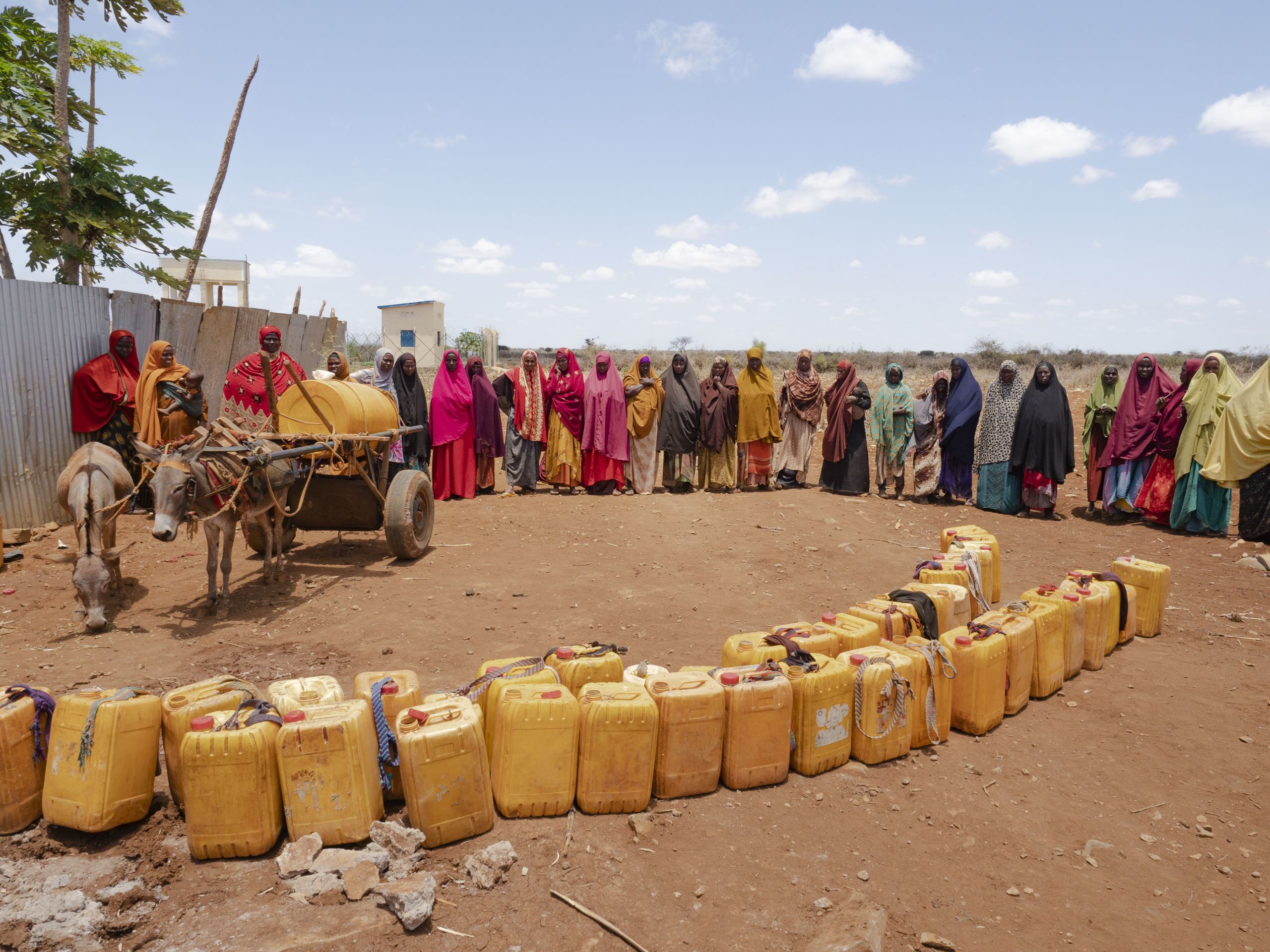
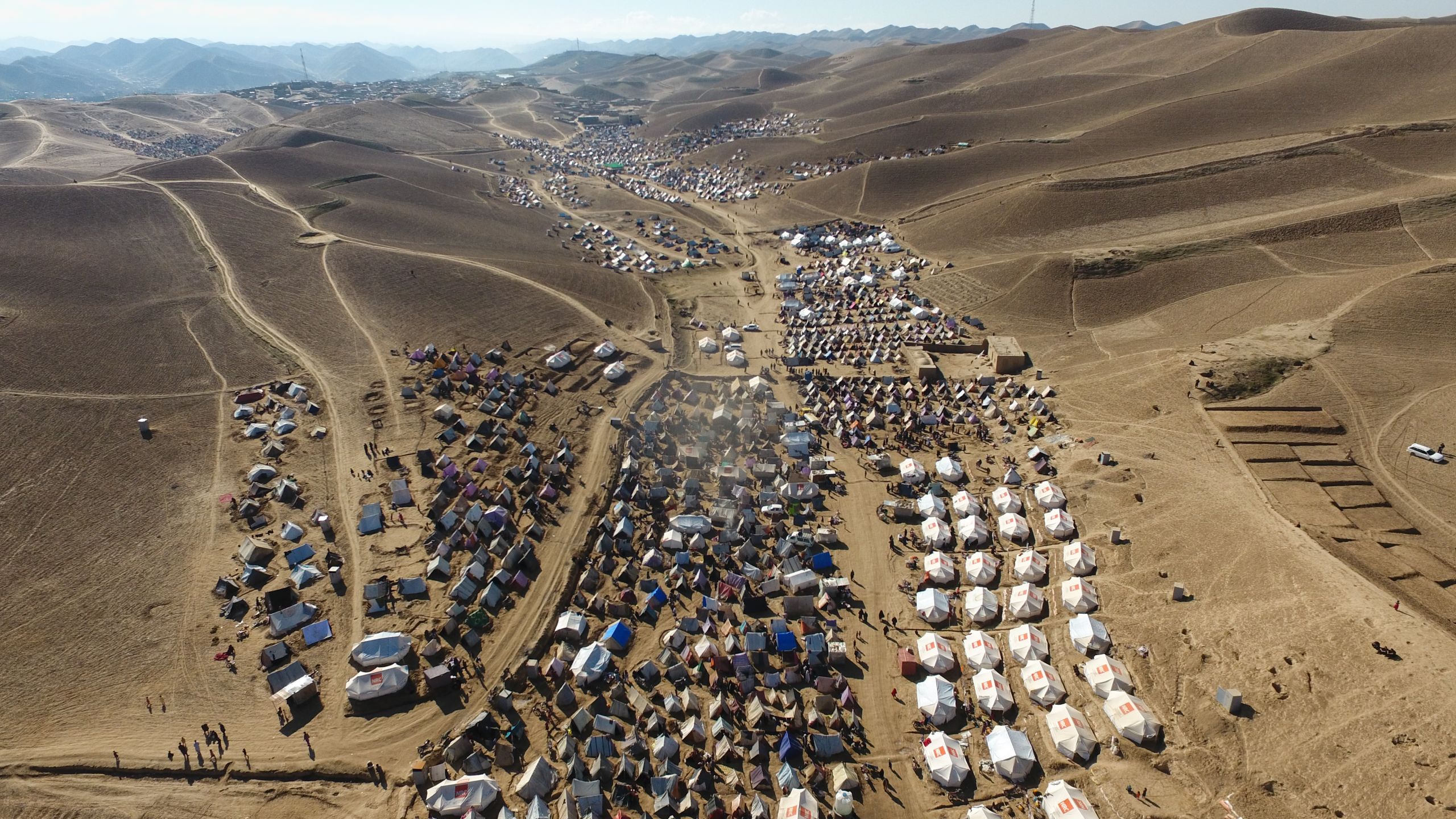
Displaced Afghans resort to desperate measures as support dwindles
Over a year after the worst drought on record forced nearly 500,000 Afghans to leave their homes, many families remain in tents on the outskirts of Herat and in Badghis. Unable to return home due to ongoing conflict, they struggle to survive as support is cut back. NRC data from these areas suggests that 50 per cent of the displaced families surveyed said that they had sold assets, borrowed money or married off their children in order to cope with their current situation. NRC has been advocating for the continuation of assistance to these displaced families until a dignified solution for them to survive is put in place.
Read about NRC's work in Afghanistan here.
This photo shows the size and scale of a site for displaced people in Badghis in north-west Afghanistan. The photo was taken during NRC’s tent distribution last year, and some of our white and orange family tents are clearly visible in the foreground. Photo: Enayatullah Azad/NRC

Syrian refugees fleeing for safety before ceasefire ends
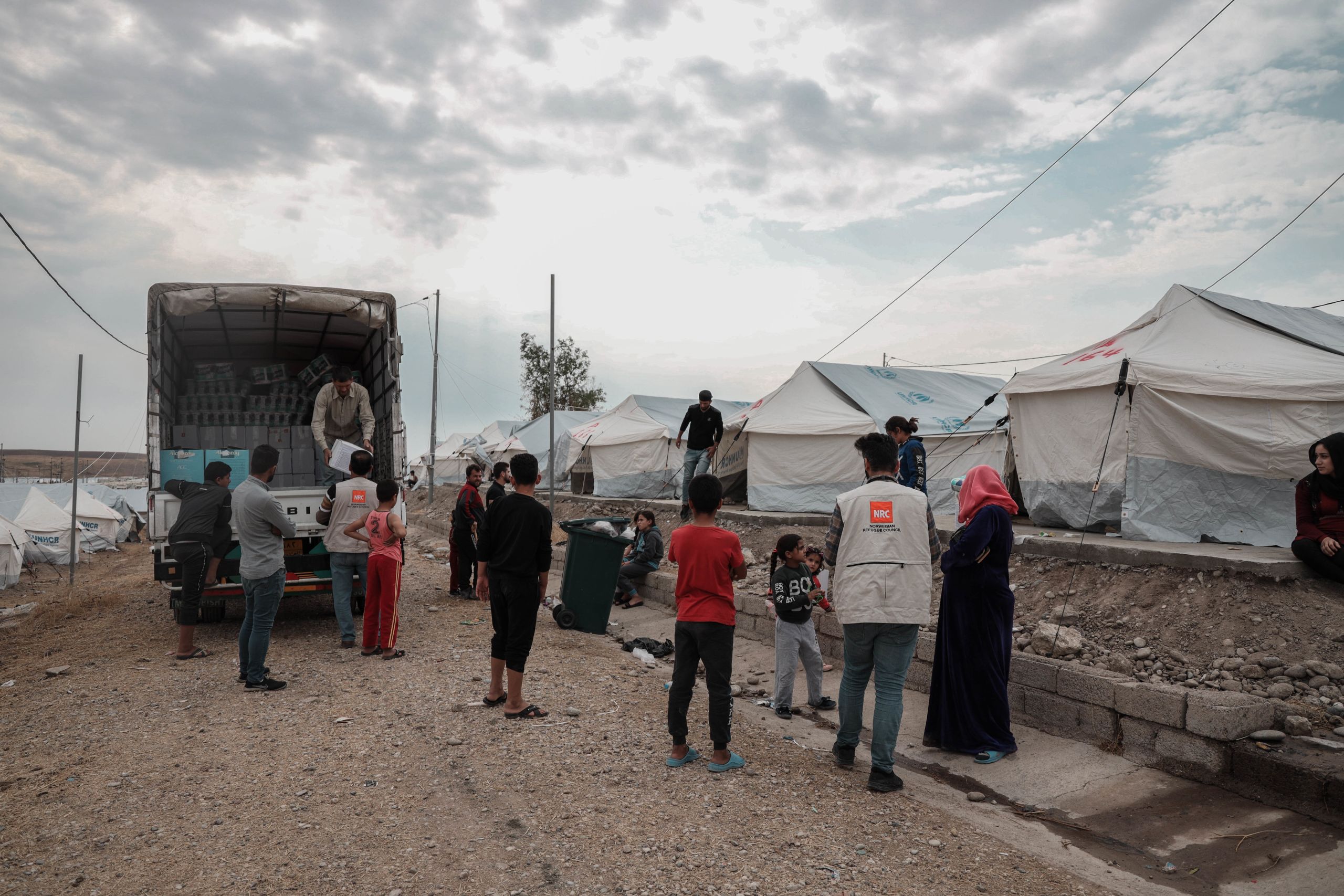
Since the start of military operations in north-east Syria on 9 October, more than 200,000 people were displaced including more than 12,000 refugees seeking shelter in Iraq. Many crossed the border and found refuge at Bardarash camp, which houses 10,724 people, most of them being women, children and elderly people. The camp is now at full capacity. Humanitarian organisations expect up to 50,000 may cross in the next six months who would need to be accommodated in camps and provided with water, food, blankets and other essential aid.
Read about NRC's work in Iraq here.
NRC truck going tent by tent to distribute hygiene kit to newly arrived Syrians in the Bardarash camp on 26 October 2019. Photo: Alan Ayoubi/NRC

Climate change, disasters and displacement
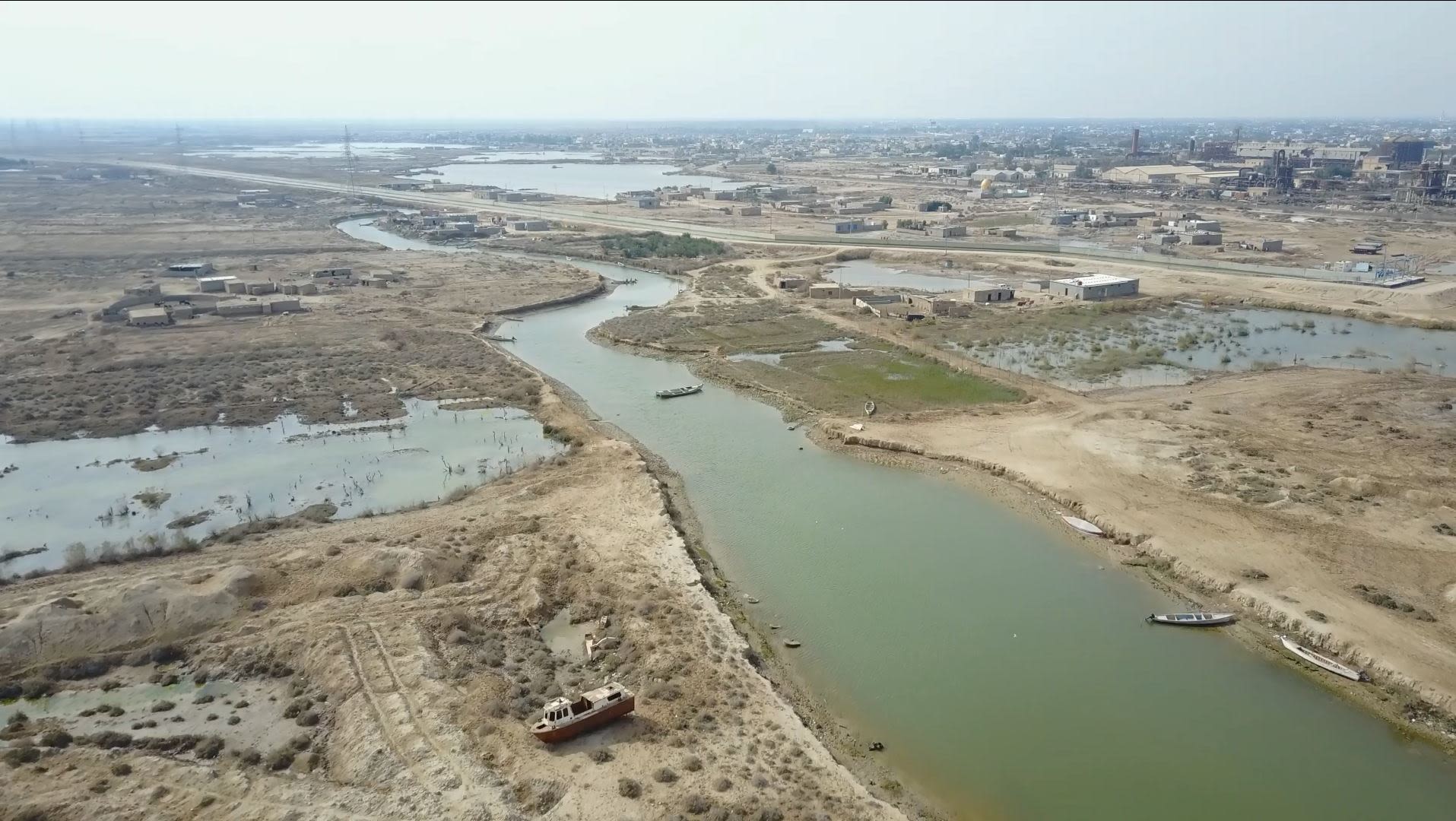
In 2018, more than 17.2 million people fled disasters in 125 countries and territories. Disasters displace three to ten times more people than conflict and war worldwide.
It causes poverty and food shortages, and forces even higher numbers of men, women and children to flee their homes. As climate change impacts the most vulnerable, we need to act. That's why we have started the process of weaving environmental issues into all of our thinking and doing.
From renewable energy to conservation agriculture, from carbon management to sustainable livelihoods: our assistance must be effective, real and most of all, sustainable. We know that a degraded environment can force people to flee, and we want to work to prevent it.
Assessing environmental risks with the NEAT app
We can innovate to work in more environmentally friendly ways. That’s why we created our mobile phone application, the NRC Environmental Assessment Tool (NEAT).
NEAT allows our teams on the ground to quickly assess the environmental risks of a project, and offers advice on how to reduce these risks. Be it pollution from waste management, the quality of a drinking water source, or impacts to natural resources, we are developing effective and practical methods for reducing impact and strengthening resilience.

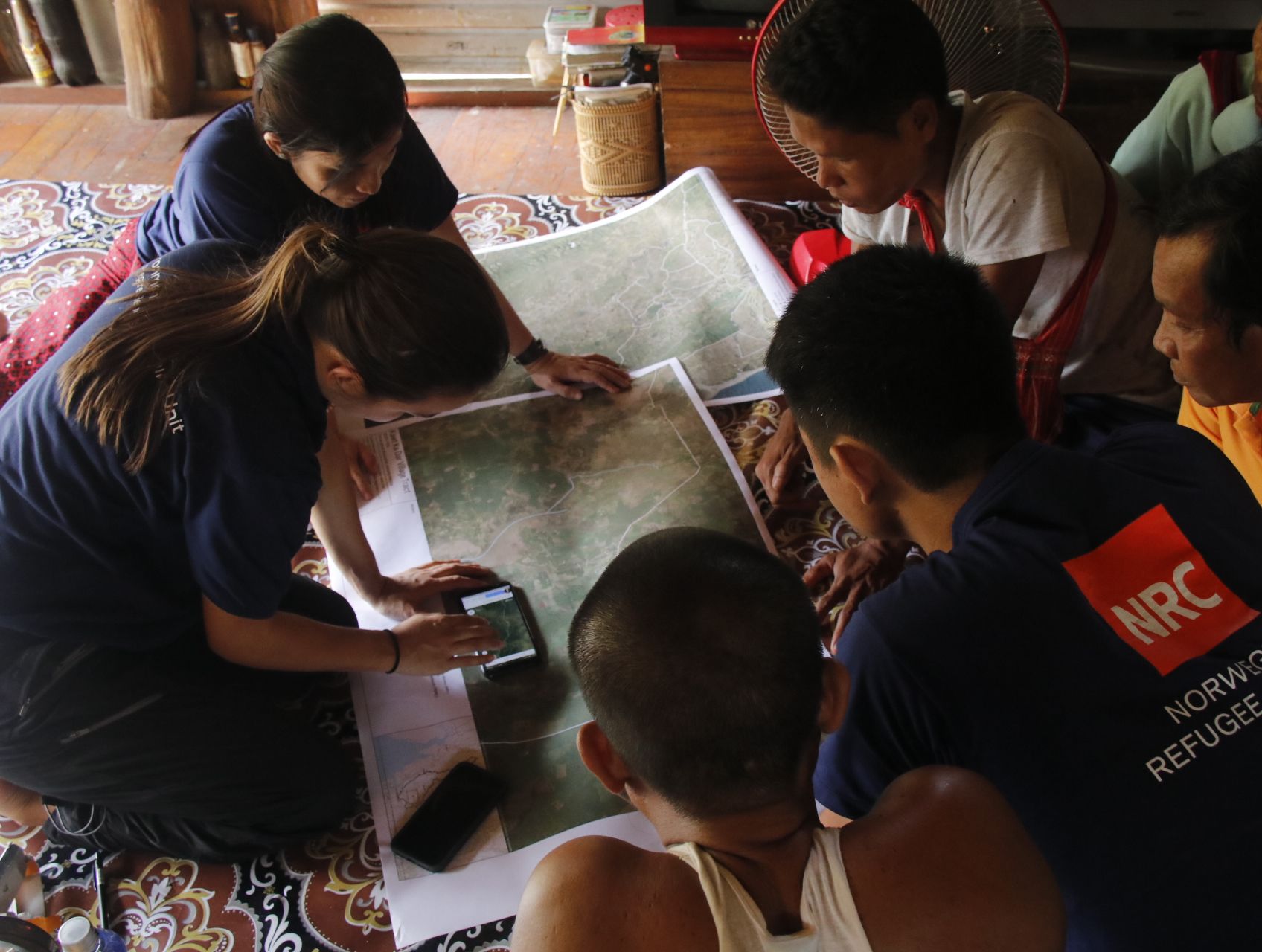
NRC together with UN-Environment staff undertook a field trip for the NEAT pilot mission to Hpa-An, Kayin State, Myanmar on 26 to 27 September 2019. Photo: Nwe Nwe/NRC
NRC together with UN-Environment staff undertook a field trip for the NEAT pilot mission to Hpa-An, Kayin State, Myanmar on 26 to 27 September 2019. Photo: Nwe Nwe/NRC
Training farmers to tackle environmental challenges
In recent years, a water crisis in southern Iraq has damaged the farming industry and threatened rural livelihoods. Now, a new generation of farmers is fighting back, learning cultivation techniques to combat the region’s new environmental challenges.

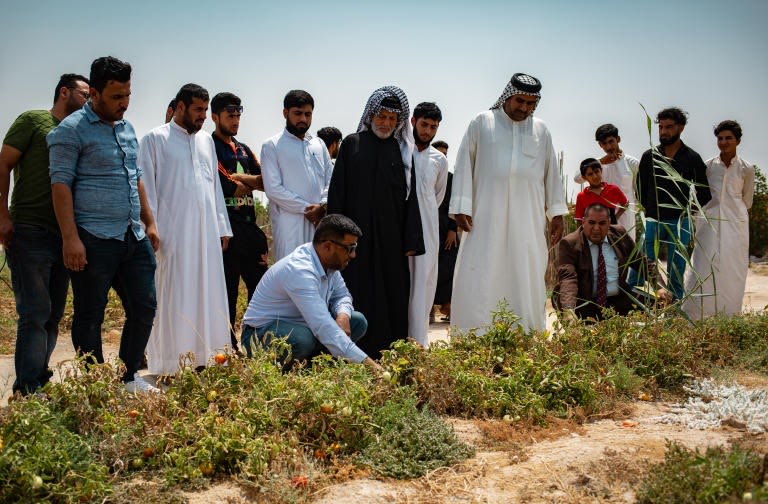
NRC, with the support of the German Society for International Cooperation (GIZ), provides targeted technical agricultural training to 350 farmers on modern agricultural production technique. This project aims to bring together farmers, agricultural experts from the Directorate of agriculture or the private sector. Photo: Tom Peyre-Costa/NRC
NRC, with the support of the German Society for International Cooperation (GIZ), provides targeted technical agricultural training to 350 farmers on modern agricultural production technique. This project aims to bring together farmers, agricultural experts from the Directorate of agriculture or the private sector. Photo: Tom Peyre-Costa/NRC
According to the United Nations Environment Programme (UNEP), Iraq is losing about 250 sq km of arable land every year because of climate change. This loss is expected to trigger new displacements in the region. To address this issue, the NRC is providing agricultural training in Basra for young farmers.
“I attended this training because there is a lack of agricultural information and a lack of experience in the area we live in. We need more expertise to be able to farm in spite of the water scarcity.”
While southern Iraq’s water crisis may take years before it is sustainably addressed, efforts to help farmers cope with their new environmental realities are urgently needed.
Read more about our work on climate displacement.

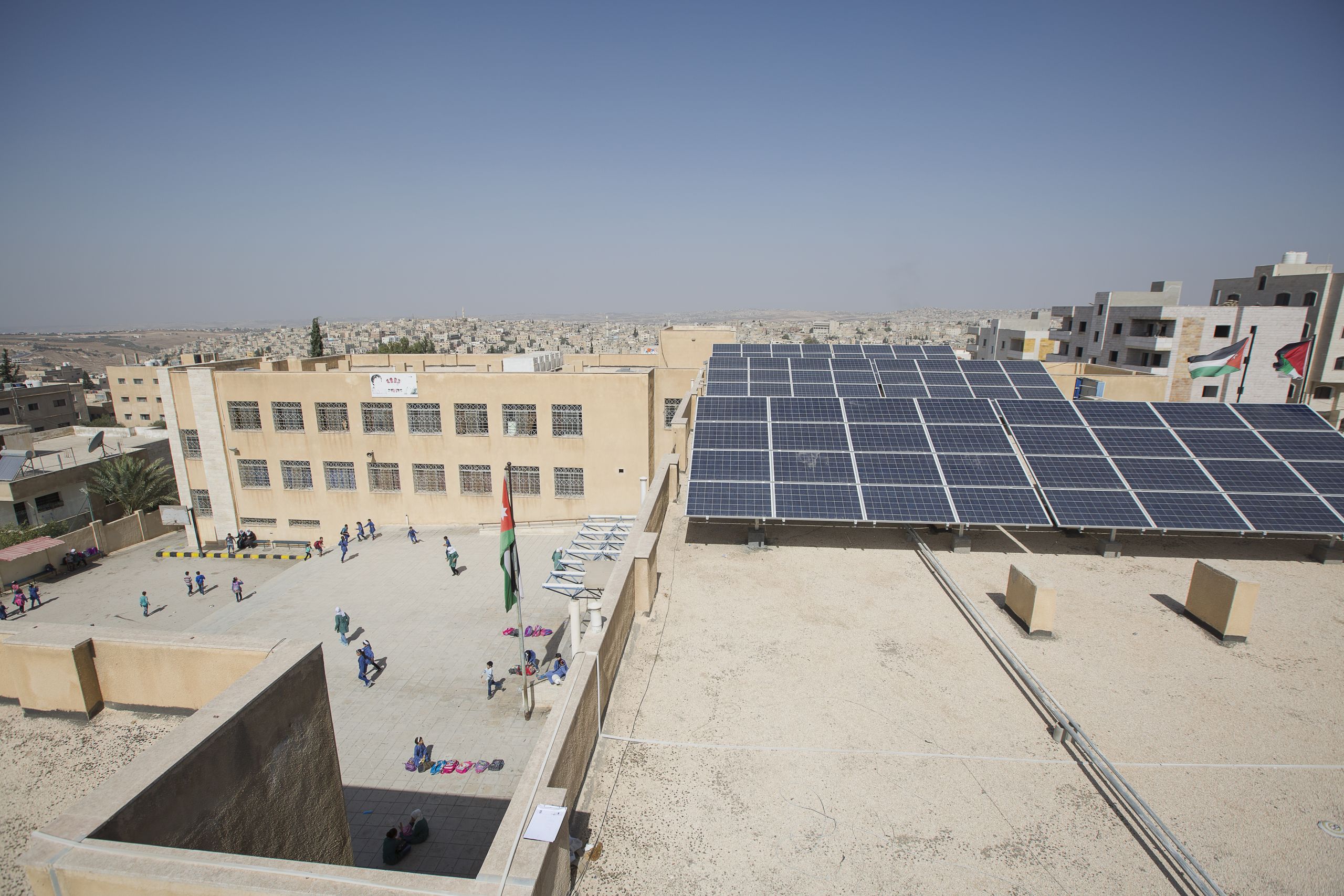
Photovoltaic (PV) system in Al Qaseelah Secondary Comprehensive School for Girls in 2016. Photo: Hussein Amri /NRC
Photovoltaic (PV) system in Al Qaseelah Secondary Comprehensive School for Girls in 2016. Photo: Hussein Amri /NRC
Renewable Energy for Refugees (RE4R) Project
NRC is the implementing partner for the RE4R Project in Northern Jordan, supporting host and refugee communities by giving access to energy solutions through installing renewable energy systems for both schools and shelters.
The project has had a big impact on the communities, contributing to improved learning environments for students and teachers. There is also more energy services in households such as solar water heaters which has helped refugees in reducing energy bills and rent cost.
So far, the project has:
- rehabilitated and installed photovoltaic (PV) systems in 14 schools.
- trained 100 youth on technical and employ-ability skills to boost their chances of entering the energy labour market.
- improved the energy services in 550 shelters.
Top posts of 2019

LinkedIn is the number one platform for business networking, and it's an important channel for us to communicate with the private sector.
In the past year, there have been some topics that have engaged our LinkedIn network more than others. These are the top three posts that engaged our followers the most in 2019.
#1 NRC's experience centre
16 September 2019
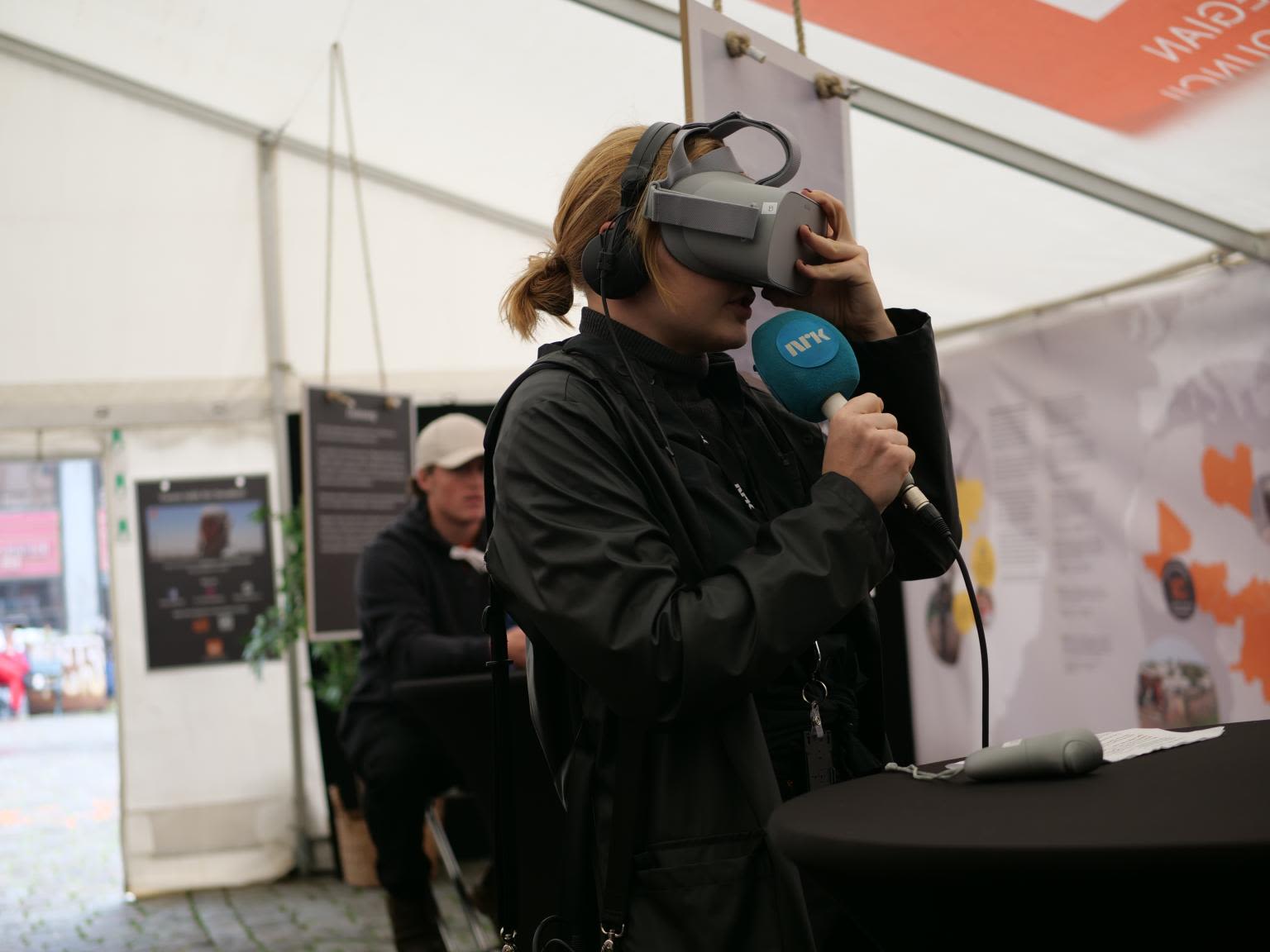
On 10-20 September, NRC setup an experience centre in Oslo, Bergen and Stavanger for children, youth and other stakeholders to learn about the challenges faced by displaced people every day.

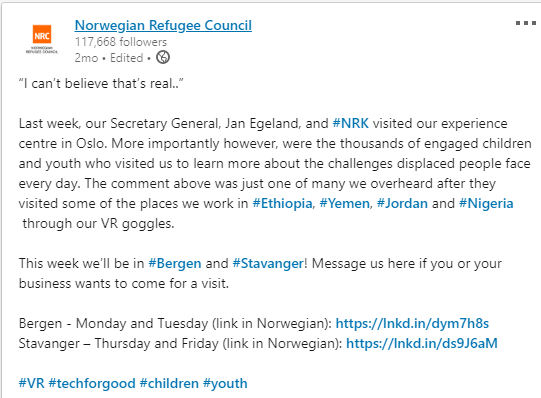
Photo: Itunu Kuku/NRC

#2 NRC speaking at Pluralsight Live
29 August 2019
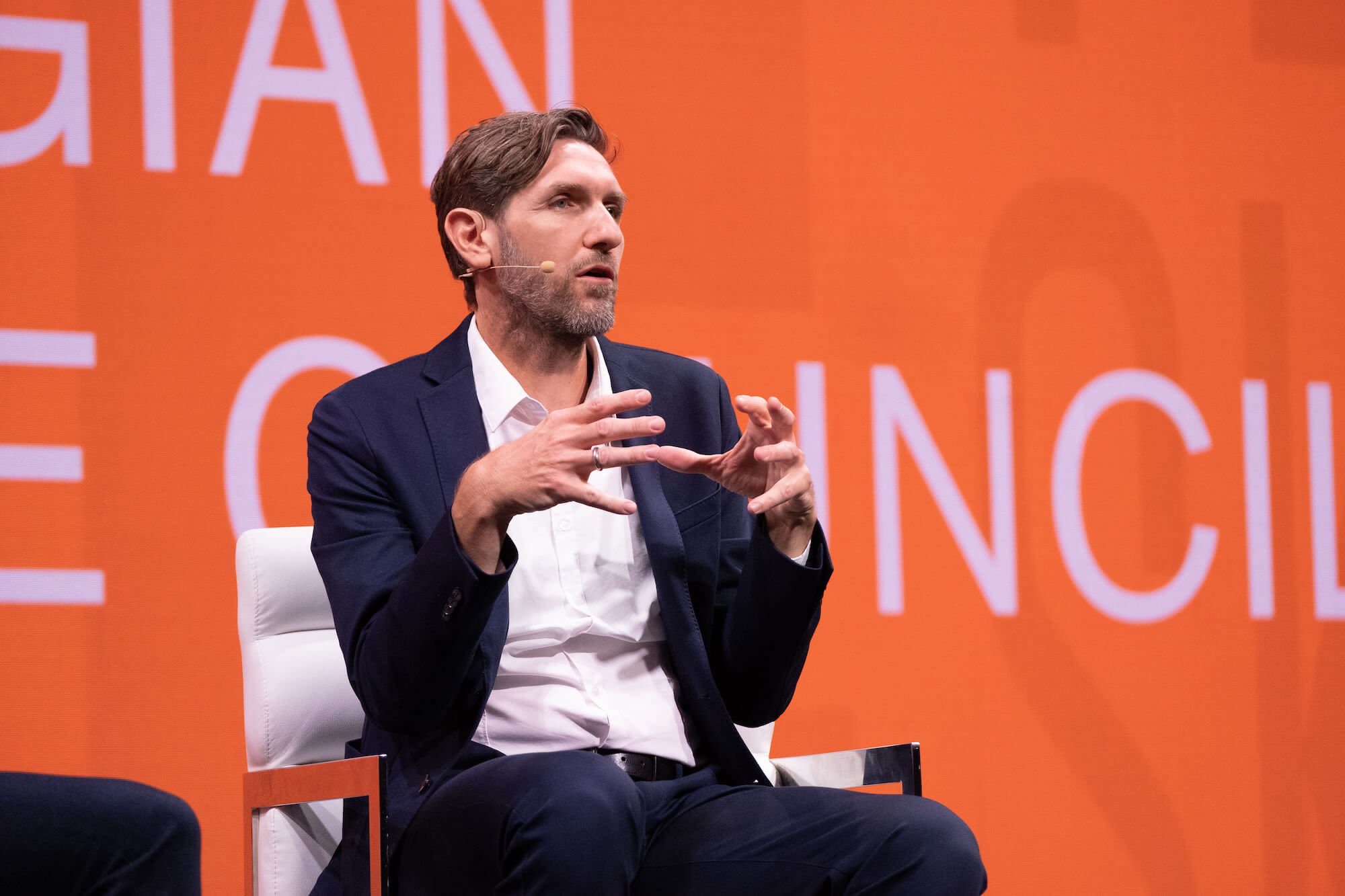
Pluralsight, a corporate partner of NRC, hosted their annual event Pluralsight Live on 27-29 August in Salt Lake City. Our CIO, Pietro Galli, took part in one of the sessions to speak about how technology is revolutionising NRC’s work and uplifting the communities we support around the world.

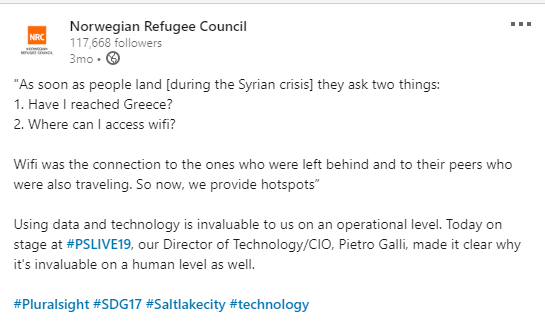
Photo: Pluralsight

#3 Sounding the alarm
12 September 2019
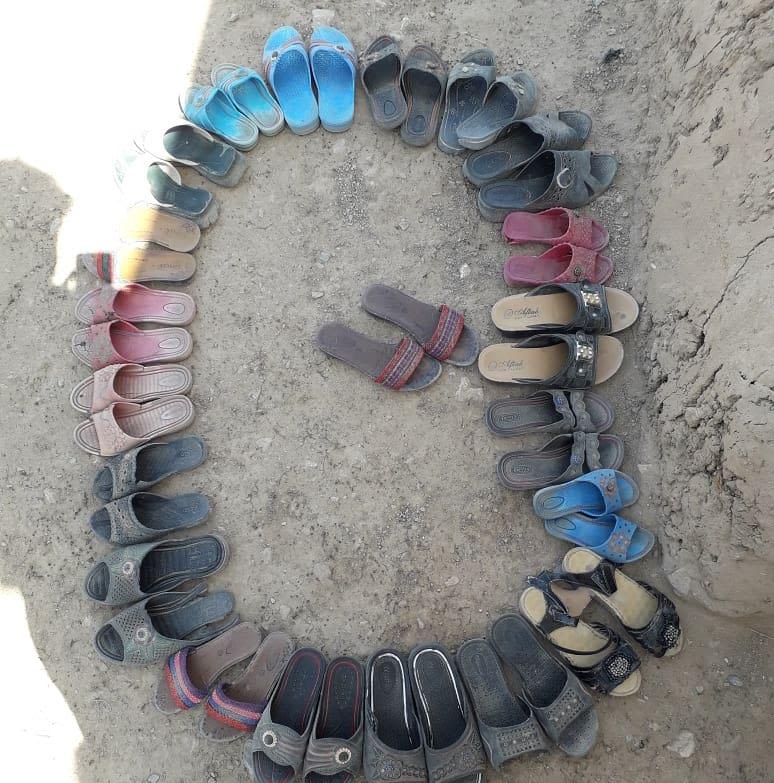
More than three million Afghan children will not start school this autumn. Humanitarian aid organisations have people on the ground, but they lack funding. Now, the NRC is sounding the alarm. “Only a very small portion of humanitarian aid goes to education in crisis areas. So far, the UN and the humanitarian aid organisations in Afghanistan have received less than ten per cent of the funds needed to secure education in crisis areas for this year,” says Anthony Neal, NRC’s advocacy manager in Afghanistan.

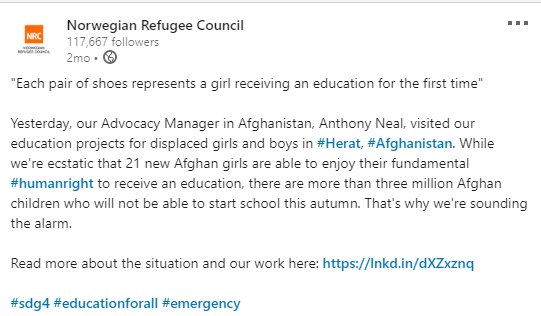
Photo: Anthony Neal/NRC

Better Learning Programme:
Helping children who have lived through war

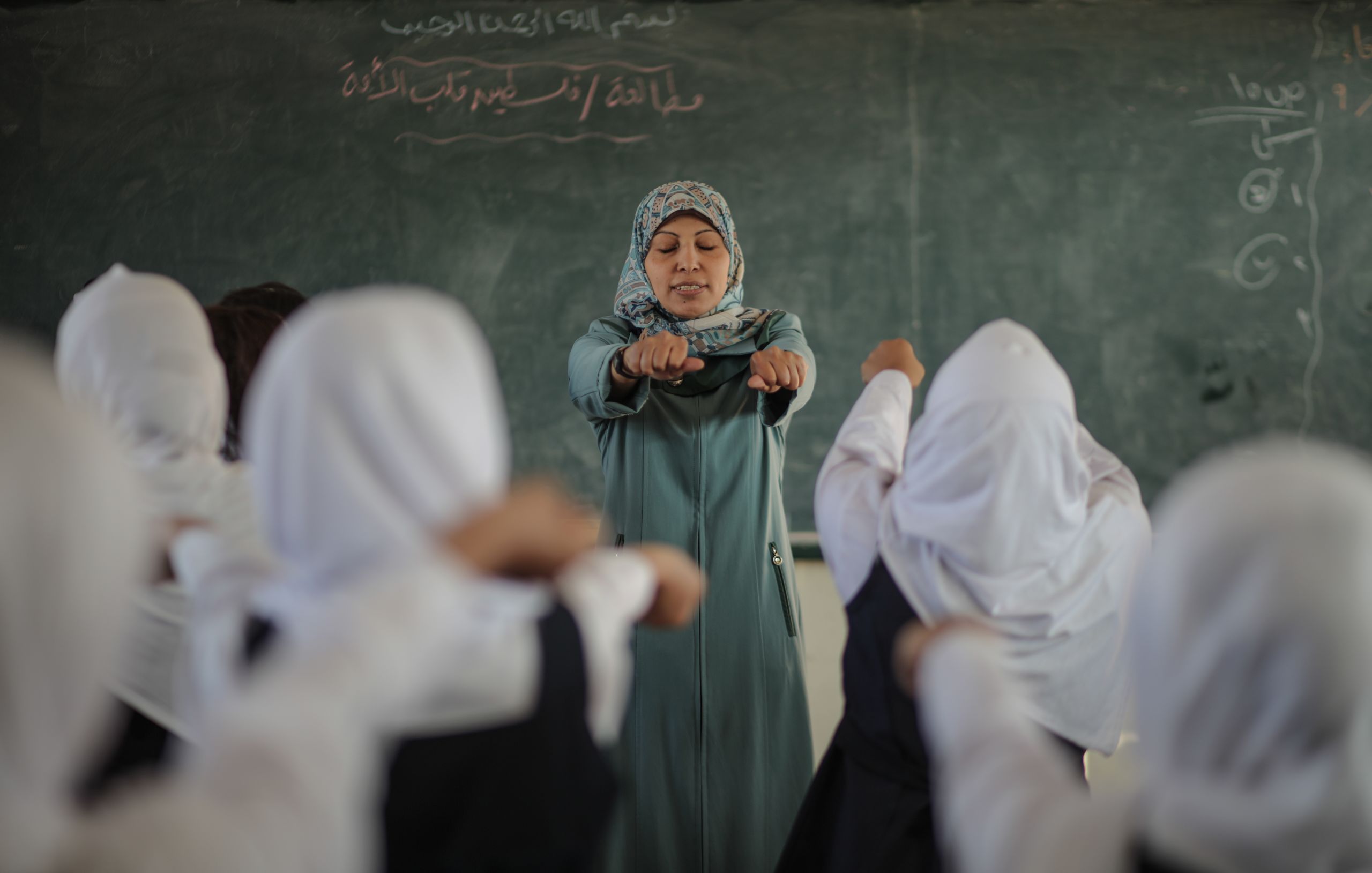
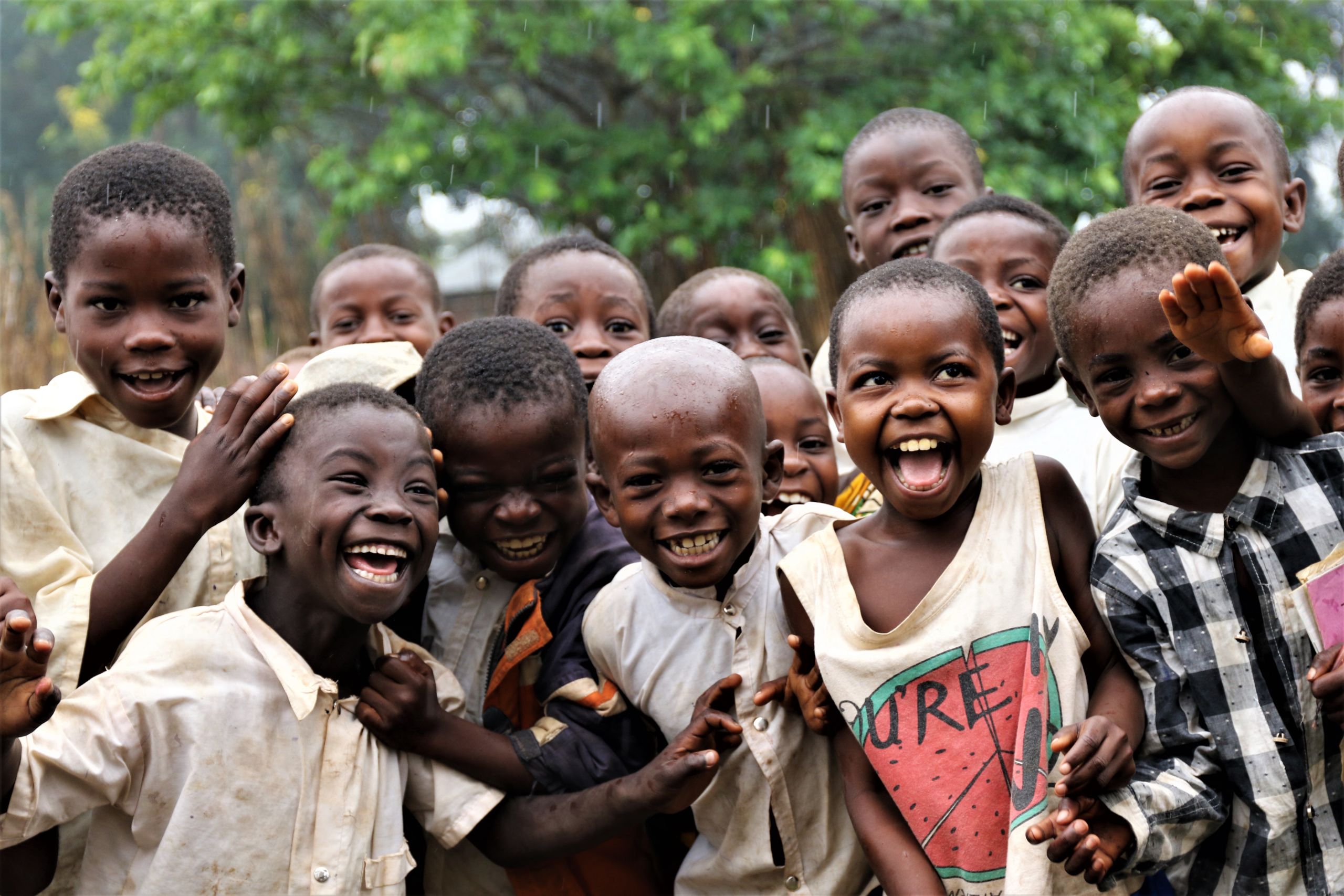
Through our Better Learning Programme (BLP), NRC builds schools and helps children with trauma getting though their education.
BLP is intended to support children’s recovery from the trauma of conflict and displacement and improve conditions for learning. It is the product of a successful, long-standing research-practice collaboration between NRC and the University of Tromsø.
The project concretely contributes to Sustainable Development Goal 4 (SDG 4) that aims to “ensure inclusive and equitable quality education and promote lifelong learning opportunities for all".

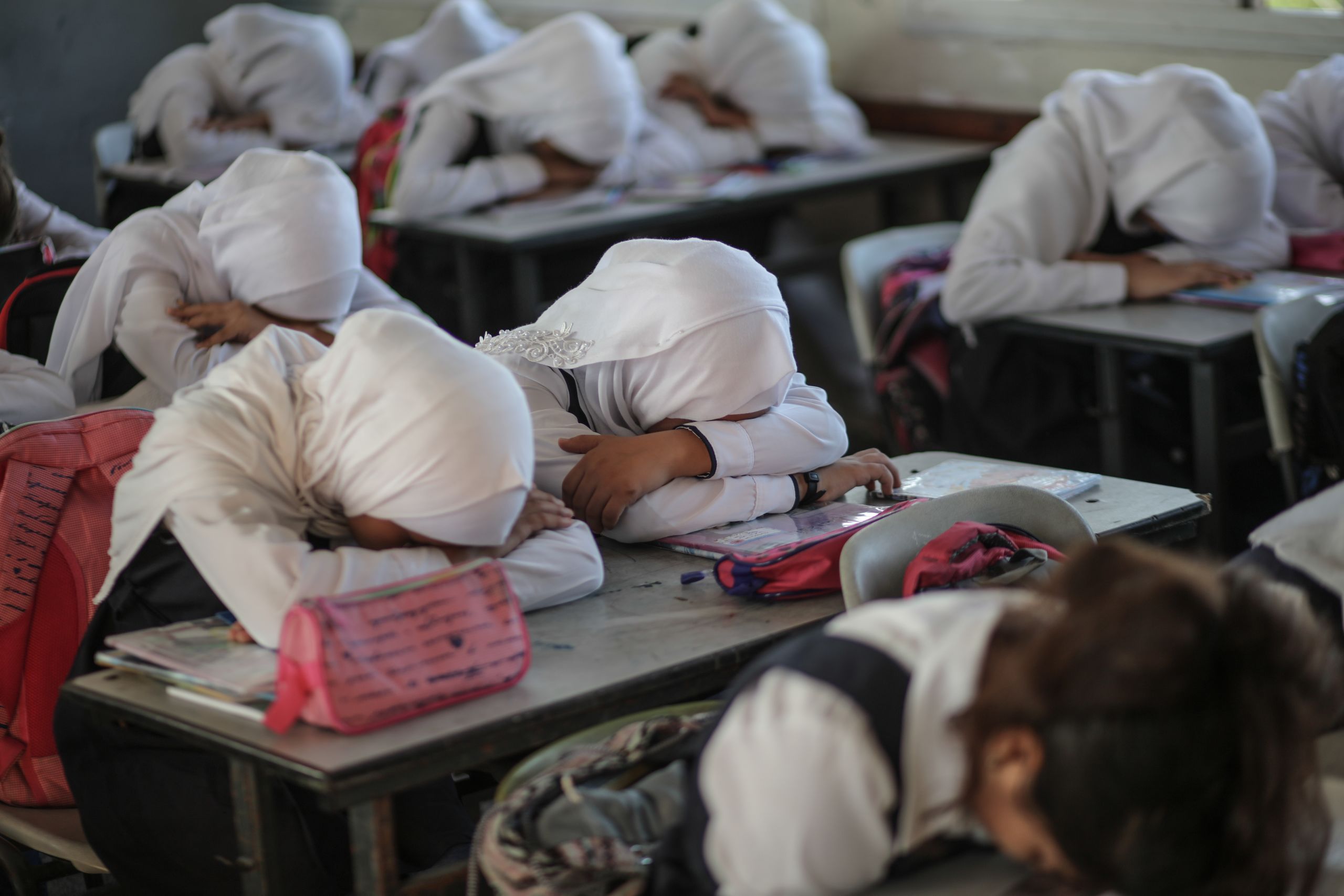
Contributing to institutionalising the Better Learning Programme
NRC Palestine introduced the Better Learning Programme (BLP) as a pilot project in 2011 to address the acute psycho-educational needs of children affected by conflict-induced trauma in the Gaza Strip, but it has since evolved significantly.
Due to the success of the programme in Gaza, we want to reach even more children who are recovering from trauma. NRC and partners are therefore in the process of rolling out BLP across Palestine, Lebanon and Jordan. Together with the main formal education providers in these areas, we will introduce or scale up the programme into schools operated by these providers.
In Gaza, the aim is to fully institutionalise the programme by implementing BLP in 160 schools by December 2021.
Photo: Wissam Nassar/NRC

Read more and stay updated on the global displacement situation on our website www.nrc.no
For inquiries, please contact corporate@nrc.no