
Irak
In 2016 NRC reached
785,798
Individuals with education, shelter, legal assistance (ICLA), Water, sanitation and hygiene (WASH) and GBV.
Humanitarian and political background
The humanitarian crisis in Iraq remains one of the largest and most volatile in the world.
As violence continues to escalate across the country, over 3 million Iraqis are now displaced, more than one million displaced are in the Kurdistan Region.
NRC has been present in Iraq since 2010.
Fresh waves of displacement
For the past several years, millions of people have been displaced from and within Iraq as a result of military operations. During the past year, more than 650,000 people in areas impacted by the conflict with the Islamic State of Iraq and the Levant (ISIL) have been newly displaced.
Every one of the nine major military campaigns during 2016 has created new displacement. While military operations were ongoing, many civilians were caught in the crossfire, unable to flee and find safety.
The situation for the people displaced within Iraq is deplorable. According to our findings, people are living in insufficient shelter conditions. Most families have depleted all their savings. Difficulties in finding livelihood opportunities, along with rising rental costs, continue to worsen their situation.
Humanitarian situation worsens
More people are vulnerable now than at any time during the recent conflict. Three years of continuous conflict and economic stagnation have impacted nearly every aspect of Iraqi society. Poverty rates in Kurdistan have doubled and unemployment has trebled in many communities. Payrolls for government employees have been cut or delayed. Agricultural production has declined by 40 per cent, undermining the country’s food sufficiency, and hundreds of thousands of people have been forced to migrate to urban areas for jobs and support.
The humanitarian situation is expected to worsen until families are able to re-establish their livelihoods and consolidate their households.
Based on assessments conducted in the last months of 2016, 2.9 million people are currently food insecure, forced to rely on severe and often irreversible coping strategies. Inter-agency and cluster assessments confirm that 10.3 million people require health care, 8.9 million protection support and 8.3 million water and sanitation. About 4.7 million people need shelter and household goods while 3.5 million children need education support. Social tensions are expected to impact at least 4.7 million people.
People we helped in Iraq in 2016
NRC in Iraq
Through our programme in Iraq, we reach Iraqis with emergency assistance. We also support Syrian refugees as they live in exile.
We have scaled up our response across Iraq to meet the large-scale crisis facing the country. We prioritise reaching more vulnerable people in areas that are difficult to access. Our goal is to always be prepared to work in new settings, so we are establishing more local partnerships in Iraq.
NRC has offices located in Anbar province, Baghdad, Dohuk, Erbil, Kirkuk and Sulaymaniyah.
NRC is part of the UNICEF and WFP-led Rapid Response Mechanism (RRM), which enables us to reach newly displaced populations with the most urgent life-saving assistance.
Today, NRC is one of the biggest cash providers in Iraq. Our emergency assistance also includes distributing food rations, hygiene kits, water and basic non-food items (NFIs). In the winter months, we also provide blankets and heaters.
We advocate for the rights of Syrians in Iraq and Iraqis who have fled their homes. We pay particular attention to gender equality and ending gender-based violence (GBV).
Education
"With the new laboratory, I can see with my own eyes how everything works, and put theory into practice."
Ibrahim, 16 years old, Syrian refugee in Darashakran camp, Iraq.
The scale of violence and displacement in Iraq has disrupted the education system, with nearly 3 million school-age children being denied their right to access quality education. Many schools have been destroyed in the conflict or damaged during occupation by armed groups, and some schools remain occupied. Ensuring access to a quality education is an urgent and imminent need in order to avert a “lost generation.”
Our education activities:
• Construct new schools, together with our shelter teams.
• Provide catch-up classes, recreational activities and safe spaces to conflict-affected children and youth.
• Provide teacher trainings.
• Establish school support centres, where we educate in areas needing emergency assistance, as well as in places where long-term displacement is becoming a reality.
• Support the integration of Syrian refugee children into mainstream schools in Iraq.
Information, counselling and legal assistance (ICLA)
In 2016 NRC recruited and trained ICLA teams in all area offices and assisted conflict affected persons to realise their rights related to displacement.
Our ICLA experts:
• Inform conflict affected people through group-information sessions, mobile counselling, radio shows and factsheets, with information on Registration and Civil Documentation (RCD) and Housing, Land and Property (HLP) rights.
• Provide information, counselling and legal assistance to help people access government social assistance rather than becoming dependent on humanitarian aid.
• Build the capacity of humanitarian partners, local authorities and displaced community leaders.
Shelter
In the harsh and varied climates, shelter is essential for affected households to live safely and securely with privacy and dignity. Shelters provide families with an enclosed space where they can keep warm at night, guard themselves from the sun during the day, and help enable to achieve a sense of place and connection to the communities in which they reside.
Our shelter experts:
• Build schools, together with our education teams.
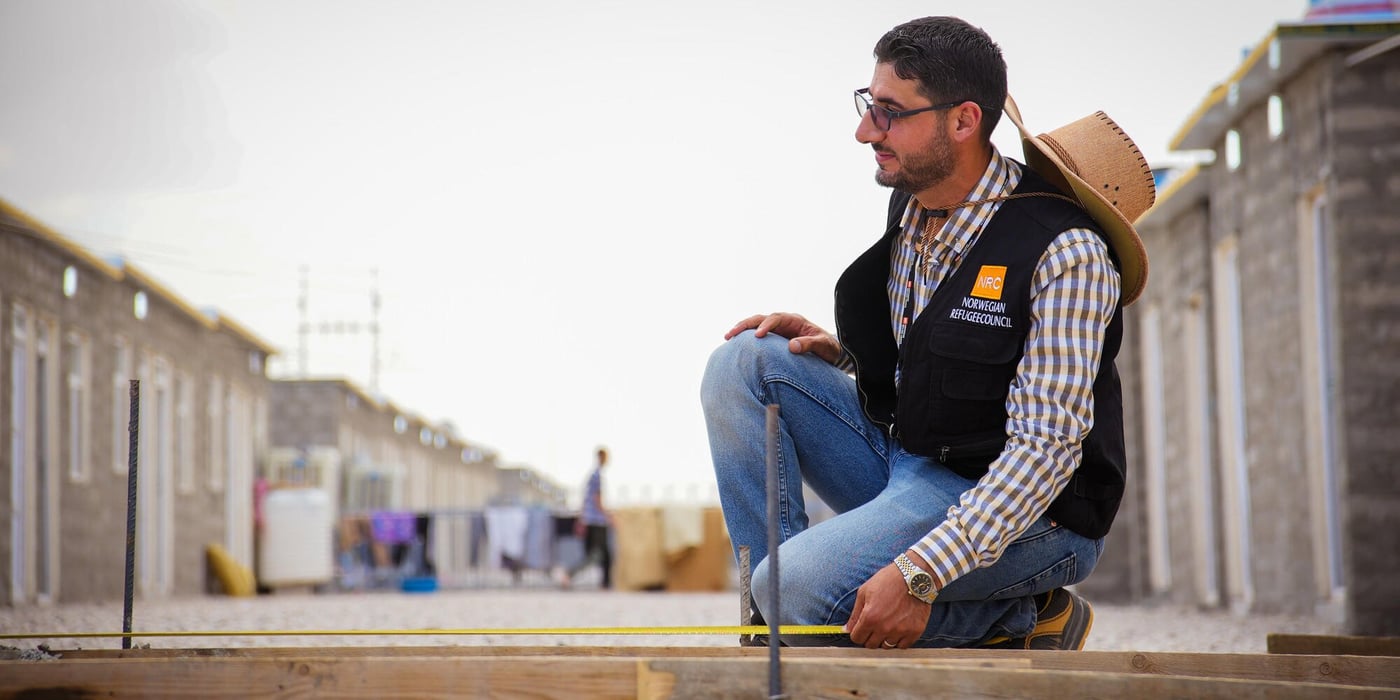
• Carry out social and technical shelter assessments for conflict affected households in both the camp and non-camp settings in close collaboration and partnership with our ICLA and GBV teams.
• Enable households to make essential repairs - sealing off their shelters from the elements and addressing issues related to privacy, safety, and security - through the provision of materials, training and/or financial resources.
• Improve shelter accessibility for persons with special needs.
• Rehabilitation and upgrading of shelters to improve their adequacy in camps and in rural, peri-urban and urban areas.
• In emergencies, distribution of emergency shelter (tents, shelter sealing off kits) and essential basic household items such as blankets, mattresses and heaters.
Water, hygiene and sanitation (WASH)
The continued waves of displacement are placing unsustainable stress on municipal water supply systems and continuing violence is damaging the water infrastructure. In some cases, entire districts are being cut off from the water supply network. As a result, risks of possible outbreak of public health related diseases due to poor sanitation and inadequate clean water are concerning.
Spanning from emergencies through the phase of protracted crisis, our WASH programmes includes the following:
• Provide safe and sufficient water supply, either through water trucking or setting up water supply systems.
• Provide sanitation facilities such as latrines to protect people from public health risks.
• Distribute hygiene kits, water storage kits, sanitation kits and latrine cleaning kits along with hygiene promotion to enable people adopt good hygiene practices.
Gender-based violence (GBV)
Through our community centres women and men are provided with safe spaces, where they access GBV prevention and response services, and participate in activities. Our community centres function as hubs, from where our teams work with groups at risk of GBV.
Our gender activities:
• Launch awareness campaigns on gender-related issues, for men, women, boys and girls.
• Establish community centres where women, men and children can have a safe space to learn skills through social and recreational activities such as sewing, language classes and sports.
• Provide psychosocial support to survivors of GBV, aiding them in the healing process.
• Provide anonymous counselling and case management to people who report violence.
• Conduct trainings for community leaders and local partners on GBV issues and the services we provide.
NRC is one of the main shelter providers in Iraq, and we also lead in rehabilitating and upgrading shelters in the non-camp settings. Our shelter experts:
• Build schools, together with our education teams.
• Carry out social and technical shelter assessments for conflict affected households in both the camp and non-camp settings in close collaboration and partnership with our ICLA and GBV teams.
• Enable households to make essential repairs - sealing off their shelters from the elements and addressing issues related to privacy, safety, and security - through the provision of materials, training and/or financial resources
• Improve shelter accessibility for persons with special needs • Rehabilitation and upgrading of shelters to improve their adequacy in camps and in rural, peri-urban and urban areas.
• In emergencies, distribution of emergency shelter (tents, shelter sealing off kits) and essential basic household items such as blankets, mattresses and heaters
Water, sanitation and hygiene (WASH)
Our water and sanitation and hygiene teams are present in both camp and in non-camp settings. Access to safe and sufficient water, sanitation facilities, waste management and promotion of good hygiene practices is essential to protecting the displaced populations from public health risks. Spanning from emergencies through the phase of protracted crisis, our WASH programmes includes the following:
• Provision of access to safe and sufficient water supply, either through water trucking or setting up water supply systems.
• Provision of access to culturally and gender appropriate sanitation facilities such as latrines, as well as solid waste management receptacles to protect people from public health risks.
• Hygiene promotion that ensures people understand the cultural aspects and the risks that might affect negatively their health. NRC distributes hygiene kits, water storage kits, sanitation kits and latrine cleaning kits along with hygiene promotion to enable people adopt good hygiene practices
Gender-based violence (GBV)
Through our community centres, women and girls are provided with safe spaces, where they access GBV prevention and response services, and participate in activities. Our community centres function as hubs, from where our teams work with groups at risk of GBV. Our gender activities:
• Launch awareness campaigns on gender-related issues, for men, women, boys and girls.
• Establish community centres where women and children can have a safe space to learn skills through social and recreational activities such as sewing, language classes and sports.
• Provide psychosocial support to survivors of GBV, aiding them in the healing process.
• Conduct trainings for community leaders and local partners on GBV issues and the services we provide.
About nrc in iraq
Country Director
NMFA, ECHO, DFID, SDC, PRM, OFDA, SIDA, UNICEF, UNHCR, UNOCHA, WFP, GIZ, UNFPA, French Government, GAC, Telethon