
In the Democratic Republic of the Congo (DR Congo), the new school year goes ahead with measures adapted to the Ebola outbreak.
DR Congo’s children return to class amid deadly Ebola outbreak
The new school year in DR Congo will start this year in defiance of the Ebola outbreak. Representatives of teachers and parents are calling on authorities to continue strengthening health measures to enable schools to reopen safely.
Several students, teachers and school principals lost their battle with Ebola in Ituri Province at the end of the 2025–2026 school year. Schools are environments where transmission may occur if necessary prevention measures are not put in place. Ensuring that children can continue attending school safely is essential to upholding their right to education.
NRC continues to support the Ministry of Education, strengthening specific measures to help ensure a safer return to school.
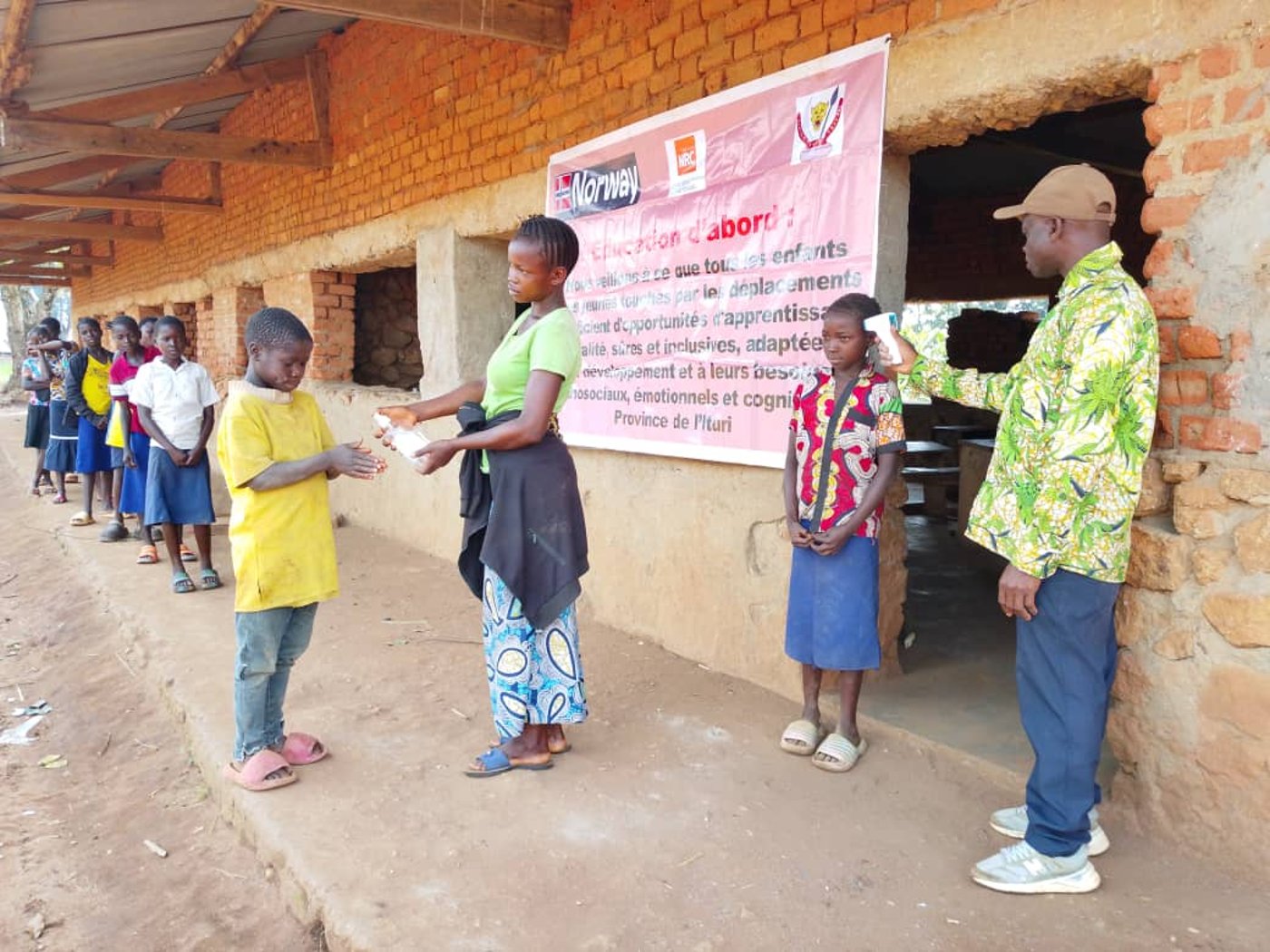
In so-called “green zones”, classes will take place as usual, with increased awareness-raising on prevention measures. In “orange zones”, schools will remain open but will implement enhanced measures, including regular handwashing, the provision of hygiene kits and symptom monitoring. In “red zones”, in-person classes will be suspended in favour of distance learning.
The risk category will be regularly reassessed. Depending on how the outbreak evolves. Schools will adapt the measures they implement accordingly.
On the ground, NRC strengthens prevention
During the 2025–2026 end-of-year exams, the Norwegian Refugee Council (NRC) supported the Ministry of Education in strengthening health measures to ensure they could take place safely. This support included the promotion of good hygiene practices, as well as training and information sessions on how to recognise symptoms.
These sessions focused on ways to prevent transmission, identify situations at risk and understand the importance of seeking care in a health centre if symptoms appear.
These efforts are equally important now as the new school year begins.
We are currently working in 66 schools in Ituri, including through the distribution of soap, hand sanitiser, infrared thermometers, face masks, water containers and chlorine.
In addition, we are contributing to improving hygiene and sanitation conditions through the construction of latrines and the installation of handwashing facilities in communities.
At the same time, we are adapting our own activities and working arrangements to reduce the risk of infection, while continuing to provide assistance to those who need our support.
Protecting children without compromising their future
For more than 25 years, NRC has been committed to ensuring continuity of education in DR Congo. In Ituri, where conflict disrupts children’s access to school, we work with communities to help children and young people continue learning despite the challenges they face.
NRC’s education activities go beyond responding to health emergencies. They focus on supporting continuity of learning, strengthening the capacities of teachers and schools, and reducing disruptions to schooling. Our goal is to enable children to remain engaged in their education, even when their environment is deeply disrupted.
This experience enables us to adapt when health crises occur, including Ebola outbreaks. When the normal functioning of schools is affected, flexible and accessible learning can be put in place to minimise interruptions to education while reducing risks.
For NRC, education in crisis settings is therefore not limited to responding to an immediate emergency. It is, above all, about protecting children’s right to learn and preventing crises from having long-term consequences on their educational journey.
Right now, we reaffirm our commitment to supporting education authorities, schools, teachers, parents and communities so that children can continue learning and building their futures, whatever crises they may face.
