

The crisis in the Middle East is directly impacting millions of lives and causing uncertainty across the world. What is it like for people in Iran living through this emergency?
Iran: voices from the ground
19 May
Even though it was a couple of months ago, I remember that time well. It was March, and about 10 days had passed since the start of the war. My parents lived alone in a part of Tehran that was targeted by multiple missiles every day, while I was living several hundred kilometres away in another part of Iran. I decided to drive the long distance to Tehran so that I could be with my family for the Nowruz (New Year) holidays, even though no joyful events were expected to take place.
When I was halfway there and had reached the first major city along the route, I witnessed a missile strike on a civilian area – the city’s transportation terminal. As I approached Tehran, the traces of anti-aircraft fire were visible in the sky. Seeing Tehran after the war – dark, silent and empty – was both shocking and saddening.
The attack on the country's fuel storage facilities, threats to strike Iran's civilian infrastructure, and actual attacks on civilian sites had turned Nowruz into the most terrifying days of the year for us.
After the first week of the Nowruz holiday, when conditions finally allowed for NRC to resume its activities, I decided to return to the city where I live and continue my work alongside my colleagues to help our fellow citizens – Iranians and Afghan refugees.
The immense workload, the lack of internet access for nearly 80 consecutive days, the economic pressure and daily inflation, plus being away from my elderly parents have made working as an NRC staff member both more difficult and yet more deeply motivating.
– NRC staff member
16 April
Although I was at home and far from the centre of Tehran on 28 February, I still heard the explosions. From that day onwards, I decided to stay home until there was an instruction or order against it. I also tried to keep my family from going out since I didn’t know if my neighbourhood would be a target or not.
In this self-inflicted quarantine, I watched the news and tried to stick to normal life by following a routine. But it was clear that the situation was not normal. We could still hear the bombs and sense the waves of attacks. I am lucky and grateful that we didn’t have any explosions or destruction in our immediate vicinity.
I didn’t have access to the internet because it was disconnected on the first day of the war. I would call or text my friends and family to check up on them. Since I didn’t go out, I had to order everything to be delivered by local services. At one point, I was worried about the delivery guy and hoped nothing would happen to them when they were out. The constant sense of worry was draining.
Now it’s been more than a week since the declaration of a temporary ceasefire between Iran and the US. The news came when many people were bracing themselves for attacks against the infrastructure of the country. I stayed awake to follow the news and was on the phone talking to my friend.
We had mixed feelings. First there was relief that we didn’t have to go through an electricity blackout and other infrastructure issues. There was also a sense of tension and ongoing confusion about the future. We didn’t know what the negotiations would mean for the future of the country and the people.
One week on, many people have returned to work and normal life. I am glad to see people on the streets. Honestly, I never thought I would miss the morning traffic.
However, we are far from a normal situation. The negotiations are ongoing but vague. The internet is still disconnected.
At NRC, we are doing our best within the current limitations. I see my colleagues working very hard to implement their activities in different areas and give emergency aid to the people who need it.
– NRC staff member
15 April
It’s been a week since the ceasefire started. People are back in town. It’s heartwarming to see the streets crowded and stores filled with people.
Everyone is talking about their own experiences of the war, along with their guesses and expectations for the future. Some people are very hopeful, while others worry about what could go wrong. Post-war inflation is also starting to show. Price increases are common in Iran after Nowruz [the Persian New Year], but this time they seem higher than normal.
Our office is now back at full capacity. Beyond greetings, colleagues are working hard to scale up the emergency response. Uncertainty has taken on a new meaning for us. Every day feels like one we must make the most of, as we’re never sure what will happen next.
– NRC staff member
7 April 2026
39th day. An important night lies ahead of us. Only a few hours remain before the scary deadline/threat set against us. I just finished a call with a friend, she was crying and panicking over what might happen tonight.
People are debating what could happen in supermarkets, gas stations, and workplaces. Some are scared and leaving Tehran, others are reading analysis and trying to comfort those around them.
This morning, the railways were threatened. With the airspace closed, railways have been used more than ever. I’m not sure if that’s the case for every Iranian, but at least among those I know, there is a deep sense of pride in Iran’s railways and their 100 year history.
It’s devastating to see and witness all these things that are out of our control.
– Anonymous
4 April 2026
Thirty-five days. Thirty-five days since we heard the first explosion in Tehran. It’s unbelievable how a time that is usually festive for all of us because of Nowruz (Persian New Year) has turned into a silent time filled with fear.
2 April was Nature’s Day in Iran. It usually marks the end of the holidays for Iranians, and people spend the day picnicking with their families. This year, a bridge in one of the picnic locations near Tehran was hit while people were enjoying the last moments of their holiday.
These days, chatting with others is only about the locations that have been hit and the neighbourhoods that are affected. Everyone is now either affected or knows someone close who is. It’s horrific how each one of us has become an expert in distinguishing the sounds we hear. It’s horrific how a teenage girl knows the difference between missiles, fighter jets, and defence systems.
Today is 4 April, the first official working day after the holidays. However, nothing looks like a normal return to work. People are worried about their businesses. They are worried about getting laid off. Many have already lost their jobs since some contracts ended before Nowruz. People with children are not sure whether they can come back to the city because any night could be a traumatic one for their little ones.
If you ask me how I would describe these days, I would say: “uncertainty”.
– Anonymous
28 March 2026
At 1am, the sound of planes flying overhead wakes me up, followed immediately by explosions that feel so close. An SMS pings on my phone. It is from my security colleague with the message to “please shelter”. I wonder if he ever sleeps at all.
I jump out of bed and start looking for my jumper and shoes so I can go down to the basement of the building to shelter. Then I realise that I don’t want to go. It might be safer there than on the 5th floor where I am now, but it is cold and I am not looking forward to spending the next few hours there. I decide to go back to bed and “hide” under the blankets while listening to the sounds of the bombs falling until it goes quiet.
I am worried about my colleagues and their families. Some live so close to the locations under attack and they have been telling me that the sounds are becoming too much. I get another SMS an hour later to say that it is now safe and I go back to sleep. Another round of bombing wakes me up at 3am, but I barely register and sleep through it until the morning.
That morning, I receive a text confirming that, following the daily headcount, all staff are safe. I feel relieved. We survived another night and I begin planning the priorities for returning to work the next day so that we can continue to deliver critical assistance.
– Martje van Raamsdonk, NRC Country Director in Iran
27 March 2026
An Iranian friend calls me in the morning, and the conversation starts with enquiring if we are okay and still safe. I realise that the war is normality now and peace is not. We go for a coffee in one of the cafés close by. Despite all this doom and gloom, Iranians are still living. We are living in a surreal balance between war and everyday life.
Early afternoon, I manage to get online briefly, and several messages come in. Glancing through, I discover that the interview I had done earlier in the week on the situation in Iran had gone live. I am grateful for the support of my family back home, and I know the images and messaging are not easy for them to comprehend. My colleagues thank me for being their voice, which makes it all worth doing.
I only have few more minutes of internet and decide not to watch the interview but instead treat myself to downloading a movie to watch later. I settle on “War Machine” as I already have seen “No Time To Die”. Maybe you think I should watch something that would calm me down or cheer me up, but I see no point. I am living war now and might as well stay on the topic.
Tonight, I will sleep with the window open. All sorts of sounds are keeping me awake, but when I peek outside, the neighbourhood is quiet. The sounds are all in my head. It starts to rain. Listening to its rhythm gives me peace, and I fall asleep.
– Martje van Raamsdonk, NRC Country Director in Iran
24 March 2026
People are mainly dealing with uncertainty. They are worried about their businesses, and wondering how long the situation will continue.
Tomorrow will be the first working day after Nowruz, however people usually take time off until Nature’s Day, on 2 April.
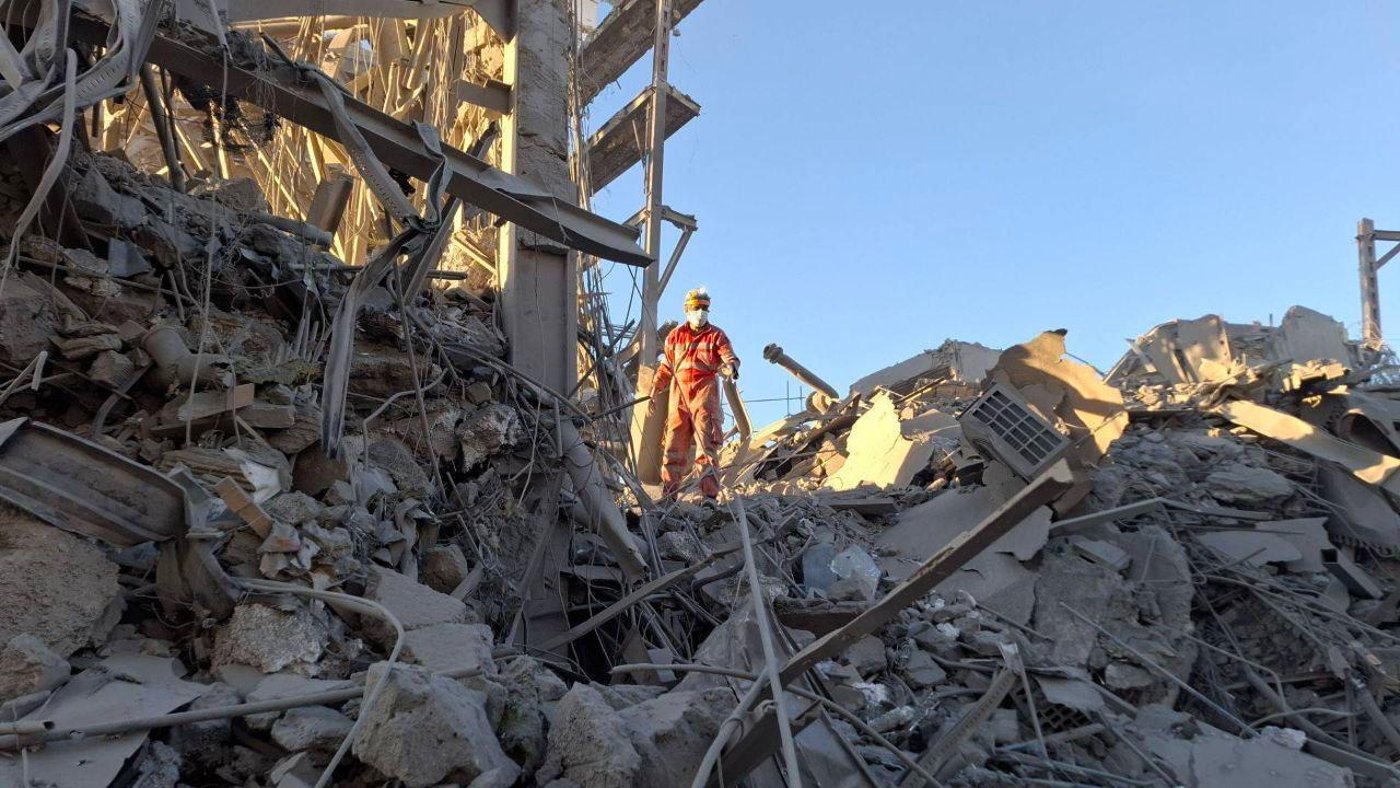
In each neighbourhood you can see at least one destroyed building with the surroundings affected.
My colleagues have mostly gone to their hometowns to celebrate Nowruz with their families. But even when you leave, you are worried about the things you leave behind.
When you pass by houses in streets, you see many houses have taped their windows, so explosions don’t shatter the windows – or if they do shatter, they don’t fall on people.
Some people who left the city in the early days of war have returned, since they don’t know how long this situation will last.
Attacks at night continue, sometimes at three different times of night. Two nights ago, attacks in Tehran happened at 1am, 3am and 5am, and people in different parts of the city heard them all.
– Anonymous
23 March 2026
Martje van Raamsdonk is NRC’s Country Director in Iran. She reports from Tehran, where the war rages on and attacks continue day and night. A few days after Nowruz (Persian New Year), she tells us how this special time, usually full of celebrations, has been for the people of Iran.
16 March 2026
Today is the 17th day of war in cold and cloudy Tehran. This time of the year is usually festive and busy as we celebrate Nowruz and the end of Ramadan, but that’s not the case this year.
Tehran, always busy with its crowded streets and huge traffic, is now calm and empty, awaiting the sounds of drones, missiles, and explosions.
Every three to four hours, there’s a loud noise – a bang. Right after that, the first thing we do is text our loved ones in the different neighbourhoods of Tehran, and other cities if we hear any news, to make sure they’re still okay. The attacks usually come without prior warning. Some nights the explosions are so intense that the sky feels like daytime. There are nights when finding sleep is impossible.
In the towns people have mostly stayed at home, while many have left Tehran. But even small cities are under attack. The roads were all packed the day the attacks started, but now with all the uncertainty, no-one’s sure what their next move should be.
Hospitals, schools and local shops are damaged or destroyed after each attack. Yet, even in this situation, people try to help each other.”
– Anonymous
