


In a workshop in northern Ethiopia, 18-year-old Ferenji is breaking more than just wood. She is dismantling the barriers that kept her future in the dark.
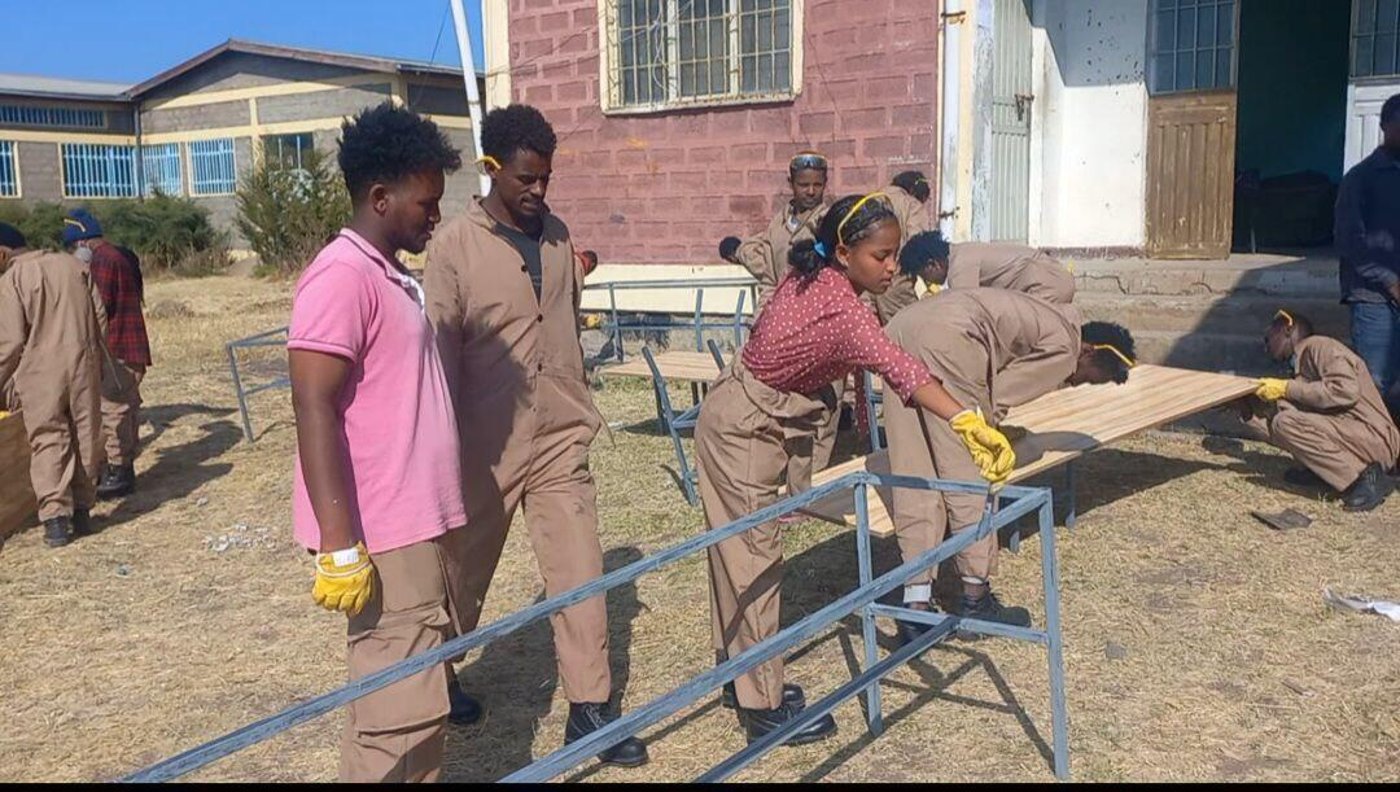
The scent of sawdust and a new sense of safety
The rhythmic rasp of a hand plane against rough timber is now the soundtrack to Ferenji’s mornings. It is a sharp contrast to the silence of the three years she spent waiting years where her education was paused, and her world was narrowed by the walls of refugee camps.
"For the first time," she says, "I am hopeful about my future."
A life interrupted
Ferenji’s journey to the Alem Wach refugee site was not a single flight, but a series of displacements. First, political unrest forced her family from Eritrea to the Hadi Harush camp in Ethiopia. Then, conflict in the north forced them to flee again.
Each displacement stripped something away. By the time she reached the Dabat area, the eighth grader had been out of school for nearly three years. Her days were consumed by the heavy labour of a household head, fetching water, cooking, and caring for her siblings while the weight of past trauma and the constant threat of violence loomed over her.
In the camp, opportunities for young women are often dictated by tradition. For Ferenji, that meant a life of domestic dependence. But she had other ideas.
Choosing an untraditional path
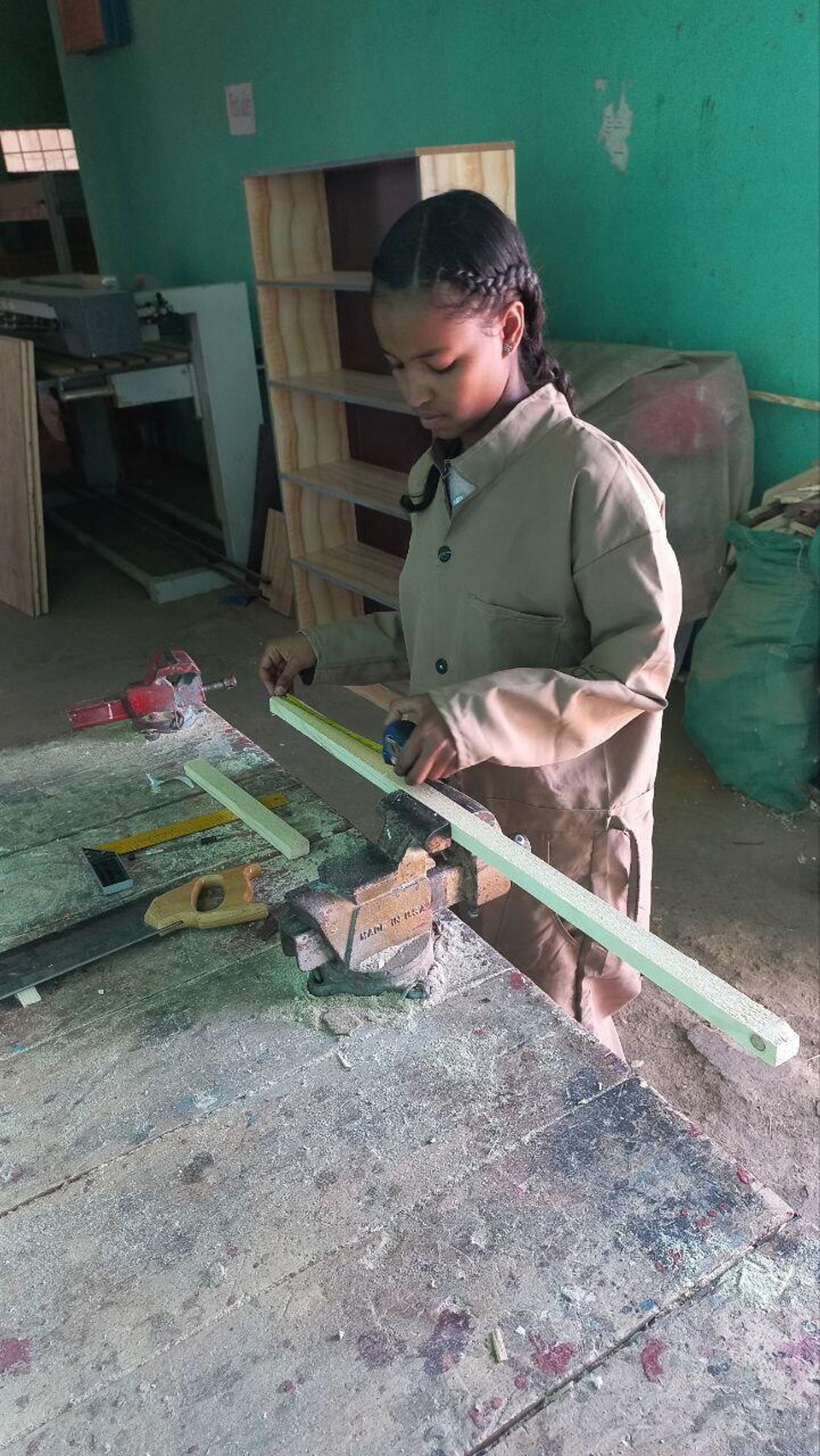
When the Norwegian Refugee Council (NRC), supported by UNICEF, launched a vocational training programme in collaboration with Dabat TVET College, Ferenji saw a doorway. While many expected her to choose a traditional female trade, she walked into the woodwork and furniture workshop.
She joined 69 other young people, but as one of the few women in the wood shop, she was doing more than learning a trade. She was challenging a deep-seated cultural norm that suggested tools and timber were not for her.
Through the youth education and training programme, Ferenji wasn't just handed a saw, she was given a "safe space." Alongside her technical training, she received psychosocial support to process the years of displacement and life skills coaching that helped her find her voice again.
From vulnerability to independence
The impact of the training is visible in the way Ferenji carries herself. The prolonged inactivity that defines life for so many displaced youth has been replaced by the precision of joinery and the pride of creation.
The kits she received, scholastic materials and dignity supplies, offered immediate relief, but the skill she carries in her hands offers a permanent exit from the cycle of aid dependence.
"I feel confident in my ability to secure employment wherever I go," she says. "Even without additional assistance, I know I can contribute to my family’s wellbeing."
A blueprint for the future
Today, Ferenji is more than a graduate, she is also a role model at Alem Wach. By mastering a male-dominated trade, she has shown other girls in the camp that their potential isn't limited by their circumstances or their gender.
As she dreams of opening her own furniture business, Ferenji is also looking back at the classroom she was forced to leave years ago. With her new skills, she finally has the economic stability to plan a return to her formal education.
Ethiopia is one of the world’s most neglected displacement crises. It may not make the headlines, but the needs are urgent. Share this story and help shine a light on the world's neglected displacement crises. Your voice matters when others remain silent.
