


In the Bandiagara region of central Mali, violence has driven many people to flee their homes. These forced displacements increase the vulnerability of women, children, older people and people with disabilities.
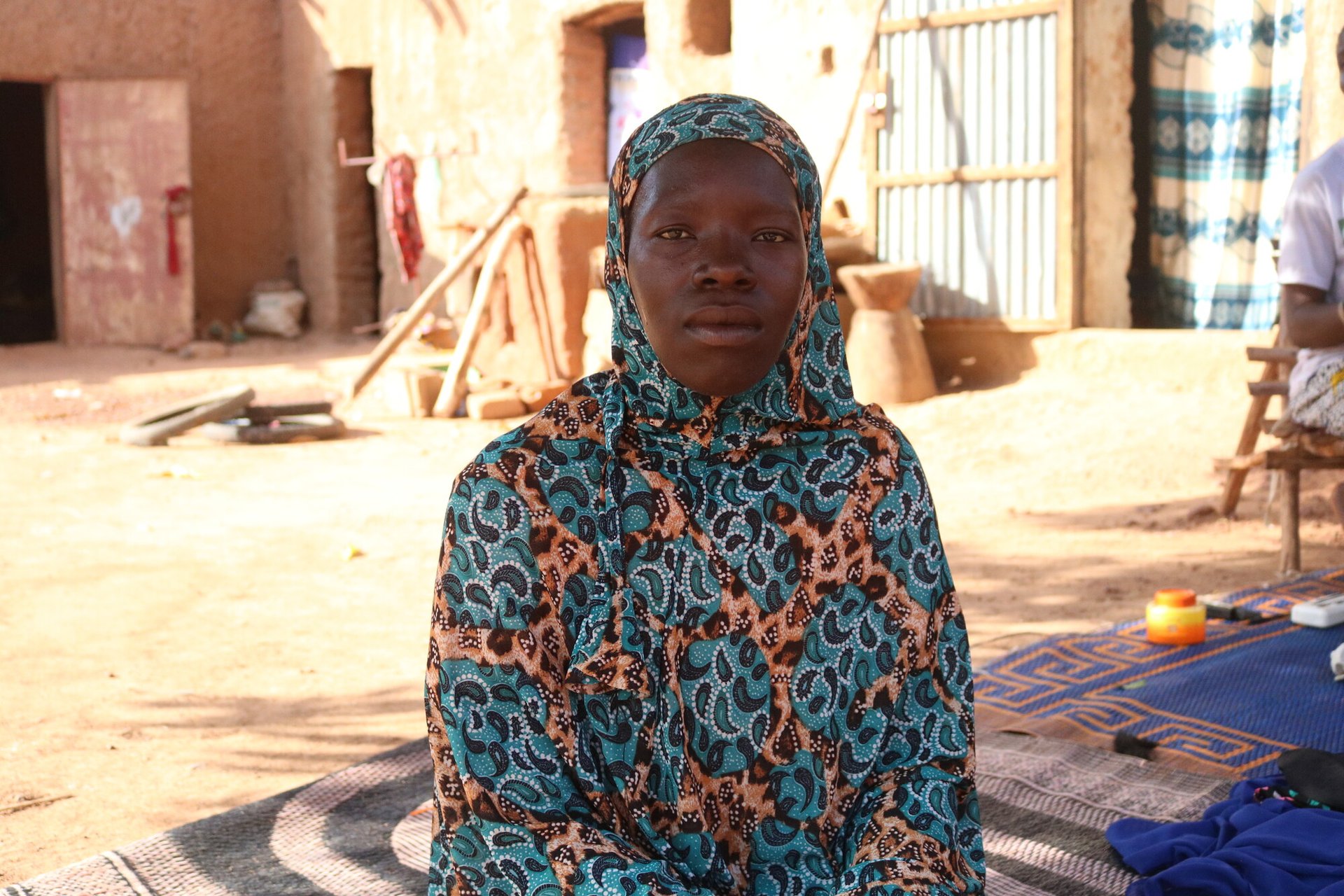
The village of Kori-Kori was attacked, resulting in the loss of property and lives, and displacement and trauma for the survivors. Hundreds of people sought refuge in Mopti region. Among them was Yapel, who was forced to flee with her five children and relatives. She used to live peacefully with her family in the village, but the attacks changed the lives and daily routines of all the villagers.
Yapel’s life was turned upside down
“Our village was attacked, our livestock were taken away, and we had no choice but to flee in fear and panic. The shock was immense,” she says.
Yapel and her family walked a long distance before taking a cart to reach the town of Sevare, in the Mopti region.
Displacement often results in loss of property, livelihoods and access to essential services. “We no longer have access to our fields. We have lost our livestock and now we are living in a new environment to which we must adapt with very few resources,” Yapel explains.
Like many displaced people, Yapel faced numerous difficulties and protection risks, including severe psychological distress, exposure to the elements, and hunger. Without a job or any source of income, it was very difficult for her to make ends meet.
“I had no means to buy food, seek medical treatment, or buy clothes for myself and the children,” she explains.
The days following the displacement were especially difficult as Yapel and her children did not have access to adequate food.
Comfort and peace of mind
Cash assistance in the form of money transfers helped support Yapel during her period of vulnerability. This type of assistance offers vital flexibility. “The cash transfer I received helped my family enormously. I was able to seek treatment when I fell ill, and I bought food and clothes for myself and my children,” says Yapel.
Unconditional cash assistance strengthens protection for participants and gives them the freedom to choose how to meet their basic needs.
Thanks to the support they received, Yapel’s family and many other households have regained social protection – enabling them to live with dignity in better conditions and access essential services.
Yapel herself has regained a sense of comfort and emotional stability following the support.
The intervention forms part of a project funded by the Swiss Agency for Development and Cooperation (SDC). It aims to strengthen the protection environment in Mali to ensure that populations affected by crises can lead a dignified life, free from violence. Thanks to this project, 2,458 displaced people – including 1,527 women, 19 girls and 6 boys in the Mopti and Timbuktu regions – have received protection assistance tailored to their needs.
