

More than a hundred people were forced to flee due to violence in the village of Niassaré, in the municipality of Sofara in central Mali. In the space of a few moments, families had to abandon their homes, their possessions and their livelihoods to seek refuge elsewhere.
For Moyiré and her children, this forced departure marked the beginning of a period of uncertainty, suffering and deprivation.
Far from her usual surroundings, Moyiré found herself facing a particularly difficult reality. Without her fields, her animals and the possessions that had enabled her to provide for her family, she had to rely on the support of relatives to find shelter. She was taken in by a family who had themselves fled the violence and knew first-hand the hardships of displacement.
She and her children were now dependent on people who, despite their willingness to help, were themselves living in precarious conditions and had limited resources. This solidarity, although valuable, was not enough to meet everyone’s needs.
“We lost our possessions, our peace of mind, our fields and our livestock, which were our main means of subsistence. I was living with my children in a host family who were themselves displaced. My children and I were an additional burden on our hosts, who were already facing their own difficulties,” says Moyiré.
At the Diaba Peulh displacement site, the needs were considerable. Access to food and safe drinking water remained difficult, whilst accommodation conditions did not always allow families to live in safety and dignity.
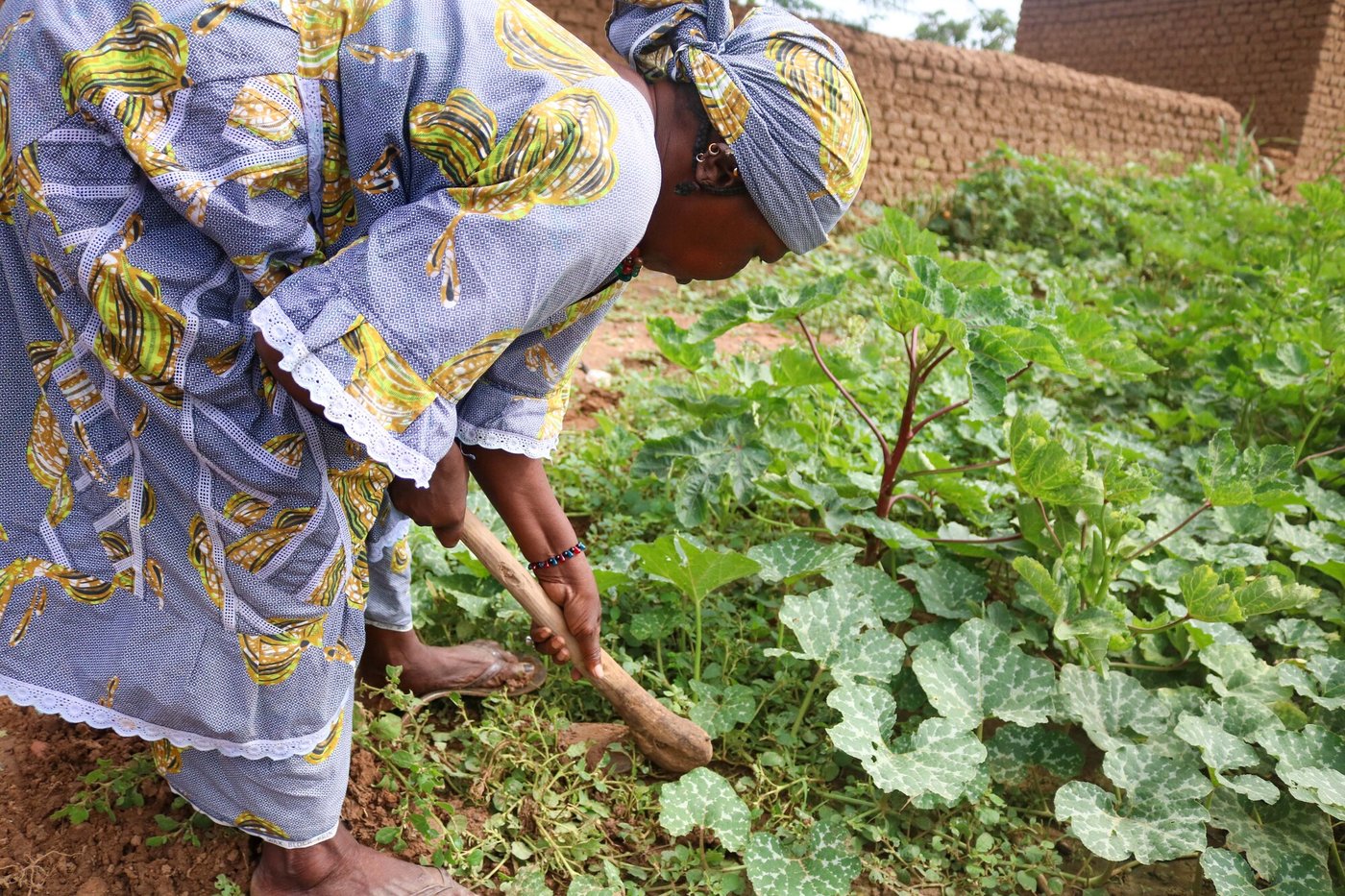
In response to this situation, the Norwegian Refugee Council (NRC) provided Moyiré with a range of assistance comprising food, essential household items, agricultural inputs to support her self-reliance, and emergency shelter support. The assistance has helped to significantly improve her living conditions and those of her children.
Speaking calmly and joyfully, she says: “I received food supplies which enabled me to meet our daily dietary needs. I then received seeds and farming tools. A plot of land was prepared so that I could grow vegetables using these seeds. The vegetables we grow help to improve my family’s diet and, in the long term, will also help us to meet some of our needs.
“I also received bedding kits and cash support, which enabled me to build our own hut. Today, my children and I finally have a safe place to sleep and live with dignity. We also have access to clean drinking water. Before, we had to drink water from the well, which made our daily lives much more difficult. Thanks to the help we’ve received, my family and I have regained a sense of stability and hope.”
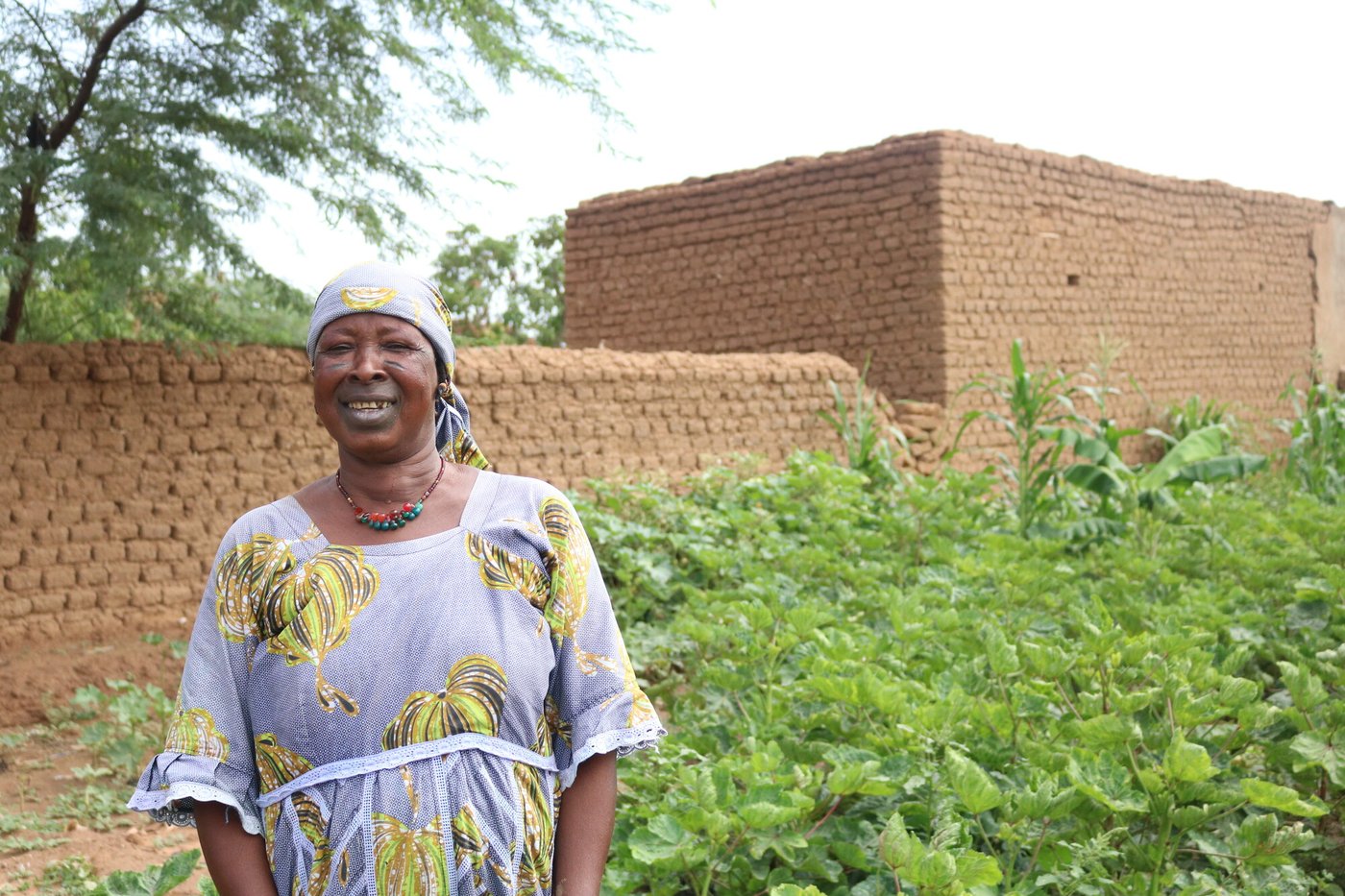
This multi-sectoral assistance was provided with financial support from the Regional Humanitarian Fund for West and Central Africa (FHRAOC).
