
In the Alem-Wach refugee site, tucked into the highlands of Dabat, Ethiopia, 24-year-old Selam Tsegay Asfah is no longer just waiting for the future to happen. She is cooking it.
A new recipe for life
For years, Selam’s world was defined by borders and barriers. Forced to flee Eritrea due to political unrest, she first sought safety in the Adi-Harush camp. But when conflict spread to Northern Ethiopia, she was uprooted again, eventually arriving at the Alem-Wach refugee site with two young children and very few possessions.
Having dropped out of school in the sixth grade, Selam found herself caught in a cycle of dependency. Without a diploma or a trade, the days were long and heavy with the psychological pressure of being unable to provide for her family.
Removing the barriers to growth
The transition from surviving to thriving often requires more than just a classroom; it requires a support system. Under the UNICEF-funded PROSPECTS II Project, the Norwegian Refugee Council (NRC) partnered with Dabat TVET College to enrol 69 young people including 41 women into vocational training.
For a young mother like Selam, the greatest hurdle wasn't a lack of interest, but a lack of childcare.
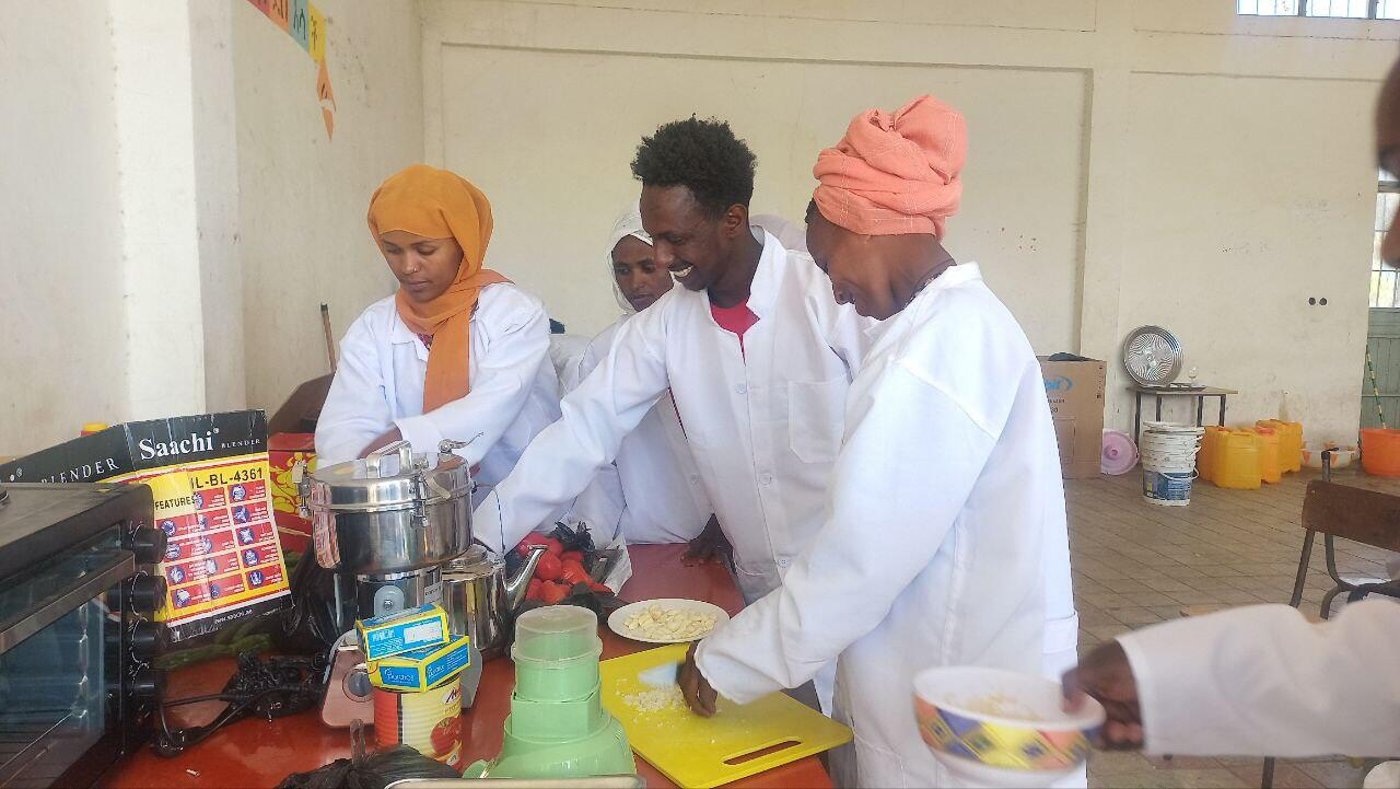
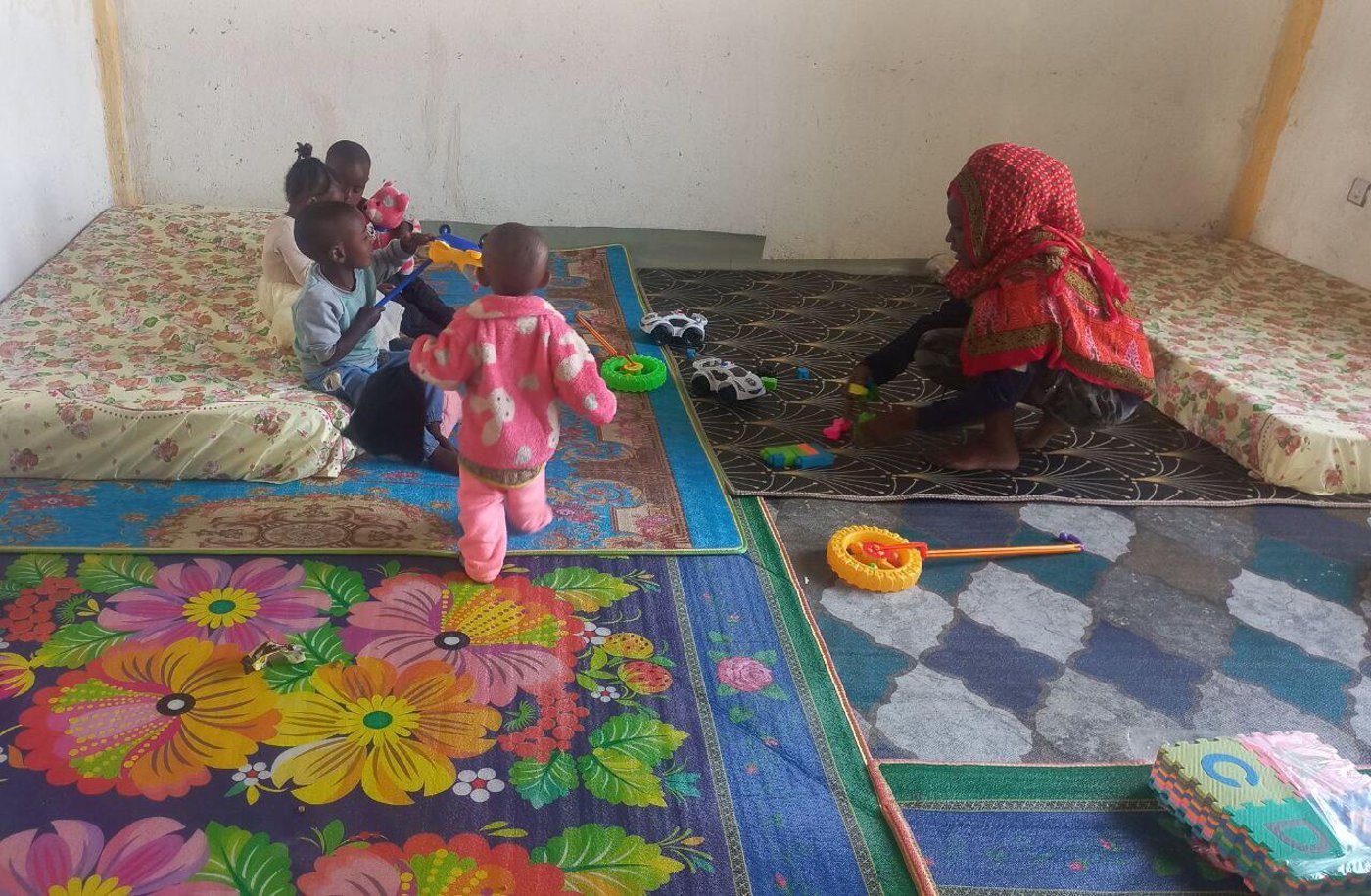
To bridge this gap, NRC established a daycare service at the college. While Selam masters the art of food preparation and catering, her youngest son is just a few doors away, playing with educational toys in a safe, supervised environment. For the first time since her displacement, Selam can focus on a knife skill or a recipe without the constant tug of worry.
Beyond the kitchen
In the training kitchen, the impact is visible. It isn't just about learning to prep vegetables or manage a professional workspace. it’s also about the reclamation of identity.
The intervention has provided Selam with:
-
Market-ready skills: Professional catering and food safety techniques.
-
Social connection: A network of peers from both the refugee and host communities, breaking the isolation of displacement.
-
Confidence: The shift from refugee to trainee, and, eventually, professional.
To ensure she could participate fully, NRC provided the essentials: scholastic materials, personal protective equipment (PPE), and dignity kits. These tools allowed Selam to step into her training not as a person in need, but as a student with a purpose.
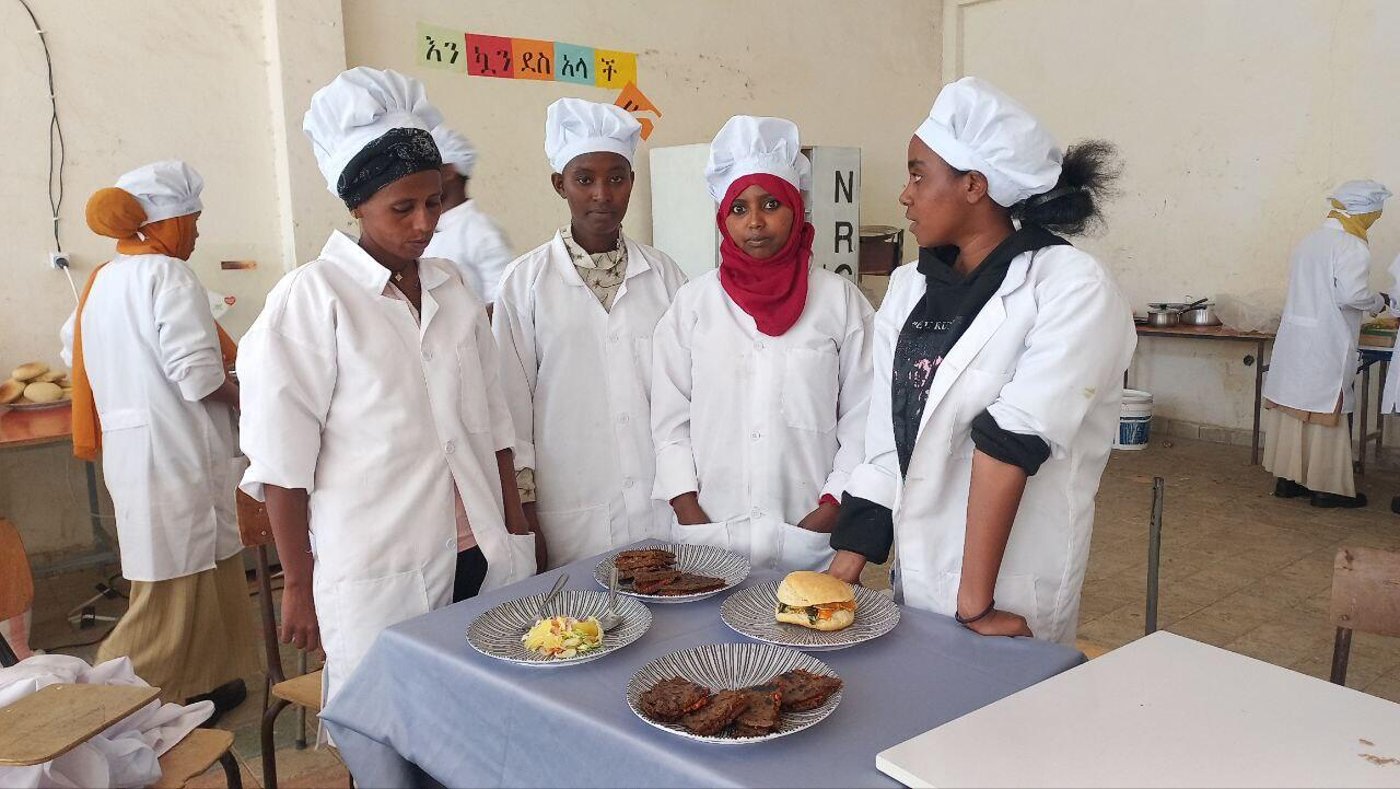
A new menu for the future
The steam rising from the pots in the Dabat TVET College kitchen carries with it the scent of a new beginning. Selam is already planning the layout of her future business.
"I have moved from displacement to determination," Selam says. "When I complete my training and receive my certification, I want to start my own business restaurant here at the Alem-Wach Refugee Site. This will help me support my family and contribute to the community."
Selam’s journey is a testament to the fact that when you invest in a woman’s skills and provide the childcare, she needs to utilise them, the return is the resilience of an entire family. She is no longer looking back at what she lost in Eritrea. Instead, she is looking forward to the grand opening of her own doors.
Ethiopia is one of the world’s most neglected displacement crises. It may not make the headlines, but the needs are urgent. Share this story and help shine a light on the world's neglected displacement crises. Your voice matters when others remain silent.
