


A new report launched today by Action Against Hunger (ACF), CARE International, International Rescue Committee (IRC), Mercy Corps, and Norwegian Refugee Council (NRC), shows how the war in Sudan is driving communities into famine conditions, with families surviving on meals made possible only because people risk their lives crossing active battlefields to produce, trade and access food.
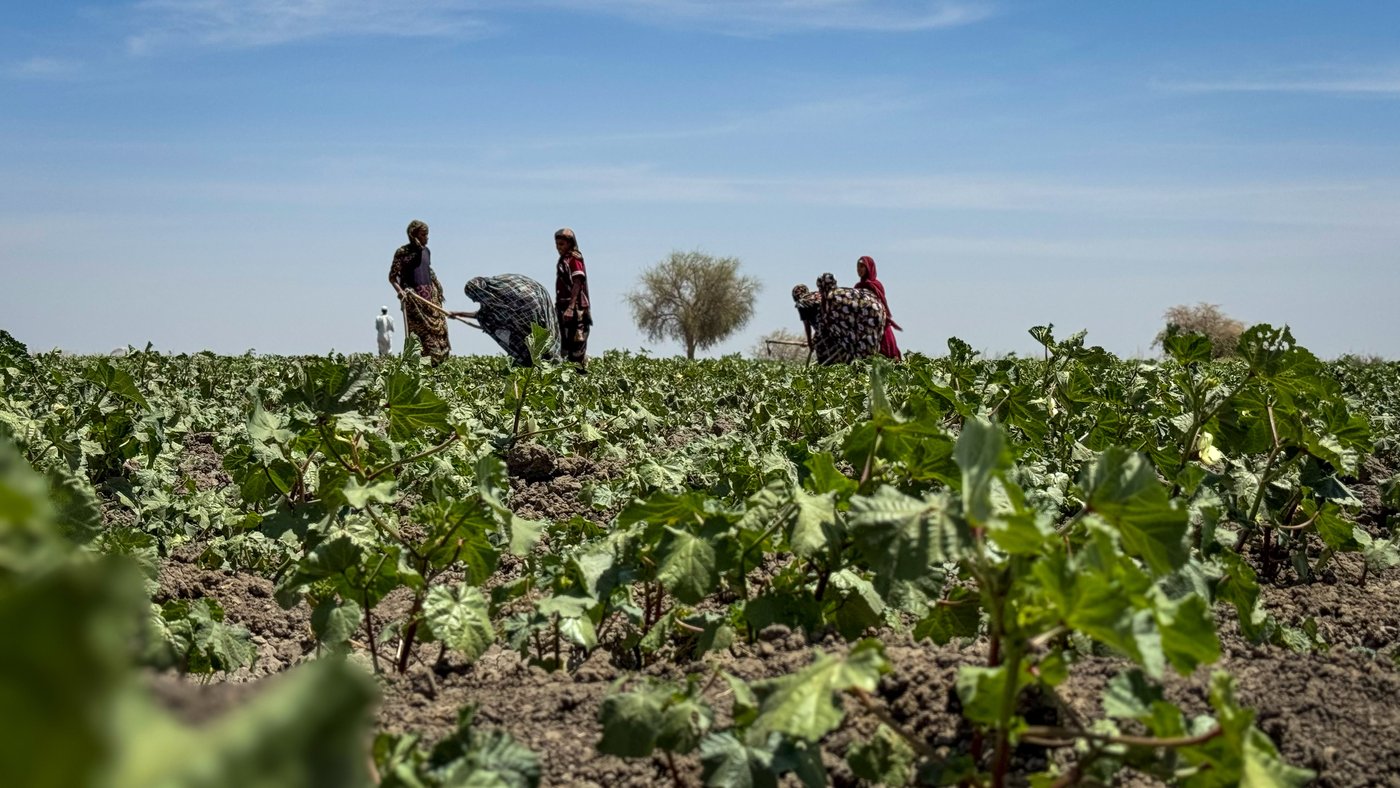
What it takes to eat: new report reveals how war is cutting off access to food as hunger deepens in Sudan
The report documents how three years of war and violations of International Humanitarian Law have turned the journey of food – from farms to markets to homes – into a dangerous and often deadly process. Despite these conditions, Sudanese communities continue to sustain a fragile food system through extraordinary resilience and ingenuity.
The report finds that millions of people in heavily conflict-affected areas, including parts of North Darfur and South Kordofan, are surviving on just one meal a day or less. Families are forced to skip meals entirely, reduce portions, and in some cases resort to eating leaves and animal feed, food not normally considered edible, as conflict, displacement and market disruptions continue to drive hunger to extreme levels. Communal kitchens, once a lifeline for many, are increasingly unable to meet rising needs as funding and food supplies dwindle.
“We no longer ask what we will eat. We ask who will eat.” — Ikhlas*, North Darfur
The Integrated Food Security Phase Classification (IPC) has already confirmed famine in parts of Sudan, with the risk of famine spreading to additional areas. More than half of Sudan’s population, 28.9 million people, is now acutely food insecure, including over 10 million facing severe or extreme levels of hunger. The crisis is being further intensified by economic collapse and climate shocks.
The situation has been compounded by widespread violations of international humanitarian law, including the use of starvation as a weapon of war and targeted attacks on civilians and civilian infrastructure. The relentless violence, displacement and siege tactics have systematically dismantled Sudan’s food system. Farms have been destroyed, farmers killed, and markets disrupted by attacks, closures and exploitative taxation.
Women and girls have been disproportionately affected, facing heightened risks of sexual and gender-based violence that restrict their ability to access food and essential services, further increasing their vulnerability to hunger.
Despite these immense challenges, local food systems continue to function under extreme pressures. Farmers, traders, and local community networks continue to produce and move food despite insecurity and repeated disruptions. Local community-led responses, including women’s groups, mutual aid groups, traders and community committees, are helping families survive, but these efforts are increasingly strained and cannot meet the scale of needs.
The report is based on extensive research, including 80 key informant interviews and 40 focus group discussions with displaced farmers, traders, community members and humanitarian actors across North Darfur, South Kordofan, White Nile and Gedaref.
The five humanitarian organisations behind the report call on all parties to the conflict to immediately cease actions that drive hunger and violate international humanitarian law, including restricting humanitarian access and targeting civilians. Urgent action is needed to protect Sudan’s food system, ensure safe movement of people and goods, and support local markets and food production.
Without immediate and sustained intervention, Sudan’s food crisis will continue to deepen across conflict-affected areas, with devastating consequences for millions of people.
*Name has been changed
Notes to editors:
- The report can be found here.
- The report is based on extensive research, including 80 key informant interviews and 40 focus group discussions with displaced farmers, traders, community members and humanitarian actors across North Darfur, South Kordofan, White Nile and Gedaref and 80 key informant interviews.
- The United Nations (UN) Independent International Fact-Finding Mission has documented a “war of atrocities” against civilians, including the use of starvation and sexual violence as weapons of war, with direct and large-scale attacks on civilians and civilian infrastructures.
- Female-headed households are reported to be three times more likely to experience food insecurity than male-headed households, with fewer than 2 per cent considered to be food-secure.
- In 2025, food security interventions under the Sudan Humanitarian Needs and Response Plan (HNRP) received less than half of their requested funding – and early recovery received only 1 per cent. In fact, the overall response was only 40 per cent funded by the end of 2025.
- With resources dwindling, community kitchens across the country are closing or reducing meal provision by 50 per cent or more – for example, only providing one meal a day, rather than three. Funding cuts are reported to have forced a large share of ERR-supported services to shut down, including in areas facing famine-like conditions.
