


Palestinians forced out of their homes and communities by Israeli settler violence in the occupied West Bank face poverty, insecurity, uncertainty, and little prospect of returning home, reveals a new report by the West Bank Protection Consortium (WBPC).
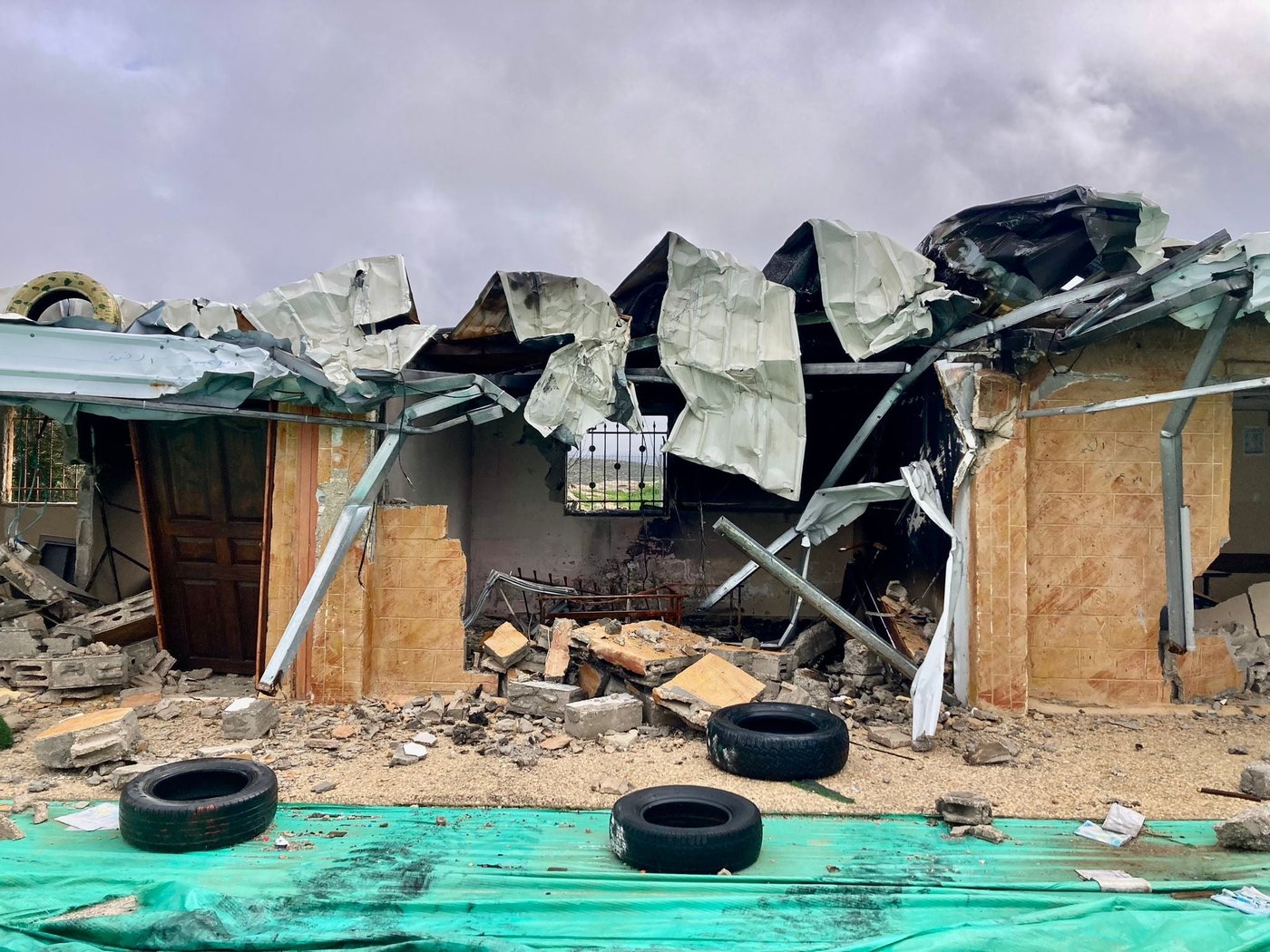
West Bank: Settler violence forces Palestinians from their homes into worsening conditions
Israeli settler violence is making life impossible for families and helping drive their forcible transfer. Eighty-six per cent of displaced families said their living conditions are worse than before displacement. The findings show that displacement is not a one-off event, but one phase of a protracted crisis.
Families continue to face threats of eviction, loss of livelihoods, inadequate housing, and restricted access to essential services, after displacement. Half of households reported they believed that they were at risk of being re-displaced within the next six months. Most attributed this risk to informal threats from Israeli authorities or settlers, or to formal eviction or demolition orders.
“With the loss of land, families are not only losing their homes and communities. They are losing the livelihoods that kept them alive,” said WBPC Chief of Party Allegra Pacheco. “Displacement means families can no longer farm their land, graze their livestock or earn the income they need to survive.”
Three quarters of families said they could no longer earn enough to meet basic needs, mainly because Israeli authorities, settlers, or both had blocked access to their land or livestock.
The findings come amid escalating settler attacks, tighter movement restrictions, increasing demolitions and other coercive measures that are intensifying pressure on Palestinian communities. The report assesses 233 Palestinian households forcibly displaced in Area C, which makes up 62 per cent of the West Bank and remains under full Israeli control. Since January 2023, Israeli settler violence and access restrictions have displaced 6,200 Palestinians across the West Bank, more than a third of them in the first half of this year.
The report also finds that settler violence remains the main reason families cannot return home. Only six per cent of households said they expect to return to their land within the next year, with most citing continued settler violence and harassment, alongside blocked access to land or property, as the reasons they cannot go back.
“Under international law - and even according to several Israeli Supreme Court decisions – Palestinians displaced from Area C should be able return to their communities, but they cannot as long as the settler violence continues. To ensure effective protection for Palestinian communities, Israeli authorities must prevent and stop settler violence, including barring settlers from entering Palestinian residential and agricultural areas," said Pacheco. “Forcible transfer is a grave breach – one of the most serious violations of international humanitarian law. The Israeli government must also cease all policies and practices that contribute to forcible transfer and immediately facilitate the return of displaced Palestinians.”
The report also warns that support for displaced families is falling far short. Many received assistance immediately after being forced from their homes, but most said it covered only part of what they needed. As displacement drags on, families urgently need livelihood support, safe shelter, water, electricity and protection services. Without sustained funding, families already forced from their homes are being pushed deeper into poverty and insecurity.
“Forced displacement is protracted and increasing in the West Bank. It must not become a permanent reality for Palestinians,” said Pacheco. “The international community must take concrete steps to hold Israel accountable and stop the drivers of displacement. Without meaningful action, more communities will be uprooted, and those already displaced will see any real prospect of return slip further away.”
Notes to editors:
-
The report draws on assessments conducted in December 2025 of 233 households that had been displaced from communities monitored by the WBPC. Data collection across Ramallah, Bethlehem, Hebron, Nablus, Tubas, Jerusalem and Jericho governorates.
-
Key Findings:
-
Settler violence is the main factor forcing families to relocate.
-
49 per cent of the households surveyed feared having to move again within the next six months.
-
86 per cent report living conditions worse than those in their communities of origin, with many residing in emergency or temporary shelters that are physically unsafe and legally insecure.
-
68 per cent experienced livelihood loss following displacement, primarily due to loss of access to land, pasture for grazing, and herding resources. Household income after displacement was insufficient to cover basic needs for 74 per cent of those surveyed.
-
Only 6 per cent expect to return to their communities within the next year, reflecting the persistence of insecurity, settler violence, land confiscation, and restricted access.
-
The West Bank Protection Consortium, led by NRC, supports Palestinian communities through material and legal assistance to prevent forcible transfer in the West Bank. It operates as a strategic partnership of five international non-governmental organisations, supported by EU Humanitarian Aid, Belgium, Canada, Denmark, Finland, France, Germany, Ireland, Italy, Luxembourg, the Netherlands, Spain, Sweden, and the United Kingdom.
-
The West Bank is experiencing its largest and most severe forced displacement of Palestinians since 1967. Ongoing Israeli military operations and surging settler violence have collectively displaced over 33,000 Palestinians from Jenin and Tulkarem refugee camps, with tens of thousands remaining unable to return to their homes. (OCHA)
-
In addition, since January 2023, Israeli settler violence and access restrictions have displaced 6,200 Palestinians. Thirty-five per cent (2,200), were displaced within the first six months of 2026. (OCHA)
-
The WBPC has recently documented the pattern and impact of sexual violence perpetrated by Israeli settlers against Palestinians in Area C of the West Bank- which has been the most significant trigger contributing to the forcible transfers.
-
In 2025, there were 1,835 settler attacks that resulted in casualties or property damage, the highest number recorded since the UN began tracking them in 2006. This was a 27 per cent increase over 2024, when the UN documented 1,449 settler attacks. (OCHA)
-
As of December 2025, there were 925 movement obstacles that permanently or intermittently restrict movement across the West Bank, including East Jerusalem. This is 43 per cent more than the annual average of 647 movement obstacles in the preceding 20 years. (OCHA)
-
In 2025, Israeli authorities demolished 1,536 structures in the West Bank for lack of building permits, the highest number recorded since the UN began tracking demolitions in 2009. (OCHA)
-
Demolitions are largely rooted in a planning system that denies Palestinians the right to build in Area C, which covers more than 60 per cent of the West Bank and remains under full Israeli control. Palestinians living in Area C must apply for permits that are almost never granted. (Bimkom)
For more information or to arrange an interview, please contact:
-
NRC global media hotline: media@nrc.no, +47 905 62 329
