
One month after the devastating earthquakes struck Venezuela, thousands of people are still living in temporary shelters while trying to rebuild their lives. International attention and financial support must be stepped up, without forgetting those who already needed humanitarian assistance, said the Norwegian Refugee Council (NRC).
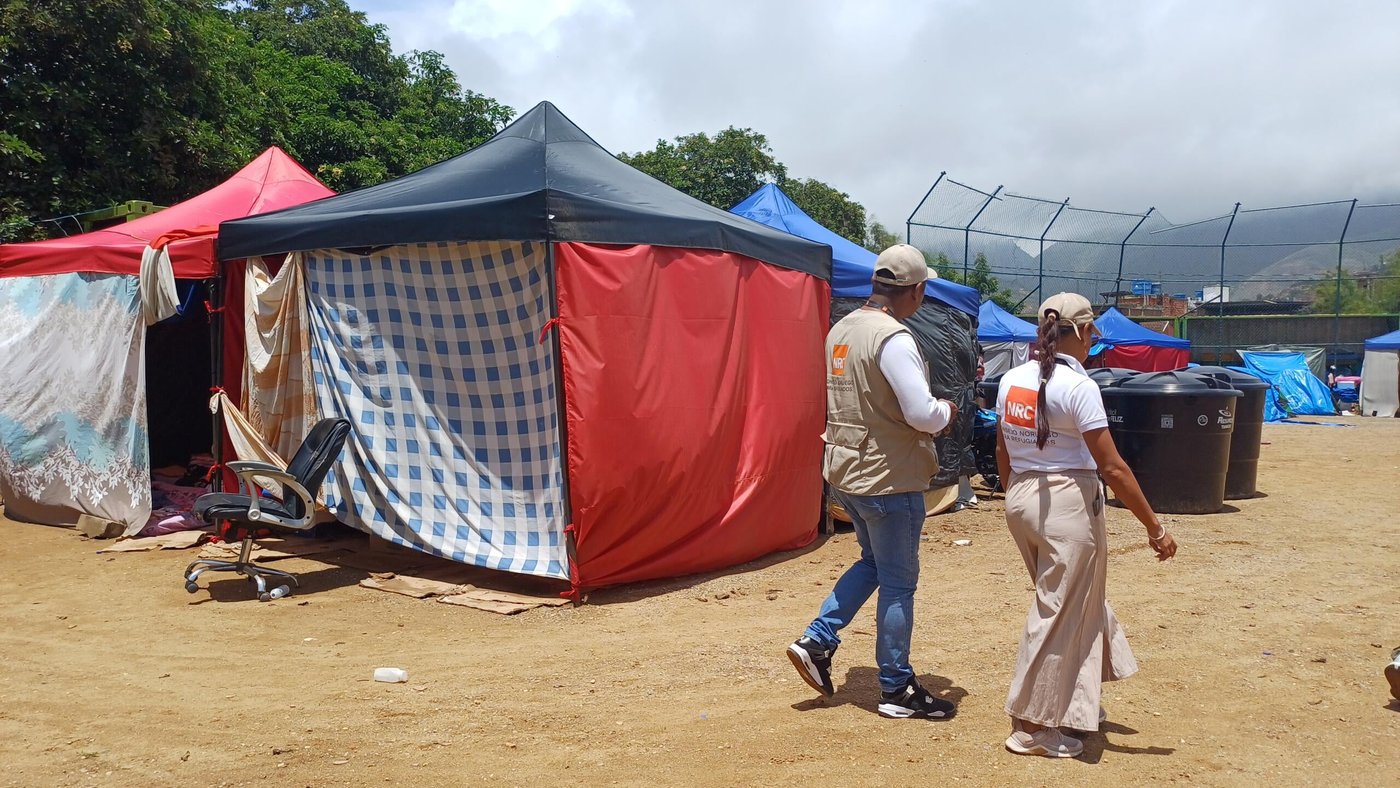
Venezuela: One month after the earthquakes, humanitarian funding falls far short
Up to 1.3 million people are in need of humanitarian assistance in the areas affected by the earthquakes, over 700,000 more people than before the earthquakes struck. The Humanitarian Response Plan has been revised to include the earthquake response, increasing requirements by nearly 50 per cent. The amended plan aims to support 6.2 million people over an initial six-month response period. Yet the plan is currently only 39 per cent funded.
"The first month after a disaster often brings global solidarity and attention. The real test now is whether that support continues after the headlines start to fade," said Elena Vicario, NRC’s country director in Venezuela. "Families who lost homes, livelihoods and access to essential services cannot rebuild their lives on short-lived commitments."
Prior to the earthquakes, over one quarter of the population was in need of humanitarian assistance and humanitarian organisations were already responding to significant needs, including protection, education, health, water and sanitation, and livelihoods across the country. The revised response plan integrates these existing priorities with emergency earthquake assistance within a single framework.
"We welcome the rapid mobilisation of resources following the earthquakes, but this funding must complement, not replace, support for existing humanitarian needs. Donors should ensure funding is sustained, reaches all sectors, and strengthens the capacities that already exist in Venezuela. Local communities, organisations, and long-standing humanitarian actors have the knowledge and access needed to reach affected populations, and new support should reinforce their work,” said Vicario.
After the earthquakes, nearly 24,000 children have had their education disrupted, further increasing the number of children in need of education support. So far, the education sector is only under 5 per cent funded, after years of underfunding from the international community, which has left education needs consistently unmet.
“For children living in temporary shelters, the emergency is far from over,” said Liliana Largo, NRC’s education programme development manager. “The routines that once provided stability and protection have been disrupted, and emotions such as fear emerge, affecting their ability to concentrate and learn. Temporary learning spaces and psychosocial support are critical in helping children rebuild a sense of normality and wellbeing, and must be treated as a core part of the emergency response."
NRC’s emergency response has evolved significantly over the past month. The organisation began by assessing needs in 16 temporary shelters. During the first month, NRC assisted more than 2,400 displaced people, distributing hygiene kits and other essential items to affected families, while also providing psychosocial support sessions for children, and legal counselling for people who have lost civil documentation and property ownership records.
"One month on, people affected by the earthquakes are still living with uncertainty every day. The humanitarian community now faces a choice: sustain the response and help communities recover or allow funding shortfalls to turn this disaster into a longer-term crisis. The world must not look away," said Vicario.
Notes to editors
- Photos and videos from Venezuela are available for use here.
- Within two weeks of the earthquakes, the 2026 Humanitarian Response Plan (HRP) was amended to incorporate earthquake-related needs.
- The revised HRP seeks to reach 6.2 million people, including 1.3 million people affected by the earthquakes (OCHA).
- Before the earthquakes, 596,000 people living in the municipalities affected by the earthquakes were included in the 2026 Humanitarian Response Plan. 751,000 additional people were included in the plan to address humanitarian needs caused by the earthquakes (OCHA).
- Total funding requirements increased from 632 million US Dollars to 931.3 million US dollars, including 298 million US Dollars for earthquake response activities (OCHA, Financial Tracking Service).
- As of 22 July, the Humanitarian Response Plan for Venezuela is 39.2 per cent funded, with 365.1 million US dollars received against requirements of 931.3 million US dollars (OCHA, Financial Tracking Service).
- The education sector accounts for approximately 10.2 per cent of the total humanitarian appeal (94.5 million US dollars), yet as of 22 July it has received only 1.1 per cent of total funding reported, leaving the sector just 4.7 per cent funded and facing a funding gap of more than 90 million US dollars (OCHA, Financial Tracking Service).
- In 2025 the education sector was 20.3 per cent funded, while in 2024 it was 7.7 per cent funded (OCHA).
- The school year in Venezuela ends in July. Educational authorities have begun working on reorganising the academic calendar, and we welcome these efforts.
- NRC will continue to support the efforts of the authorities and the wider humanitarian response, in line with the principles of neutrality and impartiality.
- In the Capital District alone, 432 schools – around a third of all schools – have been affected by the earthquakes (UNICEF).
- According to Education Cannot Wait, 34 schools are currently serving as temporary shelters.
- According to Education Cannot Wait, learning has been disrupted for nearly 24,000 students.
- Since 8 July, NRC has reached more than 200 children aged 5 to 16 with educational activities. The response is ongoing, and NRC hopes to set up 10 temporary learning spaces where 600 children can receive educational kits and psychosocial support.
- NRC has been working in Venezuela since 2005, providing education, protection, legal guidance, and water and sanitation support. In 2025 we reached more than 71,000 people across four border states (Bolívar, Zulia, Apure and Táchira). NRC has 70 colleagues in Venezuela and seven local partners. NRC’s teams are working across areas affected by the earthquakes to provide vital supplies, with a plan to provide water and sanitation support, emergency education and trauma support for children among other services.
For more information or to arrange an interview, please contact:
-
NRC global media hotline: media@nrc.no, +47 905 62 329
