
Media update from the Norwegian Refugee Council (NRC) three weeks after the earthquakes on the distress children continue to experience and the need for psychosocial support.
Venezuela on-the-record update #3: Children’s distress profound after earthquakes
Elena Vicario, NRC Country Director for Venezuela said:
“Weeks on from the earthquakes, children’s distress remains profound. For thousands of children, this moment of fear will be etched in their memory forever. Many of the safe places where they learned, played and grew no longer exist. Children have lost not only their homes and schools, but also friends, neighbours, teachers and family members.
“The need for psychosocial support is urgent. Without it is harder for children to recover from the traumatic experience and they will continue to live with the sense of danger generated by the earthquakes. This can affect their capacity to learn, thrive and achieve their full potential. For many children every loud noise can feel as though the tragedy is happening all over again. A child who receives timely support can find the words to understand and express what they are feeling and gradually regain a sense of calm and hope.
“One mother told our team how, after spending five days outdoors, a heavy storm arrived. As thunder rolled overhead, children began hugging one another and crying, convinced that another earthquake was coming. The fear and anxiety were immediate and visible.
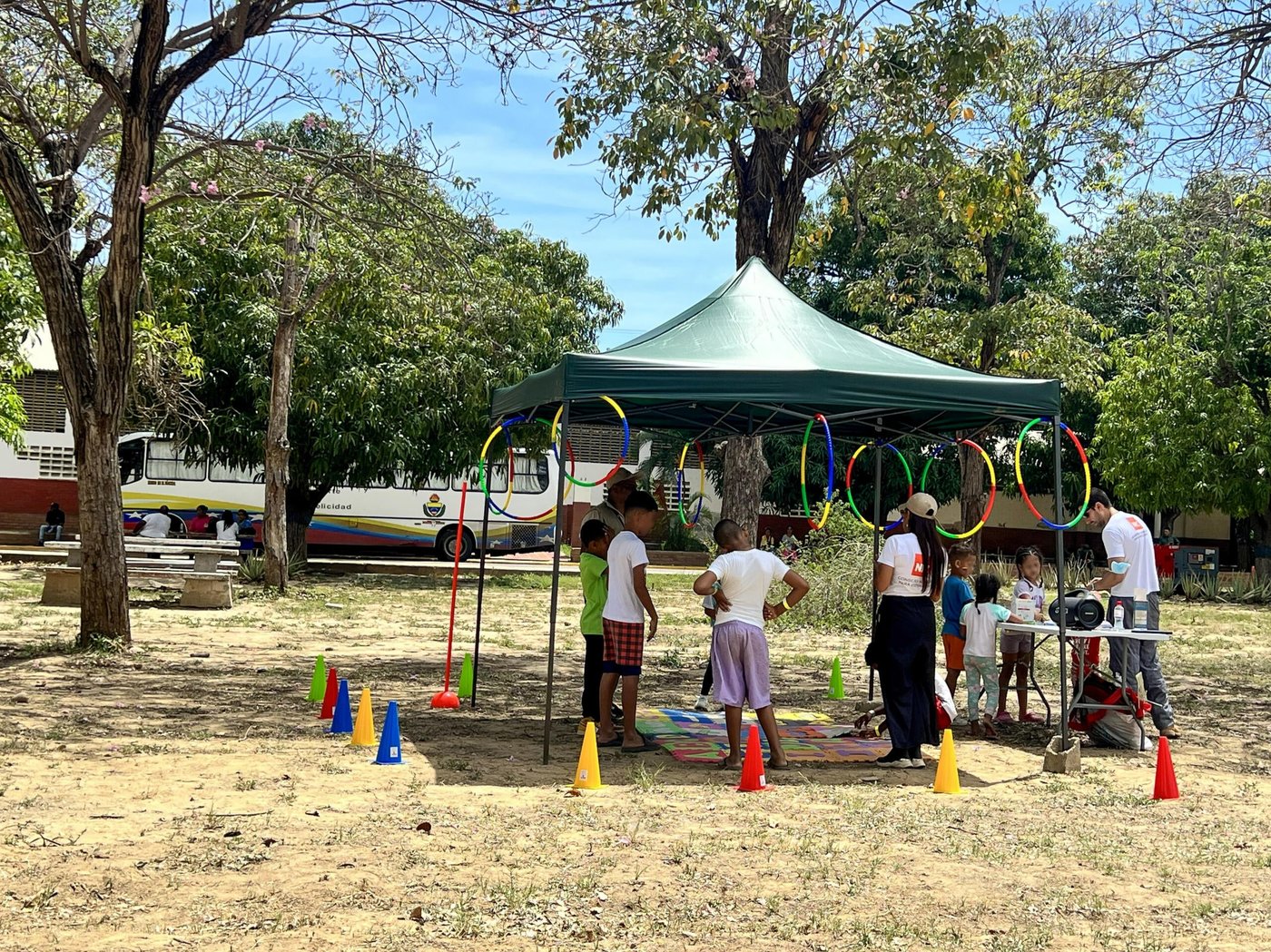
“Many schools are closed because of damage, or because they are being used as temporary shelters, and there is now a need for temporary learning spaces. NRC has started providing psychosocial support in temporary shelters. Within the first days of our education response, we reached over 100 children, creating spaces where they can express themselves, play, regain routines and begin to process what they have lived through. We hope to set up 10 temporary learning spaces where we can support 600 children as they gradually overcome the initial shock and reduce the constant sense of fear and alertness.
“The solidarity of the Venezuelan people has played an important part in the first weeks after the earthquakes. On weekends, volunteer groups come from other states to organise recreational activities for children. These initiatives are really appreciated by families and the community. However, I have noticed that adolescents are often left out. Many of them told us how much they miss school, and some even asked our colleagues if they could give them maths lessons. This shows how eager they are to keep learning and regain a sense of normality.”
Marisela, a primary school teacher from La Guaira said:
“Children have not yet let go of the overwhelming emotions caused by the earthquake that changed all our lives. We need that impact to fade little by little, working together.
“It is important to recreate learning spaces within shelters and to create activities and safe spaces to help children process what happened. There are teachers in the shelters. Activities can take place, even if it’s just under a tent.
“Seeing children suffer is horrible. Children are part of a country’s future.”
Notes to editors:
- Photos and videos from Venezuela are available for use here, including photos of Marisela.
- Marisela teaches at two schools in La Guaira, the hardest-hit area, where the courtyards are currently being used as temporary shelters. In one of them, NRC distributed family mobility kits containing blankets, mosquito repellent, sunscreen, flashlights, batteries, power banks, and other essential items to each family living there. The school has been damaged by the earthquakes and can no longer be used. At best, some chairs and desks could be recovered for the children if a temporary tent were installed in the school courtyard. 29 families are currently living in the school's courtyard. Marisela estimates that around 200 of the school’s 765 students were killed.
- The school year in Venezuela ends in July. Educational authorities have begun working on reorganising the academic calendar, and we welcome these efforts.
- We welcome the statement recently issued by education authorities highlighting socioemotional support as a priority in the areas affected by the earthquakes. NRC will continue to support the efforts of the authorities and the wider humanitarian response, in line with the principles of neutrality and impartiality.
- In the Capital District alone, 432 schools – around a third of all schools - have been affected by the earthquakes (UNICEF).
- According to Education Cannot Wait, 34 schools are currently serving as temporary shelters.
- According to Education Cannot Wait, learning has been disrupted for nearly 24,000 students.
- Between 8 and 10 July, NRC reached more than 100 children aged 5 to 16 with educational activities. The response is ongoing, and NRC hopes to set up 10 temporary learning spaces where 600 children can receive educational kits, as well as psychosocial support programmes.
- NRC has been working in Venezuela since 2005 providing education, protection, legal guidance, and water and sanitation support. In 2025 we reached more than 71,000 people across four bordering states. NRC has 70 colleagues in Venezuela, and seven local partners. Our teams are working across areas affected by the earthquakes to provide vital supplies, and will be providing water and sanitation support, emergency education and trauma support for children among other services.
For more information or to arrange an interview, please contact:
- NRC global media hotline: media@nrc.no, +47 905 62 329
