
Media update by Beatriz Ochoa, the Norwegian Refugee Council’s (NRC) Regional Head of Advocacy for Latin America two weeks after earthquakes in Venezuela:
Venezuela on-the-record update #2: Families need safe water and sanitation to reduce health risks
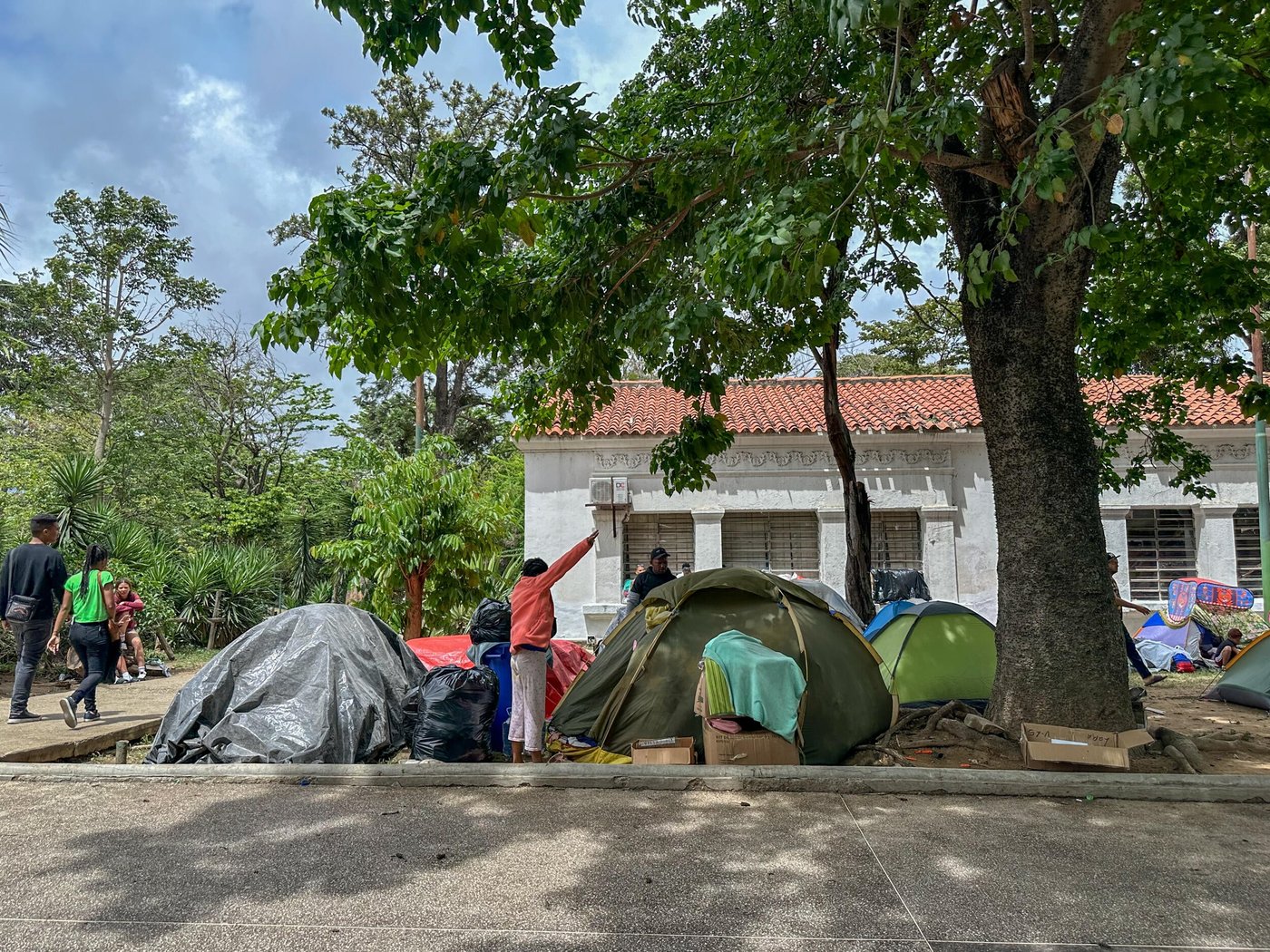
“Two weeks after the earthquakes struck Venezuela, many families who lost their homes have told me they are concerned about how they will meet their most basic needs. Thousands of people continue to live in temporary shelters, schools, parks and other public spaces. Access to safe water, sanitation and hygiene services is now becoming increasingly important to prevent health problems and the spread of disease.
“Many families are living in densely populated settings, with limited privacy, exposure to high temperatures and seasonal rains, and sometimes insufficient access to showers, soap and adequate sanitation facilities.
“I have seen families doing everything they can to maintain dignity in extremely difficult conditions. In one temporary shelter, I saw families organising themselves to keep common spaces clean, including through makeshift toilets and basic waste management arrangements. Their determination is remarkable, but families should not have to shoulder this burden alone.
“We urgently need support from international donors so we and other humanitarian organisations can provide access to safe water, toilets, hygiene supplies, and clear public health information to help reduce the risk of diarrhoeal diseases, skin infections and other preventable health problems among displaced families.
“Water is being delivered by tanker trucks to many temporary shelters, but families often lack appropriate containers to store it safely. Access to bottled water, showers and toilets remains limited in some locations. These challenges can be particularly difficult for older people, people with disabilities, pregnant women and families with young children.
"As displacement becomes more protracted, and the days turn into weeks, I have seen families beginning to organise daily life in temporary shelters, including preparing and cooking meals together. In these conditions, access to clean water remains essential to prevent disease and protect people's health.
“Families need basic but essential items, including safe water containers, water purification tablets, soap, chlorine, sanitary pads and tarpaulins.
“NRC has already provided 1,400 displaced people with soap and other hygiene items, water tanks, and jerrycans for safe water storage. We will also be distributing tarpaulins to help protect families protect from exposure to the elements and have supported first responders with personal protective equipment for search and rescue activities.
“As the response evolves, we will work with communities, authorities, and humanitarian actors to establish more suitable solutions, including larger-scale water storage and treatment systems, improved sanitation facilities and community showers that provide greater privacy and dignity.
“The first days of this response were driven by the community. The world should know that this solidarity is not simply a gesture—it is a vital necessity. But it is now time for funding and aid to flow in and support longer-term solutions so people can take the first steps to rebuilding their lives.”
Notes to editors:
- Photos and videos from Venezuela are available for use here.
- At least 3,685 people have been killed and more than 16,740 people injured. The number of dead and injured is likely to rise (OCHA).
- 17,907 people have lost their homes, according to the authorities (OCHA).
- Authorities report at least 856 affected buildings, including 190 that have collapsed (OCHA).
- 38 hospitals were damaged by the earthquakes (OCHA).
- In 2026, 7.9 million people in the country are in need of humanitarian assistance, 27.7 per cent of the total population (28.5 million people) (OCHA). 5.5 million of them have been targeted for assistance.
- The humanitarian response plan in Venezuela is currently 43.4 per cent funded with 274.4 million of the 632.2 million US dollars required having been delivered (OCHA).
- The 2025 humanitarian response plan in Venezuela was just 20 per cent funded, while the 2024 plan was 28 per cent funded (OCHA).
- NRC has been working in Venezuela since 2005 providing education, protection, legal guidance, and water and sanitation support. In 2025 we reached more than 71,000 people across four bordering states. NRC has 70 colleagues in Venezuela, and seven local partners. Our teams are working across areas affected by the earthquakes to provide vital supplies, and will be providing water and sanitation support, emergency education and trauma support for children among other services.
- A full family hygiene kit contains: 8 toilet soaps, 4 toothbrush, toothpaste or dental cream, shampoo, washing powder, bleach, toilet paper and deodorant. The family mobility kit includes mosquito repellent, anti-burn cream, sunscreen, among other essential items.
For more information or to arrange an interview, please contact:
- NRC global media hotline: media@nrc.no, +47 905 62 329
