
Media update by Beatriz Ochoa, the Norwegian Refugee Council’s (NRC) Regional Head of Advocacy for Latin America following the earthquakes in Venezuela:
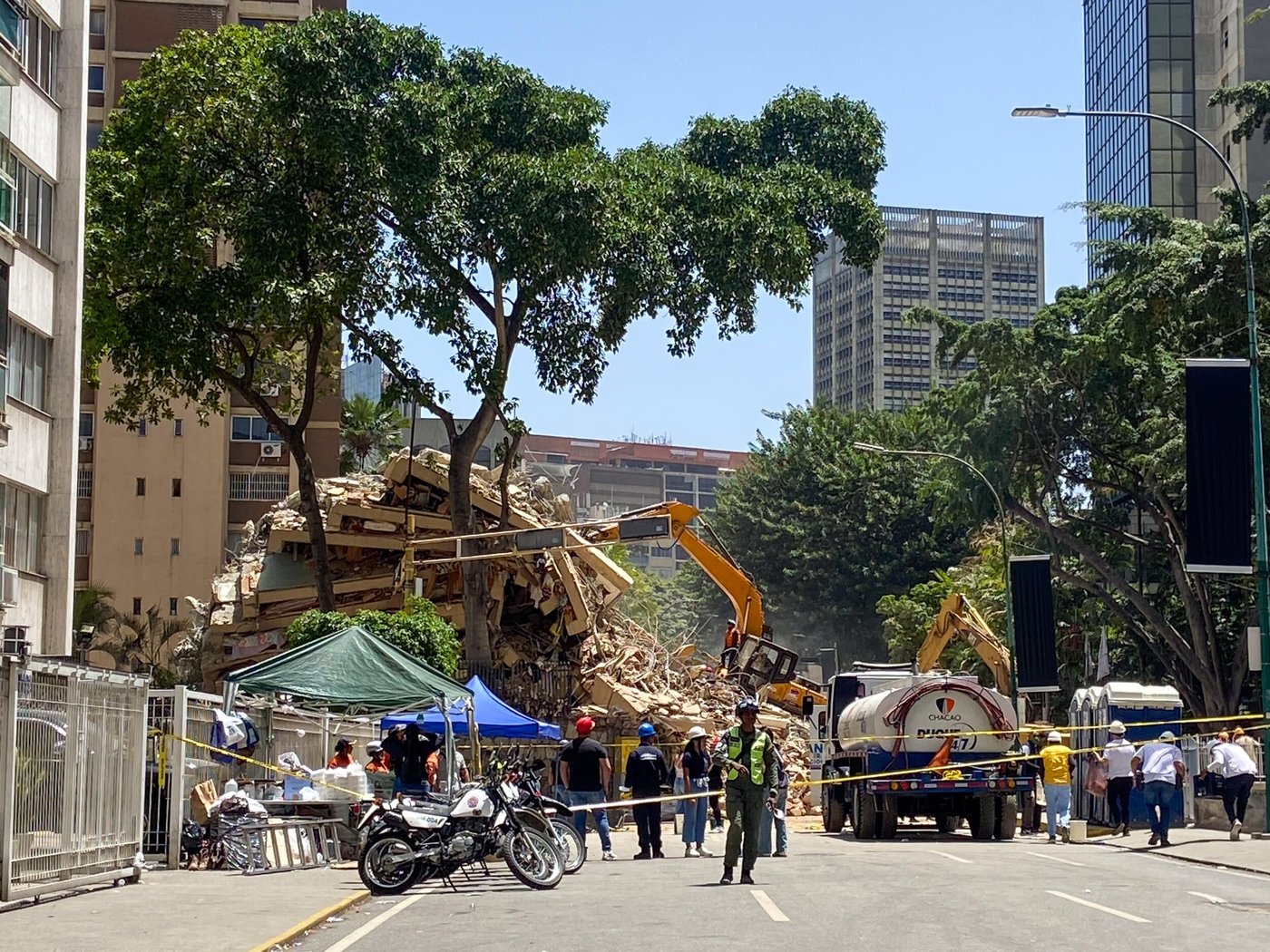
Venezuela on-the-record update #1: Urgent funding needed to scale life saving response
“These earthquakes have left thousands of families without a home. Families I have met here in Caracas tell me they have survived the first days thanks to the remarkable solidarity of the Venezuelan people, supporting one another in these extremely difficult moments, even when many have very little themselves.
“Everywhere you turn, you see people working to support their neighbours and strangers alike. Doctors delivering babies in classrooms, teenagers running games for the young kids to distract them from reality, and taxi drivers transporting families free of charge. Now we need to ensure that aid flows in and funding allows humanitarian teams on the ground to scale up support and begin to provide longer-term solutions.
“Many families who have lost their homes have found refuge in tents in parks and in schools, often in overcrowded and very basic conditions. But this is just a temporary solution. It’s urgent that displaced people are given more adequate housing solutions soon to prevent further hardship.
“The health situation will also deteriorate quickly if services are not stepped up. One man shared with me that he has not been able to shower since the earthquake forced him from his home. He told me he is trying to keep clean, but he urgently needs soap and other essentials. Without hygiene and sanitation, families are at risk of disease. We must be able to provide hygiene supplies and menstrual products and step up access to toilets and showers as soon as possible.
“As NRC we are working including with our local Venezuelan partners, to set up social and emotional support for children to manage the trauma they have experienced as well as delivering emergency education, which is particularly critical as schools will be closed for the coming weeks. We are also scaling up so we can provide emergency shelters for families who have lost their homes.
“Already before this catastrophe close to eight million people needed aid in Venezuela. For many years, the international community has fallen short in providing support to the Venezuelan people, and instead, have prioritised politics over humanity. We need to ensure that families who have lost everything due to these earthquakes are not also forgotten.”
Notes to editors:
- Photos and videos from Venezuela are available for use here.
- On the evening of 24 June, Venezuela was hit by two back-to-back earthquakes measuring 7.2 and 7.5 on the Richter scale. The epicentre of the earthquakes is in Yaracuy state but the capital Caracas and La Guaira suffered the most damage. Our office in Caracas, located on a 7th floor, suffered significant damage. Significant damage has also been witnessed in areas across the north of the country with the earthquake felt as far away as Bogota, Colombia.
- At least 1,700 have been killed and more than 5,000 people are reported as injured in hospitals in La Guaira and health centres in seven states, according to the authorities (Euronews).
- 12,721 people are displaced, according to the authorities. The number of dead and injured is likely to rise. (OCHA)
- 2,501 infrastructures are affected, including 38 hospitals. (OCHA)
- In 2026, 7.9 million people in the country are in need of humanitarian assistance, 27.7 per cent of the total population (28.5 million people) (OCHA). 5.5 million of them have been targeted for assistance.
- The humanitarian response plan in Venezuela is currently 25.7 per cent funded with 162.2 million of the 632.2 million US dollars required having been delivered (OCHA).
- The 2025 humanitarian response plan in Venezuela was just 20 per cent funded, while the 2024 plan was 28 per cent funded (OCHA).
- NRC has been working in Venezuela since 2005 providing education, protection, legal guidance, and water and sanitation support. In 2025 we reached more than 71,000 people across four bordering states. NRC has 70 colleagues in Venezuela, and seven local partners.
For more information or to arrange an interview, please contact:
- NRC global media hotline: media@nrc.no, +47 905 62 329
