
As Ukraine marks four years since the start of the full-scale war, internally displaced people face a mounting pressure to survive with dwindling aid, exhausted savings, and no safe homes to return to, warns the Norwegian Refugee Council (NRC).
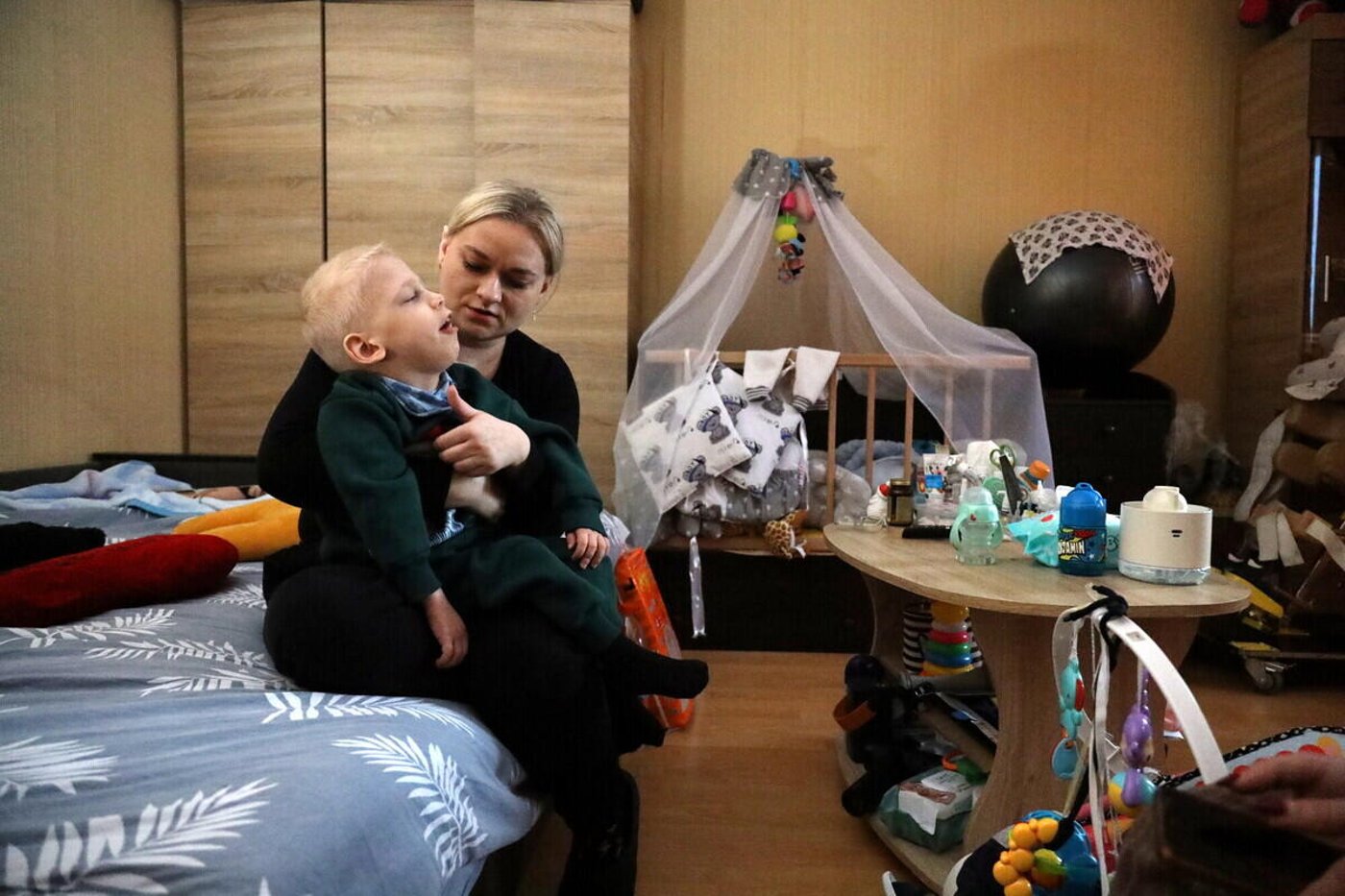
Ukraine: Four years of war leaves displaced on the brink
The harsh winter has compounded their dire situation, underscoring the need for urgent humanitarian support and Ukrainian government leadership on finding solutions for displaced people.
“After four years of war, displaced people are facing an incredible burden,” said Marit Glad, NRC’s country director in Ukraine. “Many people have burnt through their life savings and have no home to return to due to ongoing destruction and danger. I have spoken to countless displaced people who tell me they are struggling to provide for their families, often caring for children, family members with disabilities or limited mobility, while still facing the constant terror of drone attacks and the war. Without support, survival is becoming impossible.”
Ukraine’s most vulnerable displaced people are under increased pressure to make impossible choices to survive after often spending more than two years in displacement.
Vulnerable displaced people report an average monthly income of just 4,472 UAH (around 103 US dollars) – three-quarters of the estimated average monthly rental costs of 6,000 UAH (around 140 US dollars) for displaced people across Ukraine. This expense comes on top of other essential costs such as food and medicine.
With savings depleted after years of displacement, many families are now forced to live in precarious conditions, often resorting to risky or unsustainable solutions to cope, including reducing their health or heating expenses. This is particularly dangerous over winter where temperatures have plummeted to -20 degrees Celsius.
“Paying for documents, affording rent, paying for treatment for the boy. We had such a difficult period, and the pressure was so high,” said Kateryna, a 64-years old woman who is the sole carer for her 14-year-old grandson, Sasha. Both have been displaced since 2022 from Toretsk, Donetsk region. NRC supported the family with cash to cover their rent for six months, as well as with legal assistance to access key documentation. “When the money came, I cried. I couldn’t believe it,” said Kateryna.
Many displaced families are forced to share a home with others in order to afford a roof over their heads. "We were living in one house with twelve people, including seven children, crammed together,” said Olena, who fled from Asiivka, Kharkiv region, in 2022. “It was a house full of souls.” After being displaced, her family found refuge further from the frontlines in the same region. There they were met with the challenge of providing for what had suddenly become a small community living under the same roof.
“The Ukrainian government should continue to lead collective efforts to provide internally displaced people with access to safe, warm homes so that they don't need to deplete their remaining savings or resort to dangerous coping mechanisms to survive,” said Glad. “Leadership on finding long-term solutions to displacement is essential to prevent a deepening crisis and requires a clear plan and the resources to implement it. International donors should support these efforts.”
The harsh winter has intensified needs, with blackouts, fuel shortages, and the destruction of energy infrastructure limiting heating, electricity, and water access for millions of displaced people. The most vulnerable have borne the brunt of the extreme cold in inadequate homes and often at risk of social isolation.
People who have fled Ukraine and found refuge in neighbouring countries are also struggling. In Moldova, many families are unable to meet their basic needs years after leaving Ukraine, as savings are depleted and stable jobs remain hard to access. Many families rely on humanitarian assistance to meet their daily needs.
“International donors must not forget the promises they have made to Ukrainians. As this conflict becomes increasingly protracted it is vital that donors maintain robust support for displaced families who have endured years of hardship. They must not become the war’s invisible casualties,” said Glad.
Notes to editors:
-
Photos and stories of displaced Ukrainians are available for free use here.
-
According to data gathered by NRC in September 2025 from 113,845 internally displaced people (IDPs), who applied for assistance from NRC, vulnerable IDP households across Ukraine reported an average monthly income per household of 4,472 UAH (around 103 US dollars). They also reported resorting to three negative coping mechanisms to deal with the gap between their income and expenses. These were reduced health expenditure (20.2 per cent), reduced heating (13.2 per cent), spent savings (11.1 per cent).
-
IDPs who rent continue to experience a heavier rental burden than other population groups. Nationally, IDPs renters reported a median monthly rent of UAH 6,000 (around 140 US dollars) (IOM).
-
Most IDPs continue to experience protracted displacement, with 71 per cent having been displaced for over two years (IOM).
-
The Ukraine Humanitarian Needs and Response Plan for 2025 received 1,500 million US dollars of the required 2,634 million US dollars (57 per cent coverage) (OCHA). In 2026, the Humanitarian Needs and Response Plan requires 2,304 million US dollars to support 4.1 million of the most vulnerable conflict-affected and displaced people in Ukraine (OCHA).
-
NRC has been present in Ukraine since 2014 and currently delivers cash, housing repairs and winter assistance, education, community protection, and legal assistance on housing, identity, and services – partnering with local organisations to meet displaced and conflict-affected families' essential needs with dignity. Since the escalation of the war in 2022, NRC Ukraine has assisted over 1,500,000 individuals.
-
NRC has been present in Moldova since 2022 and currently delivers education services, legal assistance, livelihoods support, housing repairs, and winter assistance. Since 2022, NRC in Moldova has reached over 182,000 individuals. In 2025, 80 per cent of NRC’s project participants were reached through local partners.
For more information or to arrange an interview, please contact:
-
NRC global media hotline: media@nrc.no, +47 905 62 329
-
For Ukraine: Joachim Giaminardi, advocacy manager, joachim.giaminardi@nrc.no, +380 66 1293259
-
For Moldova: Anna Celac, media and communications coordinator, anna.celac@nrc.no, +373 79 037 426
