


Families displaced by the war in Sudan are facing extreme hunger, repeated displacement and total loss of livelihoods, according to new research by the Norwegian Refugee Council (NRC).
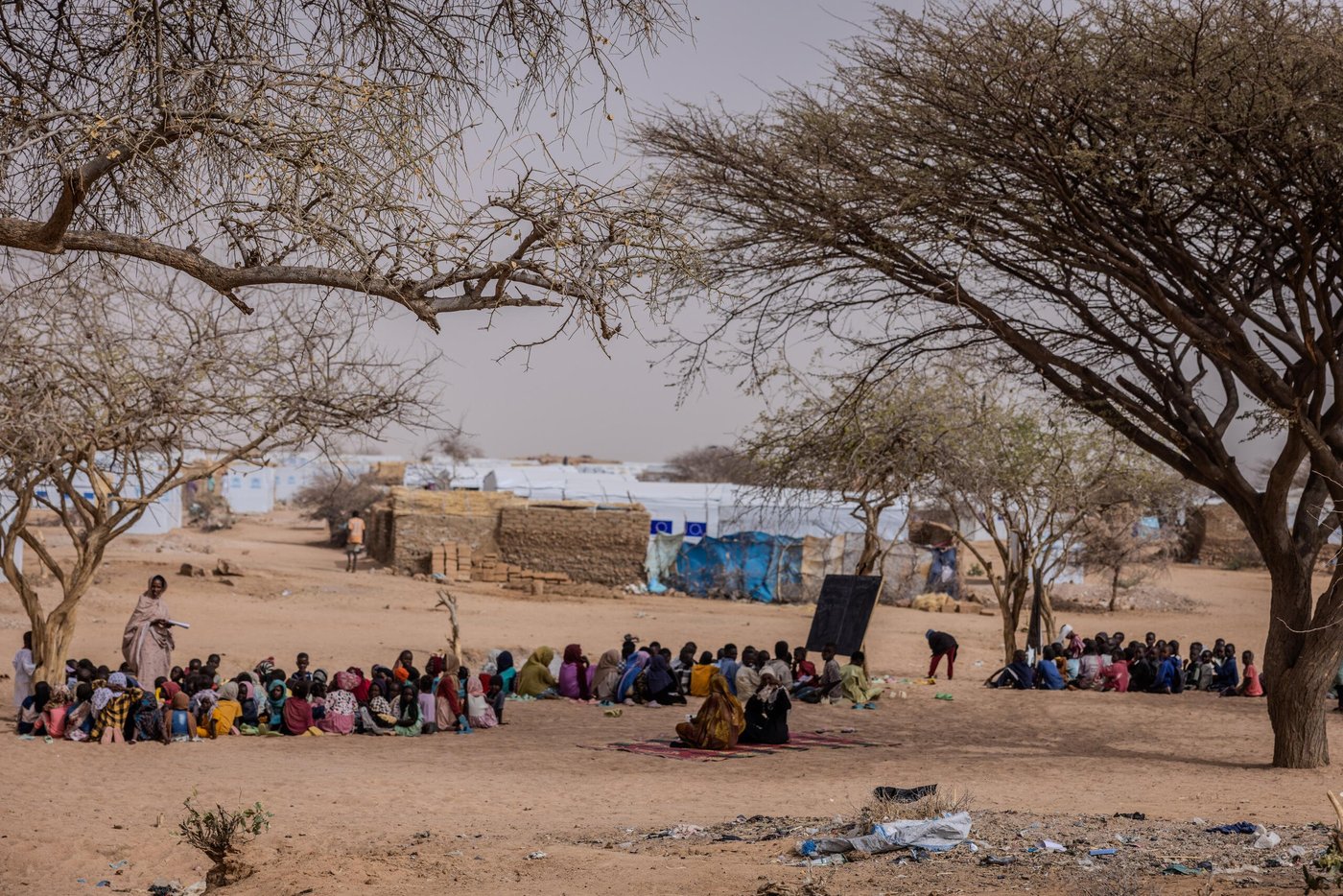
Sudan war refugees pushed into hunger as livelihoods collapse across the region
Across Sudan, South Sudan and Chad, most families have fled with nothing, are now skipping meals, and have no income to survive, three years since the war erupted. While some refugees in countries like Egypt and Libya are able to find work, many still struggle to meet basic needs and remain in precarious conditions.
Repeated displacement is pushing families into collapse. On average, households reported nearly four major losses since fleeing, including homes, livelihoods and personal belongings, with many forced to move multiple times, and each move leaving them with less.
For three years, host communities and displaced families have shared food, shelter and scarce resources, preventing an even greater catastrophe. But NRC’s latest data shows that this solidarity is now reaching breaking point.
“For three years, families have supported each other through unimaginable hardship. Today, they are telling us clearly: they are exhausted, they are eating less, and they cannot cope much longer,” said NRC’s Secretary General Jan Egeland. “Solidarity among and between the Sudanese themselves has carried this crisis, but local compassion cannot carry it alone.”
The findings come as Sudan remains the world’s largest displacement crisis. More than 9 million people are internally displaced, while over 3.5 million have fled to neighbouring countries. Across Sudan, almost 29 million people face acute hunger, including over 755,000 in catastrophic conditions.
Hunger and loss of livelihoods
The survey highlights a collapse in coping capacity. In Chad, more than 70 per cent of households reported reducing meals in the past month, rising to over 80 per cent in Sudan and nearly universal levels in South Sudan. In Egypt, 75 per cent of households are also reducing or skipping meals, showing that food insecurity extends beyond frontline displacement settings.
At the same time, income opportunities have all but disappeared. In Chad, 90 per cent of women-headed households reported having no work. Without income, even basic needs such as water have become unaffordable. While more refugees in Egypt and Libya report having some form of income, the majority rely on irregular or informal work.
“We are living a very hard life – no food, no education, no shelter. Everything is difficult, and our children are losing hope for the future,” a displaced woman in Sudan said.>
Families described severe shortages and reduced aid distributions, with some reporting receiving minimal food rations insufficient to last a full month.
Basic needs collapsing: water, sanitation and dignity
The crisis is disproportionately affecting women and children. In Sudan, Chad and South Sudan, 20 per cent of women have no access to a toilet or latrine; that is three times more than men. Women and girls often travel long distances to fetch water, facing harassment and violence along the way.
“The issue of water is difficult right now. I urge organisations to support water projects,” a female refugee in South Sudan said.
The cumulative weight of hunger, displacement and loss is a collapse in people's ability to live with dignity. Only a fraction of displaced families feels their current living conditions allow them to live with dignity: as low as 15 per cent in Sudan, rising to 25 per cent in Chad and 43 per cent in South Sudan.
Children are also at heightened risk. Across the three countries, 18 per cent of households reported sending children to work in the past month. Hunger and family separation compound this further. In Chad, family separation triples the risk of child marriage and nearly doubles child labour, while instability is driving widespread psychological distress.
Exhaustion after repeated displacement
Many families have been displaced multiple times, compounding their losses and increasing levels of exhaustion. Those displaced repeatedly are significantly more likely to report feeling “at their limit”.
Despite this, displaced people continue to support each other where they can. In Sudan and Chad, around one in three people receiving aid reported still helping others, often by sharing their own limited food supplies.
Neighbouring countries are under growing pressure. Chad hosts more than 900,000 Sudanese refugees, while South Sudan is hosting over 600,000 despite facing its own humanitarian crisis. Egypt, having received 1.5 million people, and Libya more than half a million, offer relatively greater access to work and services, but many refugees remain excluded from formal systems, face documentation challenges, and struggle to access stable income.
Across the region, the crisis is no longer defined only by displacement but by the erosion of resilience among both displaced people and host communities.
“What we are seeing is not just a humanitarian crisis, but a collapse of survival systems,” said Egeland. “Communities that have shared everything for three years have been pushed beyond their limits.”
Since April 2023, NRC has supported over 5.5 million people across Sudan and neighbouring countries including South Sudan, Chad, Egypt, Ethiopia, Libya and Uganda. However, access challenges, insecurity and funding constraints are limiting the scale and speed of the response. NRC is calling for urgent international action to scale up support to Sudan and the wider region.
“Ordinary people have done the extraordinary: sharing their food and shelter when they had almost none. It is time for a bystanding world to match local solidarity with international action by scaling up funding for life-saving aid while pushing much harder for diplomatic solutions that can end the senseless violence,” said Egeland.
Key findings:
NRC conducted a survey of 1,293 refugee and displaced households across Chad (644 households), Sudan (472 households), and South Sudan (177 households), held in March 2026, capturing both quantitative and qualitative data on food security, livelihoods, protection risks, and access to basic services. A separate needs assessment of 694 households was conducted in Egypt. Findings from Libya draw on REACH's Multi-Sector Needs Monitoring assessment. All households were drawn from displacement-affected populations, including camp and settlement settings.
- Over 90% of families in South Sudan, 80% in Sudan, 75% in Egypt and 70% in Chad are reducing or skipping meals, nearly universal hunger across the region
- 74% of households in Sudan, South Sudan and Chad have no income whatsoever
- In Chad, 9 in 10 women-headed households have no income
- 65% are separated from family members; 90% have lost their homes
- Displaced families describe extreme exhaustion, fear and deep uncertainty, with 39% in South Sudan saying they do not know what the future holds
- Across the three countries, only 15% of families in Sudan, 25% in Chad and 43% in South Sudan feel their living conditions allow them to live with dignity
- 18% of households have been compelled to send children to work; family separation triples the risk of child marriage in Chad and nearly doubles child labour
- 20% of women in Sudan, Chad and South Sudan have no access to any toilet or latrine, three times more than men
- Only 45% of children in displacement have regular access to education, with nearly one in five having none at all
Despite this:
-
In Sudan and Chad, nearly 1 in 3 people receiving aid are still sharing what they have with others. Mutual solidarity, built on food-sharing among people going hungry themselves, has been the invisible backbone of this response
Across the wider region (Egypt and Libya):
-
While refugees in Egypt and Libya report higher employment and better services, most remain in precarious informal work; 9 in 10 in Egypt lack identity documents; in Libya, 54% of children are out of school
Notes to editors:
- B-roll and photos are available for free use here.
- Full report with survey findings and analysis can be found here.
- More than 9 million people are displaced internally inside Sudan (IOM).
- Up to 4 million people have fled to neighbouring countries since April 2023 (UNHCR).
- 28.9 million people face acute food insecurity in Sudan, with over 755,000 facing catastrophic hunger (Sudan Food Security Cluster & IPC).
- 5.9 million people targeted for assistance under the 2026 Sudan Regional Refugee Response Plan (UNHCR).
- 1.6 billion US dollars are required to respond to humanitarian needs across seven countries (UNHCR).
- Refugees are hosted across: Chad, South Sudan, Egypt, Libya, Ethiopia, Uganda, Central African Republic
- South Sudan hosts more than 1.3 million refugees and returnees from Sudan (UNHCR).
- Chad hosts more than 900,000 Sudanese refugees since April 2023 (UNHCR).
- Egypt hosts 1.5 million refugees from Sudan (UNHCR).
- Libya has received an estimated 550,000 Sudanese refugees since April 2023 (UNHCR).
- Since the start of the war, EU countries resettled a mere 2,890 persons from Sudan (Eurostat).
- US resettlement data is not clearly broken down but the US admitted a total of 1,858 Sudanese refugees since April 2023 (US Refugee Admissions Programme).
- Canada has resettled 1,360 Sudanese refugees (IRCC) and Norway has resettled 570 refugees (Eurostat).
- Since April 2023, NRC has provided food assistance, clean water, shelter, education, legal aid and protection services to more than 5.5 million people affected by the Sudan crisis across the region in Sudan, South Sudan, Chad, Egypt (with partners), Ethiopia, Libya and Uganda.
For more information or to arrange an interview, please contact:
- Karl Schembri, media adviser in Nairobi, karl.schembri@nrc.no, +254 741 664562
- NRC global media hotline: media@nrc.no, +47 905 62 329
