
South Kordofan is now the epicentre of the war in Sudan, which has caused the world’s largest humanitarian crisis. Civilians in this part of southern Sudan face intensified fighting and near-total blockage of humanitarian supplies, after a year of starvation and bombardment, the Secretary General of the Norwegian Refugee Council (NRC) Jan Egeland warned today.
Sudan: Countdown to catastrophe in Kordofan, as world once again looks away
At the end of his visit to South Kordofan, Egeland said he saw that the world was once again failing civilians in Sudan, with the clock ticking on further widespread atrocities.
“South Kordofan has become Sudan’s most dangerous and neglected frontline,” said Egeland. “After the horrors in Al Fasher, Darfur, we cannot allow another civilian catastrophe to unfold on our watch. Entire cities are being starved, forcing families to flee with nothing. Civilians here have told me they are bombed and attacked where they live, pray, and learn. This is a man-made disaster, and it is accelerating towards a nightmare scenario.”
In Kadugli and Dilling, the main towns in South Kordofan, essential supply routes have been cut, leading markets to completely collapse. Trapped civilians are left with little or no access to food, cash, or basic services. Famine is taking hold in Kadugli, with Dilling at high risk of the same.
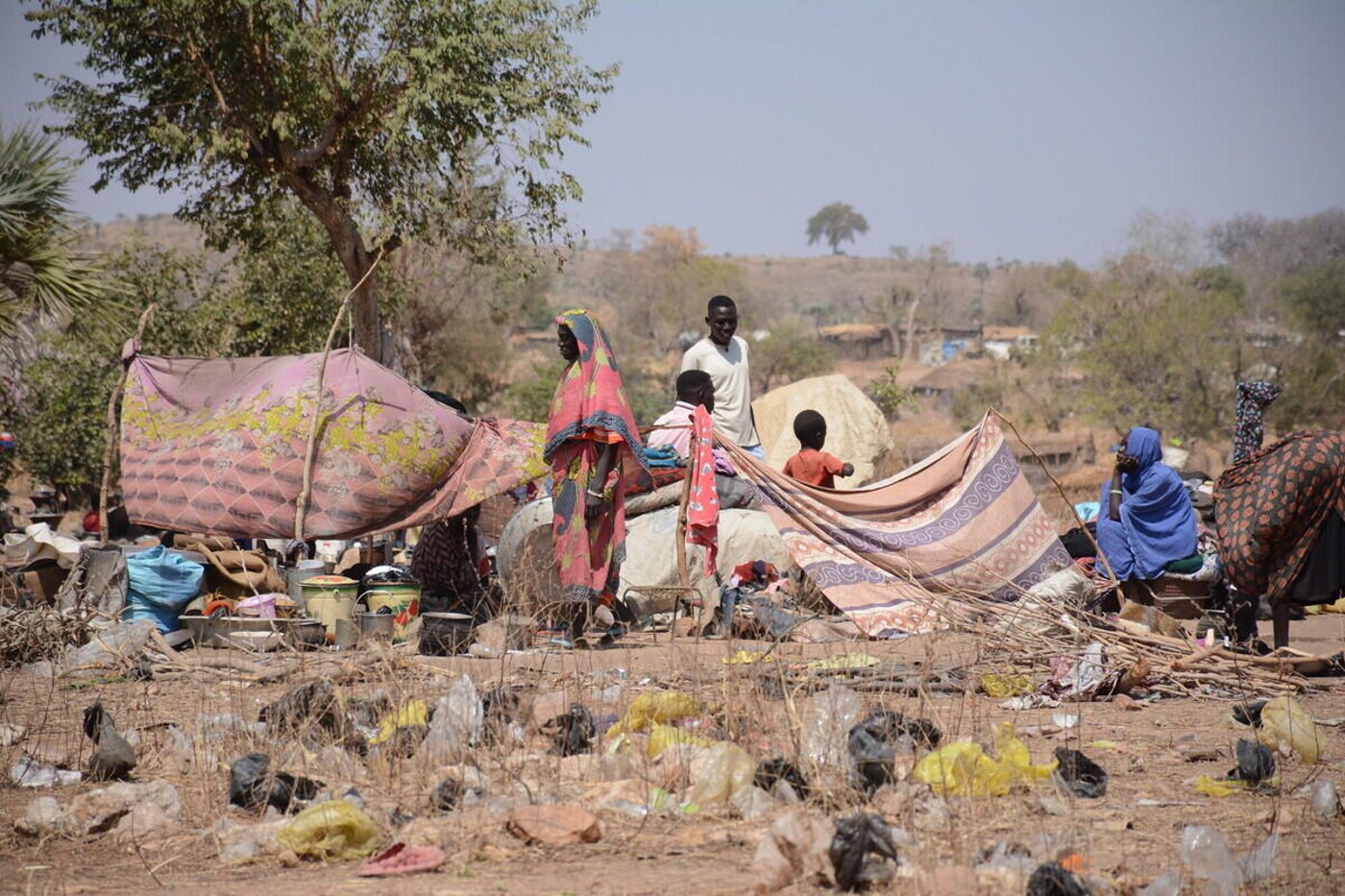
During the visit, Egeland met families who fled only after survival became impossible. Asia fled Kadugli last December with her four young children, including a seven-month-old baby, after their home was hit by explosives, while her husband was away searching for food.
“I had to carry my baby in my arms and run with my other kids to save our lives,” said Asia. “Here in Thobo Camp I still have no news of my husband and have to collect firewood and straw in the fields to sell for food. I still want to stay in the camp because here my children can attend the NRC school.”
Thousands of people are now fleeing Kordofan in small, desperate journeys, often having to navigate across frontlines, heading toward the Nuba Mountains – a region long isolated and impoverished, and now facing renewed violence. Others are fleeing to White Nile, Gedaref, and South Sudan. Journeys take days or weeks and are marked by hunger, theft, intimidation, and abuse.
Upon reaching the relative safety of displacement camps, families sleep on the bare ground or in overcrowded shelters. Aid groups like NRC are few, over-stretched, and under-funded. Essential items are critically scarce.
Children are traumatised, malnourished, and out of school. Parents tell NRC that psychosocial support, education, and cash assistance are among their most urgent needs.
Egeland warned that the humanitarian response is nowhere near the scale required, as international agencies remain largely absent and access constraints continue to block aid delivery.
“With most international organisations’ operations scaled back, Sudanese local responders are holding the line under extreme pressure,” said Egeland. “They are running communal kitchens, evacuating families, and delivering aid under fire. They are doing everything possible, but we must do more to help them.”
NRC is maintaining operations in Kadugli, the Nuba Mountains and other areas where people flee to, despite severe security and access constraints, and is supporting emergency food, cash, shelter, education, protection and water supply wherever possible. However, needs are rapidly outpacing available resources.
“This is a critical moment,” said Egeland. “We know exactly where this leads if the world looks away again. History will judge us if we abandon the civilians of Sudan again to face endless violence and deprivation.”
NRC is appealing to the parties to the conflict for immediate humanitarian access and protection of civilians. It is calling for urgent funding for life-saving aid, and effective international engagement to prevent further suffering. “The people of Kordofan have not given up,” said Egeland. “Local responders have not given up. The question now is whether the world will finally act.”
Notes to editors:
- B-roll and photos are available for free use here.
- Kadugli is already assessed as facing famine-like conditions; Dilling is at high risk of the same (UN).
- All major supply routes into Kadugli and Dilling are cut.
- Markets are largely non-functional; food prices are extremely high and cash is scarce.
- Between 25 October and 15 January more than 88,000 people were displaced in the Kordofan region. The region currently hosts more than one million internally displaced persons (IOM). Displacement routes include the Nuba Mountains, White Nile, Gedaref and South Sudan, often across active frontlines.
- No UN presence remains in Kadugli; most international NGOs have suspended or drastically reduced operations.
- Local responders are often the only providers of assistance still operating on the ground.
- NRC continues operations in Kadugli, Dilling, the Nuba Mountains and displacement areas, supporting community kitchens; with emergency water, sanitation and hygiene; supplying non-food items; and with education, in 29 learning centres. NRC is also prepositioning shelter and non-food item kits in White Nile and Gedaref in anticipation of further displacement.
- In 2025, 62 per cent of needs went unfunded. Only a fraction of total needs are likely to be met in 2026 (OCHA).
For more information or to arrange an interview, please contact:
- Karl Schembri, media adviser in South Kordofan, karl.schembri@nrc.no, +254 741 664562
- NRC global media hotline: media@nrc.no, +47 905 62 329
