
At a time when global humanitarian needs are reaching record levels, Save the Children, the Norwegian Refugee Council (NRC) and the LEGO Foundation are launching a new four-year partnership worth 32 million US dollars to deliver urgent, play-based education and protection to children affected by conflict and crisis.
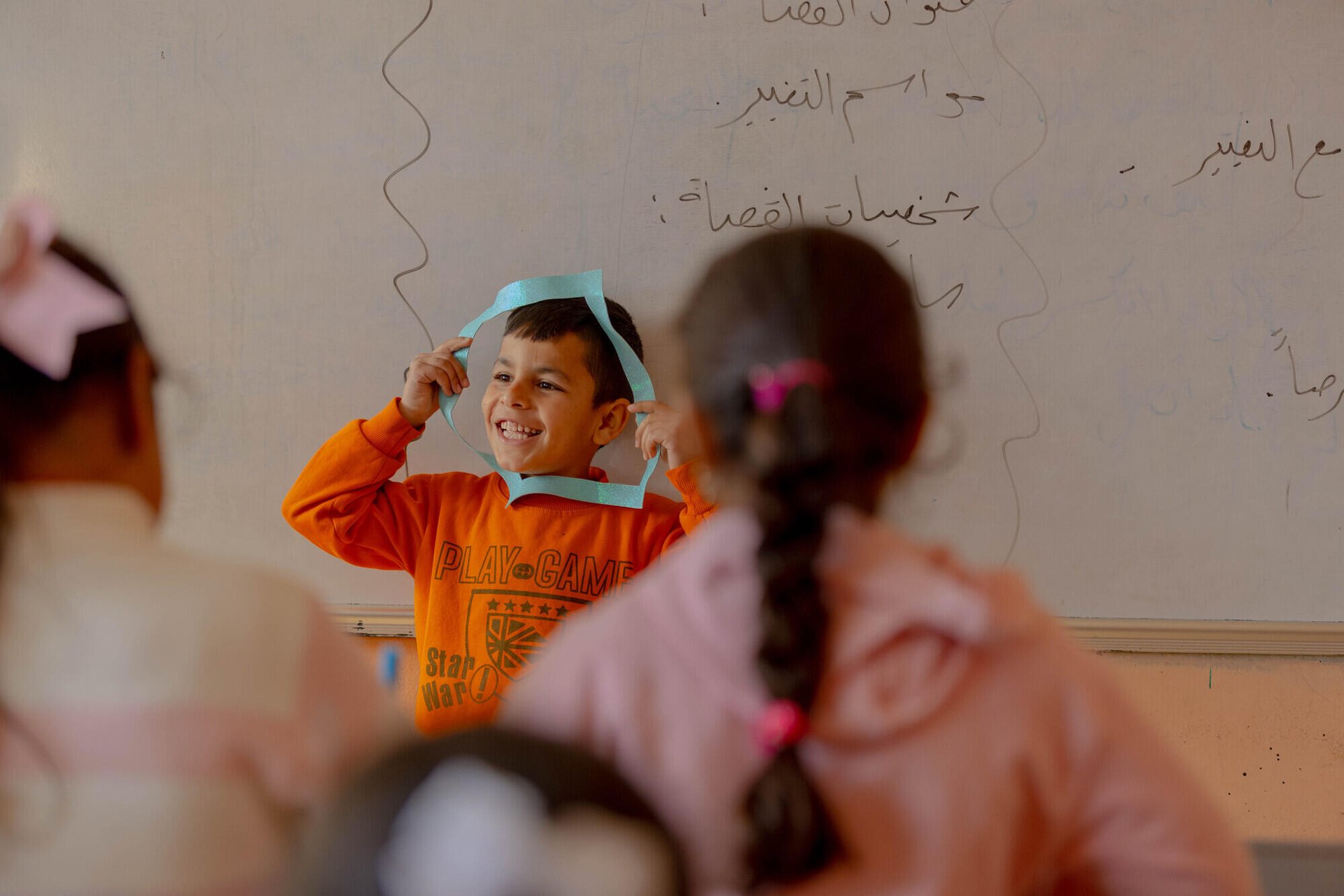
Through this partnership, an estimated 300,000 children in conflict-affected countries around the world – from Haiti to Bangladesh and from Lebanon to Somalia – will gain access to protective, playful education, improving children’s wellbeing, resilience and future opportunities.
Today, an unprecedented 520 million (1) children live in active conflict zones, while 273 million (2) are out of school. For children growing up amid violence, displacement, and uncertainty, education is far more than learning – it is a lifeline. Education provides safe spaces where children can play, learn and begin to recover from trauma, while restoring a sense of normality, stability and hope for the future. An absence of safe spaces to play and learn can have lifelong consequences – increasing the risk of child labour, early marriage, recruitment into armed groups and long-term psychosocial harm.
To address this urgency, Save the Children and NRC, in partnership with the LEGO Foundation, have developed the unique Education Acute Humanitarian Response Mechanism – an innovative operational model that enables the rapid provision of safe, inclusive and play-based education for children within days of a sudden-onset emergency or escalation in needs, ideally bridging the gap before longer-term funding is in place. The Mechanism combines education with child protection, mental health and psychosocial support (MHPSS), health and nutrition, and water, sanitation and hygiene (WASH) – all essential to children’s health, recovery and ability to engage in play and learning.
Since we launched the Mechanism in May 2024, more than 135,000 children affected by conflict and disasters have been aided through 33 responses in 18 countries across four continents. Key operations from the first phase include responses in humanitarian hotspots such as the occupied Palestinian territory (oPt), Lebanon and Sudan. In these responses, we established safe spaces with clean water and sanitation, provided packages of playful activities, trained and mobilised teachers and facilitators, and distributed teaching and learning materials, along with many other supporting activities. Jointly these playful trauma-sensitive and lifesaving interventions have significantly improved the children’s ability to protect themselves, reconnect and start to recover in these times of crisis.
The impact of this work is perhaps most clearly seen through the experiences of those closest to the children. As a facilitator at one of the programme’s safe spaces in Gaza puts it: “Children in Gaza do not see play as merely a form of entertainment. Instead, it represents a deeply meaningful psychological and social outlet, especially in the context of the ongoing crisis. For many of them, play offers a temporary safe space — an escape from the harsh realities of fear, displacement, and loss.”
Building on these successes, we are pleased to announce that, over the next four years, the partnership will raise its ambitions by expanding reach, capacity and readiness. In addition to reaching an estimated 300,000 children affected by crises, we will deliver lifesaving education faster and at greater scale when emergencies strike. Tailored to local contexts and centred on the individual child, the response will address children’s needs holistically and be embedded more deeply within the countries and organisations we work with, particularly alongside local and national actors, to maximise impact.
In an increasingly uncertain world, where emergencies are becoming more frequent and severe, our commitment places lifesaving education at the centre of humanitarian response, ensuring that children’s rights to protection, wellbeing, and learning are upheld when crises strike.
Johanne Schmidt-Nielsen, CEO at Save the Children Denmark, said:
“Access to education is a fundamental right for every child and is essential for their wellbeing and development. Yet millions of children around the world see this right violated, with devastating consequences for their mental health, happiness and future prospects. Through this partnership, we can provide vital protection and education to thousands of children affected by crisis, giving them not only support for today but hope and opportunities for the future.”
Jan Egeland, Secretary General of NRC, said:
“Conflict and displacement continue to deny millions of children their right to education. Through this partnership, we aim to help children and their parents where they are. By delivering essential, lifesaving education within weeks of a crisis, and using play-based, engaging approaches, we will help children learn, heal, and regain a sense of normality. This equips children with the skills and resilience they need to move forward.”
Sidsel Marie Kristensen, CEO at the LEGO Foundation, said:
“At the LEGO Foundation, we believe that even in the most difficult circumstances, every child deserves the opportunity to develop and thrive. Together with Save the Children and the Norwegian Refugee Council, we are working to ensure children can continue to learn, heal and recover, even in the most challenging conditions. By acting quickly and at scale, we can help protect children’s wellbeing today while supporting their ability to thrive and build their futures.”
About Save the Children
Save the Children believes every child deserves a future. Since our founding more than 100 years ago, we've changed the lives of more than 1 billion children. Around the world, we give children a healthy start in life, the opportunity to learn and protection from harm. We do whatever it takes for children, every day and in times of crisis, transforming their lives and the future we share.
About the Norwegian Refugee Council (NRC)
The Norwegian Refugee Council has more than 75 years of experience working in conflict and emergency settings, helping people forced to flee across 40 countries. We provide access to shelter, legal assistance, education, protection from violence, and water, sanitation and hygiene. NRC has supported millions of children and young people through different learning pathways in challenging contexts, offering safe and inclusive education that responds to their psychosocial, emotional and cognitive needs, while minimising learning loss and supporting transition to durable solutions from the onset of emergencies.
About the LEGO Foundation
The LEGO Foundation is an independent Danish corporate foundation working with partners around the world to support children’s needs and champion the dignity of childhood. We believe every young person deserves a childhood that protects them, respects them, and lets them be a child. And that’s what we’re working to build through partnerships, knowledge, funding and investment in solutions that help children thrive.
Notes to editor:
