
Millions of Iranian civilians and Afghan refugees living in Iran have been severely affected by the conflict, which has forced millions to flee their homes across the country. Essential civilian infrastructure has been damaged, exacerbating deep humanitarian needs, warned Jan Egeland, Secretary General of the Norwegian Refugee Council (NRC) during a visit to the country.
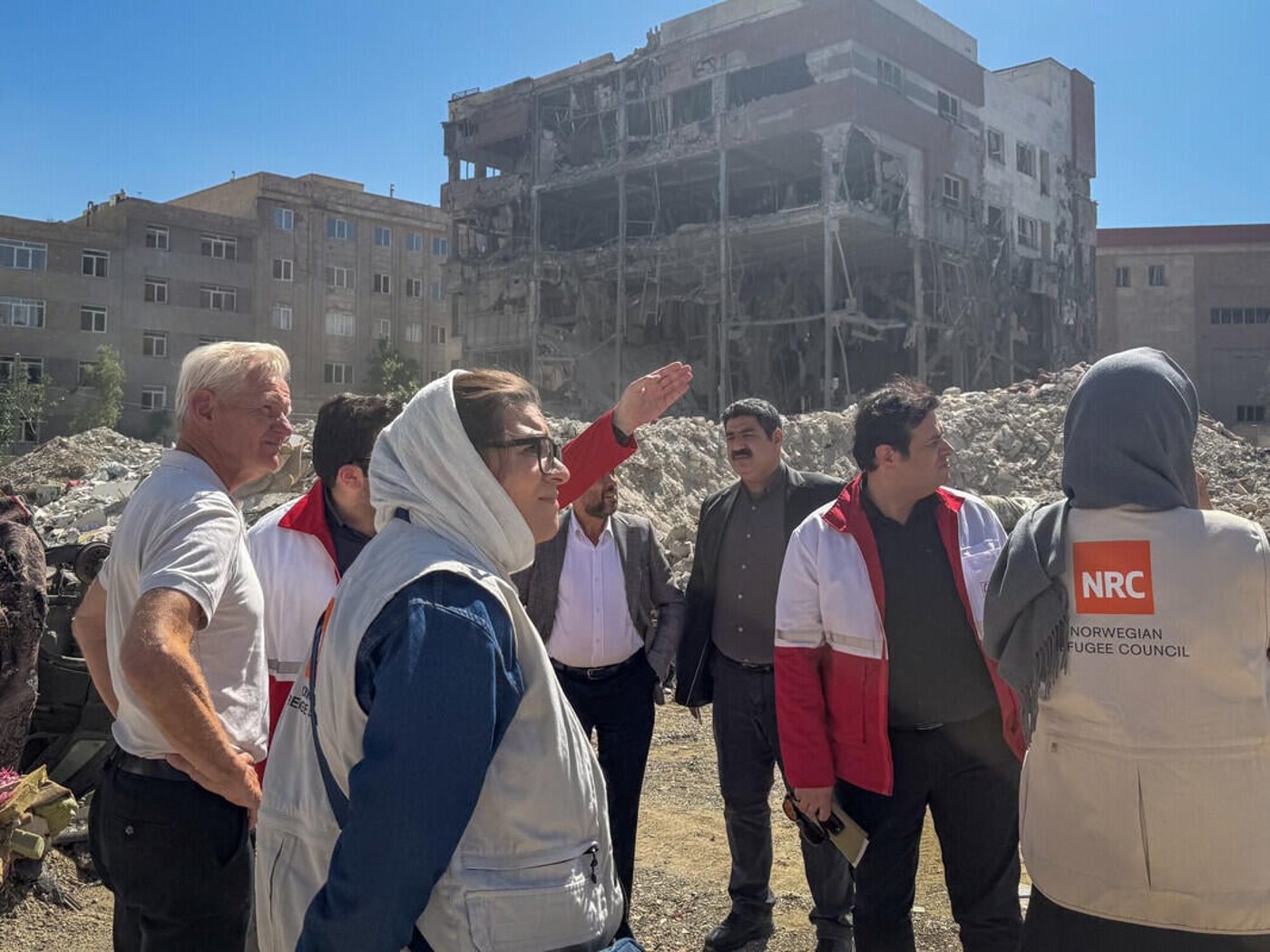
Iran: War has devastated life for millions of refugees and displaced
“Families here in Iran, both vulnerable Iranians and Afghan refugees, are paying a terrible price for this war,” said Egeland. “Widespread US and Israeli airstrikes forced millions to leave their homes in search of safety. Children are traumatised and have had their education disrupted, whilst parents struggle to make ends meet due to inflation and rising prices. Everyone I have spoken to feels fearful that the war will again escalate.”
Since the war began on the 28th of February, almost 3,500 people have been killed in the country, with more than 32,000 people injured nationwide. Across Iran, Israel, Lebanon, and the Gulf, thousands have been killed in airstrikes, with millions of lives shattered as a result of widespread attacks.
The intense air campaign on Iran – in densely populated areas – triggered massive displacement, with millions fleeing Tehran to seek safety. People who temporarily relocated are now returning, but those whose homes and livelihoods were destroyed remain displaced. In total, almost 150,000 homes, shops, schools, and other civilian buildings have been damaged, and 17 million pupils remain unable to attend school in person.
NRC calls upon all parties to commit to a permanent end of hostilities. A sustained ceasefire and lasting peace agreement would enable the civilian populations in all conflict affected countries to gradually resume their lives and facilitate safe humanitarian access for humanitarian relief and rehabilitation.
“Civilian life in Iran has been turned upside down as a result of the war,” said Egeland. “NRC and our partners have been doing all we can to support Afghan refugees and displaced Iranians. But we only have a third of the funding we need to sustain our emergency relief efforts.”
NRC has been working in Iran since 2012, providing support to hundreds of thousands across ten provinces, including cash assistance, education, and water and sanitation.
“Without further funding, we will have to reduce our emergency relief efforts instead of scaling up for those in desperate need. We only have funding from Norway, Sweden, and the European Union, in spite of Iran being the world’s largest refugee-hosting country and the dramatic impact of the war on civilians,” said Egeland.
“Without proper resources for this crisis response, the lives of both Iranian civilians and Afghan refugees will face severe consequences from this war, for years to come.”
Most of the four million Afghan refugees have been living in the country for decades, in urban and semi-urban industrial areas where their employment opportunities have been curtailed by the war and the sanctions against the Iranian economy.
“The people I’ve met here in Iran speak of terrible loss: homes, family members, life savings, but also of the traumatising impact the war has had on children. Now, economic pressures are robbing them of their hope for the future. It is vital that we support both the vulnerable Iranian and Afghan refugee population, to prevent a further deepening of this humanitarian crisis,” said Egeland.
Notes to editors:
-
Around 3.2 million people were temporarily displaced at the beginning of the war (UNHCR).
-
The Iranian Ministry of Health report 3,375 civilian deaths and 32,314 injuries nationwide. (OCHA).
-
Nearly 149,000 civilian units have reportedly damaged, directly affecting an estimated 400,000 people. (OCHA).
-
1,200 educational facilities reported as affected and 20 schools destroyed, as well as 240 health facilities reported damaged (OCHA).
-
More than 17 million students remain unable to attend school in person. (OCHA)
-
With over 4.4 million Afghans seeking safety and livelihoods in the country, Iran is currently hosting the world's largest refugee population (UNHCR).
-
About 2.4 million Afghans reside in Tehran (according to the Province Governor). Tehran metropolitan area hosts a significant Afghan population due to its industrial zones, employment opportunities, and proximity to the capital.
-
The response for Afghan refugees in Iran has been chronically underfunded with just 18 per cent funded in 2025 through the Regional Refugee Response Plan (OCHA).
-
The more than four million Afghans are among the most affected by the consequences of the war. More than 35,000 have returned to Afghanistan since the start of the conflict, and more than one million remain at risk of deportation. (NRC)
-
The humanitarian response is 47% funded -only 37.6 of the 80 million US dollars required have been raised (OCHA)
-
On the evening of the 7th of April, a ceasefire agreement was announced, but airstrikes have continued.
-
NRC has been working in Iran since 2012. In 2025, NRC provided assistance to nearly 115,000 Afghans and host community members across 10 provinces.
-
NRC is aiming to target 50,000 Iranians and Afghans affected by this crisis across nine provinces, while prioritising cash assistance, education services, protection and legal assistance and integrated water and sanitation, and shelter support to ensure vulnerable communities can meet their urgent needs.
For more information or to arrange an interview, please contact :-
NRC global media hotline: media@nrc.no, +47 905 62 329
-
