


Media update from Hanadi Alkfarna, Norwegian Refugee Council (NRC) site management assistant on the aftermath of the storm in Gaza.
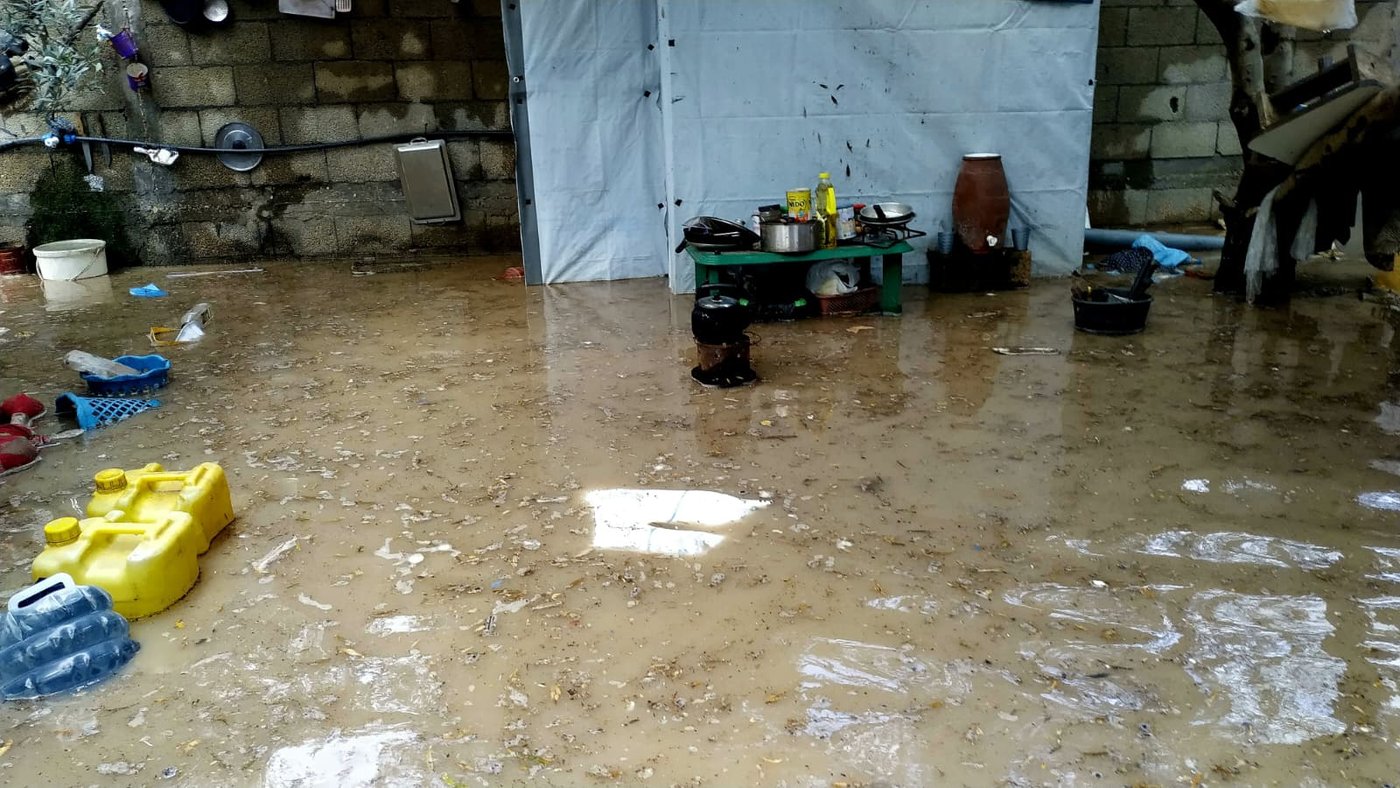
Gaza: Winter storms flood thousands of tents
“The situation is extremely difficult, and I am speaking from personal experience. I am displaced too, and I was affected by this storm like every other family. The rain began before dawn on 7 November while people were asleep, and water flooded into the tents without any warning.
“From the early hours of the [next] morning, my phone did not stop ringing with appeals, both from the sites we work with and from other sites, all hoping that the Norwegian Refugee Council (NRC) could provide urgent support.
“Even after the rain stopped, the suffering did not end. Families are still trying to dry their mattresses and blankets under a weak sun, and many have had to sleep on wet ground or sit up all night because there is no dry place to lie down. As temperatures drop at night, children have started coughing and catching colds, with too few blankets and winter clothes to go around.
“The damage is extensive. Some tents were completely destroyed; others are still standing, but water got inside and ruined everything: mattresses, blankets, clothes, food, and even identity documents. There are scenes I saw with my own eyes that I will never forget. A man with a physical disability watched the rainwater pour into his tent and could do nothing to get it out. When a palm tree fell next to his tent and brought down the fence around it, he was left completely helpless.
“It will be very difficult for families to recover. We are already living without the most basic necessities: there is no sewage system, and no decent tents or tarpaulins to protect us from the rain. Families have lost most of what they own and have no means of replacing it.
“It is critical to prepare people and sites before the next storm, not just to respond after the damage is done. The priorities are new tents for families who lost theirs, and strong tarpaulins to replace those that have worn out and torn. Levelling the ground and preparing pathways inside the sites, especially in low-lying areas, is equally important.
“If we protect and secure the tent and prepare the ground around it, we can greatly reduce the damage and protect families' health and dignity throughout the winter. But these solutions remain temporary; what people truly need is to return to their homes and their land, and to live in safety and dignity.
“Even so, delivering these priorities does not depend on us alone. Humanitarian work in Gaza has not stopped, but it is heavily constrained by restrictions on the entry of supplies. Tents, tarpaulins, water tanks and other essentials are waiting on trucks and are not reaching people in the quantities needed. Without regular and sufficient entry of these materials, the response will remain far below the scale of need.
“Finally, I know that many people around the world are exhausted by the news from Gaza, and some now avoid it altogether. But the people of Gaza need the world to keep listening to them, and they need journalists to keep reporting on what is happening here. People are still holding on to hope, but they need others to stand with them and push for an end to this suffering.”
Notes to editors
- Photos and videos from the storm in Gaza are available for use here.
- Israeli authorities continue to block items needed to make repairs and construct more resilient shelter including timber, cement and metal sheeting. (Palestine Shelter Cluster)
- 294,250 families in Gaza are in need of shelter assistance this winter. Around 950,000 people were living in displacement sites assessed as facing medium or high flood risk. (NRC)
For more information or to arrange an interview, please contact:
- NRC global media hotline: media@nrc.no, +47 905 62 329.
