
From January 2025 to date, the ongoing armed conflict has forced over 170,000 civilians into confinement in Colombia, a strategy used by non-state armed groups to exert control, particularly in rural areas. Whoever controls the population also controls the territory.
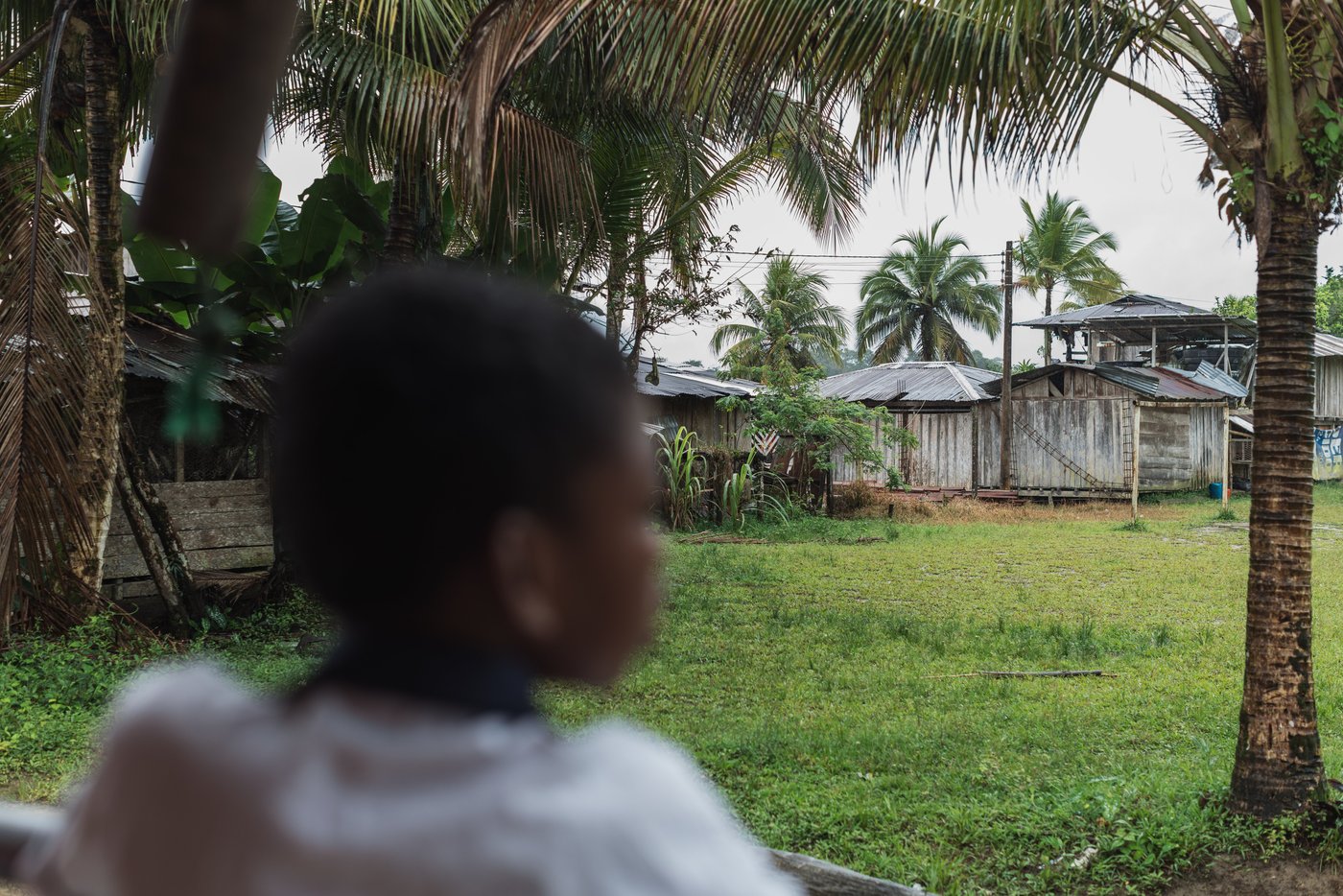
Colombia: Trapped in their own territory
In response to this crisis, international humanitarian organisations are urging both the Colombian authorities and international observers to maintain their focus on these populations. The protection of their rights and their very survival depend on urgent humanitarian response.
For the vast majority of Colombia's 50 million inhabitants, rural territories remain out of reach in certain regions as a consequence of the armed conflict. Across these areas, tens of thousands are forced into confinement within their own homes, unable to exercise their right to freedom of movement for weeks on end as a calculated strategy by non-state armed groups.
A significant percentage of those affected are from Indigenous and Afro-Colombian communities. The risks of gender-based violence and forced recruitment are especially acute for women and children during confinements.
“Colombia currently has the third largest number of internally displaced people globally. Equally alarming is the scale of those forced to survive and endure illness behind closed doors, in dire need of humanitarian aid,” said Boris Aristín, manager of the Emergency Response Consortium MIRE+, representing a strategic alliance of international humanitarian organisations.
“This is not normal, nor should it be. The international community should continue to call to all non-state armed groups in Colombia to respect the freedom of movement of civilians.”
People’s right to move freely has become a privilege granted by non-state armed actors who have influence over the population. This is particularly evident in western Colombia.
“Every step beyond the community is their decision,” explains a Pacific coast resident, referring to the armed groups. This forced confinement has effectively turned rural areas into forbidden zones, leading to the resident's grim conclusion: “Most Colombians cannot approach this area. Millions do not know that we suffer in silence.”
Life under confinement is a struggle against deprivation. Most rural communities have no water supply, and electricity is a rare luxury that flickers on for just a few hours a day. Pain must be endured without medicine, with no hope of accessing a doctor or emergency care. Children face the risk of forced recruitment by armed actors. Farming is impossible as people are confined to their homes and the rivers— the only transport routes for many—are prohibited by no state armed actors. Anyone who chooses to brave their rules puts their life at risk.
“Fear of conflict is shaping the nation into isolated pockets where the right to move does no longer exist,” said Aristín. “In areas where the state is absent or barred by violence, international humanitarian actors are essential to delivering food, water, protection, shelter, education, health and sexual and reproductive health services to those in need. But this relief is entirely dependent on global humanitarian funding. If this generosity continues to falter, the armed conflict will once again engulf these communities, and their silent suffering will inevitably lead to the loss of lives.”
Notes to editors:
-
The MIRE+ Consortium is an emergency response mechanism established in 2020. It is currently led by the Norwegian Refugee Council in partnership with Action Against Hunger and Doctors of the World France.
-
MIRE+ provides rapid-response humanitarian assistance to communities facing displacement, forced confinement, or disasters anywhere in the country where emergencies arise and the consortium’s response provides added value. In the critical early days of an emergency, the consortium delivers multipurpose cash transfers, psychosocial and legal aid, emergency education, food security, health, shelter, water, sanitation, and hygiene. Following this immediate life-saving phase, the consortium assesses and supports the feasibility of early recovery processes.
-
Since January 2025, the MIRE+ Consortium has assisted nearly 20,000 people forced into confinement and with mobility restrictions in the country.
-
The MIRE+ Consortium is funded by the European Union (ECHO), the United States Department of State, the Spanish Agency for International Development Cooperation (AECID), and the Swiss Agency for Development and Cooperation (SDC).
-
According to the United Nations, 172,395 people were forced into confinement in the country between January 2025 and March 2026 (OCHA). The crisis of confinement is concentrated in the west, with 91,627 people affected in the departments of Cauca, Chocó, Nariño, and Valle del Cauca alone (OCHA).
-
At the end of 2024, 7.3 million people were living in internal displacement as a result of conflict and violence in Colombia, surpassed only by Syria (7.4 million) and Sudan (11.6 million) (IDMC).
-
Humanitarian funding for Colombia was halved from 2024 to 2025, from 205.9 million dollars in 2024 to 95.1 million dollars in 2025 (OCHA).
-
Nearly 9.9 million Colombians continue to live in areas where non-state armed groups are present (OCHA).
For more information or to arrange an interview, please contact:
-
NRC global media hotline: media@nrc.no, +47 905 62 329
-
Ana Milena Ayala Sanchez, advocacy and communication officer in Colombia: ana.ayala@nrc.no, +57 3232746021
