
Statement by Giovanni Rizzo, the Norwegian Refugee Council’s country director for Colombia on the humanitarian situation following Monday’s deadly earthquake:
Colombia: Conflict affected families have lost everything yet again
“Colombia was facing severe humanitarian needs long before Monday’s deadly earthquake. Over nine million people—survivors of armed conflict, refugees, migrants, and communities affected by severe floods and droughts—were already reliant on aid. Roughly 10 per cent of them live in the very regions now most devastated by this earthquake.
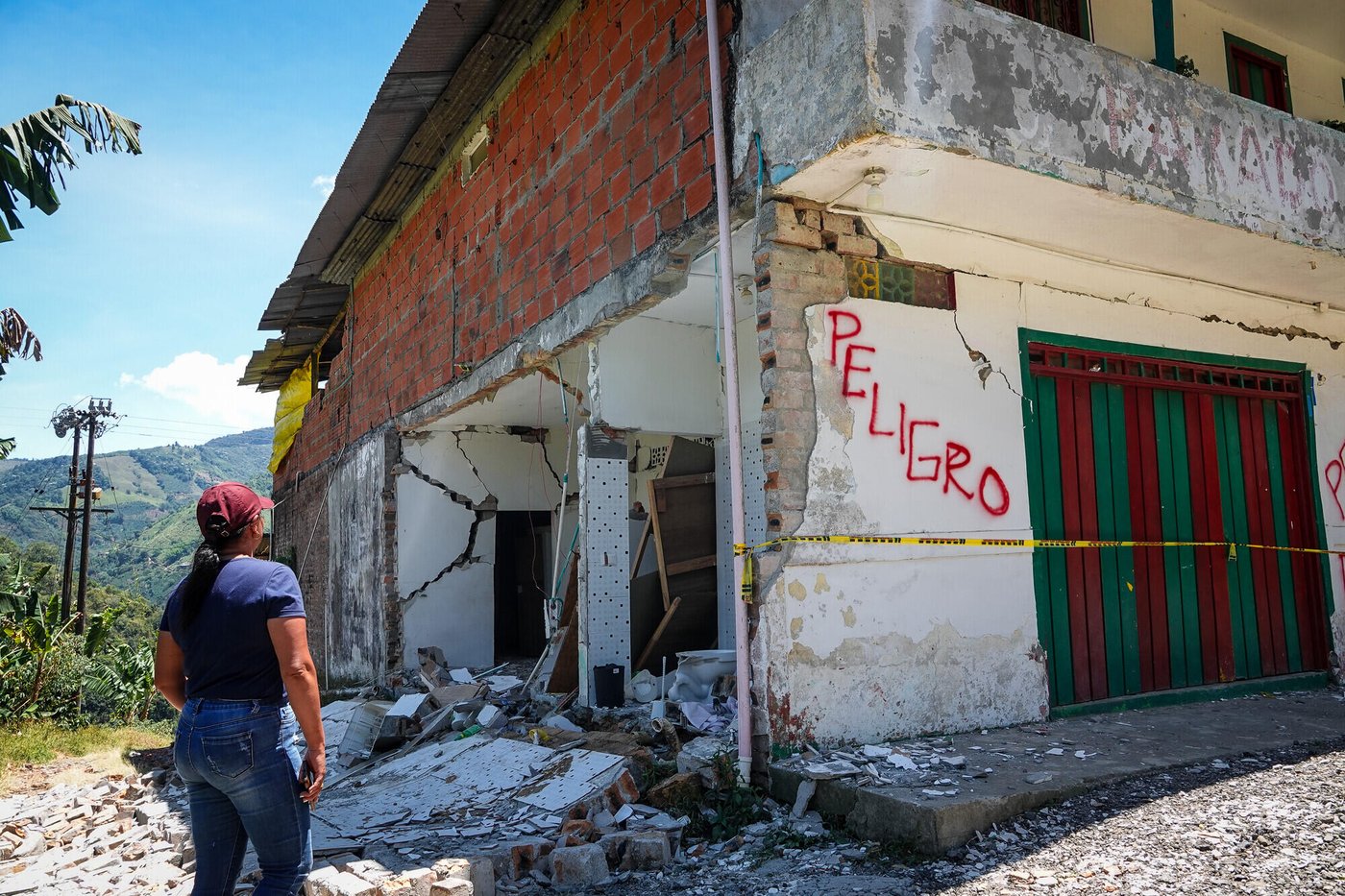
“This disaster impacts major cities and rural communities alike, but especially in rural areas, many families already affected by conflict have lost everything yet again.
"In the western Colombian town of El Cairo, the destruction is overwhelming. Most of the houses are uninhabitable, the mayor said. Many of the families affected have already been displaced by conflict. 'I had a home, but I lost it when I was forced to flee Guaviare. Then I went to Chocó and was displaced a second time. Now, here, I’ve lost my home for the third time,' a survivor of the earthquake told NRC’s team in El Cairo.
"Recovery is now not merely about clearing rubble. It is about helping families rebuild what the earthquake destroyed, while honouring and supporting a resilience that has carried them through decades of adversity.
“A child who has just seen their classroom torn apart does not merely see broken concrete. For a child who has survived war, a school is a sanctuary of stability. None of the four schools in El Cairo can be used today, and re-establishing emergency education immediately is important to bring back a sense of normality and safety in an otherwise chaotic situation.
“NRC is distributing mattresses, blankets and cooking kits to people affected by the earthquake staying in shelters across Quibdó, but there is an urgent need to scale up the support. Colombia remains one of the world’s most neglected displacement crises. We cannot turn our backs on a country shaken by overlapping emergencies, where human resilience is being tested to its absolute limit. The government and the international community must ensure life-saving aid reaches every affected community—both now and for the long haul.”
Notes to editors:
-
Photos and videos from El Cairo, Colombia are available for free use here.
-
A 7.4 magnitude earthquake struck western Colombia on Monday 10 August. It is estimated that 437.285 people have been affected. 273 have lost their lives. (3iS; 13 Aug).
-
172 collapsed structures, 74.873 houses are damaged and 12.584 destroyed. 216 hospitals, 2.198 schools and 825 community centres have been affected (3iS; 13 Aug).
-
The estimate of over nine million people in need is derived from the combined population calculations of the 2026 Humanitarian Needs and Response Plan (HNRP) and the 2026 Regional Refugee and Migrant Response Plan (RMRP) for Colombia. This total includes survivors of armed conflict and forced displacement, populations affected by severe drought and flooding, as well as refugees and migrants.
-
Colombia remains one of the world’s most neglected displacement crises, according to NRC.
-
The departments most severely affected by the earthquake are Chocó, the Coffee Region (Caldas, Quindío, and Risaralda), and Valle del Cauca. The cities of Pereira, Cali, Manizales, Quibdó, and Armenia are among the hardest hit, reporting casualties, extensive damage to public infrastructure and housing, and the widespread disruption of essential services (Asocapitales).
-
Colombia hosts one of the world's largest populations of refugees and migrants, the vast majority of whom have arrived from Venezuela and remain in the top 3 countries with the highest number of Internally Displaced Persons (IDPs) in the world, surpassed only by Sudan.
-
Out of four schools in El Cairo, only one survived the earthquake usable - and it must now be used as a shelter or for storage.
-
The departments of Chocó, Valle del Cauca, Risaralda, Caldas, and Quindío account for an estimated 1.014.872 people in need, according to data from Colombia's 2026 Humanitarian Needs and Response Plan (HNRP) and Regional Refugee and Migrant Response Plan (RMRP). By department, Valle del Cauca accounts for the highest concentration with 489,084 people in need, followed by Chocó (450,894), Risaralda (46,577), Caldas (15,034), and Quindío (13,283). These figures reflect baseline humanitarian vulnerabilities established through inter-agency planning processes and do not represent direct earthquake impacts; however, they highlight the critical pre-existing needs in territories now facing this compounding disaster.
-
According to Colombia’s Official Victims Registry (Registro Único de Víctimas - RUV), 2,511 of El Cairo’s 6,179 residents are registered victims of the armed conflict. This means that roughly four in ten people (40 per cent) in the municipality were already survivors of displacement, violence, or other conflict-related harm prior to the earthquake.
-
The Norwegian Refugee Council (NRC) has already begun distributing shelter kits to people affected by the earthquake staying in shelters across Quibdó. NRC has deployed a team in Buenaventura to support with cash transfers, and collective shelters rehabilitation. Teams are actively engaged on the ground - conducting needs assessments for temporary shelters in Cali, evaluating structural impact in urban Quibdó, and identifying needs in El Cairo.
For more information or to arrange an interview, please contact:
-
NRC global media hotline: media@nrc.no, +47 905 62 329
-
Ana Milena Ayala Sanchez, advocacy and communication officer in Colombia: ana.ayala@nrc.no, +57 3232746021
