


Attacks on education occurred every three days on average in Colombia during the first six months of 2026, with almost 12,000 children, teachers and school staff caught up in the violence, according to new data from the Norwegian Refugee Council (NRC).
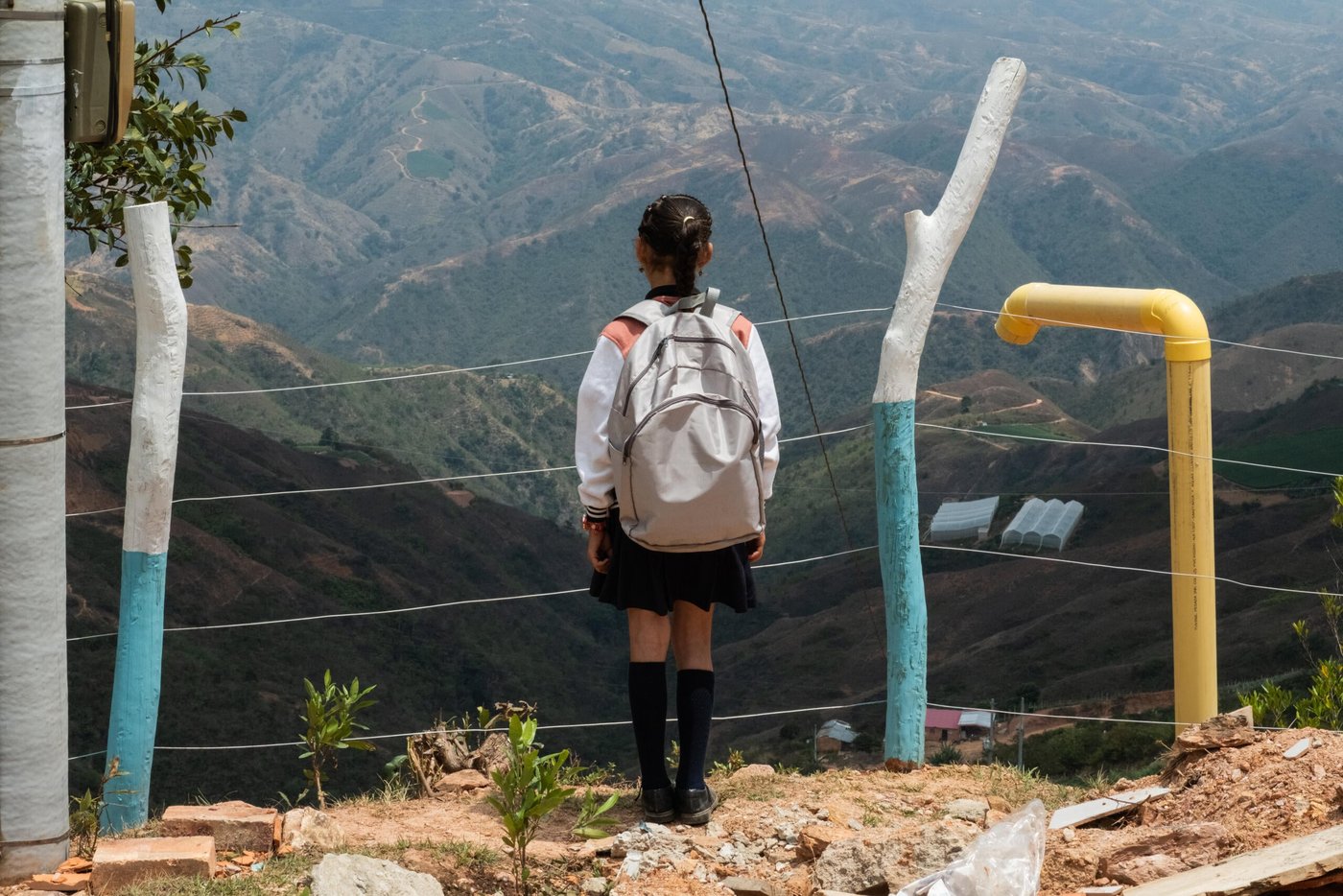
Colombia: Armed groups’ attacks on education affect over 12,000 students and teachers
The data comes from NRC's documentation of attacks on education across Colombia's conflict areas between January and June 2026, covering 61 incidents within seven departments where the organisation provides humanitarian assistance to people affected by the armed conflict.
Four in ten attacks took place on the routes children take to school; the majority happened directly inside the classrooms and school grounds.
“Six in ten of these attacks happened inside the school itself, in the one place children are meant to be safe,” said NRC's Colombia head of programmes, Mikel Mendezona. “It is unacceptable that rural schools continue to be caught in the crossfire between armed groups. All parties to the conflict have an obligation to respect the rules of war so that schools can be safe spaces.”
The majority of the attacks documented by the organisation were concentrated in the departments of Norte de Santander, Choco, and Cauca.
Attacks range from the military occupation of buildings, the deployment of explosive devices on school grounds, and the forced recruitment of minors, to crossfire putting the lives of thousands of students and teachers at risk.
A member of a school community in western Colombia told NRC how armed men broke into the local school, occupied it, and attempted to coerce a schoolgirl into sexual acts in exchange for money.
“Our school is completely exposed to the violence of these armed groups,” said the woman. “We need investment to protect our schools and our girls.” Neither state institutions nor international humanitarian aid are responding in time to the attacks on education.
According to data from the Norwegian Refugee Council (NRC), two out of every three schools affected are still waiting for the help they desperately need. Around the country, students need mental health support and training on how to stay safe if caught in the middle of a gunfight. Teachers must learn how to handle emergencies and unexploded devices. Landmines must be cleared from school grounds. Damaged classrooms must be repaired or rebuilt. Building fences and walls is vital to keep armed groups out of schools.
Compounding the problem, NRC's recent case studies reveal that many conflict-affected rural schools operate on land without official property deeds. This lack of legal security prevents authorities from spending public money to repair damaged infrastructure and protect schools.
“It is heartbreaking to watch children's futures destroyed by adults with weapons,” Mendezona said. “The government must continue to make the safety of every child in school their priority, and that starts with giving schools the legal protection they still lack.”
Notes to editors
- Photos and video from Colombia are available to download for free use here.
- According to the Education Under Attack 2026 report by the Global Coalition to Protect Education from Attack (GCPEA), Colombia remains one of the countries most affected by attacks on education globally.
- According to data collected by NRC[KS14] , a total of 11,976 people were affected by 61 attacks on education in the context of armed conflict (11,485 students, 424 teachers, 67 other school staff) between January and June 2026 in Antioquia, Arauca, Bolivar, Cauca, Choco, Norte de Santander and Valle del Cauca departments. NRC is present in these areas.
- NRC collects information on schools caught in the crossfire of armed clashes or affected by the use of explosive devices; educational institutions vandalised or looted; teachers threatened or killed; and students at risk of forced recruitment, recruited, or victims of sexual violence. We also document accidents and incidents related to the suspected or confirmed presence of explosive devices within schools or along their access routes, as well as schools used by armed actors as combat positions or operational bases, settings for civic-military actions, or those facing risks due to the presence of armed actors during the school day.
- In the first half of 2026, 40 per cent of reported attacks on education happened on the routes leading to schools and 60 per cent occurred within the schools themselves (NRC).
- While 33 per cent of the schools affected by attacks received some form of assistance, the remaining 67 per cent were still awaiting a response when NRC compiled its report in the first half of 2026.
- NRC has found evidence of attacks against education caused by the armed conflict since 2022. NRC data show that more than 71,500 students, teachers and other school staff have been affected by attacks on education from January 2022 to June 2026 in areas where NRC has a presence.
- NRC's report (available in Spanish) is not a comprehensive analysis of all attacks on education in Colombia. The data and information presented in this report only reflect the situation in the areas where NRC is present, and its categories of analysis are limited to those related to the Safe Schools Declaration.
- The Safe Schools Declaration, launched in 2015 by Norway and Argentina, is an intergovernmental commitment to protect students, teachers and schools from attack and military use during armed conflict. It also emphasises the importance of continuing education in such situations. When children are out of school, they are more vulnerable to various risks, including recruitment by armed groups, child labour, exploitation, and abuse. Schools act as protective environments in armed conflict scenarios.
- Read the recent NRC case study examining how the lack of property deeds for school grounds is hindering the response to attacks on education in Colombia (available in Spanish). The case study focused on the departments of Cauca and Norte de Santander, areas affected by armed conflict where attacks on education have been recurrent, according to information collected by the Norwegian Refugee Council (NRC).
- The analysis evaluated 18 cases: 11 in Cauca and seven in Norte de Santander. The findings provide an understanding of the correlation between land titling and the state's response to attacks on education, offering evidence to inform public policy.
For more information or to arrange an interview, please contact:
- NRC global media hotline: media@nrc.no, +47 905 62 329
- Ana Milena Ayala Sanchez, advocacy and communication officer in Colombia: ana.ayala@nrc.no, +57 3232746021
