


One year since an internal conflict escalated in Catatumbo, north-east Colombia, people are living in constant fear of forced recruitment, explosive devices, targeted killings and death threats warns the Norwegian Refugee Council (NRC).
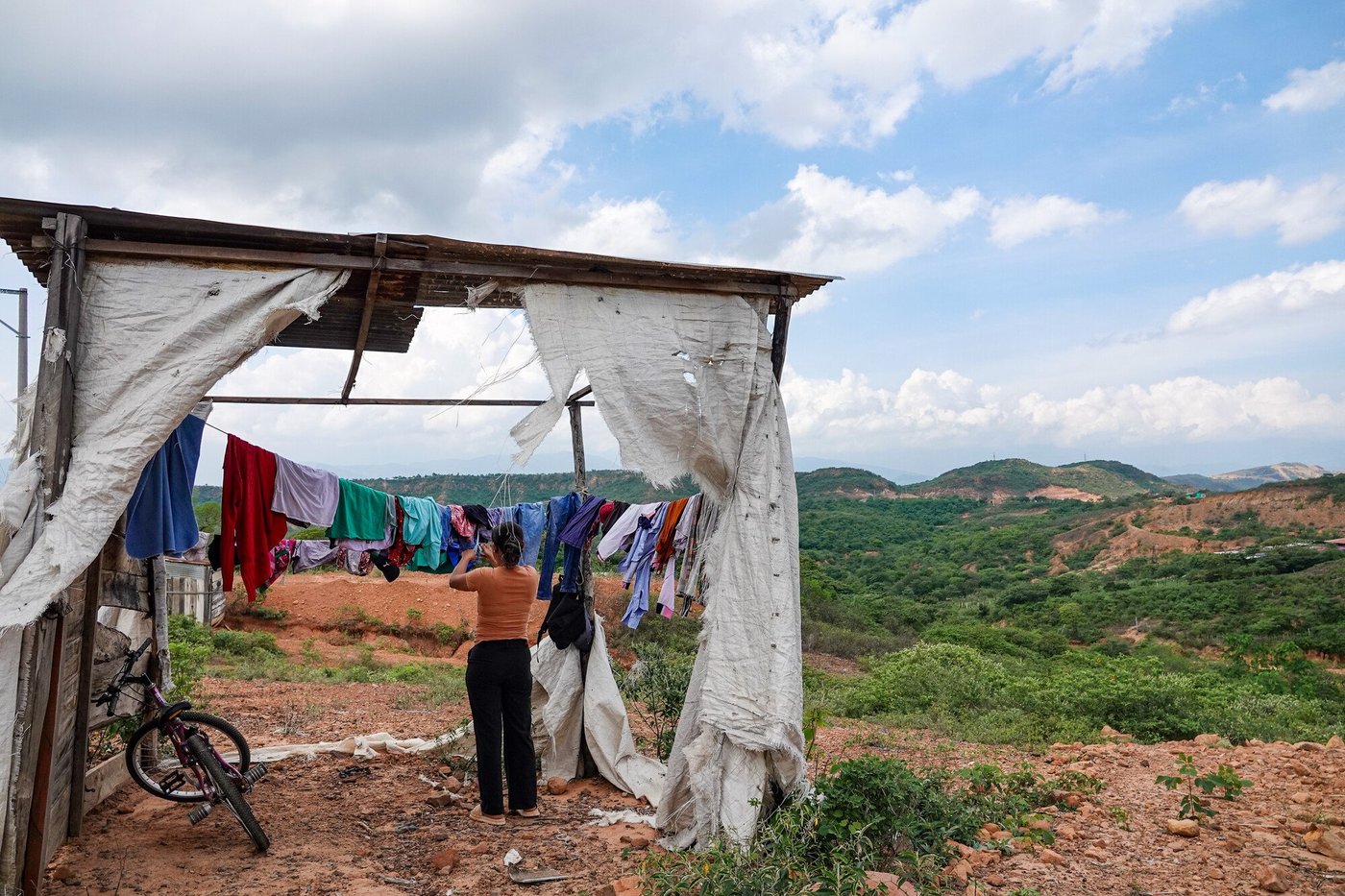
Catatumbo, Colombia: 100,000 displaced after a year of brutal conflict
Twelve months after the armed conflict in Catatumbo escalated sharply on the 16th January 2025, the violent territorial dispute shows no sign of abating in this volatile region bordering Venezuela. Ongoing clashes continue to claim new civilian victims and force people to flee their homes. It is estimated that 100,000 people were displaced by the violence since the escalation.
"Following a year of relentless hostilities, people in Catatumbo are losing hope. The Colombian government and the international community must step up their response, providing safe shelter, education, protection and livelihoods for the many people who continue to be affected by the deepening humanitarian crisis. Furthermore, for those seeking to return, guaranteed safety in their home communities is vital," said Giovanni Rizzo, NRC’s Country Director in Colombia.
This emergency is shattering both the lives of Colombians, as well as vulnerable Venezuelan refugees and migrants in the region. Mirroring the world’s most brutal wars, parents here are forced to rely on their imagination to shield their children from the horror.
“I told my children that the explosions were just toy balloons popping; I cannot bear for my son to grow up haunted by the same terror that follows me every day,” a displaced mother of four told NRC.
To prevent further suffering, NRC calls on all armed actors to immediately cease the targeting of civilians and adhere to international humanitarian law.
“We have received reports of displaced families being forced by organised armed groups not to wear dark clothing, to prevent them from being mistaken for targets during armed clashes. Far from offering protection, these practices place civilians directly in the line of fire and increase their vulnerability,” said Rizzo. “We call on all parties to the conflict to respect the lives of civilians unconditionally and end these predatory tactics.”
The humanitarian consequences of this crisis are widespread. Hunger in the region is driven by conflict, as armed groups limit food production and force farmers to plant coca crops for illegal use. Access to safe water has reached a critical breaking point following the deliberate destruction of civilian infrastructure. Hundreds of children are being robbed of their future, unable to attend school due to direct attacks on classrooms or the trauma of forced displacement.
“Catatumbo is currently in humanitarian intensive care. Every dollar invested today is an investment in the future stability of this fragile border region—saving the country from the far higher costs of future displacement and reconstruction,” said Rizzo.
While the number of people affected by conflict in Colombia increased threefold during 2025, only 25 per cent of the resources needed for humanitarian assistance were secured. This is not a mere consequence; it is a direct cause of more victims. “Timely or sustained aid forces families back to high-risk areas, exposing children to recruitment and coercing adults into the illicit economy, which only serves to deepen their suffering and expand the cycle of violence,” said Rizzo.
Notes to editors
- Photos available for free use can be found here.
- On 16 January 2025, clashes between organised armed groups over territorial control escalated sharply in Catatumbo.
- 102,857 people were internally displaced in Catatumbo last year (Victims Unit).
- Since the 16th of January 2025, data from OCHA indicates that the armed conflict in Catatumbo has affected an estimated 200,000 individuals, representing 53 per cent of the region’s total population of 377,746 (OCHA).
- Since 14 December 2025, around 800 people have been displaced and 1,500 people confined (Ombudsman’s Office).
- Since November 2024, the Ombudsman's Office warned of escalating armed conflict between organised armed groups, posing extreme and high risks to civilians in Catatumbo. On October 2025, the Ombudsman's Office issued a new early warning, once again alerting the public to the danger facing the civilian population (Ombudsman’s office).
- The Constitutional Court issued Order 1666 of 2025 in November 2025, due to the serious humanitarian deterioration in the Catatumbo region and weaknesses in the coordination of the State's response (Constitutional Court).
- Around 7.3 million people are living in internal displacement as a result of conflict and violence in Colombia (IDMC).
- According to OCHA, approximately 1.6 million people were affected by the armed conflict between January and November 2025, tripling the figures for 2024 (OCHA).
6.9 million people need humanitarian assistance in Colombia (OCHA). - In 2025, the international community requested $342 million to address the humanitarian needs caused by the armed conflict and disasters in the country, $82.5 million (24 per cent) of these resources were reported as received by humanitarian actors (OCHA).
- NRC continues to support government institutions with the registration of the displaced population. In addition, NRC is providing food, drinking water and hygiene kits, shelter kits, implementing protection activities to mitigate violence and providing emergency education activities (NRC).
For more information or to arrange an interview, please contact:
- NRC global media hotline: media@nrc.no, +47 905 62 329
- Ana Milena Ayala Sanchez, advocacy and communication officer in Colombia: ana.ayala@nrc.no. +57 3232746021
