
Families in Afghanistan face a crisis that is worsening month-on-month, driven by displacement, conflict, climate shocks, and gender discrimination. The country has been utterly abandoned with terrible consequences for women and girls, warns Norwegian Refugee Council’s (NRC) Secretary General Jan Egeland during a visit to the country this week.
Afghanistan: Families in free-fall, abandoned and ignored
While Afghanistan was at the centre of the international community’s attention before August 2021, it has since faded from the global agenda. NATO countries have withdrawn leaving millions of vulnerable Afghans to face deepening humanitarian needs with scarce international attention and support.
“This is my fifth visit to Afghanistan since the Taliban takeover in 2021. Each time I have seen a deepening humanitarian crisis that is hardest for women and girls, that has received only lip service from the Western countries who pledged to ‘never forget them.' Where is the aid to families who suffer alone and abandoned? Where are the diplomats and envoys who could mobilise desperately needed international support for Afghan families in need, and bring relief to women and girls here?" said Egeland.
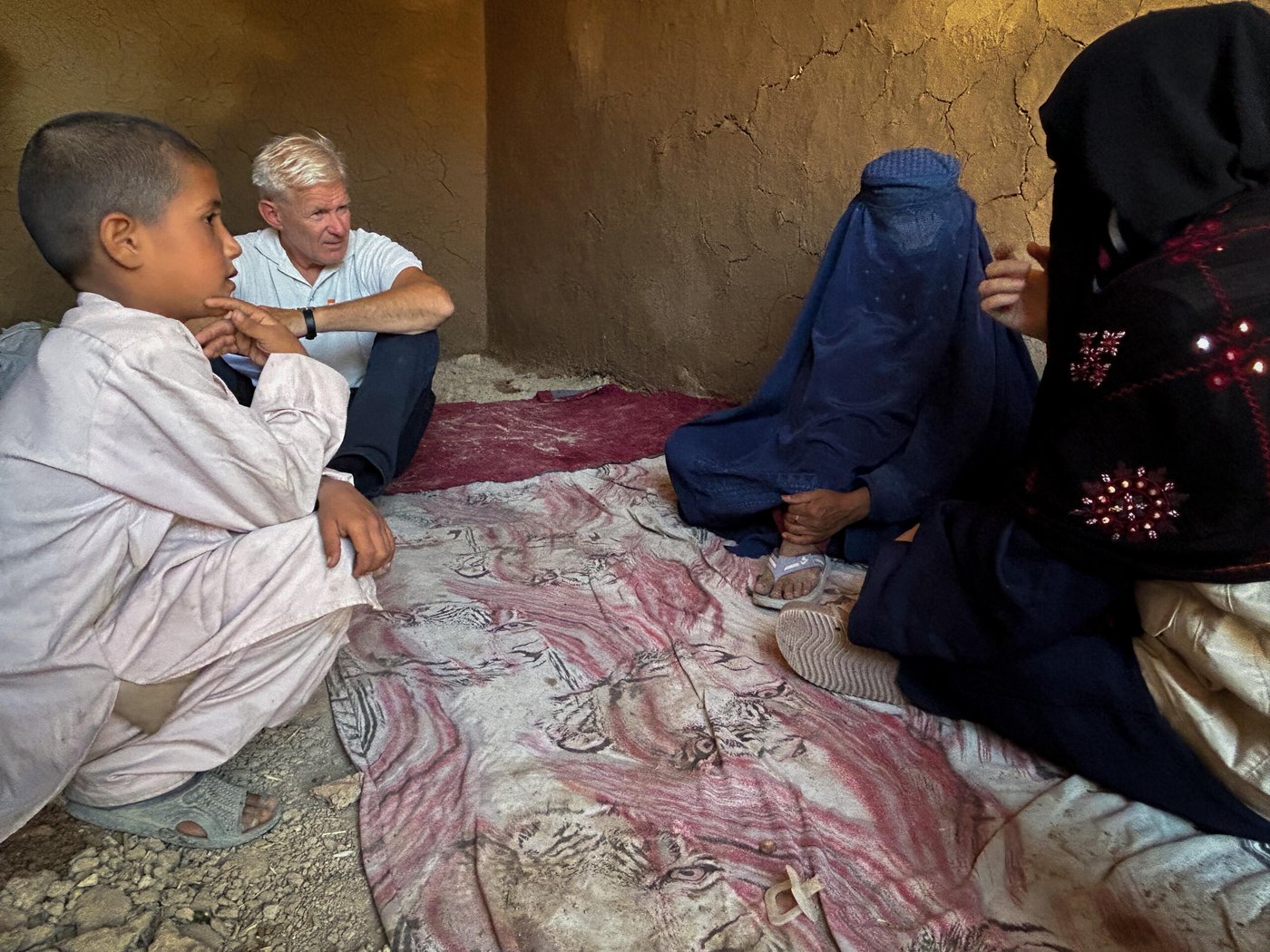
"This week I have met with mothers who have nothing to give their children, and who fear the coming winter. Infant malnutrition is soaring, and communities are at rock bottom, with nowhere to turn. Humanitarians have less than a third of the funding needed, forcing organisations to make impossible decisions about who can be helped.”
Afghanistan is experiencing one of the largest return movements in the world. In 2025 alone, 2.9 million Afghans returned from Pakistan and Iran, while more than one million people have returned to Afghanistan so far this year.
The scale and speed of these returns places enormous pressure on communities, housing, livelihoods and already overstretched public services. Months of sporadic fighting between Afghanistan and Pakistan has added to the uncertainty facing civilians already unable to support themselves.
“When I visited the Iran-Afghanistan border last year, and again this week during my visit to our Community Resource Centre in Kandahar, I met many families who had returned to Afghanistan. They arrive here with almost nothing, and will be met with little or no support," said Egeland.
“This week I have listened to families forced to live in the most basic of shelters, sometimes lacking roofs and with nothing but sticks and discarded packaging for walls. They must get the opportunity to rebuild their lives and once again support themselves with dignity.”
Women and girls across Afghanistan continue to face severe restrictions imposed since 2021, including restrictions on education, work, movement, and access to basic services. These challenges are often even greater for women and girls who return to the country, whose families have little or no income and are often forced by their lack of resources to find shelter in areas with no access to healthcare or education.
It is vital that donors invest not only in the emergency response, but also in longer-term initiatives that can help returnees reduce their dependence on humanitarian assistance.
“Today in Afghanistan, returnee families are trapped in a terrible position,” said Egeland. “Political limitations to engagement with Afghan authorities further restrict opportunities to identify long term solutions, leaving humanitarian organisations struggling to meet ever-growing, urgent needs. The international community must engage meaningfully with the Afghan authorities to ensure that people here do not pay the price for shifting geopolitical priorities.”
Mohammad Ali, a father of six, who returned from Iran and now lives on the outskirts of Herat province, explained, “For the past year that I am back here from Iran, I seldomly got any emergency assistance. I appreciate that [support] but this kind of assistance does not sustain life. I am willing to work but there is no job or [lasting] assistance that can secure mine and my children’s future.”
“Donors are indeed facing competing global priorities, but being here and seeing the way that Afghan civilians are being abandoned is truly shocking,” said Egeland.
“After years of high-cost military interventions, the testimonies I have heard come from communities who have been consigned to oblivion. Where are the diplomats? Where are the international institutions? Those with the experience in providing support in complex settings should be doing far more here.
"These past five years have been a desperate downward spiral: it is vitally important that civilians in Afghanistan do not become invisible.”
Notes to editors:
-
Photos and b-roll from Egeland’s visit to Afghanistan is available for free use here.
-
Infant malnutrition rates in Afghanistan are rising rapidly. 3.7 million children are acutely malnourished, including 1 million who have life-threatening severe acute malnutrition (UNICEF).
-
Over six million Afghans have returned from Pakistan and Iran since late 2023 (IOM DTM).
-
Around 2.9 million Afghans have returned from Pakistan and Iran only in 2025 (UNHCR).
-
One million Afghans have returned so far in 2026 (UNHCR).
-
73 per cent of Afghan returnees are unemployed (IOM).
-
3.2 million people were internally displaced people as of December 2025 (UNHCR).
-
A summary of Afghanistan’s annual Humanitarian Needs and Response Plans can be found here.
-
The stark conditions facing Afghan civilians are being compounded by increasingly frequent natural disasters. Last August a devastating earthquake struck eastern Afghanistan, killing and injuring thousands. More than 8,000 families, including 28,000 women, were directly affected across Kunar, Nangarhar, and Laghman provinces, and many were left without any shelter at all.
-
The funding available for the humanitarian response has been cut by almost 70 per cent, from 3.3 billion dollars in 2022 to 1 billion dollars in 2025. So far this year, only 500 million US dollars have been provided for the humanitarian response, about 30 per cent of the 1.7 billion dollars needed (OCHA).
-
NRC supports displaced people across nine provinces in Afghanistan including providing water and sanitation support, protection from violence, information and legal assistance, and education. Our community resource centers function as a central hub for the response, ensuring families can receive the services they need. In 2025 we provided assistance to more than 340,000 people, including 49 per cent women.
For more information or to arrange an interview, please contact:
-
NRC global media hotline: media@nrc.no, +47 905 62 329
