
"The armed men came to our house in the evening. They forced my husband to carry out all our things. Then they hacked him to death."

DR Congo: A mother, three children, and a world that looks away
Zawadi lost her husband and everything she owned when armed men attacked and looted their home in Peti, in eastern Democratic Republic of the Congo (DR Congo). After burying him there, she took her three children and fled.
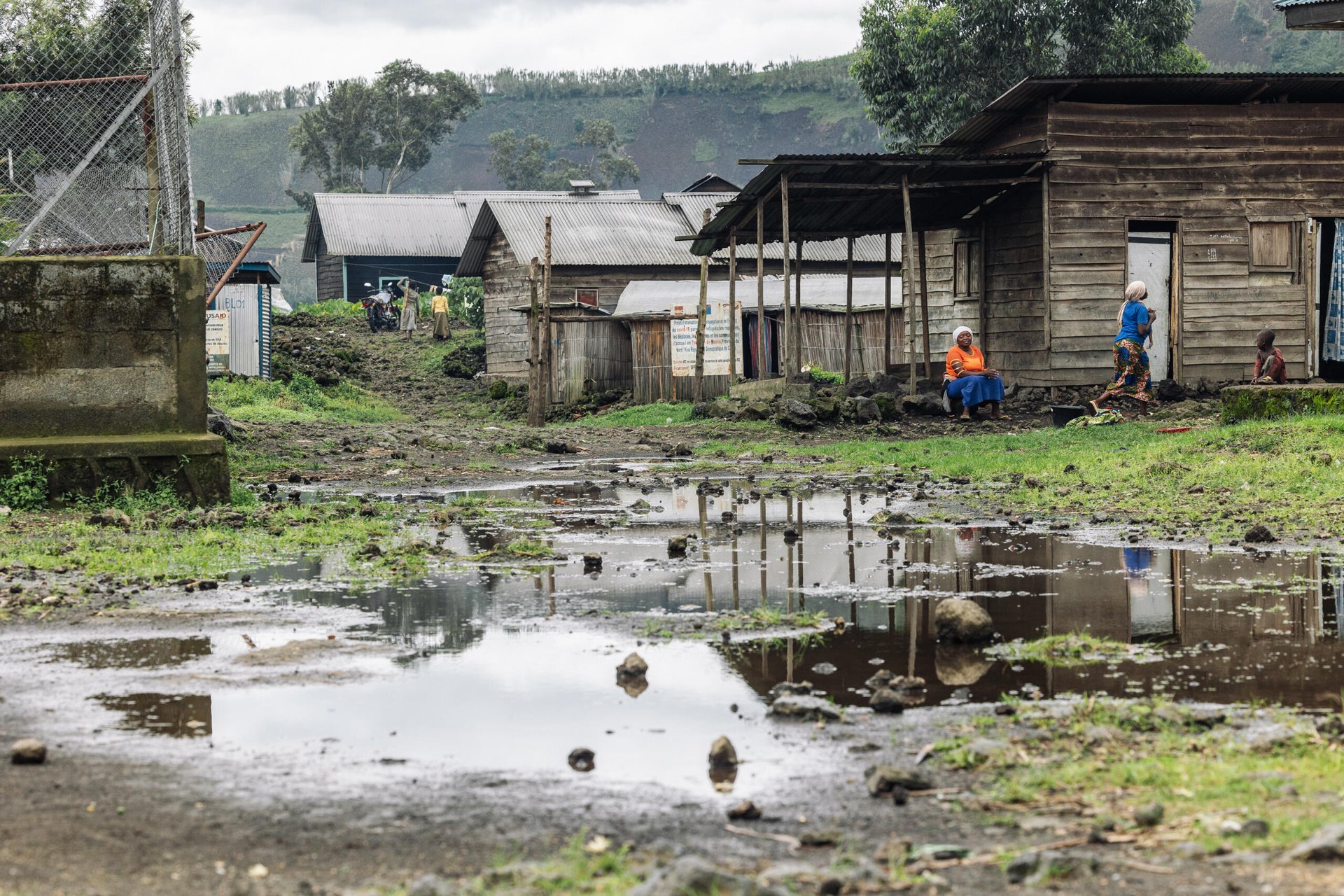
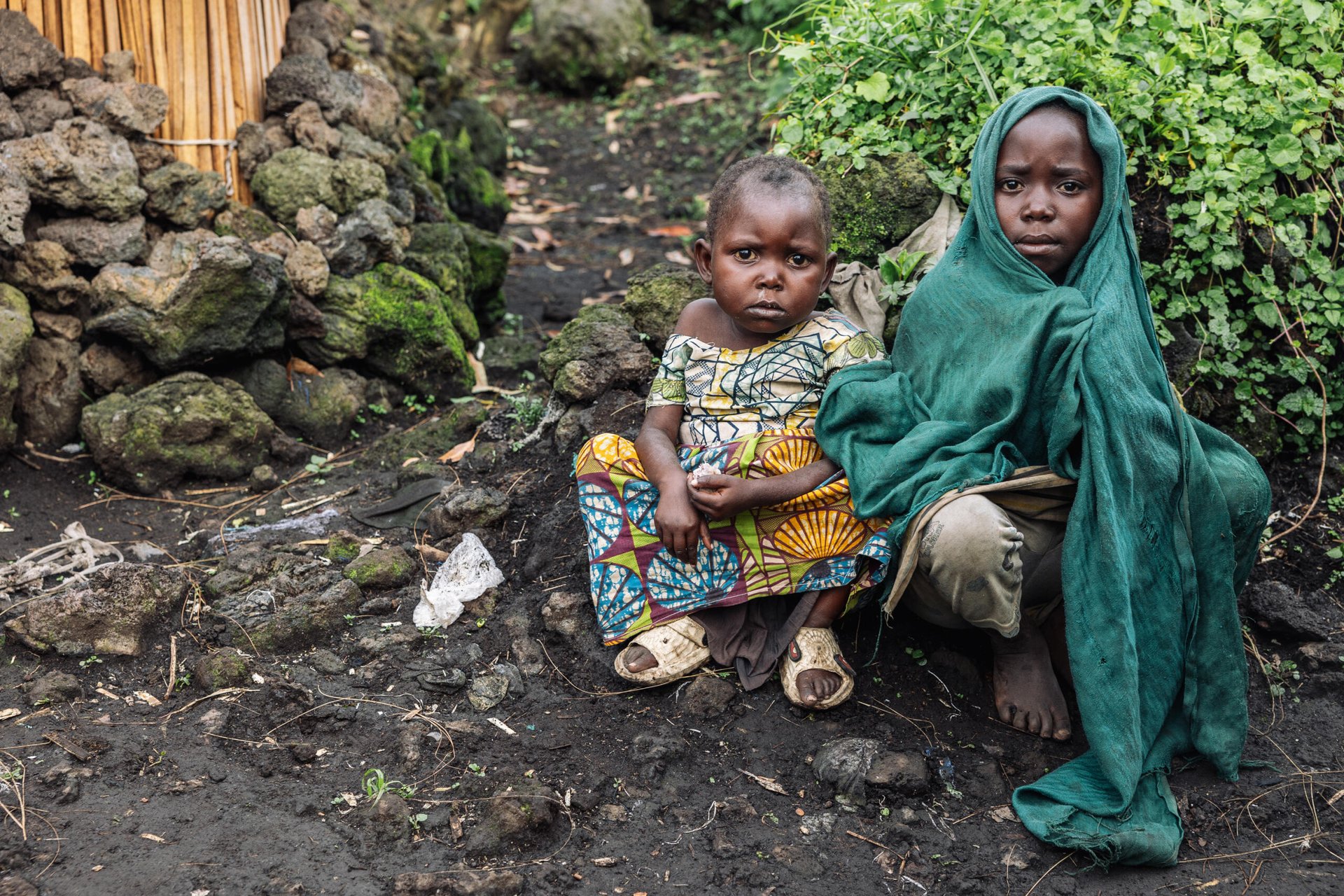
Her gaze is serious. Her children crowd closely around her as she stands in front of the simple hut of twigs and tarpaulins that is now their home. They arrived here a week ago and were first housed in a kind of hangar with other displaced families. Now, they have been assigned this hut in a camp for internally displaced people in Kitshanga, a few kilometres south of her hometown.
Bienvenue, 2, sits on Zawadi’s arm, chewing on a piece of bread. The girls Ciza, 5, and Florence, 8, cling to their mother. She sits down on the wooden bench outside the hut with Bienvenue on her lap. She starts breastfeeding him.
“How was my day?” Zawadi repeats the question. “I woke up early and went out to beg. Someone gave me some porridge and told me to go home and cook for my children. Tonight I'm going out again to beg for more food. That's my life. The children and I are hungry all the time.”
Read more about the world's most neglected displacement crises.
Brutal violence
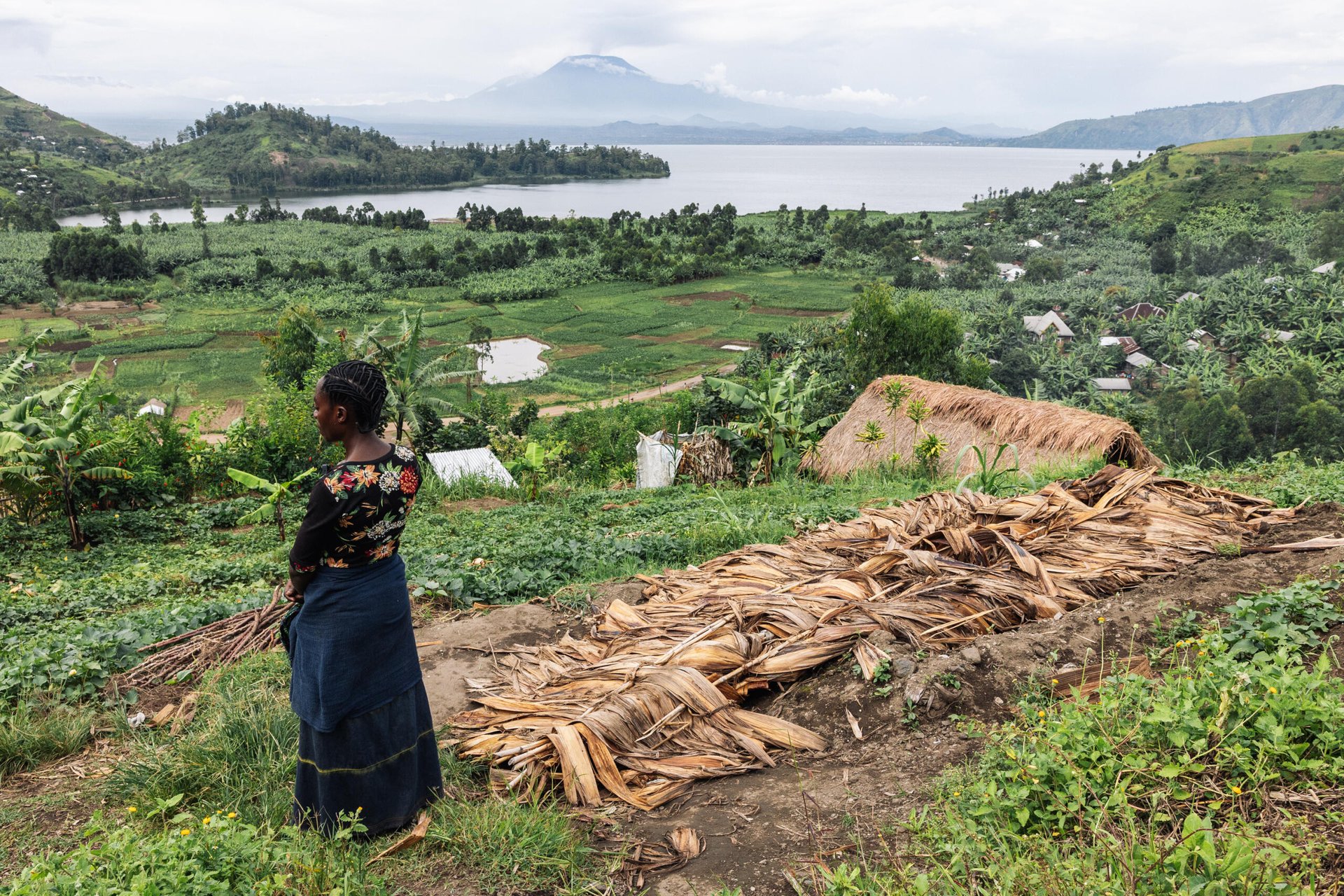
From the Norwegian Refugee Council’s (NRC) country office in Goma, the capital of North Kivu, the drive to Kitshanga takes four hours north on almost impassable roads, through lush, mountainous landscapes and areas affected by shifting conflict dynamics. As the crow flies, the distance is about 85 km. The beautiful, green landscape stands in stark contrast to the realities faced by local communities and their stories of the brutal violence that permeates the lives of the population here.
The rainy season, with torrential rains and thunderstorms throughout the night, leaves its mark. The roads are full of mud and large puddles of water. In some places, they are partially blocked by fallen trees. People speak of water leaking into houses at night. At dusk, the mosquitoes start buzzing.
In the areas around Kitshanga, violence can drive people to flee their homes at any time. It wasn’t long ago that Zawadi had to leave everything.
“I decided to flee with my children,” she says. “I can’t go back there.”
Armed groups fighting for control
Zawadi's story is not unique. DR Congo is experiencing one of the world's longest running and most complex crises. The stories of brutal violence, abuse, food shortages and displacement are plentiful. Yet the crisis receives very little international attention.
The country's history has been marked by armed conflict since 1996. There are over 200 different armed groups fighting for access to land and natural resources nationwide, 120 of which are operating in North Kivu. Violence has increased in recent years, and poverty has become part of everyday life for communities across the country. Armed groups fight for control of areas, the state has a weak presence, and civilians are caught in the middle.
Millions are forced to flee – often multiple times. Families live in unsafe conditions without access to food, housing, water or health services. Children cannot go to school, families are broken up, and people are exposed to violence and abuse. It is not just a conflict between groups – it affects every part of ordinary people's lives.
A completely neglected crisis – for over ten years
DR Congo is the only country to be on the NRC’s list of the world’s most neglected displacement crises every single year. Ten years of data tell us that the crisis and the needs in the country are widely recognised and understood. The numbers of displaced people have been documented, humanitarian aid plans and the costs have been carefully calculated, and warnings have been issued – including in the neglected crises report – year after year.
What has been missing is sustained funding, accountability and political will to address what people need and the underlying causes of the violence.
In 2025, we saw a painful deterioration in eastern DR Congo. Fighting intensified in the provinces of North and South Kivu, forcing families to flee, sometimes three or four times in the space of a year. In the northeastern part of the country, the population of Ituri province experienced clashes between ethnic groups, armed actors and foreign forces. Villages became front lines, schools became barracks, livelihoods were destroyed, and civilians were exposed, with no safe place to seek refuge.

Ebola spreading
Over 6 million Congolese are now displaced in their own country. This is not an isolated crisis. The conflicts in DR Congo are linked to global issues, from colonial history to today’s demand for minerals used in batteries and mobile phones. DR Congo is a country rich in resources that do not benefit the population.
In the spring of 2026, a new crisis struck: A new outbreak of Ebola, a dangerous infectious disease with a high mortality rate, is spreading in the east of the country. The virus has probably been circulating among the population for several weeks without being detected. Funerals of people who died of the disease, and the transport of their bodies, have contributed to greater exposure. The development of new cases in recent weeks indicates a rapidly growing outbreak.
The reduced surveillance systems following last year’s drastic cuts in global aid budgets has not helped in the response. In the years leading up to 2025, US government funding played a key role in outbreak preparedness and frontline health responses in eastern DR Congo.
NRC has been working here for 25 years
Through 25 years of operation in the country, NRC has built a reputation as a good and reliable humanitarian organisation. The main reason we are able to get through on this bumpy road from Goma to Kitshanga, in addition to solid vehicles handled by skilled drivers, is the trust we have among the various groups operating in the area, and among the local population.
In DR Congo, we work in several ways that are unique compared to other aid organisations:
Through shelter, water and education projects, we help meet the needs of displaced people and people who have returned home after being displaced.
Through legal aid, we support people in gaining control of their lives. In practice, this means assisting people with 1) regaining land or housing that they lost when they were forced to flee, 2) obtaining identity documents so that they can work or access services, and 3) understanding and demanding their rights.
Through cash support, we provide flexibility and self-determination: NRC is one of the leading players in what is called Multipurpose Cash Assistance (MPCA). This means that we provide money directly to people instead of ready-made emergency aid packages. This allows families to prioritise food, rent, medicine, school fees or other things themselves.
NRC is present in the most remote and conflict-prone areas. Eastern DR Congo is full of areas that are very difficult to reach due to conflict, poor roads and security risks. We reach people who would otherwise be without support. This requires a long presence, local networks and high tolerance for complex and risky working environments. These are among the factors that allow us to reach people who would otherwise fall by the wayside in a neglected crisis like the DR Congo.
In areas like Kitshanga, we do regular assessments to map the needs of newly arrived displaced people, such as Zawadi and her children.
Hope to see the children grow up
In the camp, Zawadi does not dare to hope for a better future.
“Our life here is the way it is because we have nothing. But even if I had the opportunity and the means to go back, I would not do it. To a place where they find someone sleeping in their home, and they come in and kill them! Many people are hacked to death there. It is a terrible place.”
What she wants is to see the children grow up, in safety.
“That would make me so happy. Can I deny myself that? Especially since the man I was supposed to raise them with is no longer alive. The day I see my children have grown up, I will thank God.”

