Children from Ukraine
Getting help
with stress
and trauma
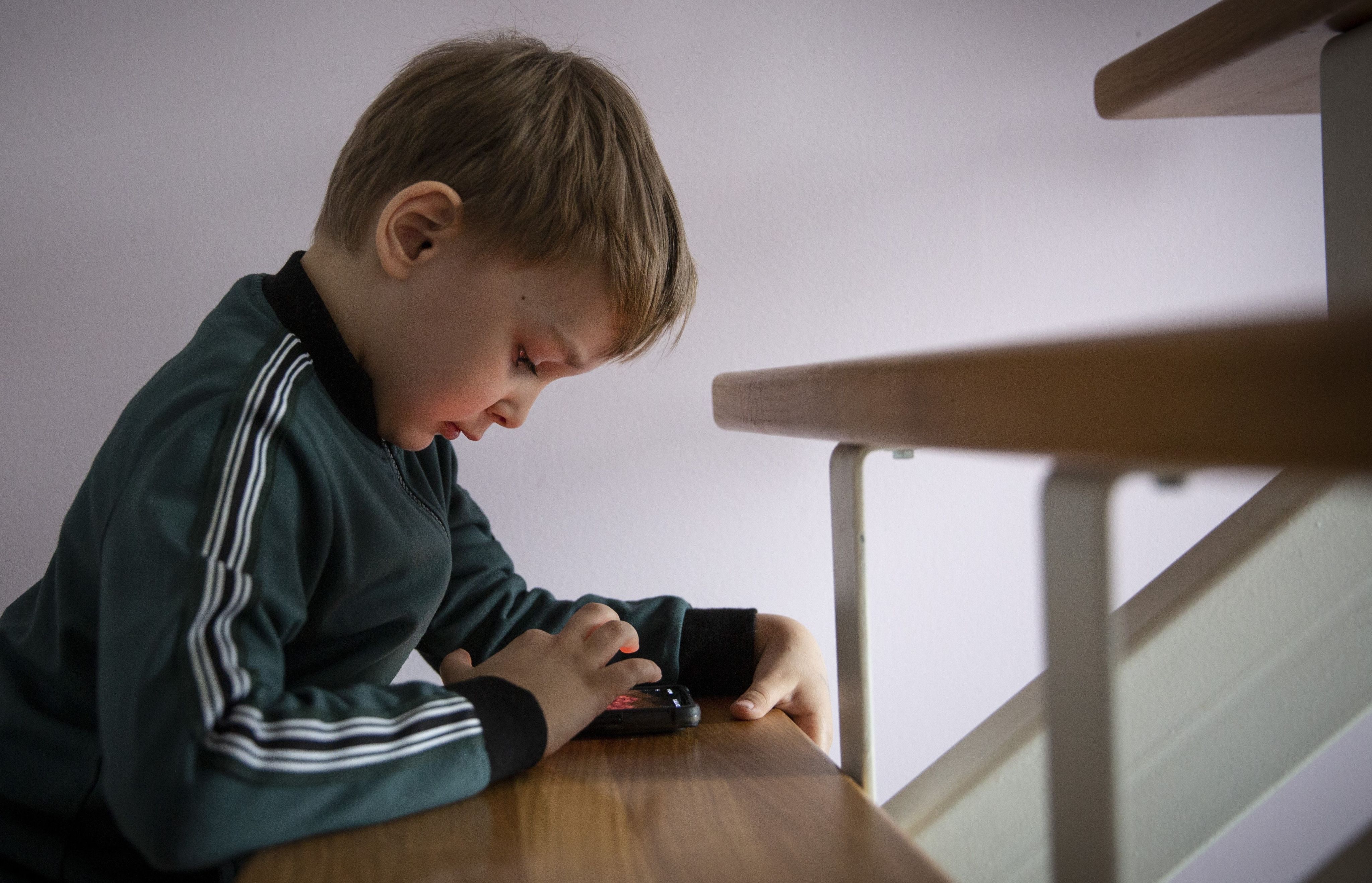



“He can be my daddy until I see my real daddy again,” says Max, 5, and tightly squeezes the hand of the mannequin in front of him.
Max and his mother, Maria, stand in a daze in the middle of a shopping centre in Żyrardów, Poland. It has only been a few weeks since the war came to the family’s neighbourhood in Kyiv.
When the windows of their apartment began to shake with the explosions, Max’s mother grabbed the first clothes she could find in the wardrobe and hurriedly left with her son in tow. Max’s father had to stay behind.
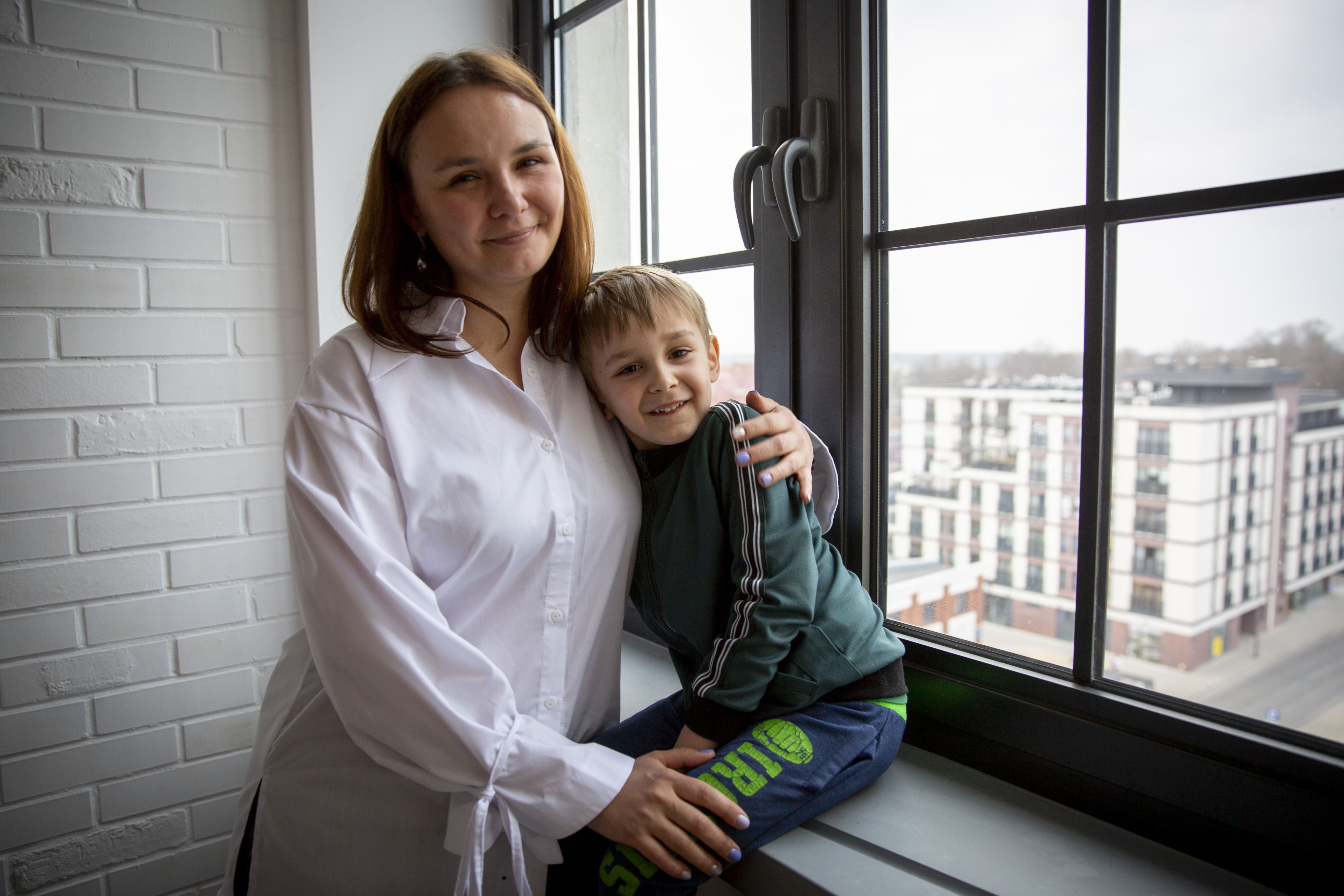
Max with his mother Maria. Photo: Ingebjørg Kårstad/NRC
Max and Maria have managed to reach safety in neighbouring Poland. They were able to get a flat from a Polish family in the city of Żyrardów, 50 km outside the capital Warsaw. Finally, Maria can breathe out and sit back. She has nothing but praise for the Polish hospitality, but she is worried about her son.
“Max didn’t want to let go of the mannequin, and we almost had to drag it with us out of the mall. He really misses his father, but starting school has helped,” she says.
More than two and a half million Ukrainian children have fled the war-torn country.
Many have experienced the horrors of war and seen their homes destroyed. Some had to endure a dramatic flight, and many left their fathers, grandparents, friends and pets behind.
There are many children like Max who are struggling with stress and trauma – but now they are getting help.



Max with his mother Maria. Photo: Ingebjørg Kårstad/NRC
Max with his mother Maria. Photo: Ingebjørg Kårstad/NRC
From war to play
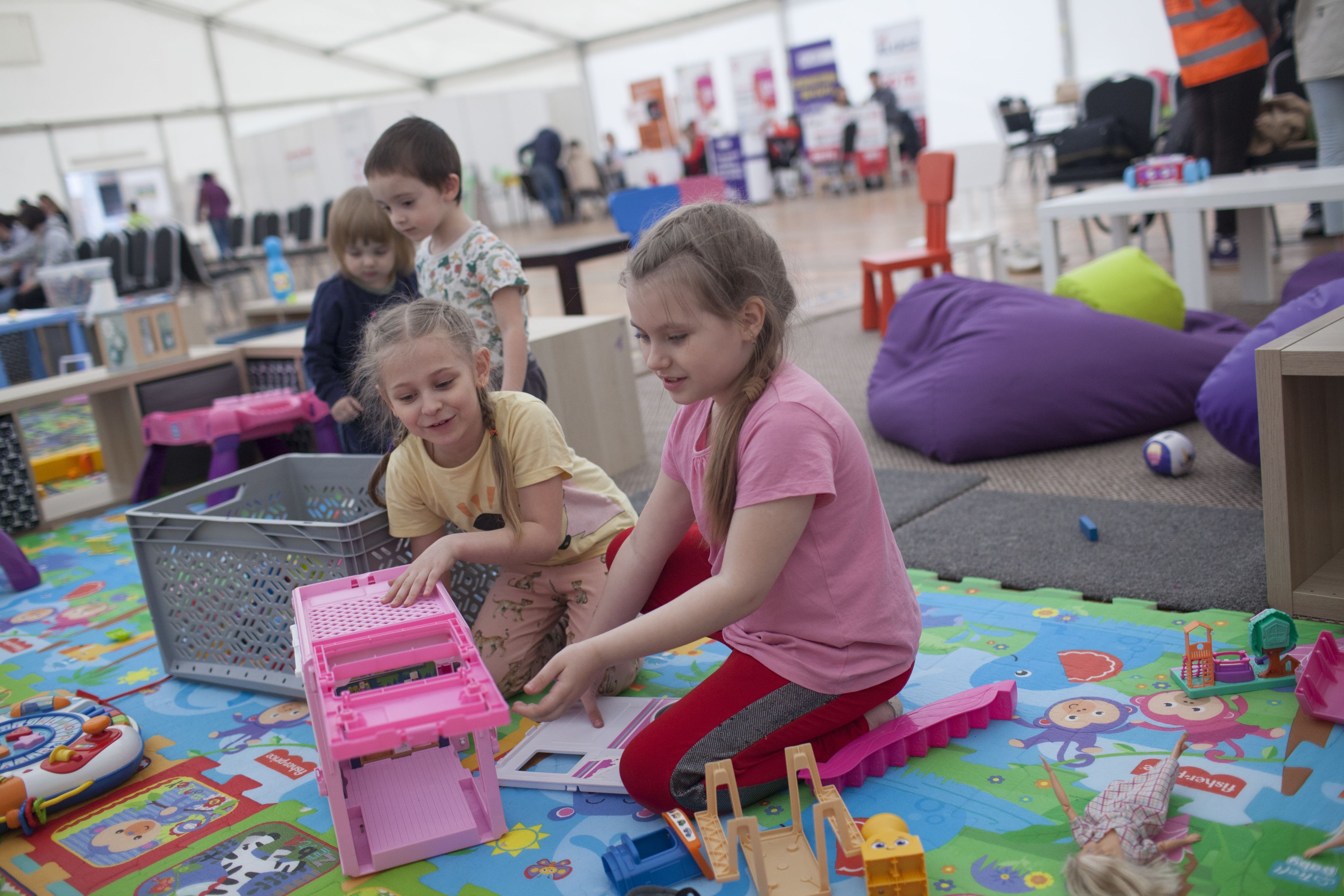
They are scared, exhausted and hungry, after fleeing the atrocities of war. A safe area to play at the NRC reception centre provides them with a space to be children again.

Better Learning Programme
To help children who have experienced stress and trauma, we have worked with the University of Tromsø to develop the psychosocial school programme called Better Learning. The programme, which combines psychosocial and educational methods, helps teachers to support children who are suffering from stress and trauma as a result of war and displacement.
At NRC’s reception centre at Warsaw East train station, run in cooperation with our local partner, PCMP, mothers and children who have just arrived in the country can get some food, rest, and take time to orient themselves and work out what to do next.
In one colourful corner of the large reception centre, we have worked with staff and volunteers from the Polish organisation GPAS to set up a play area for children.
The volunteers are motivated adults, many of them trained teachers and educators, who have undergone training in our psychosocial programme, the Better Learning Programme.
A safe haven from war

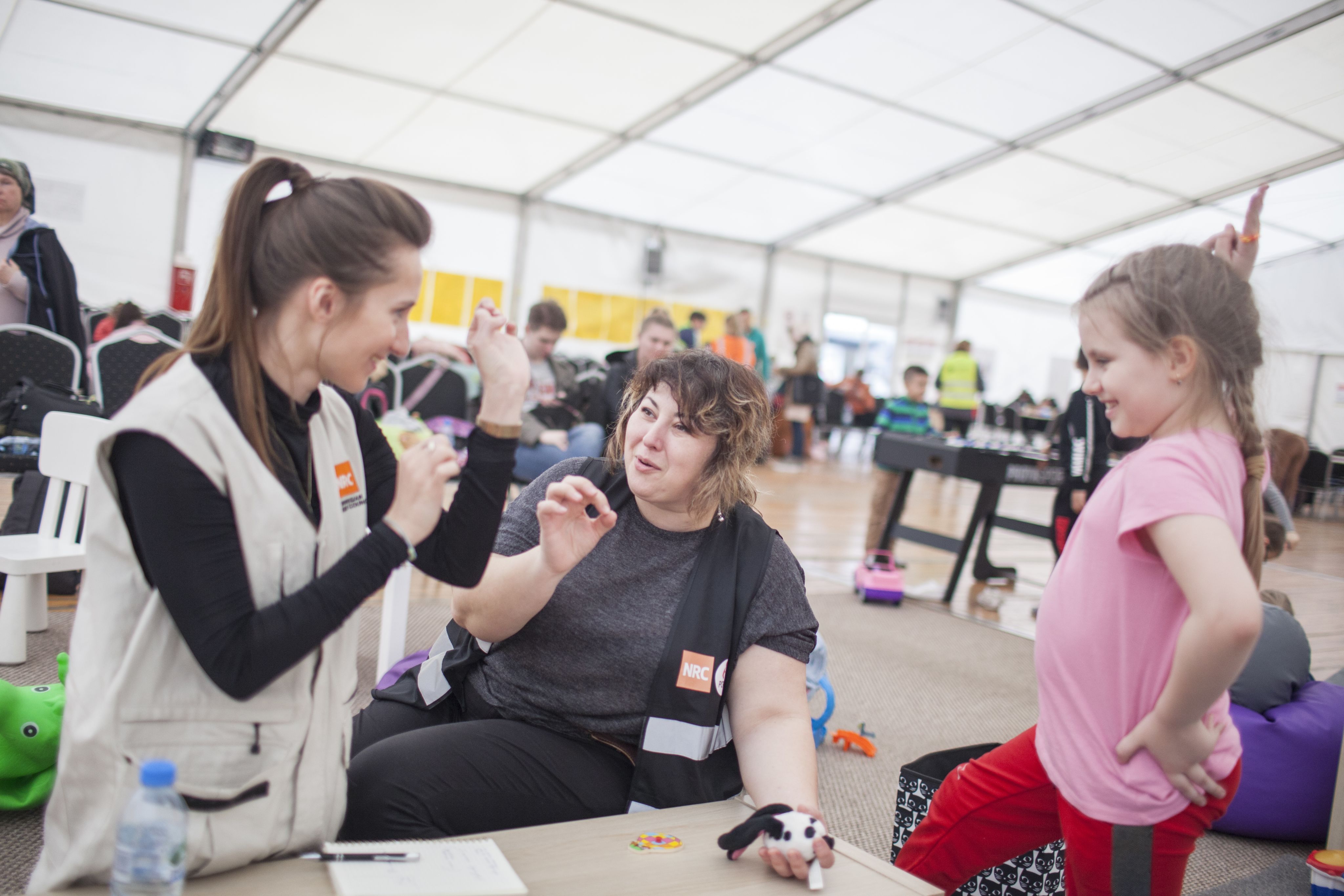
Tatiana is a trained teacher and psychologist. Originally from Ukraine, she has lived in Poland for the past two years. She meets the families who have crossed the border from Ukraine, and sees first-hand the urgent need for psychosocial support.
Many of the children are struggling with stress and trauma. Mothers tell NRC staff that their children scream and cry at night, and that they are afraid of the slightest sound. The safe space provided at the transit site gives them a chance to be carefree again under the supervision of our adult volunteers.
“It is also a place where mothers can finally relax, rest, gather their strength and map out a way forward. Many have no idea what awaits them in the coming days and weeks. Here, they can finally take a breath after days and weeks of flight.”
Playing war

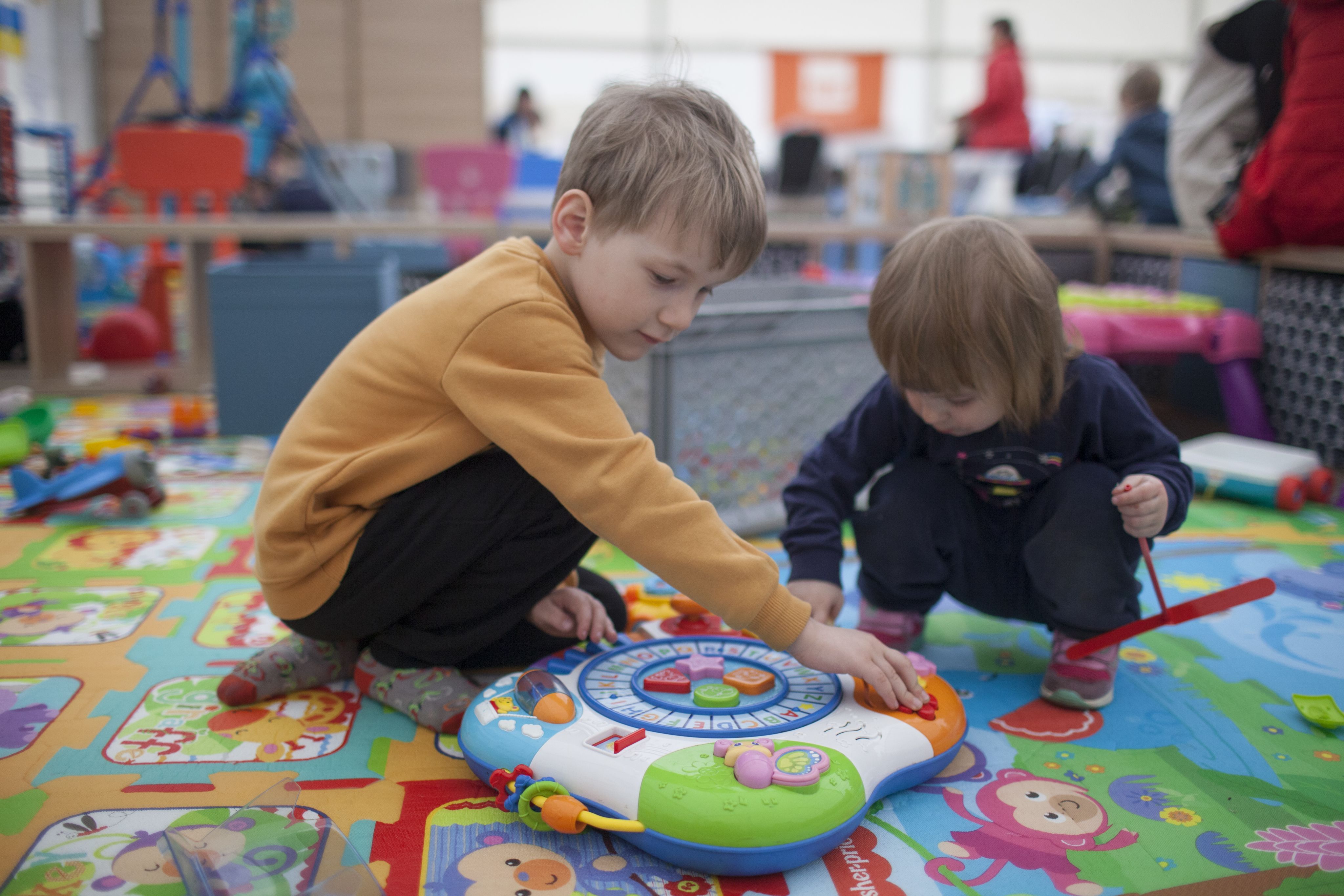
Tatiana explains that some of the children are strongly affected by their up-close experiences of the war, while others managed to flee before the fighting reached their homes.
“We receive more than a hundred children every single day. Some of the children have energy to spare, and some of the oldest want to help. For others, the war has left deep scars. Some of them play war,” says Tatiana.
A couple of days ago, she met a boy who was playing with a doll’s house.
“He put two of the dolls in the shower in the doll’s house bathroom. ‘Is it bath time?’ I asked. ‘No, they’re dead,’ he replied, without hesitation.”

“We had to say goodbye to dad at the border”
Nastia, 8

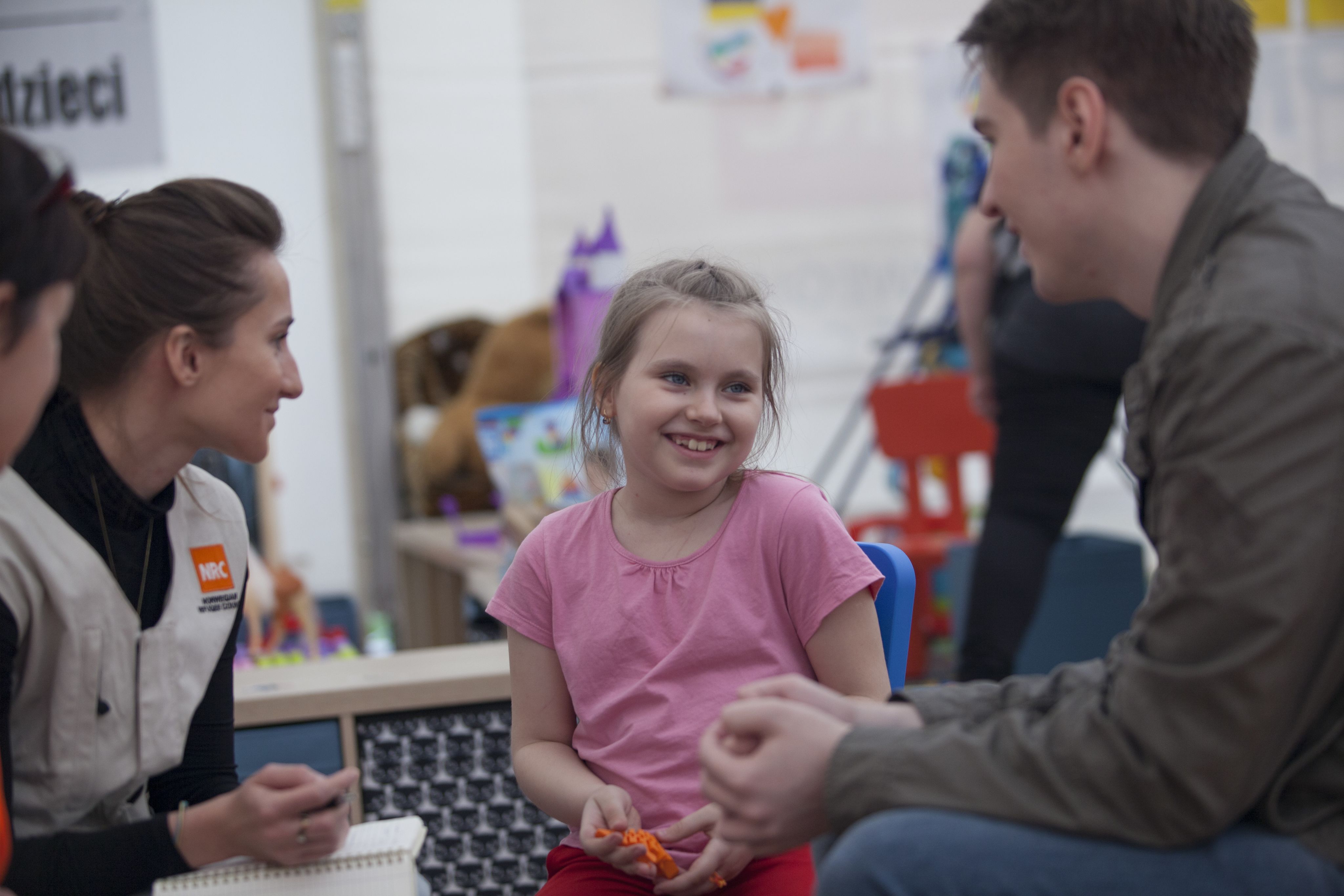
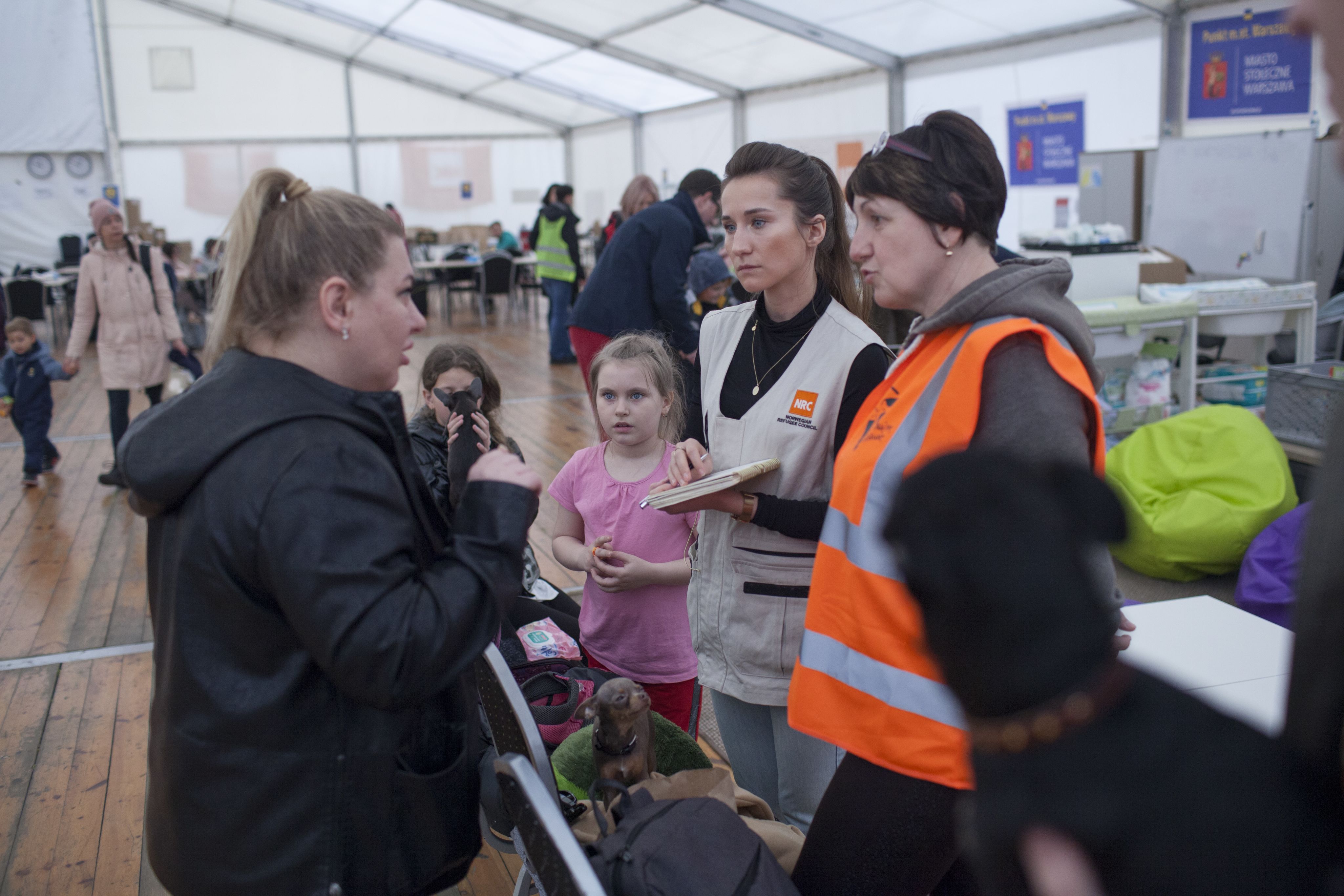
NRC’s Joanna Nahorska and one of the volunteers in conversation with Jana, mother of Nastia and Vania. Photo: Adam Rostkowski/NRC
NRC’s Joanna Nahorska and one of the volunteers in conversation with Jana, mother of Nastia and Vania. Photo: Adam Rostkowski/NRC
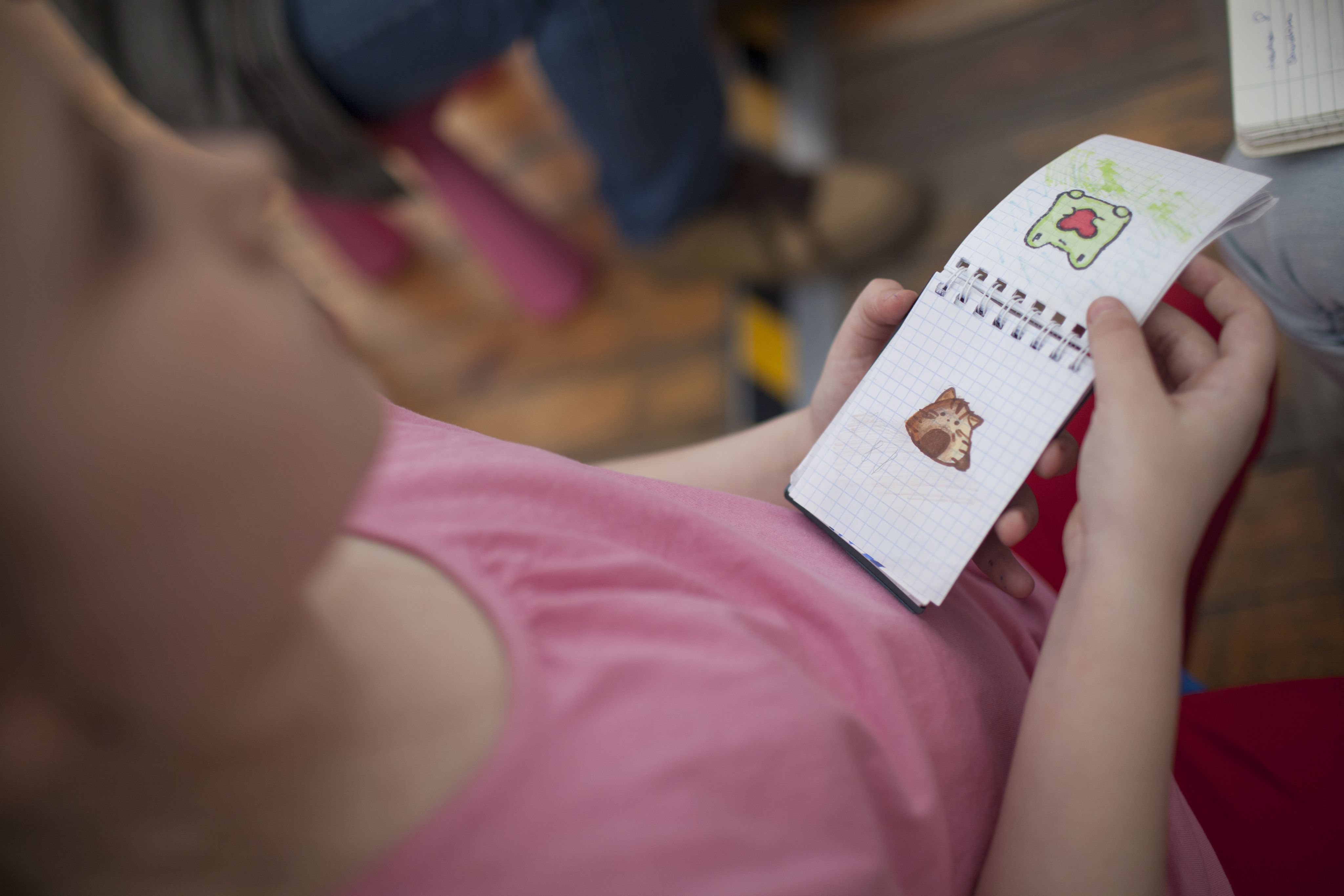
Nastia shows us her drawing pad. Photo: Adam Rostkowski/NRC
Nastia shows us her drawing pad. Photo: Adam Rostkowski/NRC
Nastia, 8, is one of the children who has come to the reception centre. She is here with her brother Vania, 17, her mother Jana, 34, and the family’s three small chihuahuas.
Nastia remembers bits and pieces from the family’s dramatic four-day flight from her hometown of Donetsk, via Russia and Belarus, to Poland.
NRC’s Joanna Nahorska and one of the volunteers in conversation with Jana, mother of Nastia and Vania. Photo: Adam Rostkowski/NRC
“I tried the whole time to shield the children from the horrors of war,” says Jana.
But Vania adds that they had to flee in a hurry when both the family’s house and their grandparents’ house were destroyed by bombs. “There was nothing left,” he says.
In the safe play area, Nastia can finally breathe easy, play and be a child again. She runs around with the other children, and lets them play and cuddle with her dogs.
Nastia shows us her drawing pad. Photo: Adam Rostkowski/NRC
Together, we try to find out if her favourite toy is a rabbit or a zombie dog. Nastia is an expert on rabbits and the best “dog mummy” at the centre. But she doesn’t want to become a veterinarian. “I want to be a clothing designer,” she says, after her initial shyness disappears.
The family is on its way to Germany, where Vania hopes to continue his studies. “I want to study medicine,” he says. They are very worried about Nastia’s father. “We had to say goodbye to him. He was stopped at the border with Belarus and was not allowed to leave the country.”
“We were always ready to run to the bomb shelter”
Alina, 34

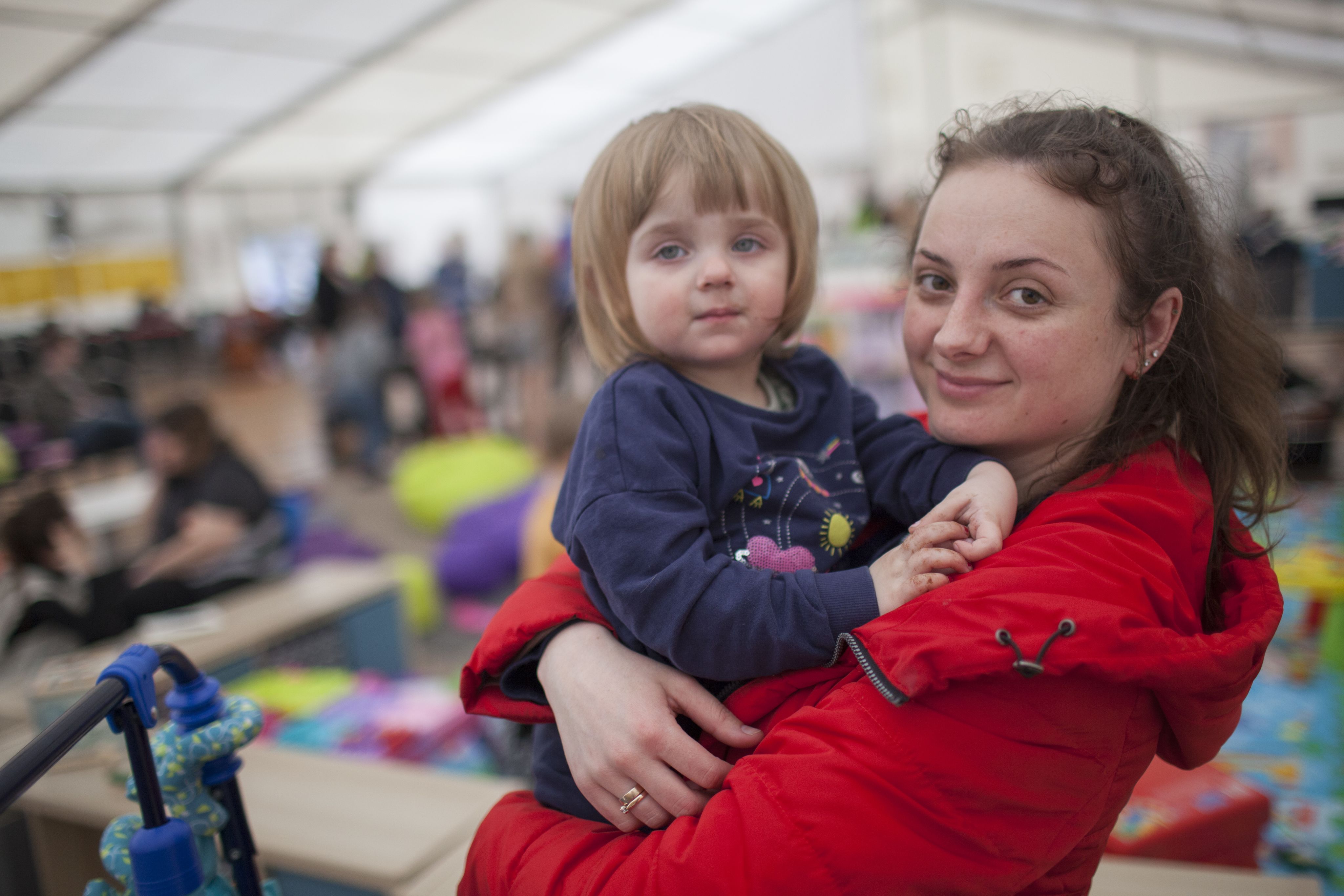
On 11 April, the home of two-year-old Polina in Kharkiv lay in ruins. “That was when I decided to flee with my daughter and mother to my uncle in Poland,” says Polina’s mother Alina, 34.
She says that it was a heart-breaking decision to leave her hometown.
“Polina was terrified. She crouched and covered her head every time we heard an explosion. The slightest sound made her point at the door. We stayed awake most of the day, ready to run to the bomb shelter,” says Alina.
Polina was terrified. She crouched and covered her head every time we heard an explosion.
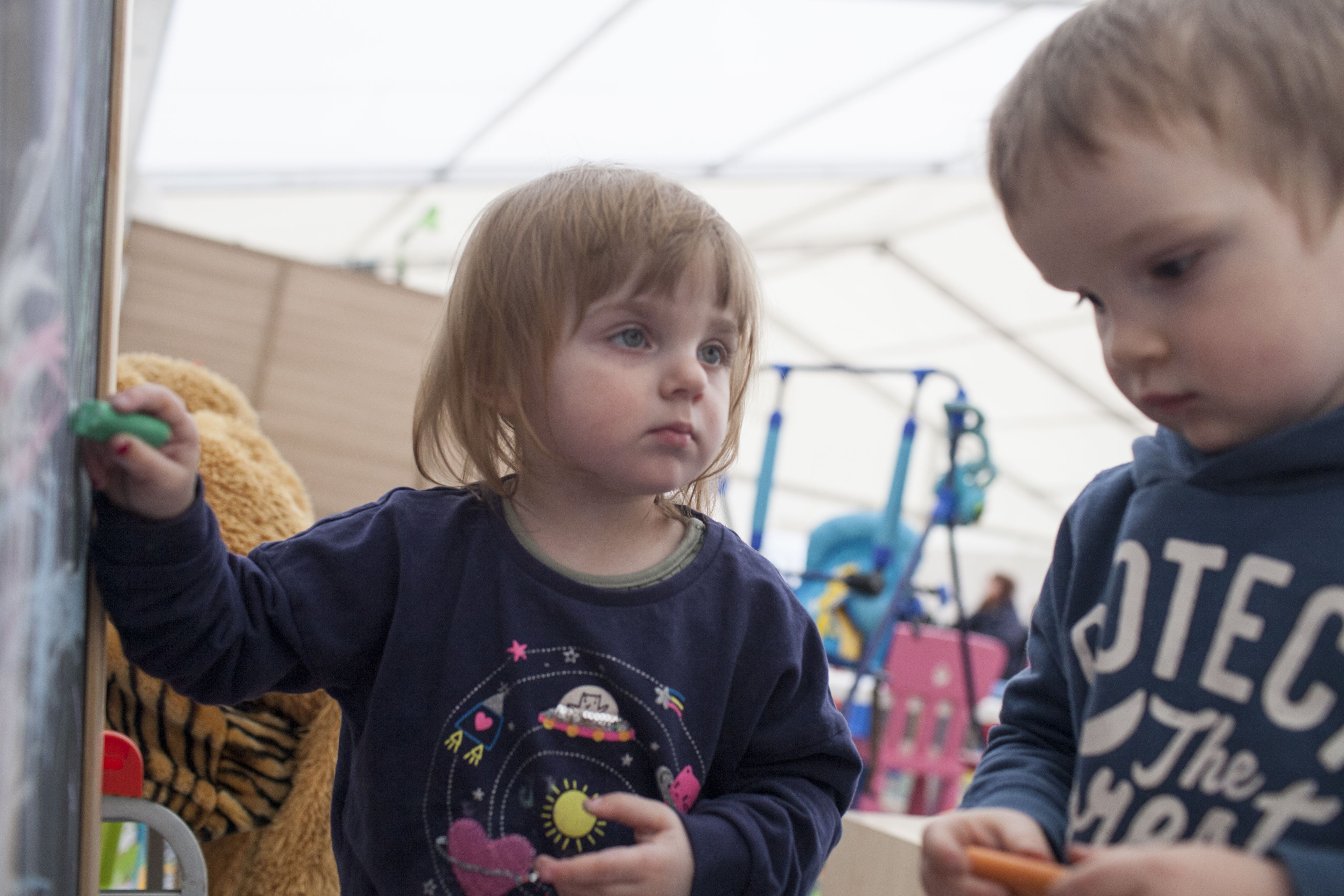
Polina, 2, and Artem, 3, can finally forget the war for a while. Photo: Adam Rostkowski/NRC
Alina hopes she will be able to continue her work in food technology and find a kindergarten for Polina. She is happy to see her daughter running around and playing with other children, while they wait to move on to stay with relatives in Poland.
“We left everything we had and didn’t manage to bring any of Polina’s favourite toys,” says Alina.
Sign up to our newsletter for more information about our work.
Polina, 2, and Artem, 3, can finally forget the war for a while. Photo: Adam Rostkowski/NRC
Polina, 2, and Artem, 3, can finally forget the war for a while. Photo: Adam Rostkowski/NRC
“Artem has been scared ever since the war began”
Marian, 28

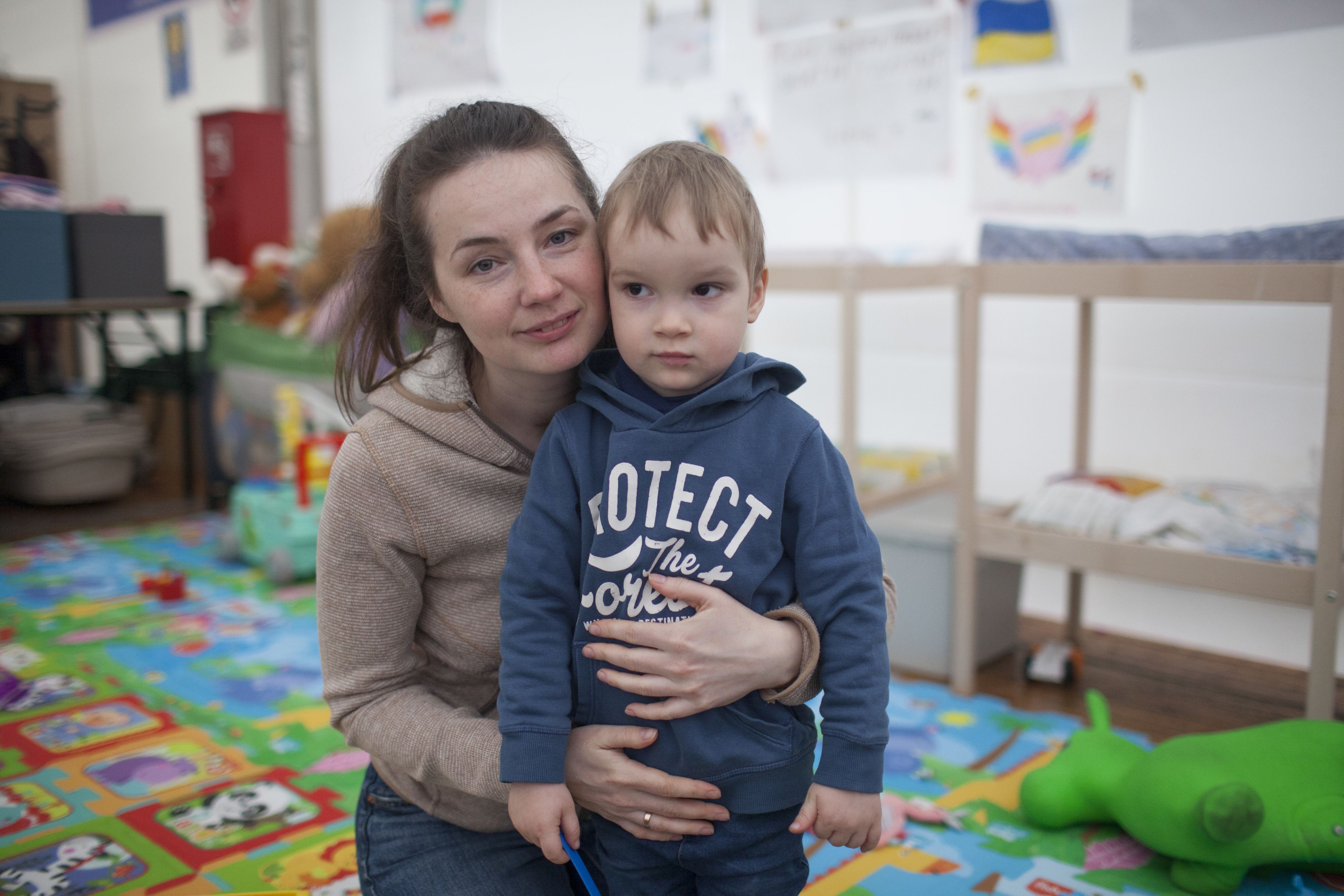
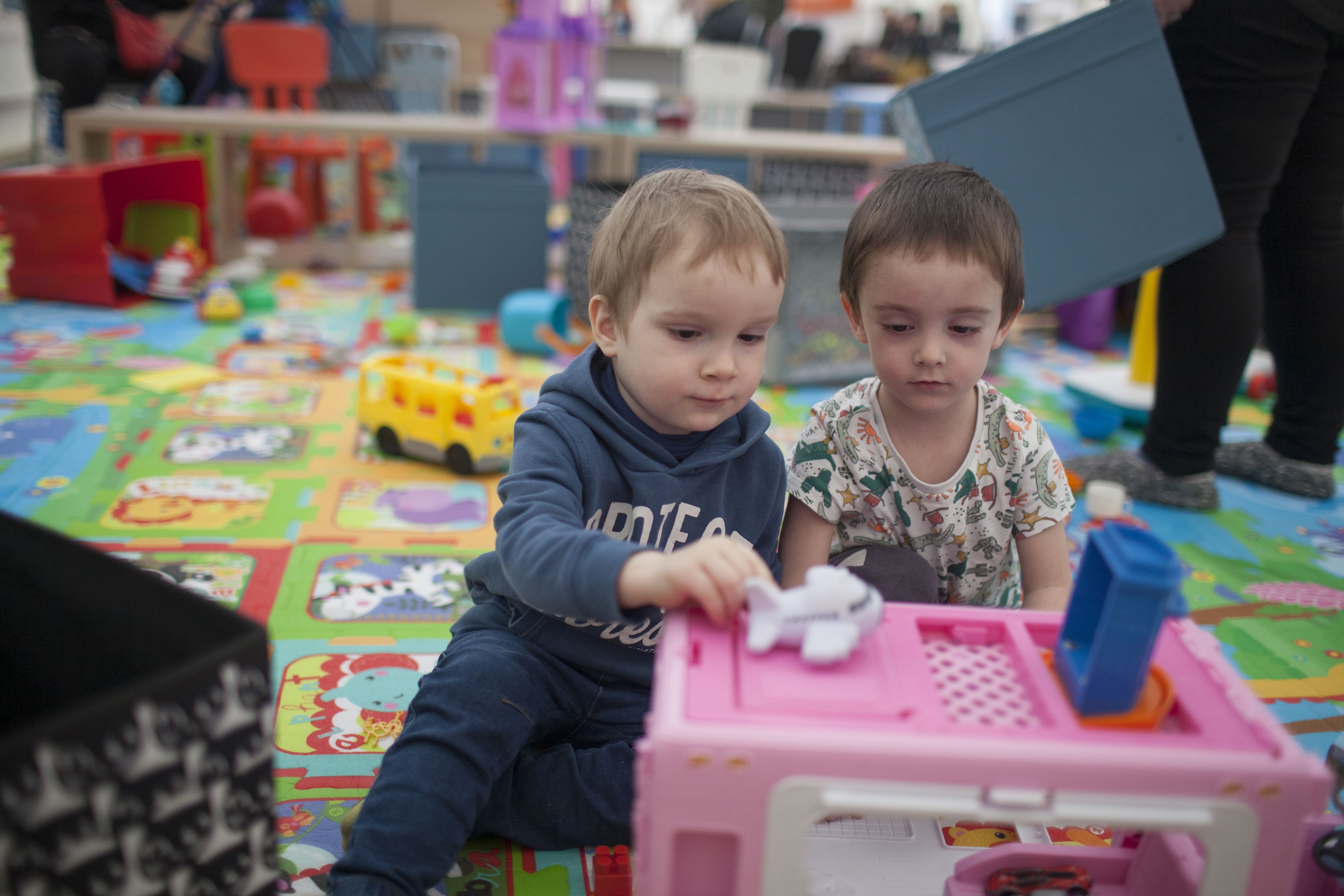
Artem, 3, has found a playmate at the centre. Photo: Adam Rostkowski/NRC
Artem, 3, has found a playmate at the centre. Photo: Adam Rostkowski/NRC
Marian, 28, and her son Artem, 3, fled Vinnytsia in western Ukraine. Ever since the end of March, when Artem first saw the play area, they have visited the reception centre regularly.
“He calls it ‘a café’,” laughs Marian. “A warm place where we can get something to eat, and Artem can play and be with other Ukrainian children and make friends.”
Artem has a great time playing with all the toys. First, he draws on a chalkboard. Then, he tries out various other toys, before sitting down with a puzzle. He looks proudly in his mother’s direction.
Artem, 3, has found a playmate at the centre. Photo: Adam Rostkowski/NRC
“He misses our house and keeps insisting that he wants to go back home,” says Marian, as she struggles to hold back her tears.
“He has been scared ever since the war began. Afraid to go out and play in the neighbourhood. Every little sound scares him, and he starts trembling.”
Every little sound scares him, and he starts trembling.
“I like it here,” says Artem, as he plays enthusiastically with the toys.
The two live with a Polish family who have opened their home in Warsaw. They plan to move on to Canada to start a new life.
“At first I thought this would last for a week or two. After two months, I have no doubt that we will have nothing to return to. Now, my only focus is on giving my son security and a future,” says Marian.
“Ilona is finally able to calm down”
Oksana, 35

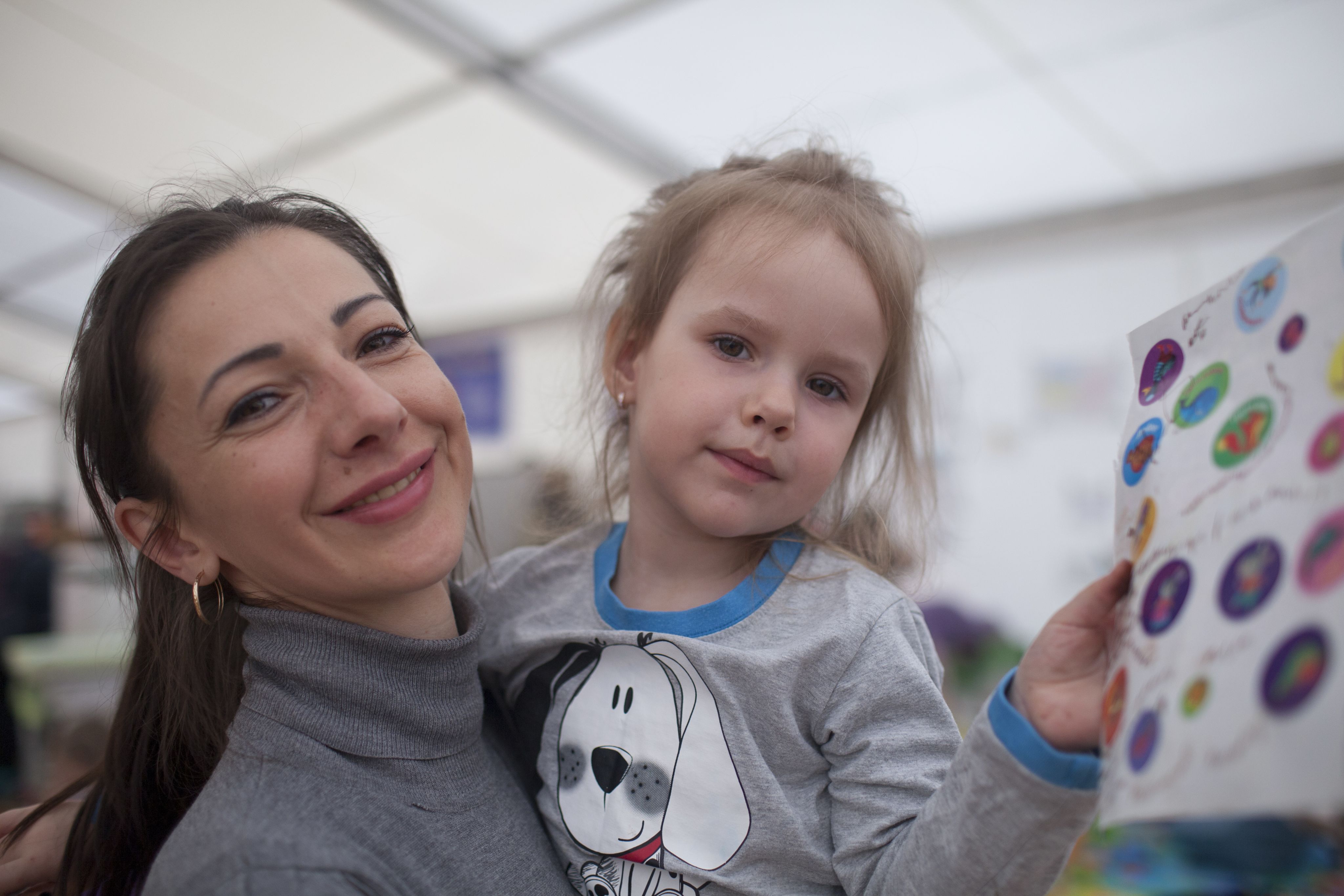
After fleeing for three days, Oksana, 35, can finally breathe a sigh of relief and enjoy spending time with her daughter Ilona, 3. They are able to have their first hot meal since leaving their hometown Kharkiv.
Ilona’s father wanted to stay behind, and Oksana left without telling him. “I haven’t heard from my husband since we left,” says Oksana.
When she tells how the war has affected her daughter, she breaks down in tears.
“It has been frightening and emotionally exhausting, but when Ilona developed severe symptoms of anxiety and stress, I had no choice but to flee the country,” she says.
I had no choice but to flee the country.
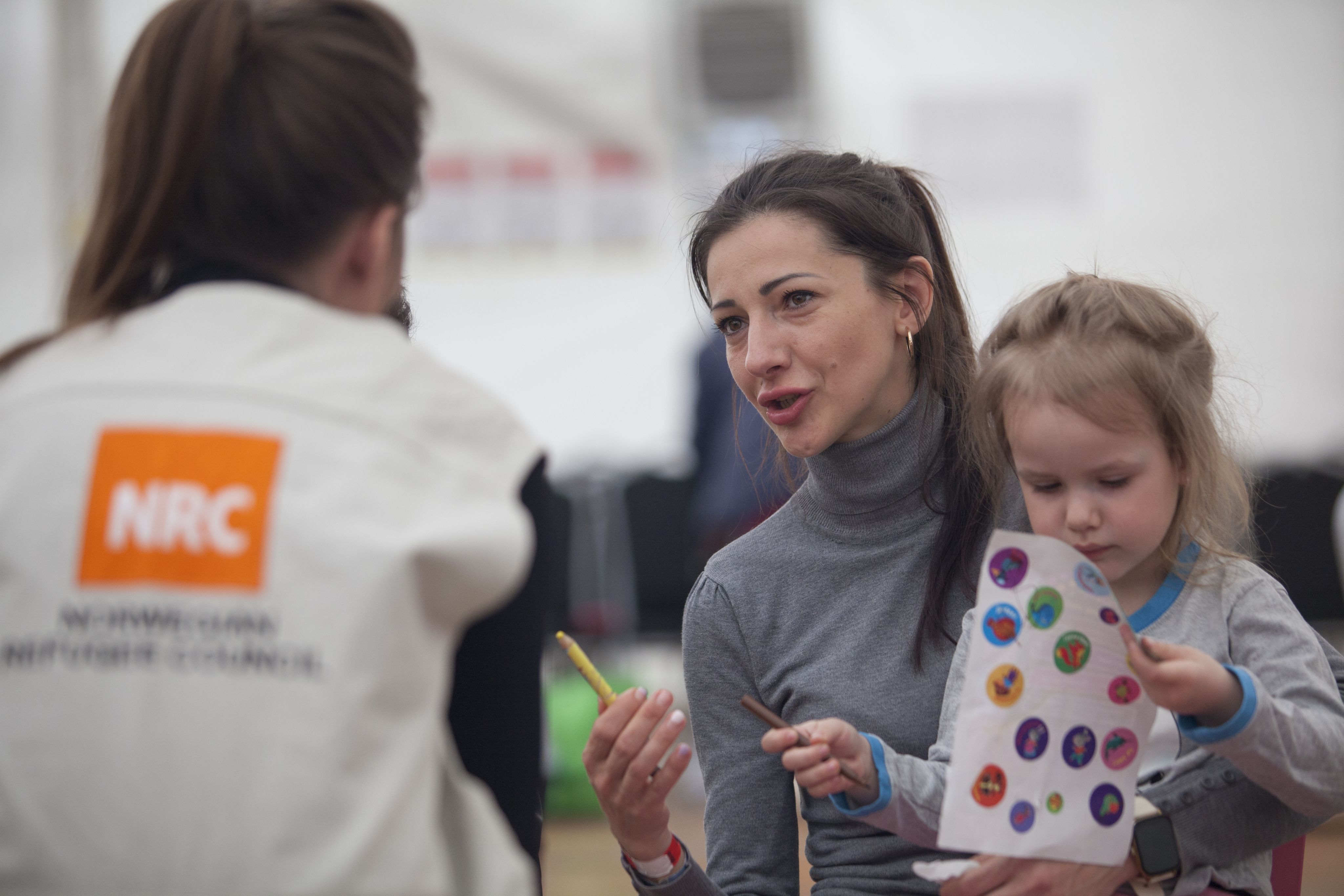
Oksana, 35, in conversation with NRC’s Joanna Nahorska at the reception centre. Photo: Adam Rostkowski/NRC
“Every time we heard thunder, or loud noises, Ilona asked if it was the war,” says Oksana, with tears in her eyes.
Oksana lights up when Ilona starts playing. “Finally, she seems to be able to calm down, despite everything we have been through the last few days. Now, she can finally play with other children,” she says, and looks over at her daughter, who has found several playmates.
Ilona also shows great interest in some of the pets that other children have brought with them. “I want to be a vet when I grow up,” says the three-year-old, who had to leave her own little dog back home.
Oksana, 35, in conversation with NRC’s Joanna Nahorska at the reception centre. Photo: Adam Rostkowski/NRC
Oksana, 35, in conversation with NRC’s Joanna Nahorska at the reception centre. Photo: Adam Rostkowski/NRC
There is now a record number of displaced children in Europe. Elsewhere, too, children are displaced by war and conflict. In some countries, children and schools are being attacked. That’s why it is important that we get involved, so that as many people as possible can receive help and protection.

 Built with Shorthand