---
title: "My name, my country, my rights: Legal identity, nationality and statelessness in the Middle East and North Africa (MENA) region"
description: "The right to a legal identity and to a nationality are some of the most essential rights we have as human beings."
url: "https://www.nrc.no/resources/reports/legal-identity-nationality-and-statelessness-in-the-mena-region"
language: "en"
published: "2024-10-11T08:45:15Z"
modified: "2024-11-22T14:44:40Z"
---
# My name, my country, my rights: Legal identity, nationality and statelessness in the Middle East and North Africa (MENA) region
Published 11. Oct 2024|Updated 22. Nov 2024
[Information, counselling and legal assistance (ICLA)](https://www.nrc.no/themes?categoryId=154) [Legal identity](https://www.nrc.no/themes?categoryId=350)
This article was first published more than 2 years ago
The right to a legal identity and to a nationality are some of the most essential rights we have as human beings.
This webpage provides access to a selected range of legal resources on access to legal identity, civil documents, nationality and the reduction of statelessness throughout the region. It includes reports and guides authored by the Norwegian Refuge Council (NRC), and links to other sources of information including UN agencies, academic institutions and civil society networks and organisations.
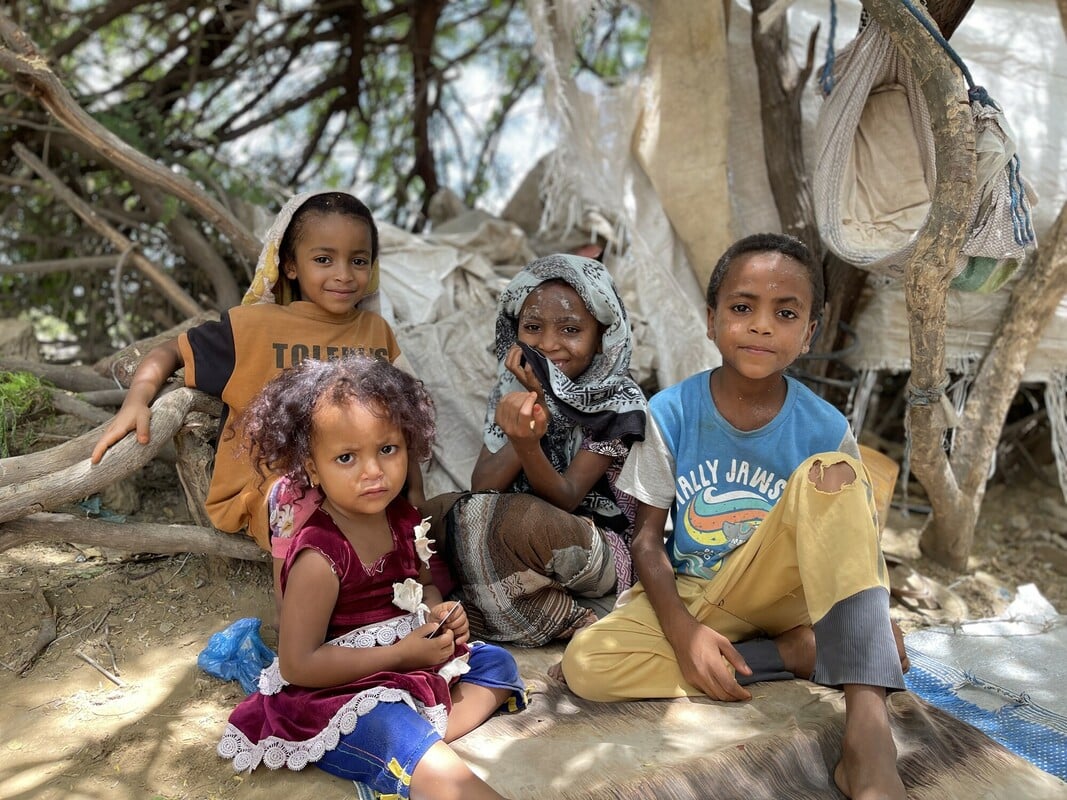*Yemeni children without ID cards, Al Sharair camp. Photo: Malka Mohammed/NRC*
### The right to an identity
The right to be recognised as a person with a legal existence – a name, an identity document, a nationality and a legal status in the law – is a right we take for granted. Millions of people worldwide, however, are deprived of this fundamental right.
This includes people who are stateless without any formally recognised nationality, people who have lost their identity documents through conflict, natural disasters or other forms of displacement or people who are discriminated against in their own countries and are denied legal recognition.
The right to a legal identity and to a nationality are some of the most essential rights we have as human beings, enshrined in a wide range of international human rights treaties and conventions, including the Universal Declaration of Human Rights, the International Convention on Civil and Political Rights, the Refugee Convention, the Convention on the Rights of the Child and the Convention on the Reduction of Statelessness, amongst others.
UNHCR have estimated that over 4.4 million people in the world remain stateless at present.
**Read more:** [The Legal Protection of Children in the Middle East](https://www.nrc.no/resources/guidelines/legal-protection-of-children-middle-east)
### Go to country resources →
### Legal identity and statelessness in the MENA region
UNHCR have estimated that more than 350,000 people across the Middle East and North Africa are formally stateless. Hundreds of thousands more, particularly Syrians, are or without legal and civil documents proving their legal identity and are thus at risk of statelessness. To this figure must be added the more than 3 million Palestinians living outside the State of Palestine without the formal nationality of any country who can be considered to be stateless, including those living in Egypt, Jordan, Lebanon and Syria.
The causes of statelessness and the lack of legal identity are context-specific and the result of different factors. In many countries within the region, laws discriminate against women by preventing them from passing their nationality to their children. Where the father is deceased, missing, of unknown identity or refuses to acknowledge parentage, children are at risk of statelessness. Children of unregistered marriages face particular challenges. Through conflict and natural disasters, many children have been abandoned or orphaned, with no proof of their identity or their family background. Many children on the move through North Africa, including Egypt, Libya and Tunisia, such as unaccompanied minors, lack proof of identity and are particularly vulnerable.
Hundreds of thousands of Syrians have lost their identity documents during the conflict and face challenges in proving their identity and obtaining replacement documents, especially without effective access to Syrian government agencies. This includes refugees in host countries or internally displaced people in areas outside of governmental control.
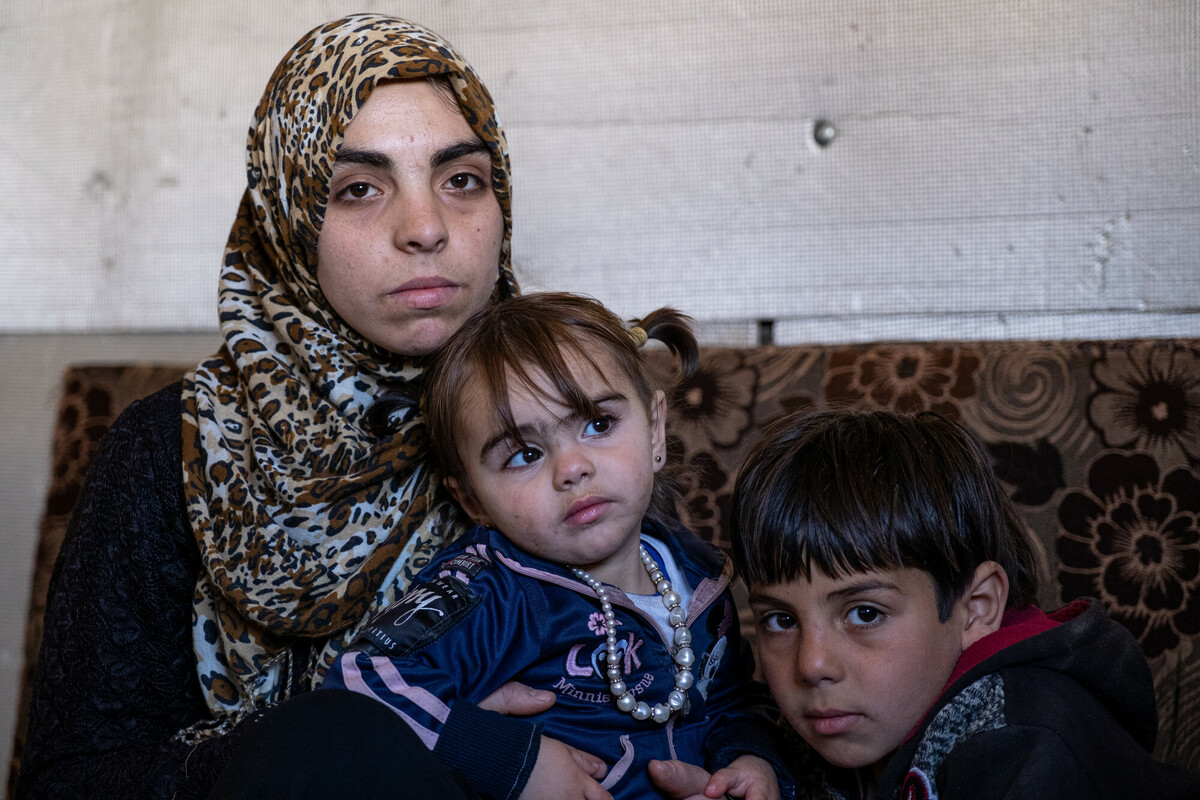*Syrian refugee family, Bekaa, Lebanon. Photo: Zaynab Mayladan/NRC*
Some groups have been historically marginalised and face extreme difficulties in proving their identity and claiming their right to a nationality, such as many Kurds in Syria, Muhammasheen in Yemen or persons of undetermined background or nationality (*qayd el dares* or *makhtoum el qayd*) in Lebanon. In Iraq, persons with family members of alleged ISIS affiliation are routinely denied access to legal identity documents and face administrative and evidentiary barriers in proving their identity, parentage and right to Iraqi nationality.
### The duty to act
Governments have the primary duty to ensure that all people within the country can prove their legal identity and can access proof of their nationality. They can do this by making sure that all people have access to civil registries, courts and other government institutions that can help issue legal identity documents, family booklets and proof of nationality, such as passports. They should also change laws and practices which discriminate against particular groups on the basis of gender, ethnicity, perceived political opinion or for other discriminatory reasons.
Efforts should be made to ensure that groups facing evidentiary or administrative barriers in proving their identity, parentage or background are helped to claim their rights. For refugees, migrants or non-nationals, governments can liaise with UN agencies, including UNHCR, IOM or UNRWA, to help confirm legal identity and nationality.
Civil society organisations and INGOs play a key role in providing administrative and legal assistance to help vulnerable, marginalised and displaced people claim their rights to legal identity and nationality. To do so they must be properly resourced.
2024 marks the end of UNHCR’s 10-year [Global Action Plan to End Statelessness 2014-2024](https://www.unhcr.org/ibelong/global-action-plan-2014-2024/) and the [I Belong Campaign](https://www.unhcr.org/ibelong/#:~:text=The%20%23IBelong%20Campaign%20aims%20to,global%20action%20to%20end%20statelessness.&text=Nationality%20is%20a%20fundamental%20human,don't%20have%20a%20nationality). All efforts should be made to reduce the prevalence and impact of stateliness by the end of 2024 and beyond.
### Country resources:
**Iraq**
|  | |
| --- | --- |
**Jordan**
|  | |
| --- | --- |
**Lebanon**
|  | |
| --- | --- |
**Palestine**
|  | |
| --- | --- |
**Syria**
|  | |
| --- | --- |
**Yemen**
|  | |
| --- | --- |
**Statelessness**
- [Understanding statelessness in the Syria refugee context](https://www.nrc.no/globalassets/pdf/reports/understanding-statelessness-in-the-syria-refugee-context.pdf)
- [Understanding statelessness among Syrian refugees in the Kurdistan Region of Iraq](https://www.nrc.no/resources/reports/understanding-statelessness-among-syrian-refugees-in-the-kurdistan-region-of-iraq)
**Other sources**
- [Hawiati MENA Statelessness Network](https://www.hawiati-mena.org/)
- [MENA Statelessness Platform](https://www.statelessmena.com/)
- UNHCR I Belong Campaign; [UNHCR I Belong Campaign](https://www.unhcr.org/ibelong/#:~:text=The%20%23IBelong%20Campaign%20aims%20to,global%20action%20to%20end%20statelessness.&text=Nationality%20is%20a%20fundamental%20human,don't%20have%20a%20nationality).
- UNHCR; [Global Action Plan to End Statelessness 2014-2024](https://www.unhcr.org/ibelong/global-action-plan-2014-2024/)
- UNHCR; [In Search of Solutions: Addressing Statelessness in the Middle East and North Africa](https://www.refworld.org/reference/regionalreport/unhcr/2016/en/32226)
- [Institute for Statelessness and Inclusion](https://www.institutesi.org/)
- [Boston University Human Rights Clinic](https://www.bu.edu/law/experiential-learning/clinics/international-human-rights-clinic/) with reports on statelessness through the MENA region including; [Egypt](https://www.bu.edu/law/files/2022/07/Egypt-Report_Eng._final.pdf), [Iraq](https://www.bu.edu/law/files/2022/07/FINAL_Iraq-Report-3.14.22.pdf), [Jordan](https://www.bu.edu/law/files/2021/09/Statelessness-In-Jordan-Report_3.2021-1.pdf) and [Lebanon](https://www.bu.edu/law/files/2021/03/The-Campaign-to-End-Statelessness-and-Perfect-Citizenship-in-Lebanon_FINAL.pdf)
- [Peter McCullin Centre on Statelessness](https://law.unimelb.edu.au/centres/statelessness)
- Boston University School of Law; [Statelessness and nationality policy in Tunisia](https://www.bu.edu/law/files/2023/07/7.6-Final-Draft-2023_Tunisia-Report.pdf)